Understanding patterns Addition Worksheets for Ages 7-8 - Page 2
29 filtered results
-
From - To
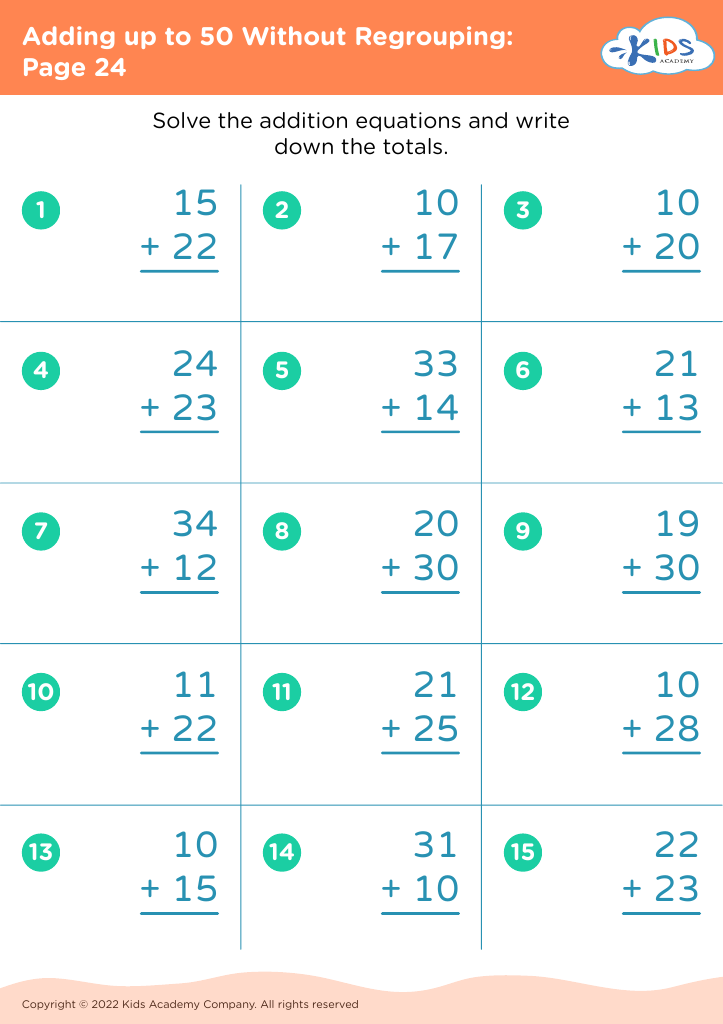
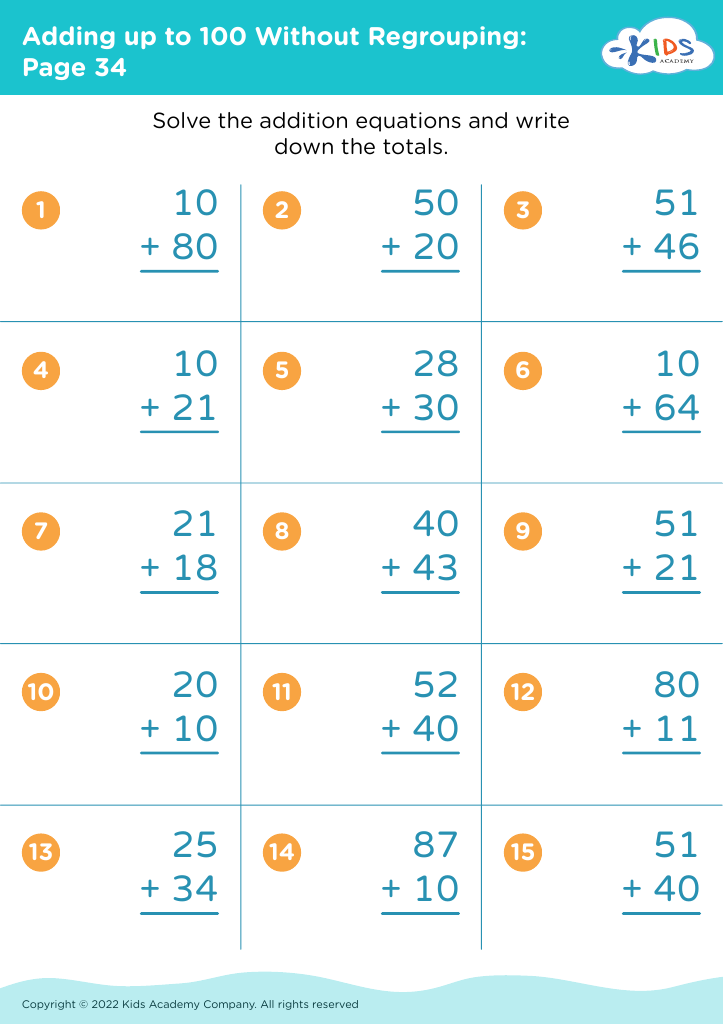
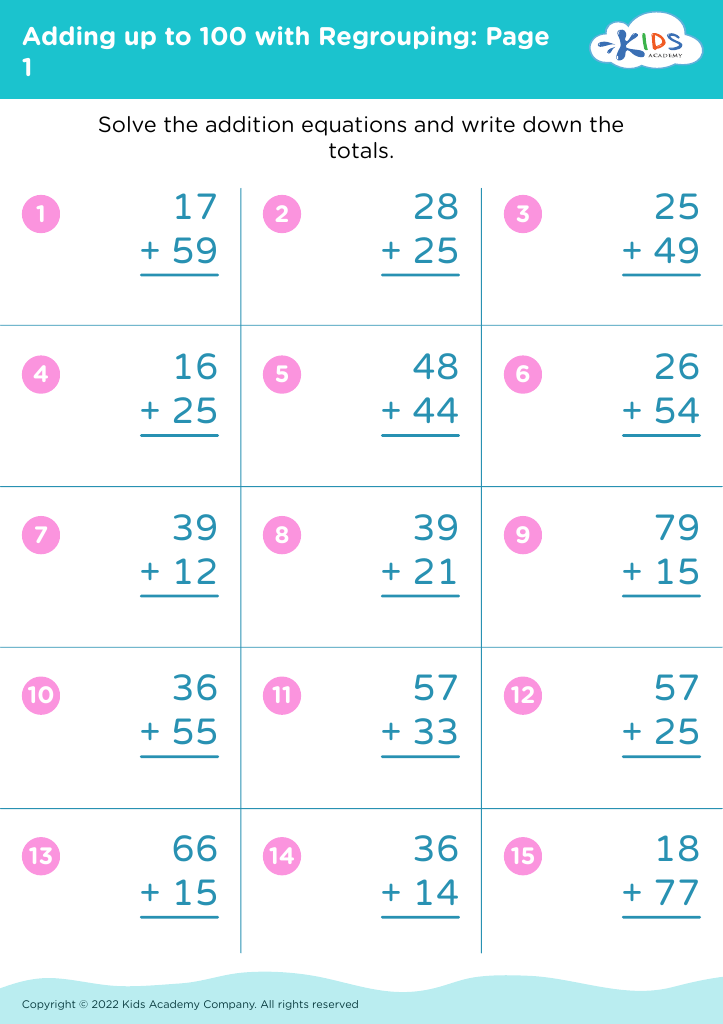
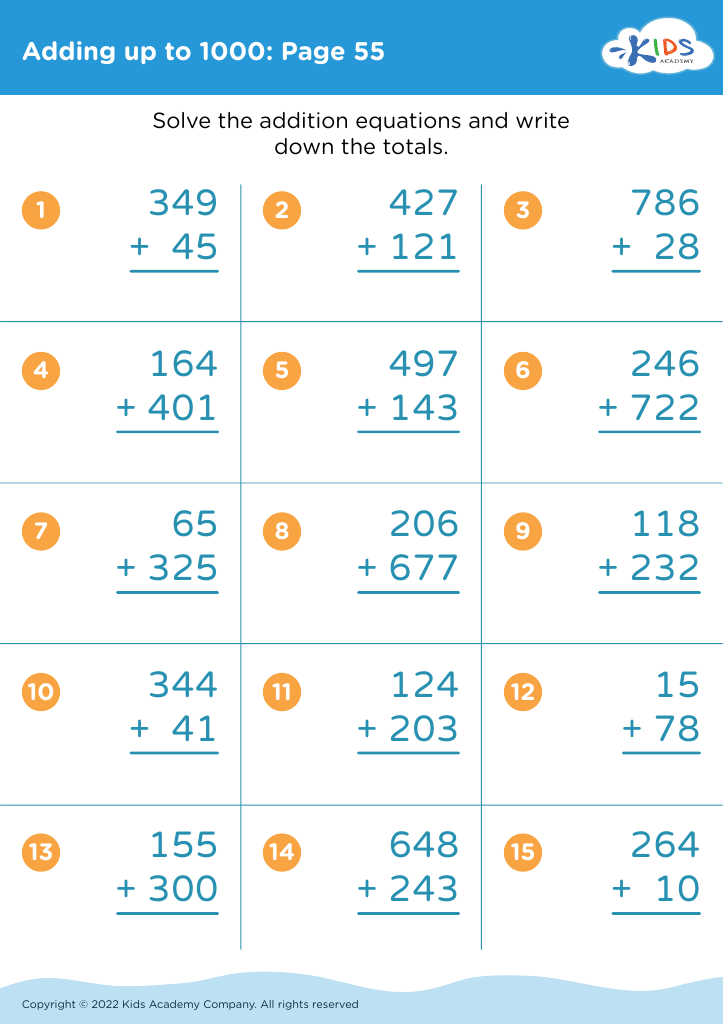
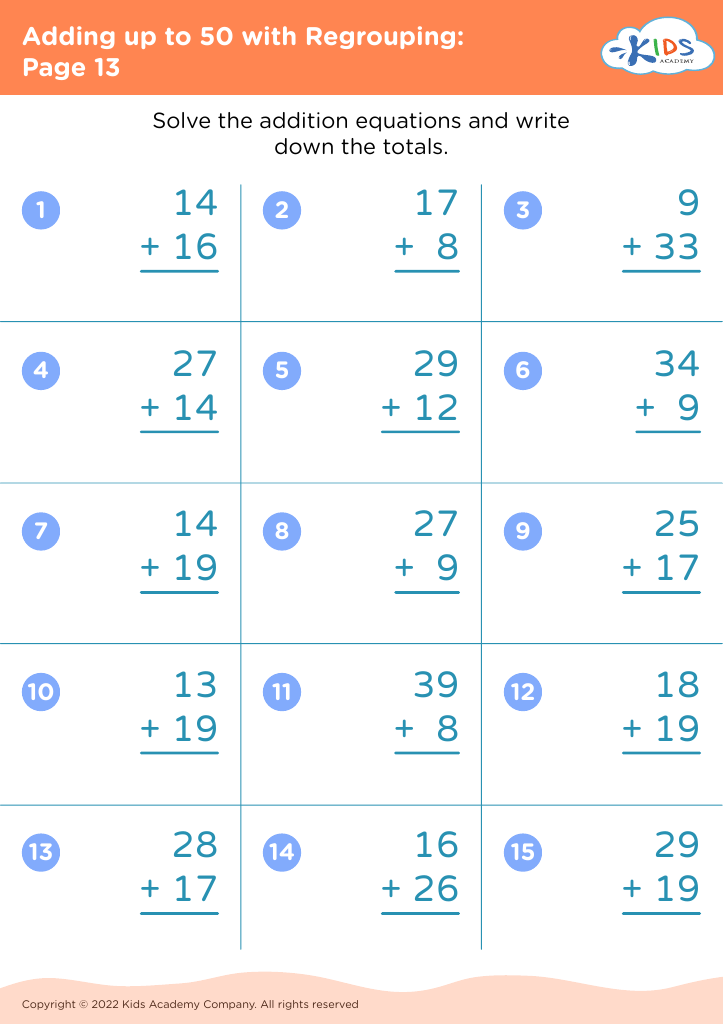








Understanding patterns in addition is crucial for children aged 7-8 as it builds a strong foundation for future mathematical learning. At this age, kids are transitioning from basic arithmetic to more complex concepts, and recognizing patterns is a key component of this journey.
Firstly, pattern recognition helps enhance their number sense. By spotting regularities and sequences, children start to see the relationships between numbers, which simplifies difficult calculations and fosters mental math skills. For instance, understanding that adding two to an even number always results in another even number can make number manipulation easier and more intuitive.
Secondly, being proficient in patterns boosts problem-solving abilities. Children learn to identify, predict, and apply rules, which are essential skills in tackling both mathematical and real-world problems. This nurtures critical thinking and logical reasoning, essential competences for academic success and everyday decision-making.
Lastly, mastering patterns in addition fosters confidence and enjoyment in learning math. When kids recognize and predict outcomes successfully, they experience a sense of achievement and are more likely to engage actively and positively with the subject. This early positive attitude towards math can influence their future academic choices and achievements.
In essence, understanding patterns in addition equips children with key analytical tools and nurtures an encouraging learning atmosphere, pivotal for their overall educational journey.








