Understanding Sequences Addition Worksheets for Ages 7-8
13 filtered results
-
From - To
Introducing our "Understanding Sequences Addition Worksheets for Ages 7-8": an engaging tool designed to enhance your child's mathematical skills. These worksheets teach essential concepts of sequences and addition through fun, interactive exercises. As students progress, they'll boost their problem-solving abilities and numerical understanding. Perfectly crafted for ages 7-8, our worksheets align with curriculum standards, ensuring your child comprehends and excels in foundational math. Each worksheet provides a step-by-step approach to mastering sequences, making learning enjoyable and effective. Start your child's journey towards math proficiency today with our expertly designed resources!
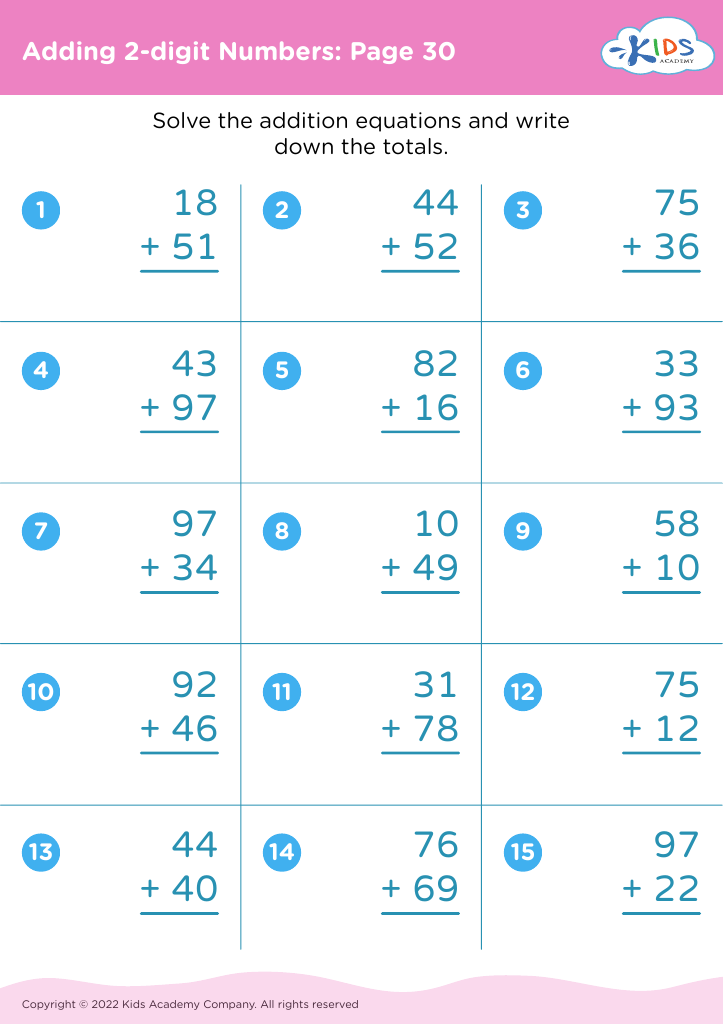
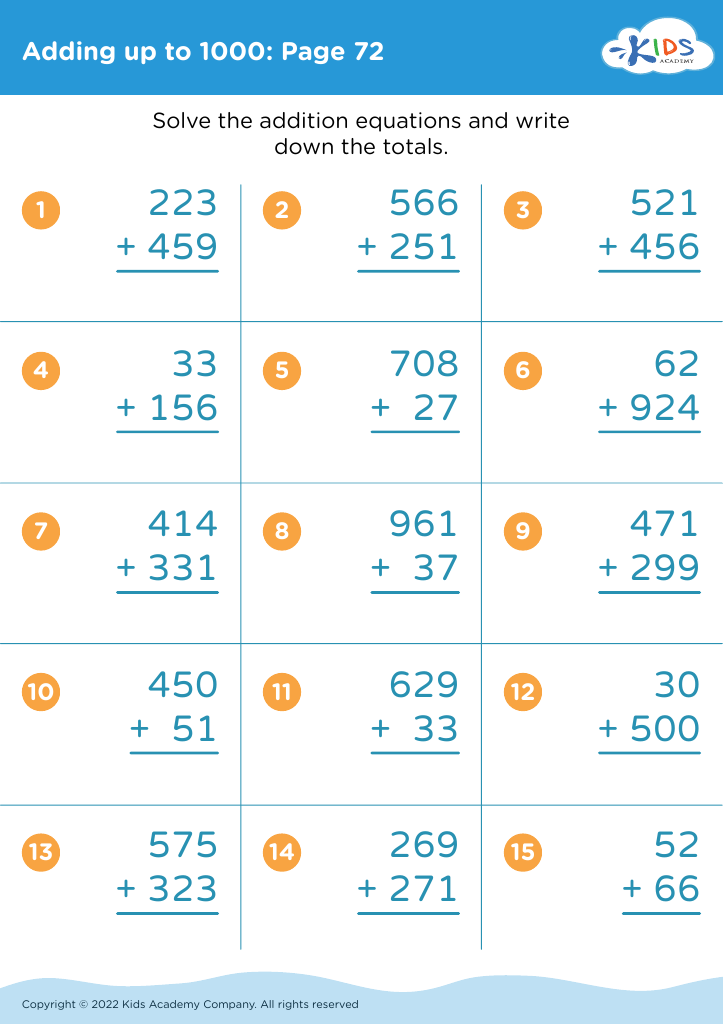
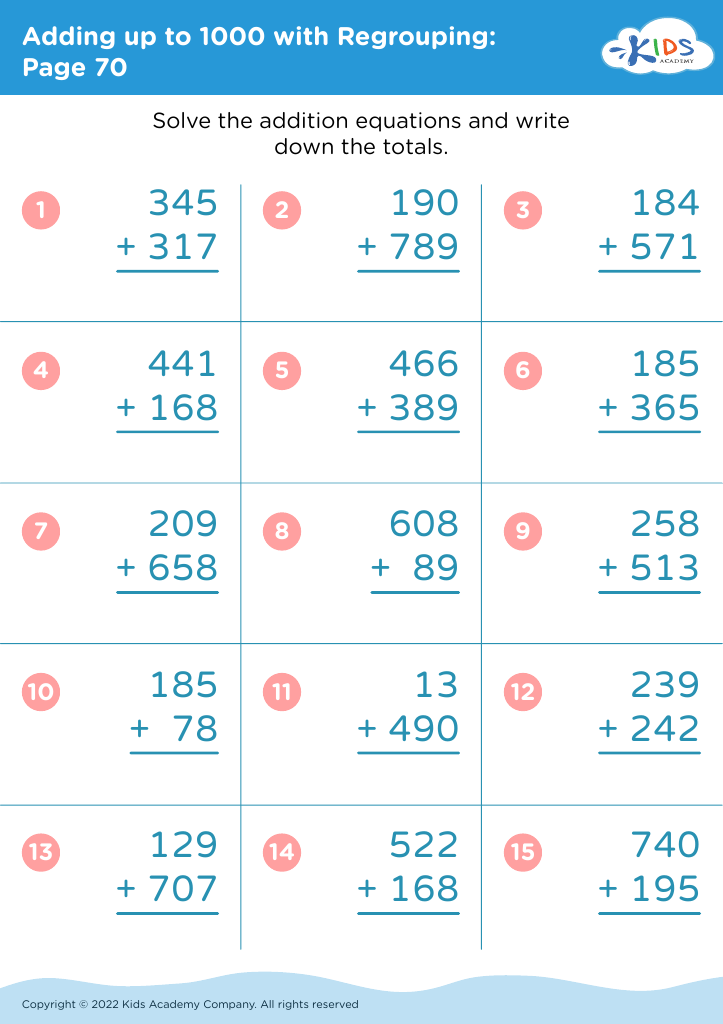
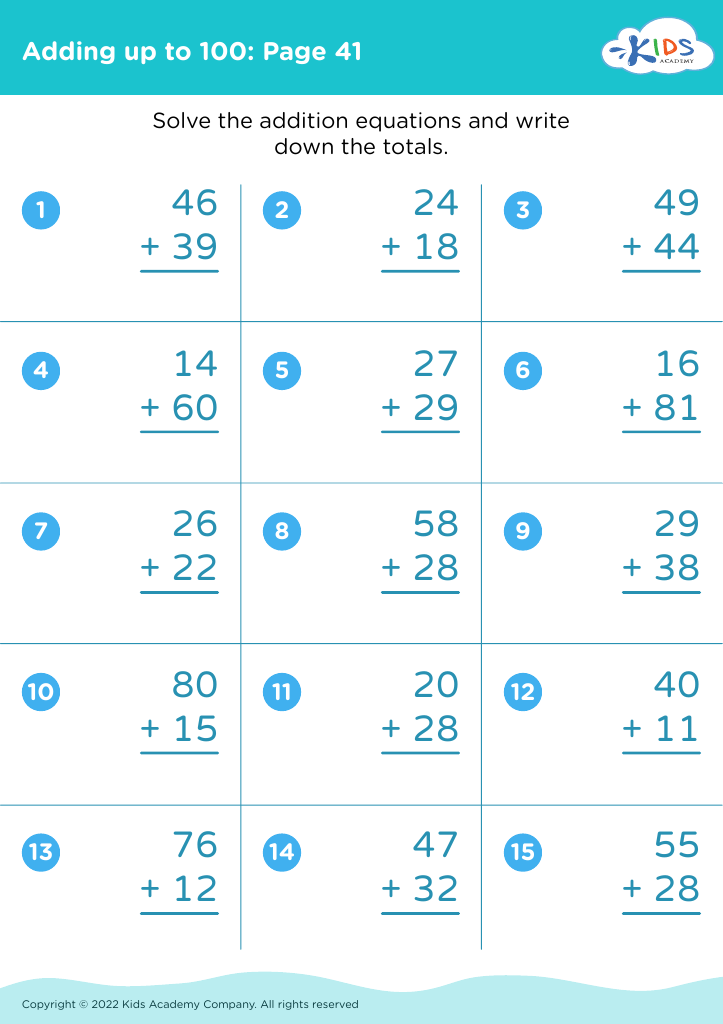
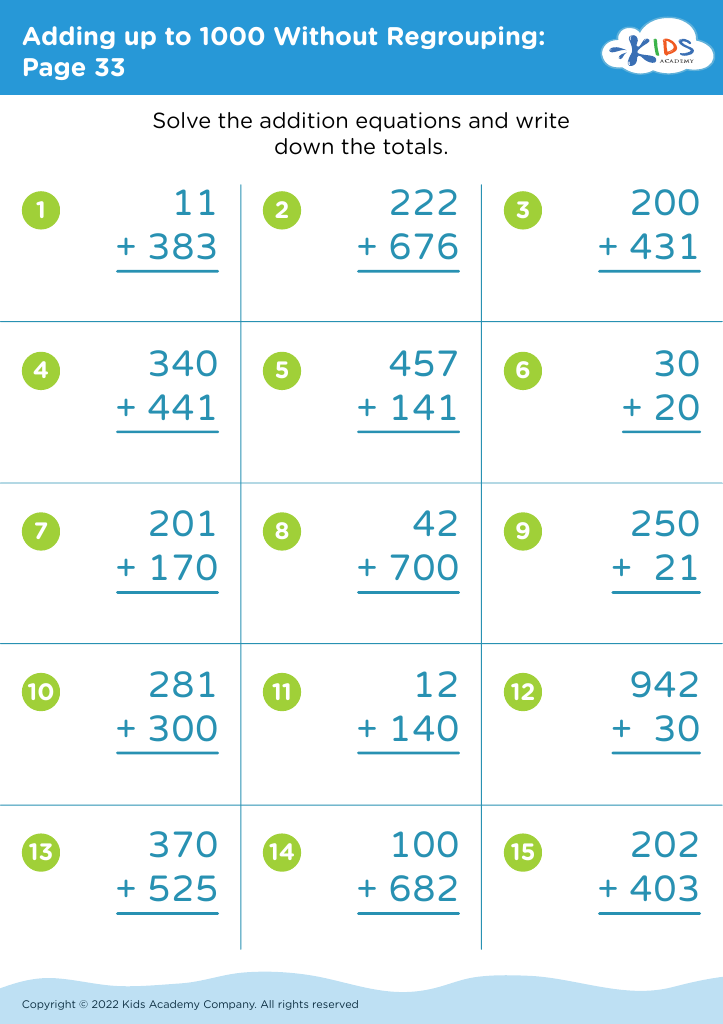








Understanding sequences and addition for children aged 7-8 is vital for their mathematical development and problem-solving abilities. At this stage, children are transitioning from basic counting to more complex mathematical concepts, and grasping the idea of sequences and patterns helps build a foundation for advanced math topics such as multiplication, algebra, and logical reasoning.
When children recognize numerical patterns, they develop an intuitive understanding of order and predictability, which are crucial skills in both math and everyday situations. Sequences teach children to identify and extend patterns, helping them to approach problems methodically and logically. This foundational knowledge promotes critical thinking as kids learn to predict the next number in a sequence or solve problems involving missing numbers.
Addition is a key arithmetic skill that, when paired with sequences, enhances a child's computational fluency. Practice with sequences situations like arithmetic series (e.g., counting by twos, fives, or tens) strengthens their addition skills and number sense. This dual focus not only boosts their confidence in handling numbers but also supports their understanding of the relationships between different mathematical operations.
Moreover, these concepts are typically woven into educational curricula and standardized tests, making early mastery essential. Parents and teachers should foster a supportive and engaging learning environment to encourage children to explore, question, and understand these foundational math concepts, setting them up for future academic success.








