Visual Learning Addition Worksheets for Ages 7-8
3 filtered results
-
From - To
Enhance your child's math skills with our engaging Visual Learning Addition Worksheets designed specifically for ages 7-8. These interactive worksheets leverage visual aids, such as colorful illustrations and diagrams, to make learning addition fun and accessible. With a variety of exercises tailored to different learning styles, children will strengthen their addition abilities while enjoying the process. Encouraging a deeper understanding of mathematical concepts, our worksheets are perfect for both classroom settings and at-home practice. Download and watch your child's confidence and competence in addition grow, setting a solid foundation for future math success! Explore the world of visual learning today!
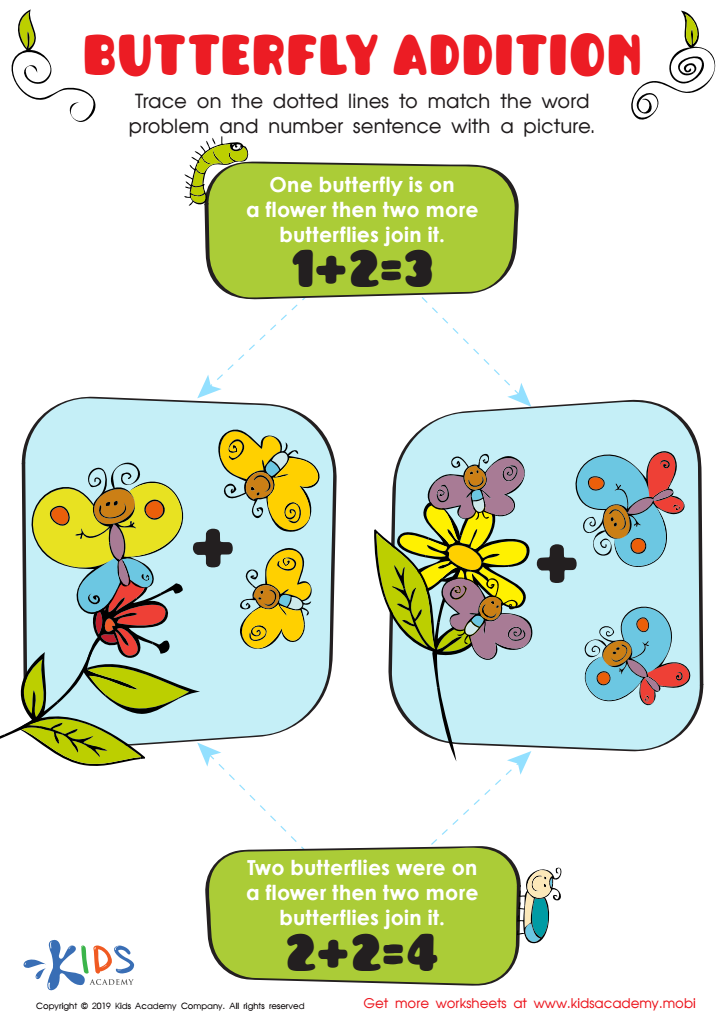
Butterfly Addition Worksheet
 Assign to My Students
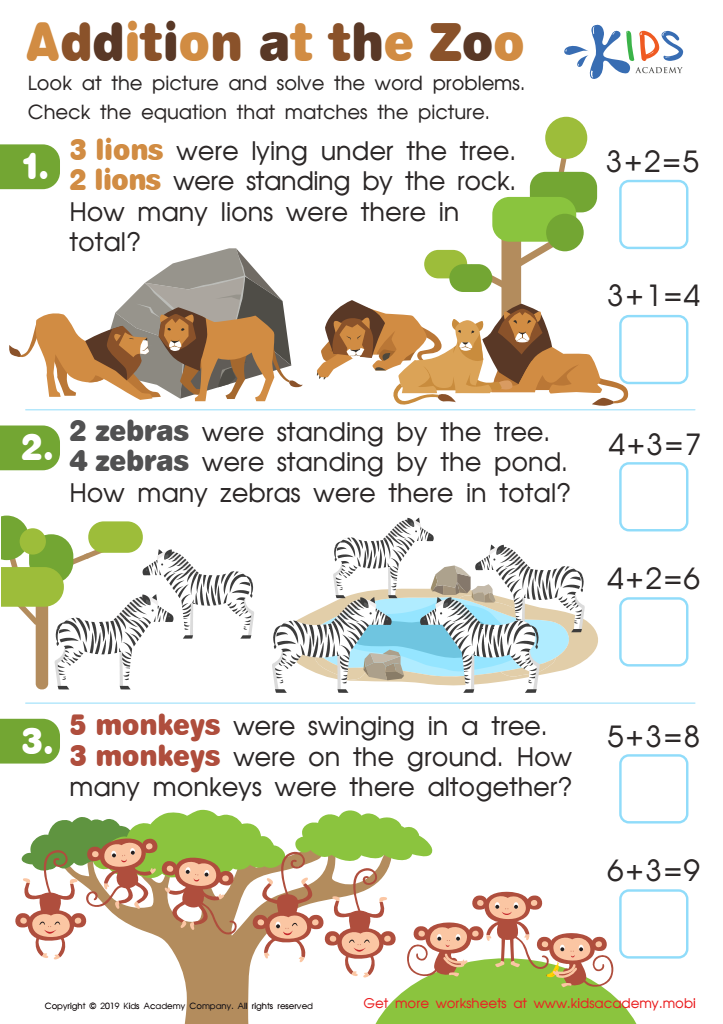
Addition at the Zoo Worksheet








Visual learning is a crucial approach for children aged 7 to 8, particularly in subjects like addition. At this developmental stage, children are beginning to refine their cognitive skills, and visual aids can significantly enhance their understanding of mathematical concepts. Visual learning allows students to engage with addition through pictures, diagrams, and physical objects, making abstract ideas more concrete and relatable.
Fostering visual learning strategies, such as using number lines, blocks, or visual representations of problems, caters to different learning styles. This method nurtures critical thinking and problem-solving abilities by encouraging children to visualize their thought processes and outcomes. Moreover, incorporating these techniques helps to boost confidence in young learners, as they grasp concepts at their own pace.
Parents and teachers should prioritize visual learning because it not only makes addition engaging but also lays a foundation for future mathematical understanding. It encourages exploration, collaboration, and communication, vital skills in today’s educational landscape. By fostering visual learning, parents and teachers can create a supportive environment that promotes positive attitudes toward math, ensuring that children build a strong, enjoyable foundation for lifelong learning. Engaging children visually empowers them to embrace challenges and fosters a love for learning that extends beyond the classroom.








