Visual representation comprehension Addition Worksheets for Ages 7-8
5 filtered results
-
From - To
Enhance your child's math skills with our Visual Representation Comprehension Addition Worksheets tailored for ages 7-8! These engaging worksheets utilize colorful visuals and relatable scenarios to help young learners grasp the concept of addition. By interpreting charts, pictures, and diagrams, students build a deeper understanding of adding numbers in a tangible and enjoyable way. Designed to promote critical thinking, these worksheets foster a love for learning while reinforcing essential math concepts. Perfect for use at home or in the classroom, our resources cater to various learning styles, ensuring children gain confidence and proficiency in addition. Download now to ignite your child’s mathematical journey!
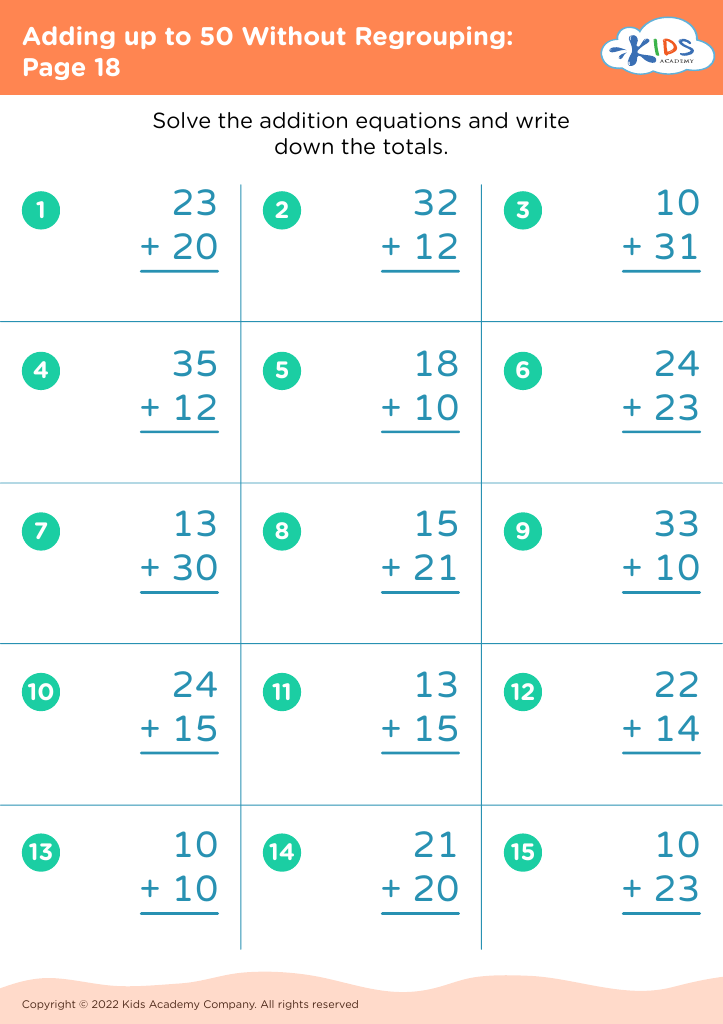
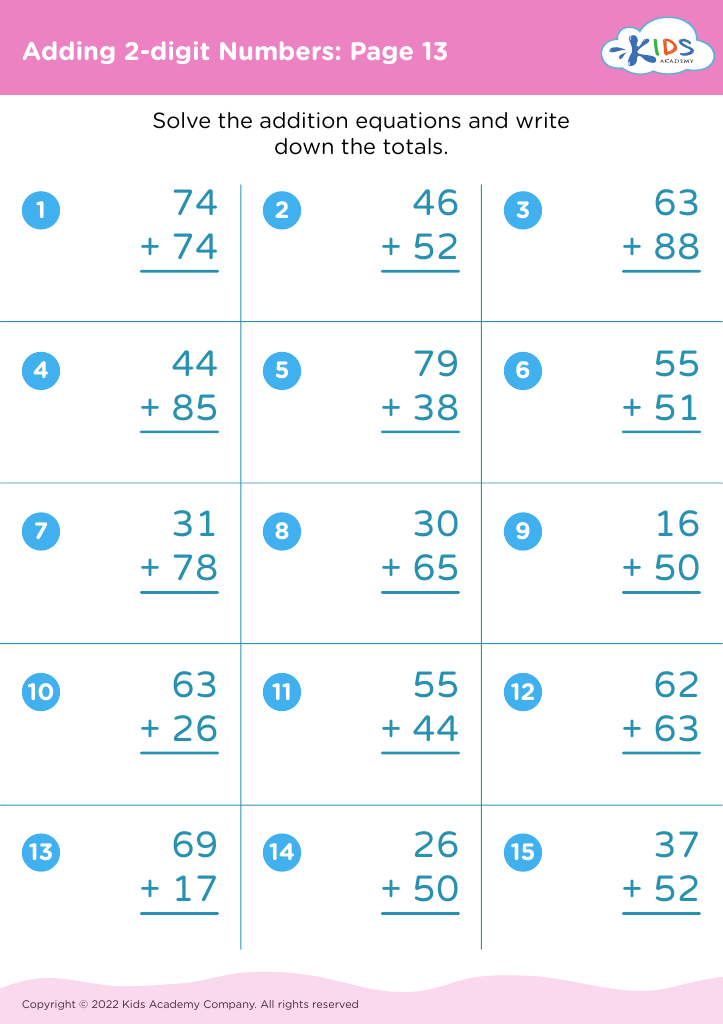
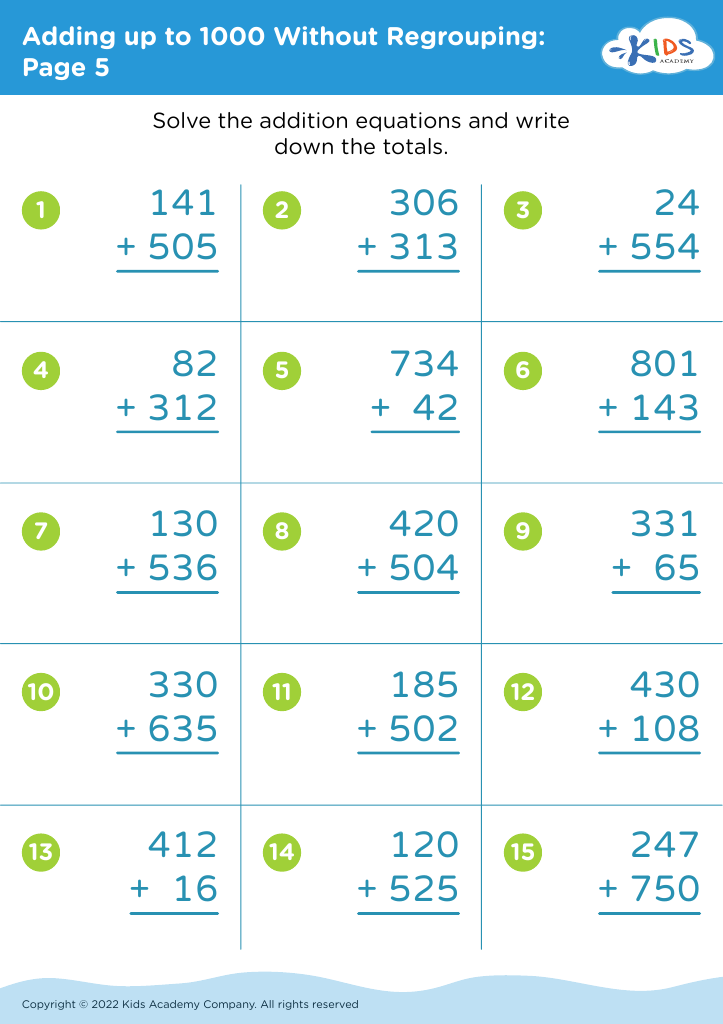
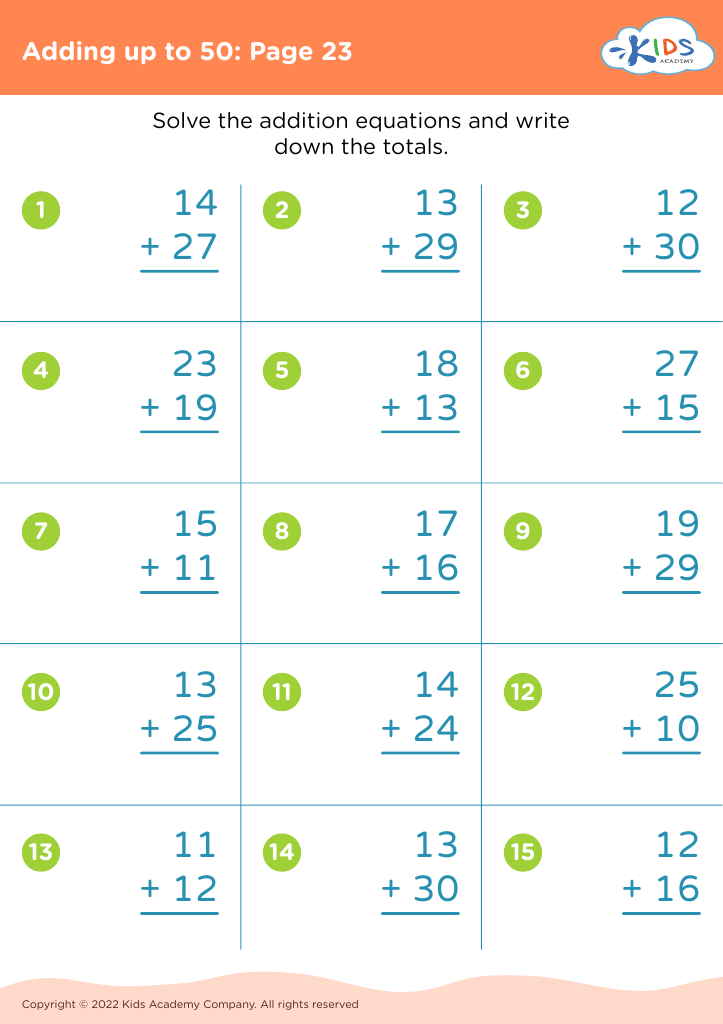
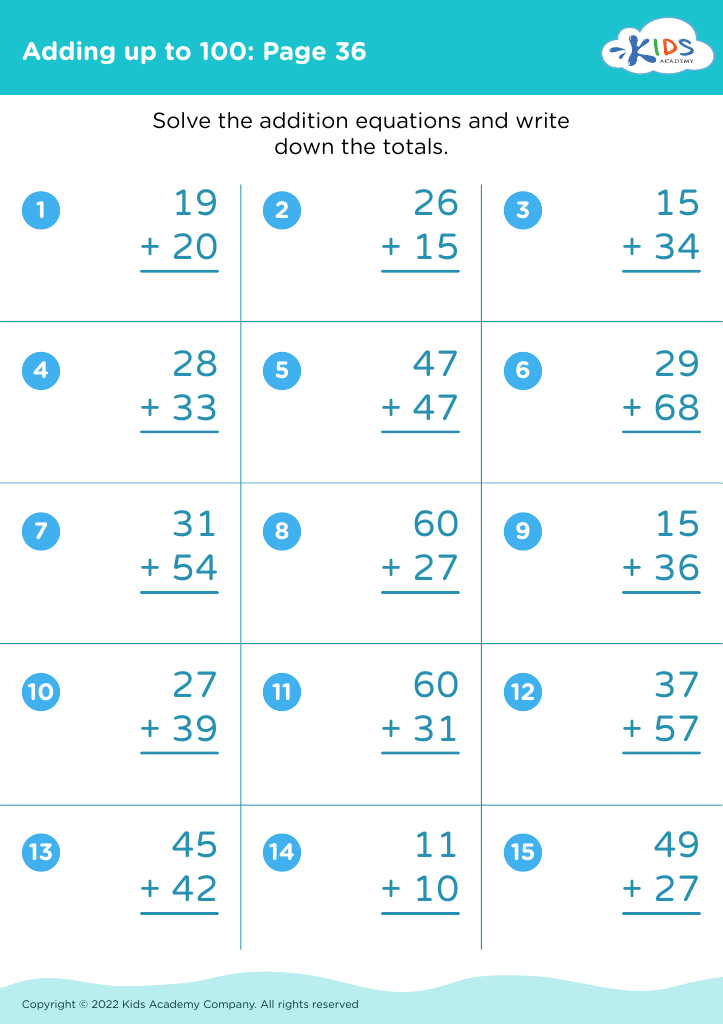








Visual representation comprehension in addition is crucial for children aged 7-8, as it forms a foundational skill for mathematical literacy. At this age, children are transitioning from concrete to more abstract thinking, making visual aids essential for their understanding. Parents and teachers should care about this aspect of learning because visual representations—such as number lines, arrays, and base-ten blocks—allow students to see mathematical concepts in action. These tools help demystify addition by breaking down numbers and illustrating how different values combine.
Moreover, strong visual comprehension aids in problem-solving and enhances memory retention, allowing students to grasp more complex mathematical concepts in the future. Children who can manipulate and visualize numbers often develop greater confidence and interest in math, setting the stage for continued success in the subject.
Encouraging visual representation fosters a positive attitude toward learning and helps children articulate their thought processes, which is vital for both communication skills and collaborative learning. Therefore, by supporting visual understanding in addition, parents and teachers equip children with critical skills that extend beyond math, fostering analytical skills that are essential in everyday life. Ultimately, investing in this aspect of learning can lead to deeper engagement and achievement in mathematics.








