Vocabulary development Addition Worksheets for Ages 7-8
5 filtered results
-
From - To
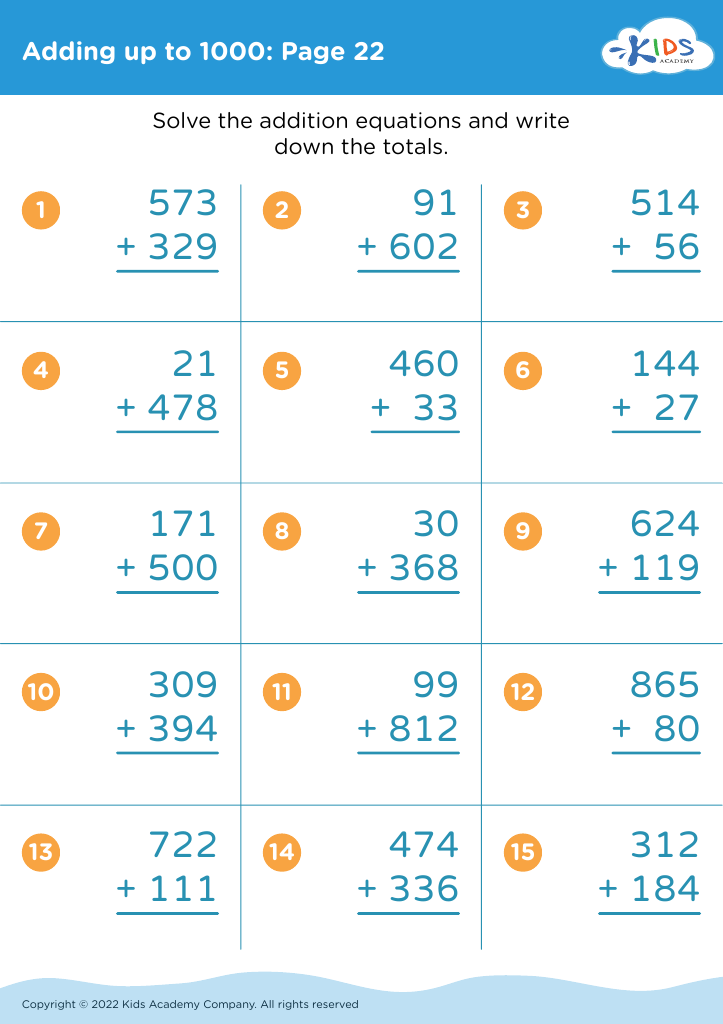
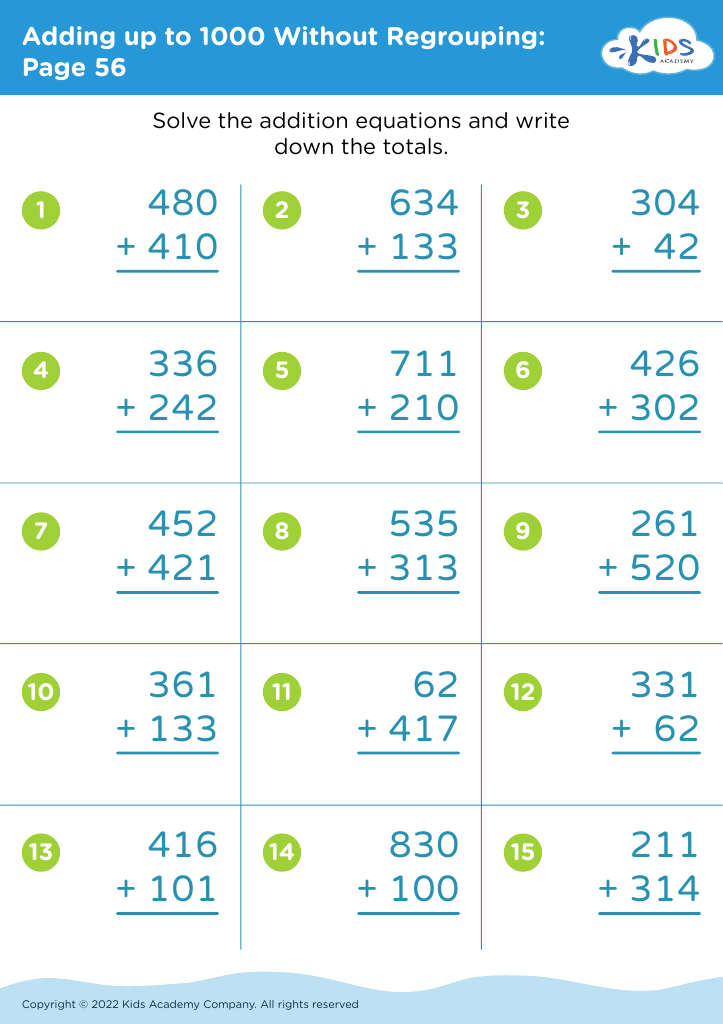
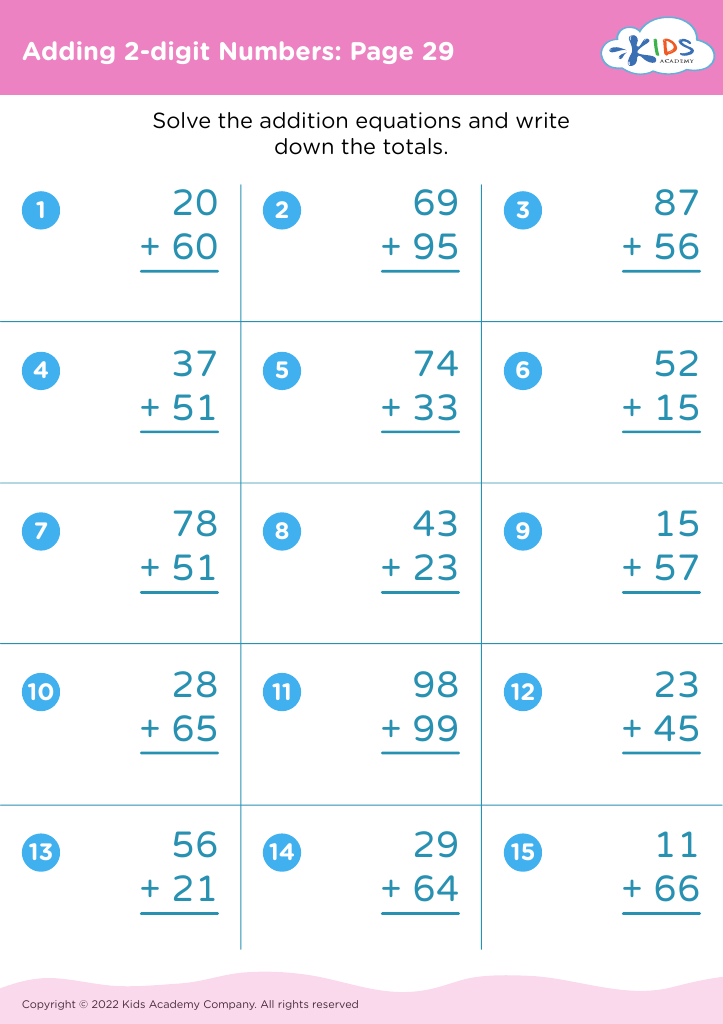
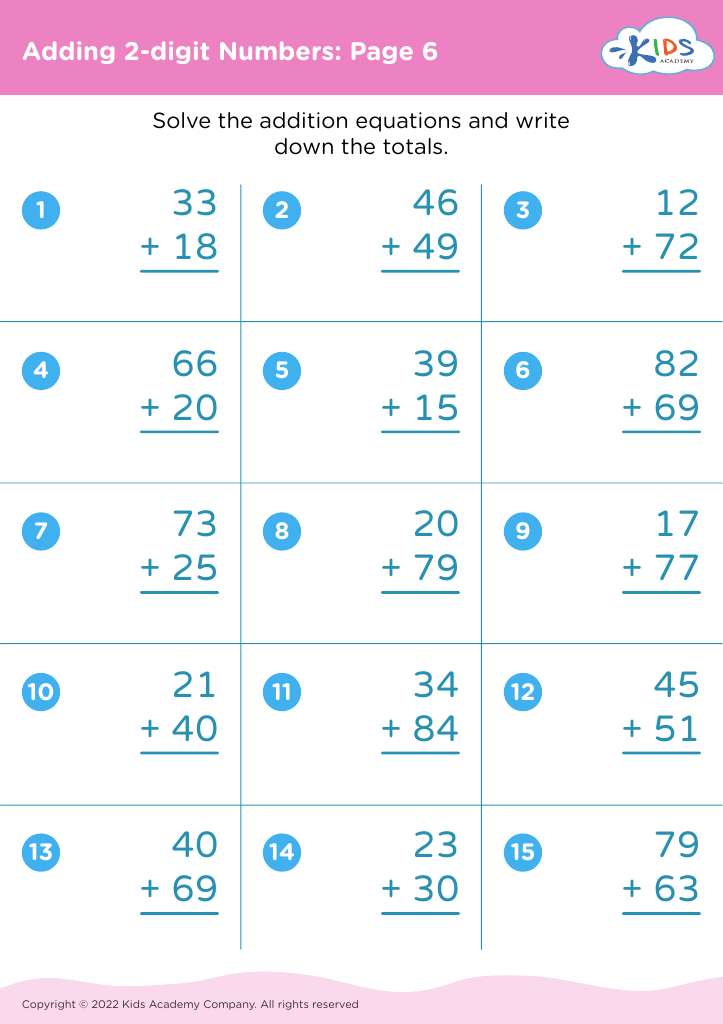
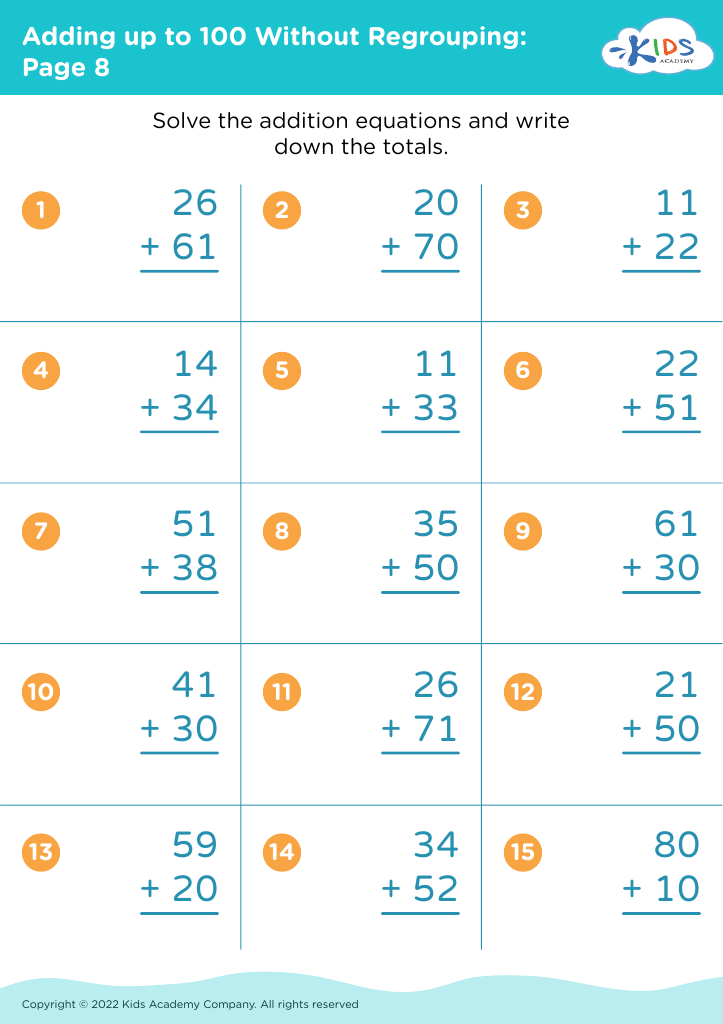
Enhance math skills and boost vocabulary development with our engaging addition worksheets designed for ages 7-8. These worksheets at Kids Academy seamlessly combine arithmetic practice with vocabulary building, supporting both mathematical fluency and language skills. Each activity focuses on key addition concepts while introducing and reinforcing relevant math terminology. Our carefully curated exercises make learning fun and effective, encouraging young students to confidently approach both addition and new words. Perfect for classroom or homeschool settings, these worksheets are essential tools for fostering comprehensive educational growth in your child. Explore now to give them a solid foundation in math and language proficiency.








Vocabulary development for children aged 7-8 is crucial for several important reasons. At this stage, children transition from learning to read to reading to learn. A robust vocabulary enhances their comprehension skills, allowing them to grasp more complex texts, follow storylines, and understand nuanced instructions or information. This foundational literacy skill sets the stage for academic success across all subjects—math, science, and social studies included—where understanding terminologies and concepts is essential.
Vocabulary growth also bolsters communication skills. With a richer vocabulary, children can express their thoughts, feelings, and ideas more clearly and effectively. This improved communication fosters better interactions with peers, teachers, and family members, promoting both social and emotional development.
Moreover, a good vocabulary impacts cognitive abilities by expanding children's capacity for critical thinking and problem-solving. It introduces them to a range of experiences and ideas they might not encounter in everyday conversation, stimulating curiosity and imagination.
Lastly, strengthening vocabulary at an early age helps reduce the academic achievement gap. Children who have a strong vocabulary base enter higher grades better prepared, often putting them on a positive educational trajectory. Therefore, parents and teachers should prioritize vocabulary development to foster a lifelong love for learning and equip children with the tools they need for future academic success.








