Color recognition Arrays Worksheets for Ages 7-8
3 filtered results
-
From - To
Our "Color Recognition Arrays Worksheets for Ages 7-8" make learning fun and engaging! These worksheets blend math skills with color identification to help kids understand arrays while boosting their color recognition. Each activity encourages visual learning and critical thinking, allowing children to excel in both math and art. Designed specifically for ages 7-8, these worksheets are perfect for home or classroom use. Printable and easy to use, they help young learners grasp foundational math concepts and color theory with ease. Unlock a vibrant learning experience and watch your child's skills shine!
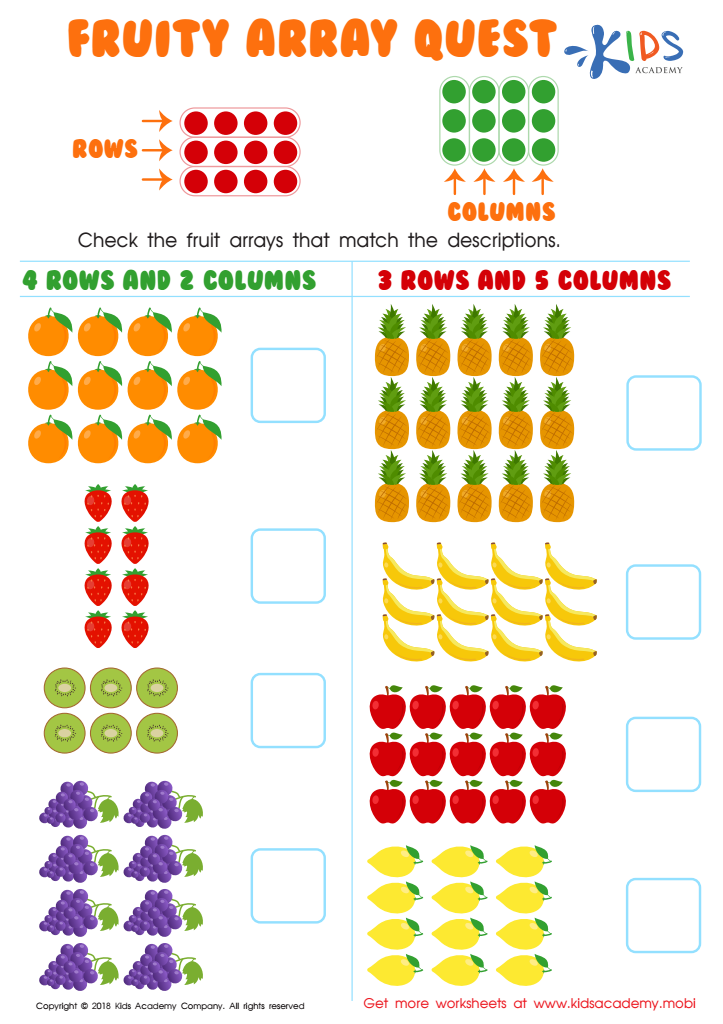
Fruity Array Quest Worksheet
 Assign to My Students
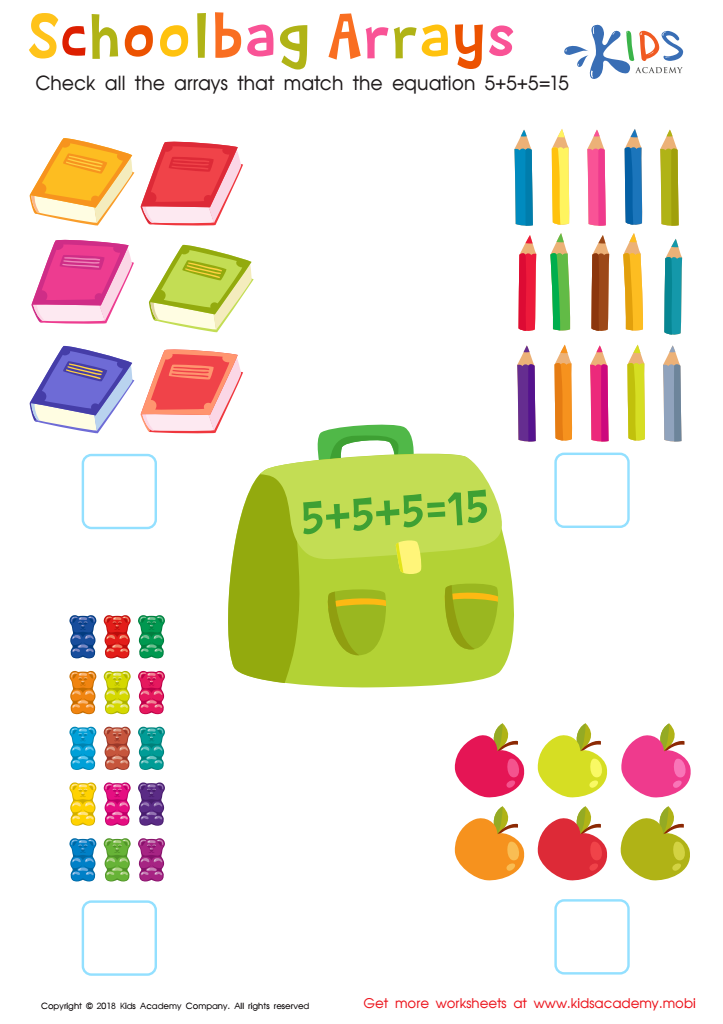
Schoolbag Arrays Worksheet
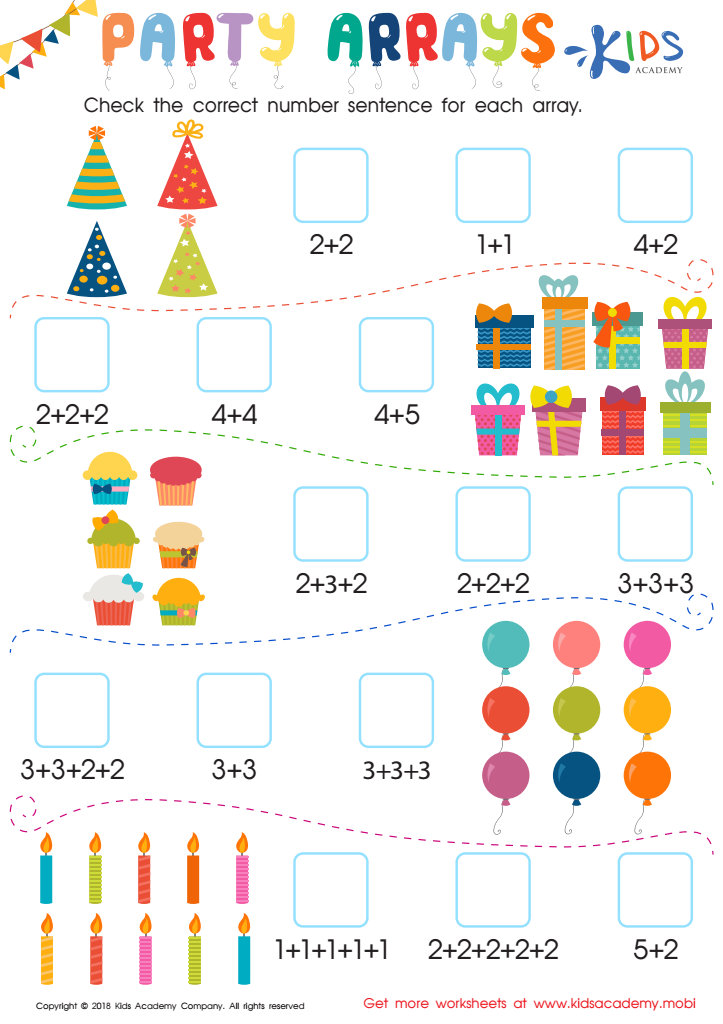
Party Arrays Worksheet








Color recognition arrays are vital tools for the development of children aged 7-8, offering significant cognitive and educational benefits. At this age, youngsters are not only refining their basic skills but also laying the groundwork for more complex learning. By interacting with color recognition arrays, children enhance their ability to discern and differentiate between various colors, which sharpens their visual acuity and attention to detail.
Moreover, working with these arrays bolsters critical thinking and problem-solving abilities. Kids learn to observe patterns, categorize objects, and make comparisons—skills integral to subjects like mathematics, reading, and science. Recognizing color patterns in arrays can also improve a child's memory and information retention, aiding in more effective learning.
For teachers, incorporating color recognition arrays into the curriculum allows for the introduction of more diverse and engaging teaching methods, fostering a dynamic learning environment. Parents, too, find these tools useful for supporting learning at home, turning everyday activities into educational experiences. Using color recognition arrays can transform seemingly simple play into developmental milestones, helping to foster a love for learning and academic curiosity in young minds. Overall, these arrays are not only engaging and entertaining but are foundational to a child’s educational journey.








