Problem-Solving Skills Arrays Worksheets for Ages 7-8
4 filtered results
-
From - To
Enhance your child's problem-solving skills with our engaging Arrays Worksheets, designed specifically for ages 7-8. These interactive printable materials introduce foundational math concepts through fun, hands-on activities that promote critical thinking. Children will explore arrays in various contexts, allowing them to visualize multiplication and division effectively. With a range of exercises, from visual recognition to real-world applications, our worksheets foster confidence and curiosity in young learners. Ideal for both classroom settings and home practice, these resources help make math enjoyable while ensuring comprehension. Empower your child to tackle problems confidently and build essential skills for academic success!
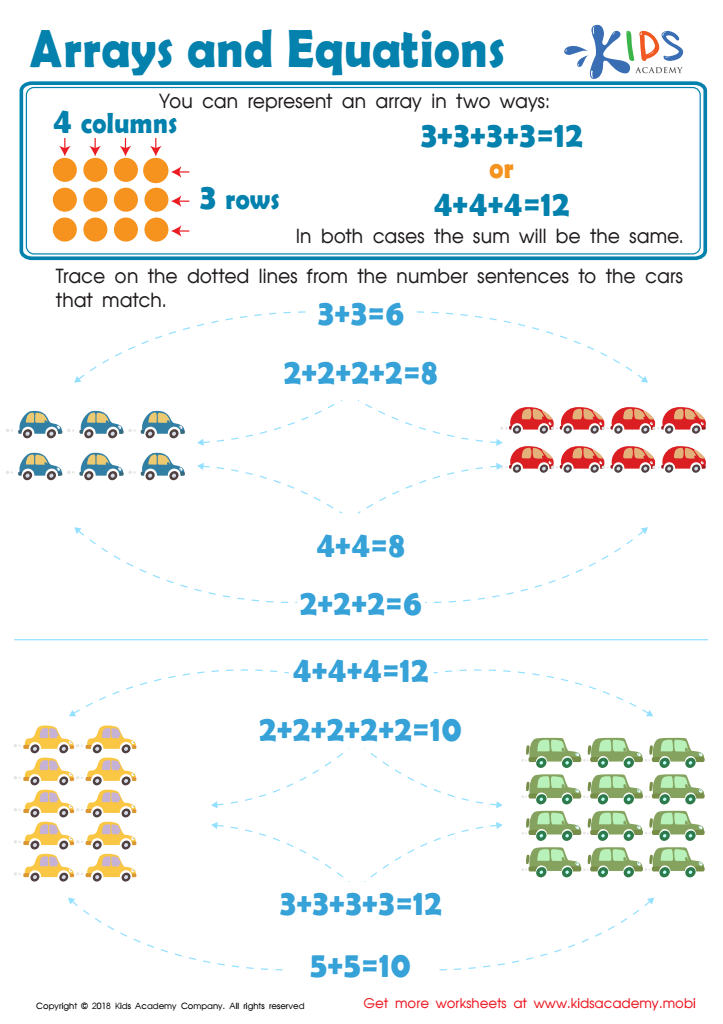
Arrays and Equations Worksheet
 Assign to My Students
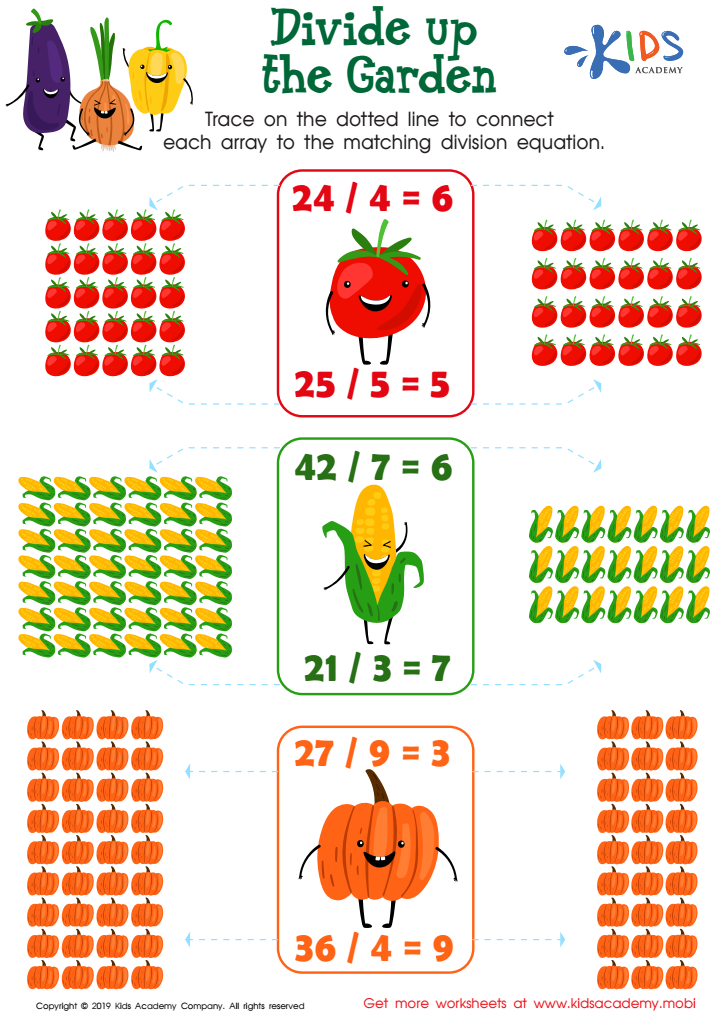
Divide up the Garden Worksheet
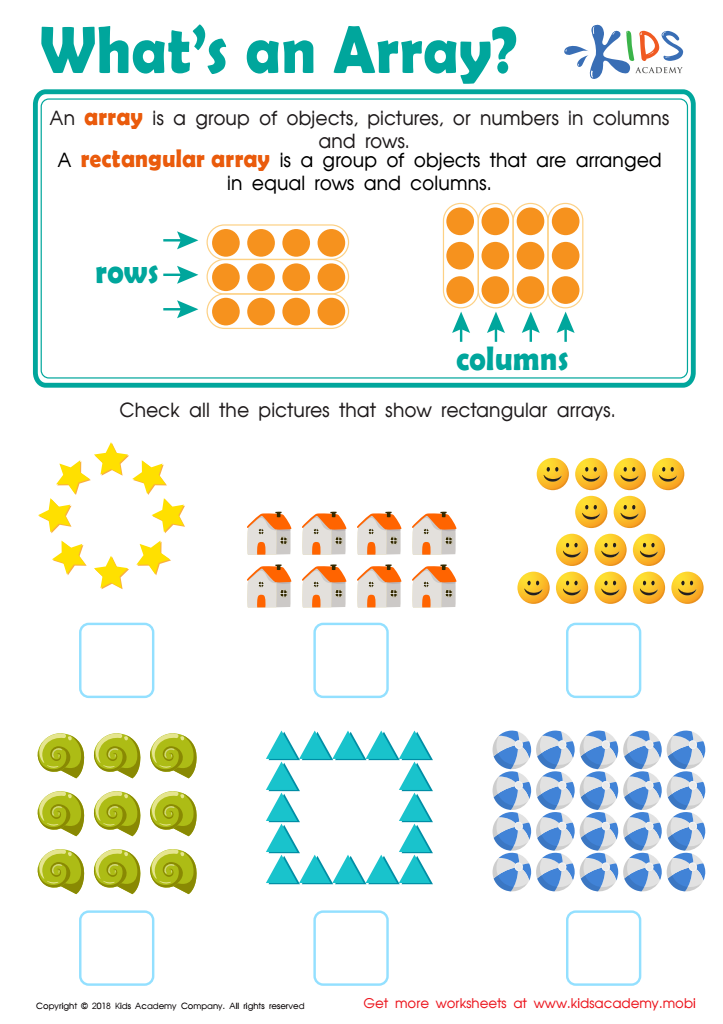
What's an Array? Worksheet
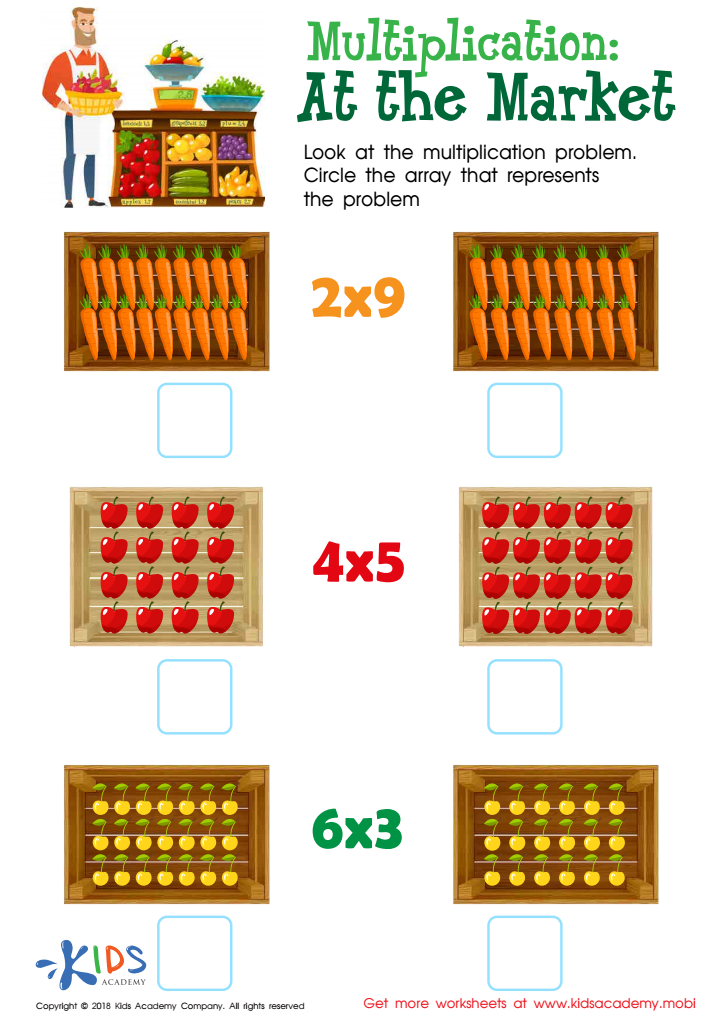
At the Market Worksheet








Problem-solving skills are essential for the intellectual and emotional development of children, especially between the ages of 7 and 8. During this critical period, children are building the foundation for advanced mathematical concepts. Introducing arrays as a problem-solving tool can significantly enhance this learning process. Arrays help children visualize and organize information, enabling them to understand multiplication and division in a structured way. This not only strengthens their mathematical reasoning but also fosters critical thinking.
Moreover, problem-solving skills extend beyond mathematics; they are pivotal in everyday situations. When children learn to solve problems effectively, they become more resilient and confident in facing challenges. By understanding arrays, students also develop collaboration skills as they participate in group activities where they can share different approaches and solutions with their peers.
For parents and teachers, nurturing these skills is vital. It prepares children for future academic success and instills a lifelong love for learning. Engaging in problem-solving strategies, like using arrays, cultivates a mindset geared toward inquiry and exploration, equipping children with the essential tools needed for not just school but for life in general. Ultimately, promoting these skills lays a strong foundation for future success in both academic and personal contexts.








