Reading comprehension Arrays Worksheets for Ages 7-8
5 filtered results
-
From - To
Unlock your child's reading potential with our Reading Comprehension Arrays Worksheets for ages 7-8. These expertly crafted worksheets blend essential reading skills with engaging math array exercises, fostering both literacy and numerical reasoning. Specifically designed for young learners, they help students practice comprehending small passages while solving array problems. This dual approach not only enhances their understanding of text but also sharpens their ability to organize objects efficiently. Ideal for both classroom and home use, these worksheets make learning fun and interactive, ensuring your child builds a strong foundation in both reading and math. Boost their academic success today!
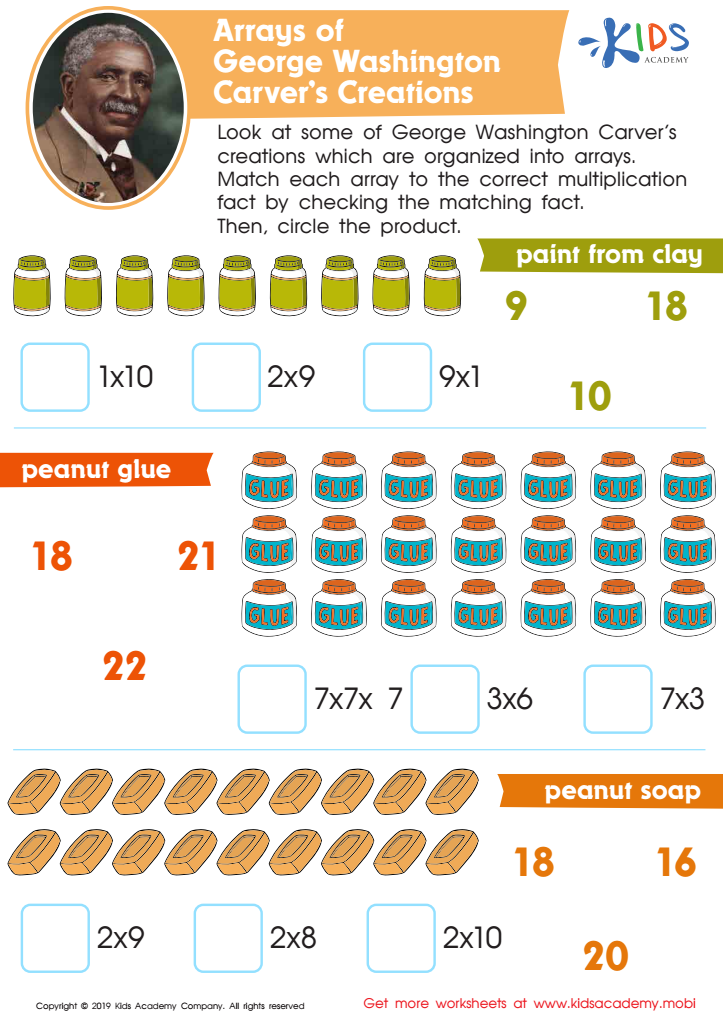
Arrays of George Washington Carver’s Creations Worksheet
 Assign to My Students
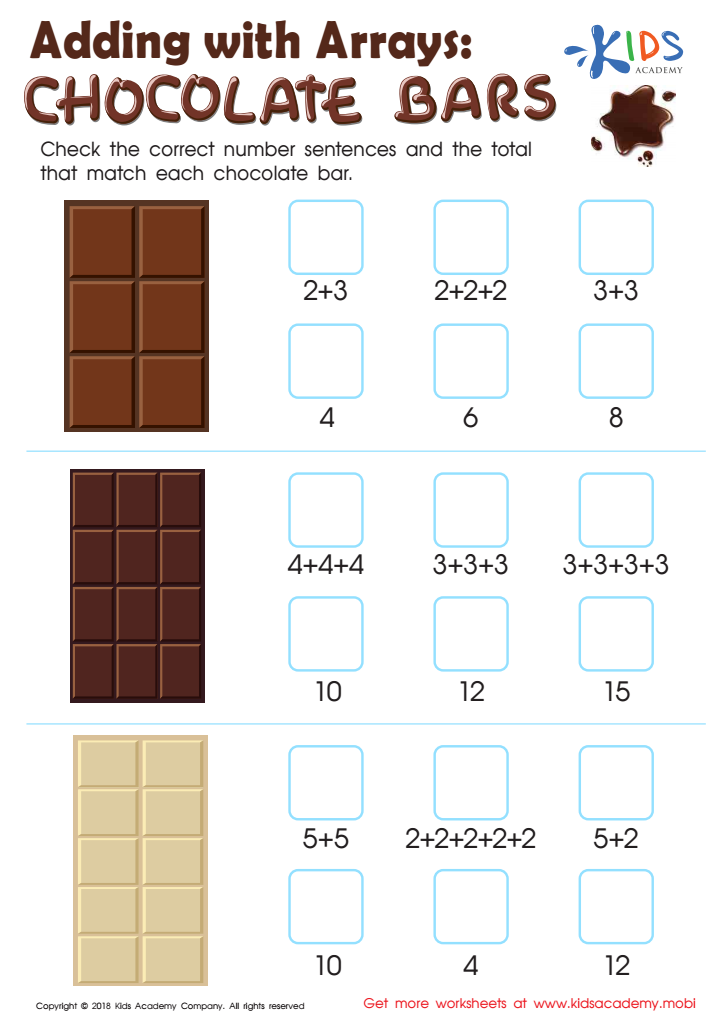
Adding with Arrays: Chocolate Bars Worksheet
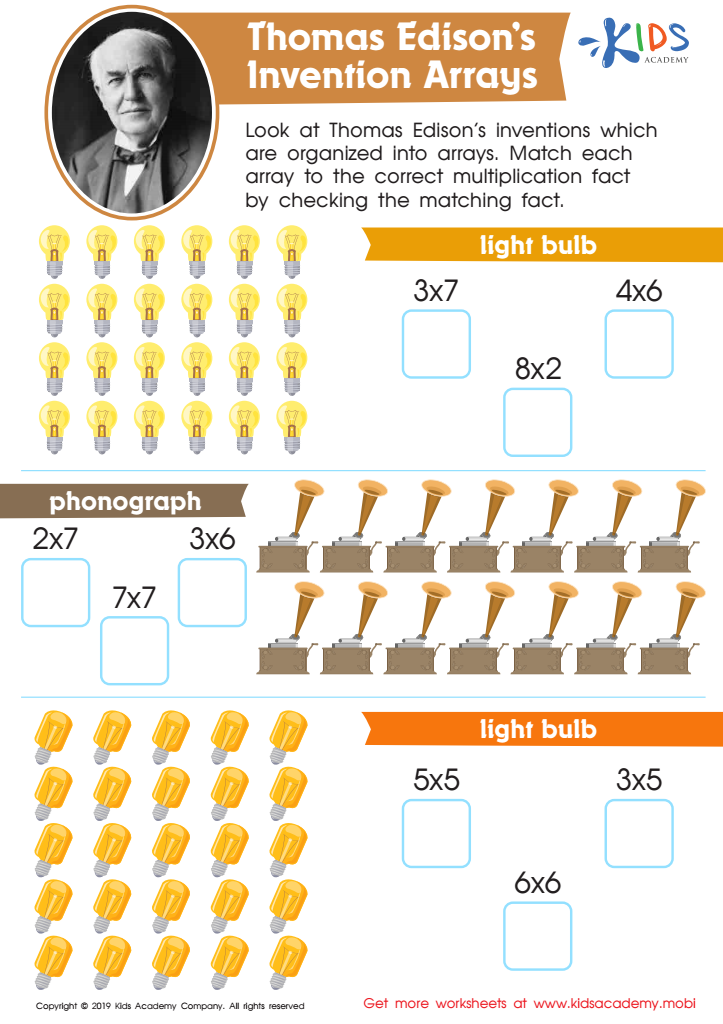
Thomas Edison’s Invention Arrays Worksheet
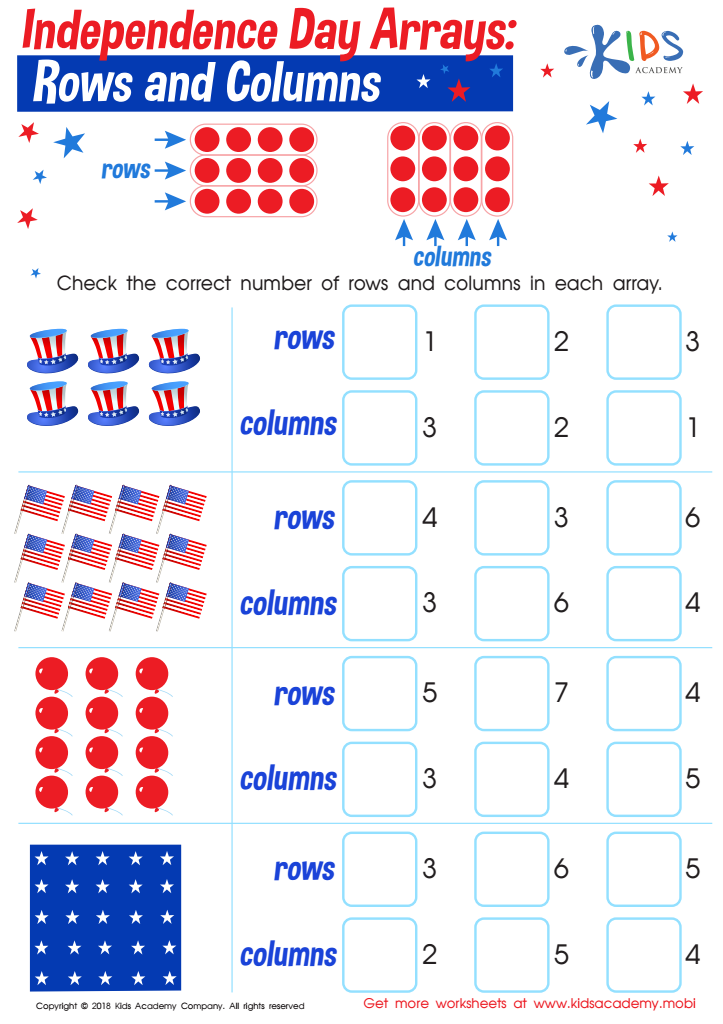
Independence Day Arrays: Rows and Columns Worksheet
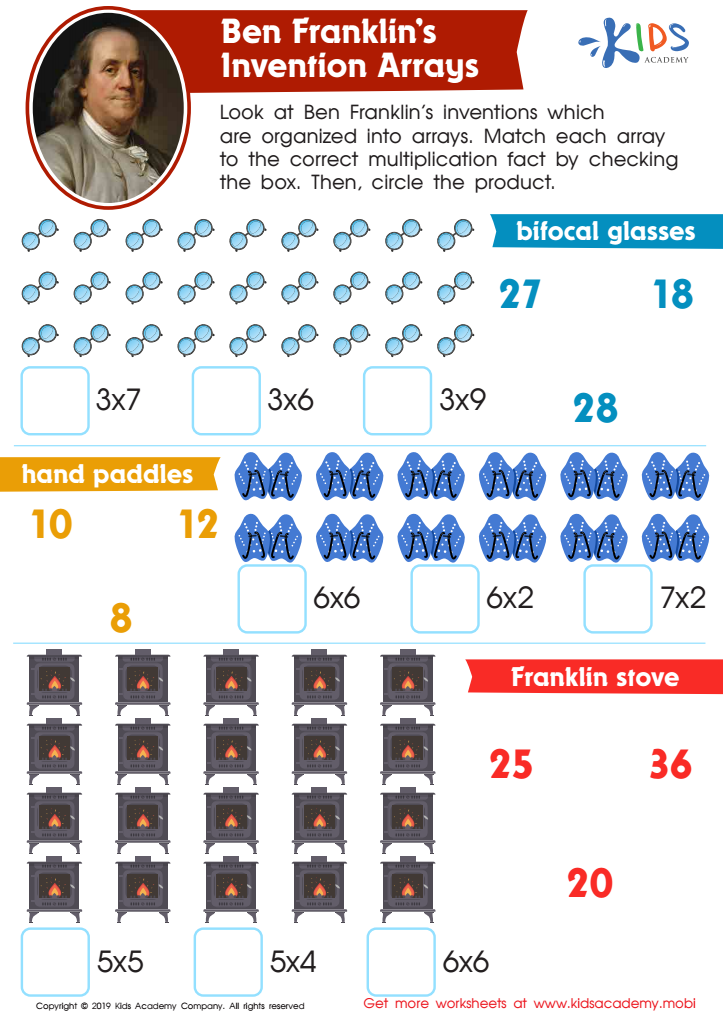
Ben Franklin’s Invention Arrays Worksheet








Reading comprehension is essential for academic success and lifelong learning, and reading comprehension arrays can significantly aid children aged 7-8 in developing this critical skill. At this stage, children transition from "learning to read" to "reading to learn," making comprehension fundamental to their overall learning journey. Reading comprehension arrays, which often include grids of questions, visual aids, and interactive tasks related to a text, activate various cognitive processes, helping young learners understand and retain information better.
Engaging with these arrays encourages children to delve deeper into texts, fostering analytical thinking and attention to detail. They learn to identify main ideas, infer meanings, and make connections between text and their existing knowledge. This not only enhances their understanding but also builds a solid foundation for critical thinking skills that will benefit them across all subjects.
Moreover, comprehension arrays can be particularly beneficial for diverse learners, offering multiple entry points that cater to various learning styles, be it visual, auditory, or kinesthetic. When parents and teachers prioritize the use of these tools, they actively contribute to improved literacy skills, greater academic confidence, and a lifelong love of reading in their children, paving the way for future educational success.








