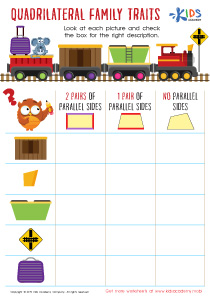
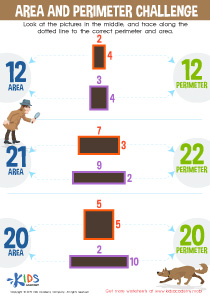
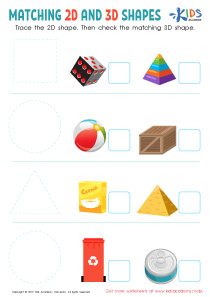
Shape Recognition Fractions of Shapes Worksheets for Ages 7-8
9 filtered results
-
From - To
Explore our "Shape Recognition Fractions of Shapes Worksheets" designed for ages 7-8! These engaging and interactive worksheets will help young learners grasp the concept of fractions through the lens of shape recognition. Children will identify and shade shapes, learning to recognize halves, thirds, and quarters while enhancing their visual perception skills. Perfect for reinforcing math concepts in a fun and creative way, these worksheets support both classroom and home learning environments. Foster your child's critical thinking and mathematical understanding as they enjoy hands-on activities designed to captivate their curiosity about shapes and fractions. Start the journey to math mastery today!
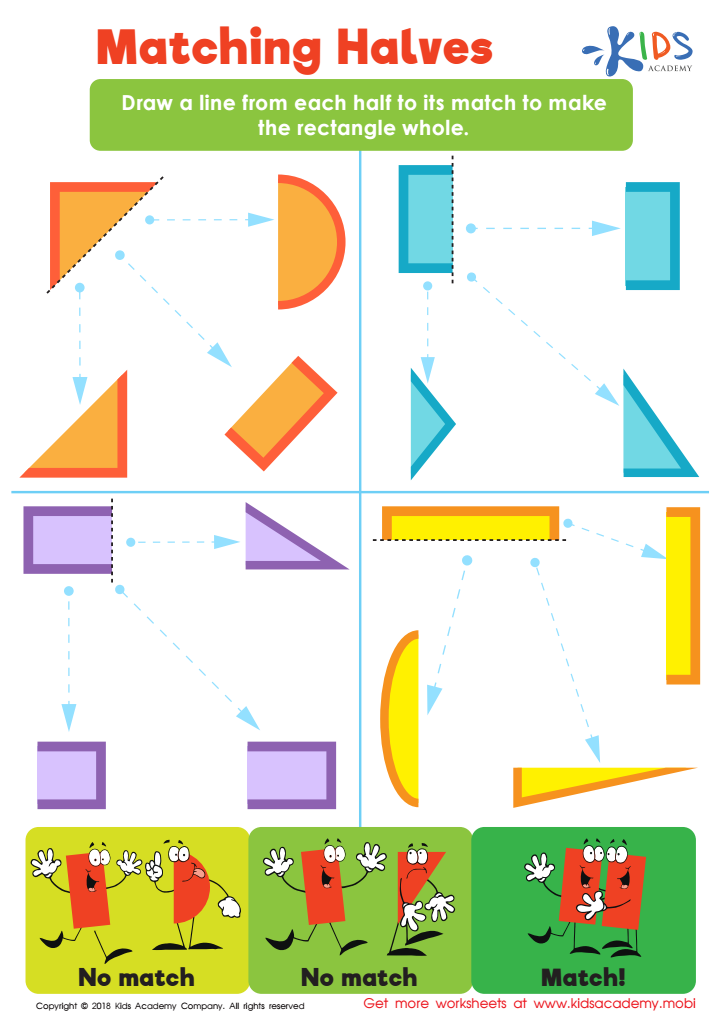
Matching Halves Worksheet
 Assign to My Students
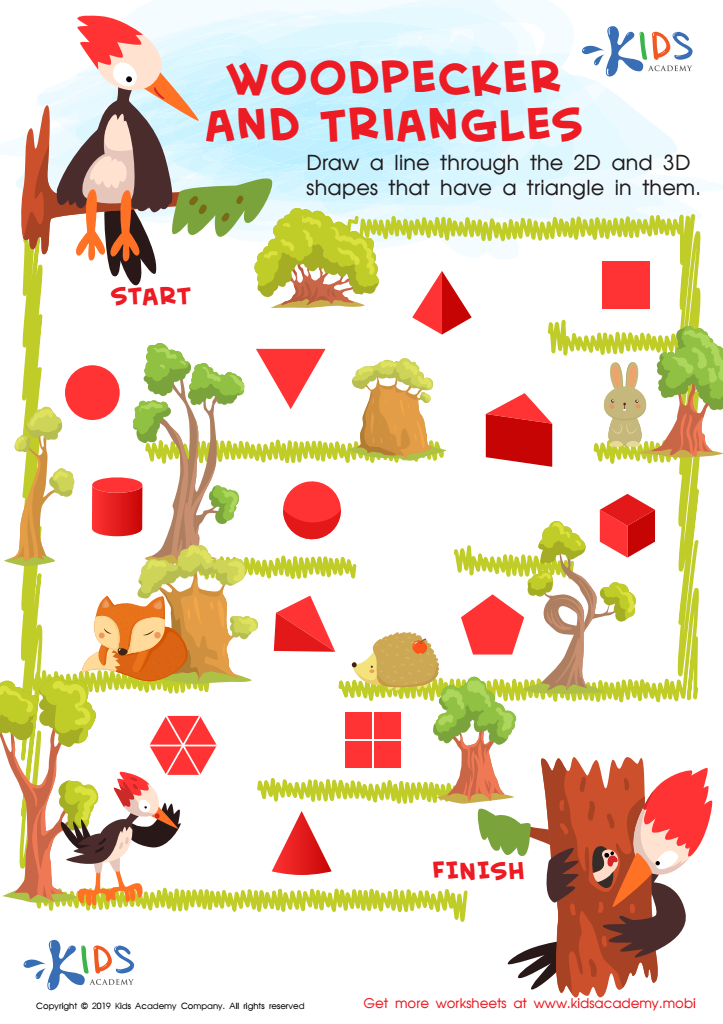
Woodpecker and Triangles Worksheet
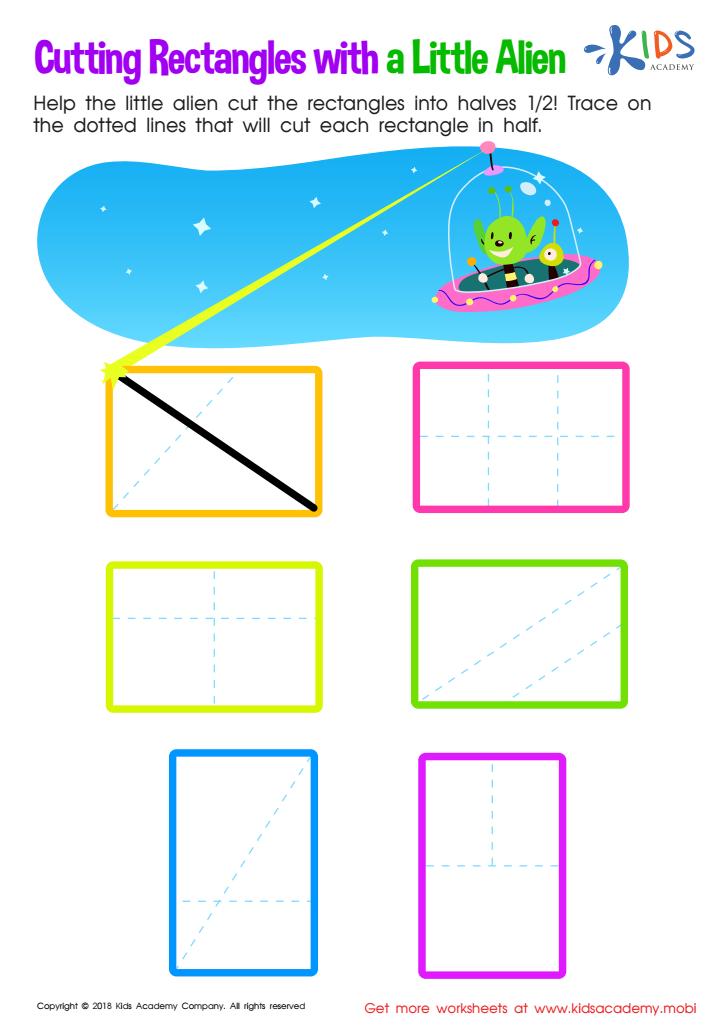
Cutting Rectangles with Alien Worksheet
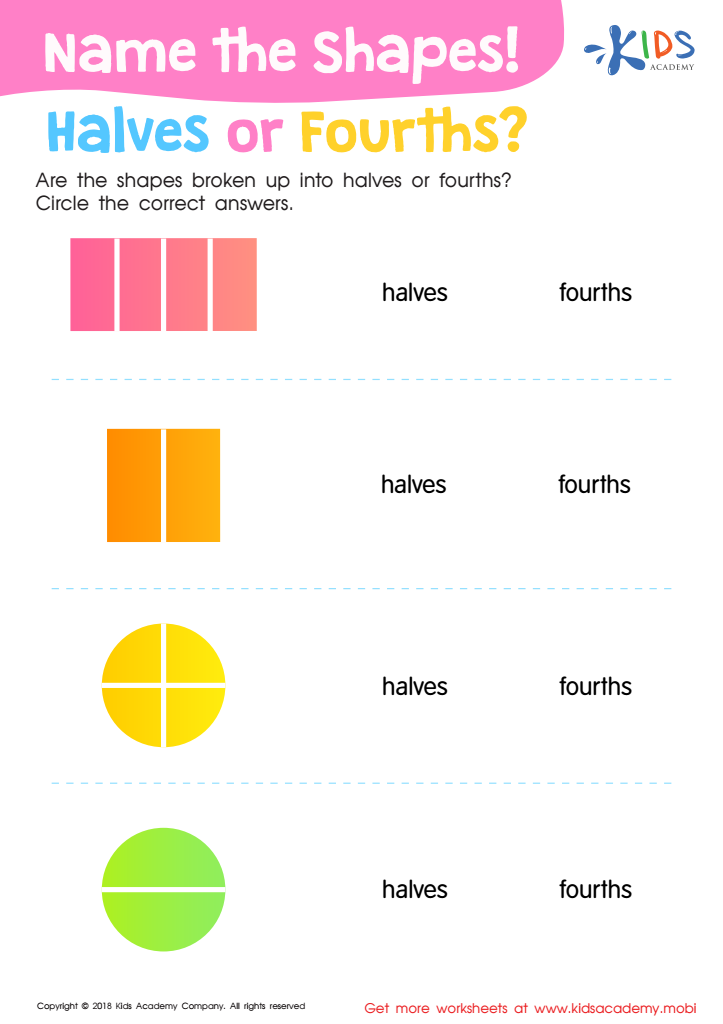
Name the Shapes Halves or Fourths? Worksheet
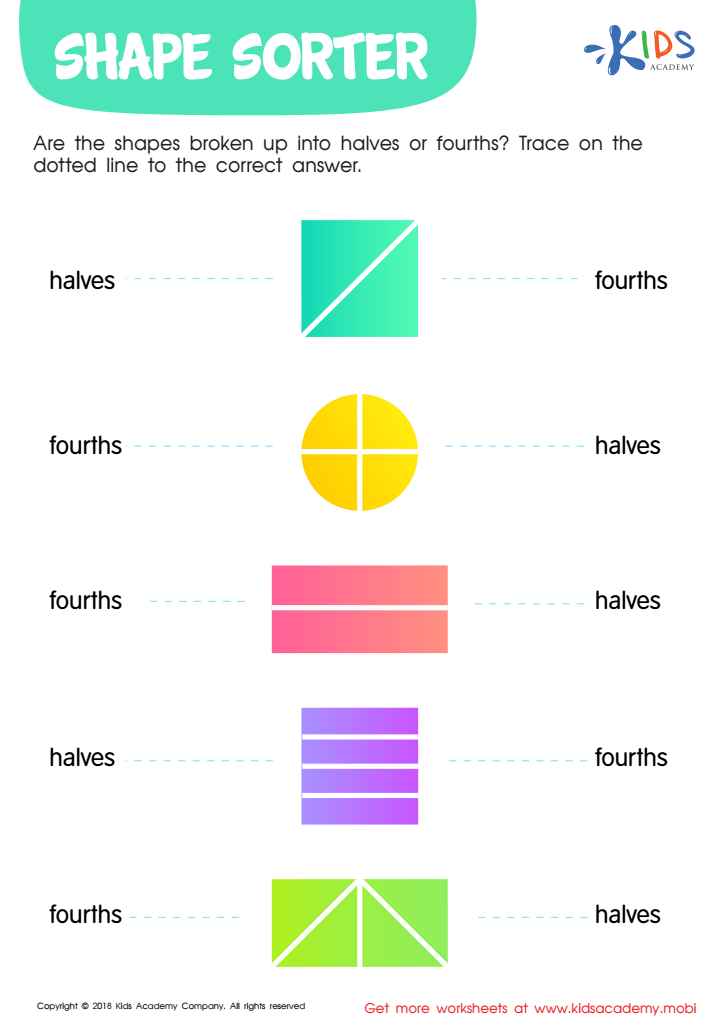
Shape Sorter Worksheet
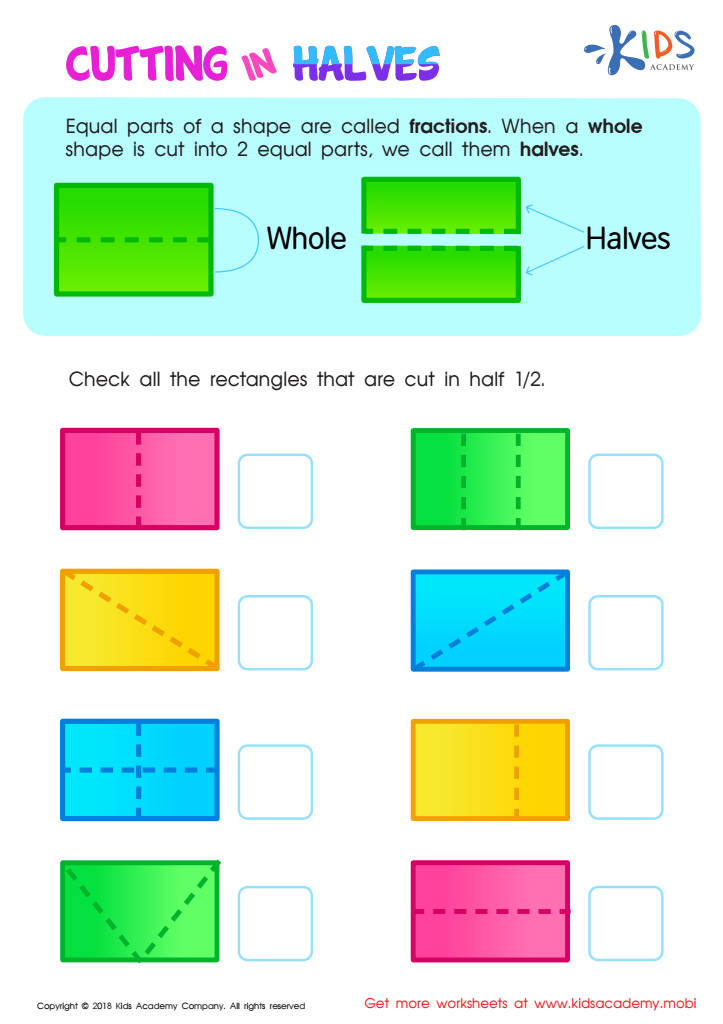
Cutting in Halves Worksheet
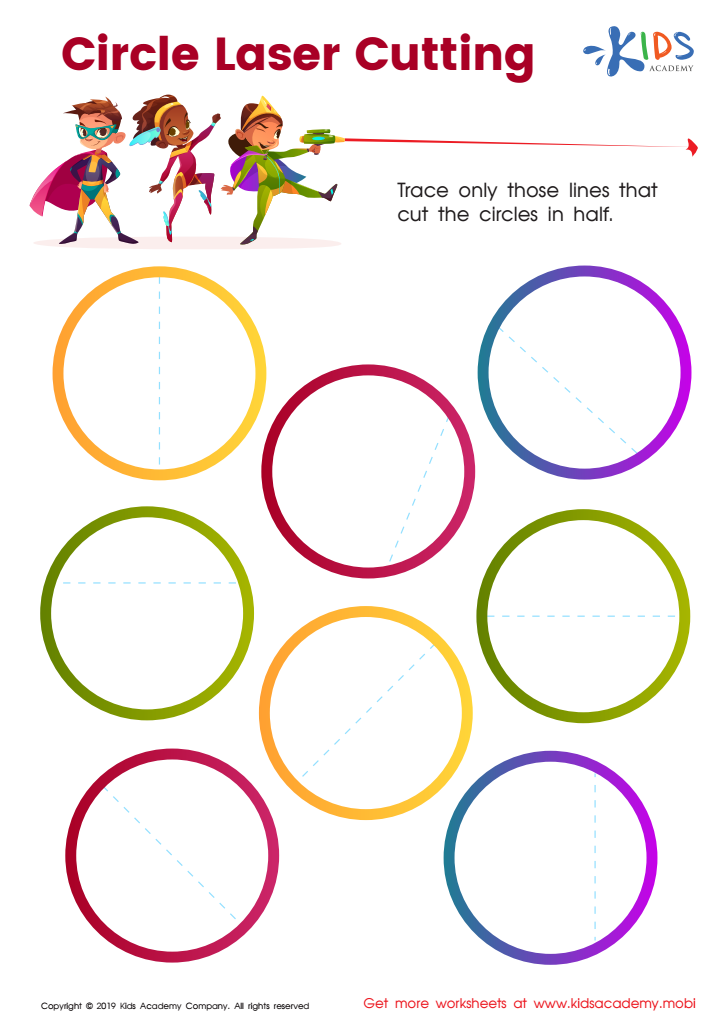
Circle Laser Cutting Worksheet
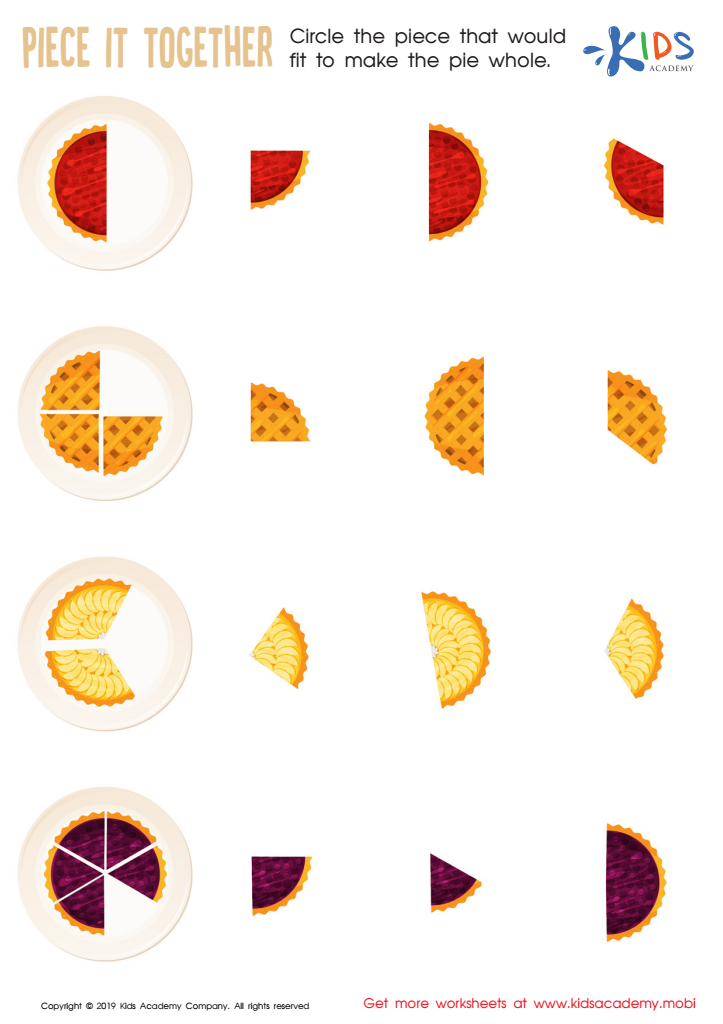
Piece it together Worksheet
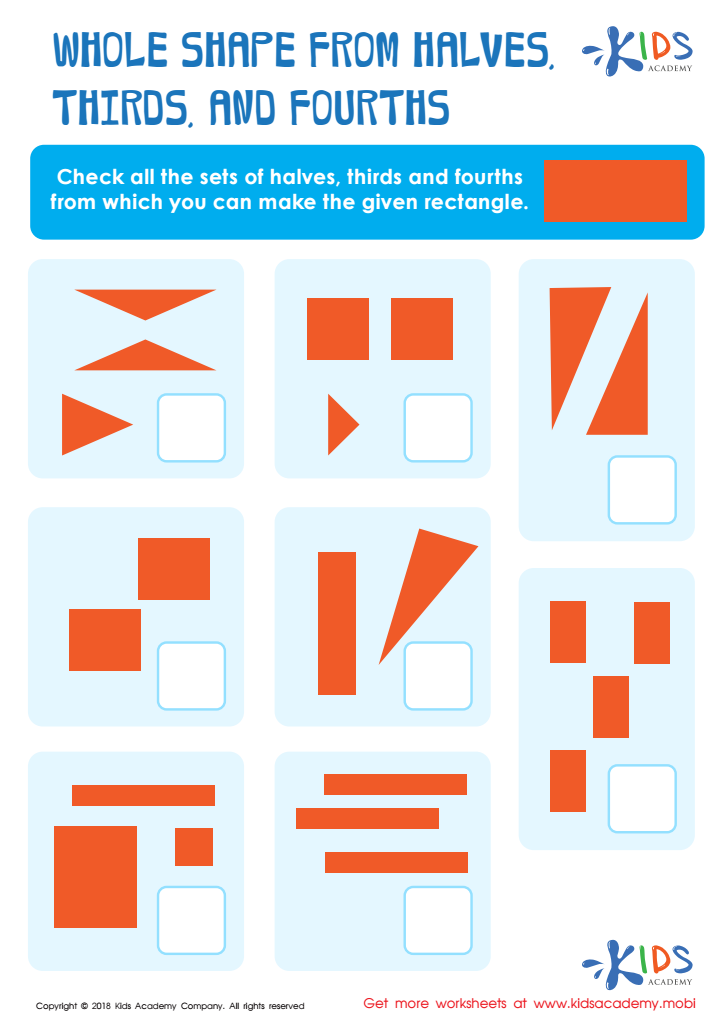
Whole Shape from Halves, Thirds and Fourths Worksheet








Shape recognition and understanding fractions of shapes are crucial concepts for children ages 7-8 that significantly impact their mathematical development. At this stage, children's cognitive abilities are expanding, enabling them to grasp more complex ideas. Recognizing shapes helps them categorize and describe their environment, promoting spatial awareness and critical thinking skills. When learners identify and manipulate various shapes, they enhance their geometry understanding, which lays the groundwork for later mathematical concepts.
Introducing fractions of shapes at this age deepens children's numerical comprehension. It teaches them how to interpret and represent parts of a whole, fostering an understanding of concepts like dividing, sharing, and proportionality. This foundational knowledge is vital not only for advanced mathematical skills but also for real-life situations, such as cooking or sharing items among friends.
Moreover, understanding shape fractions contributes to problem-solving skills. As students encounter challenges involving geometry and fractions, they learn to approach problems logically and creatively. For parents and teachers, emphasizing these concepts ensures that children build a strong mathematical foundation, cultivating confidence and enthusiasm for math as they progress in their education. Prioritizing shape recognition and fractions ultimately nurtures well-rounded, capable learners ready to tackle future math challenges.