Counting practice Geometry Worksheets for Ages 7-8
3 filtered results
-
From - To
Enhance your child's math skills with our engaging Counting Practice Geometry Worksheets, designed for ages 7-8. These expertly crafted worksheets combine counting and basic geometric principles to make learning fun and effective. Each sheet features a variety of activities that challenge young learners to count shapes, identify patterns, and develop spatial awareness. Perfect for reinforcing classroom lessons or additional practice at home, our worksheets are a brilliant resource to build a strong foundation in math. Inspire your child to excel in their math journey with our unique and interactive counting practice geometry program. Download and print today!
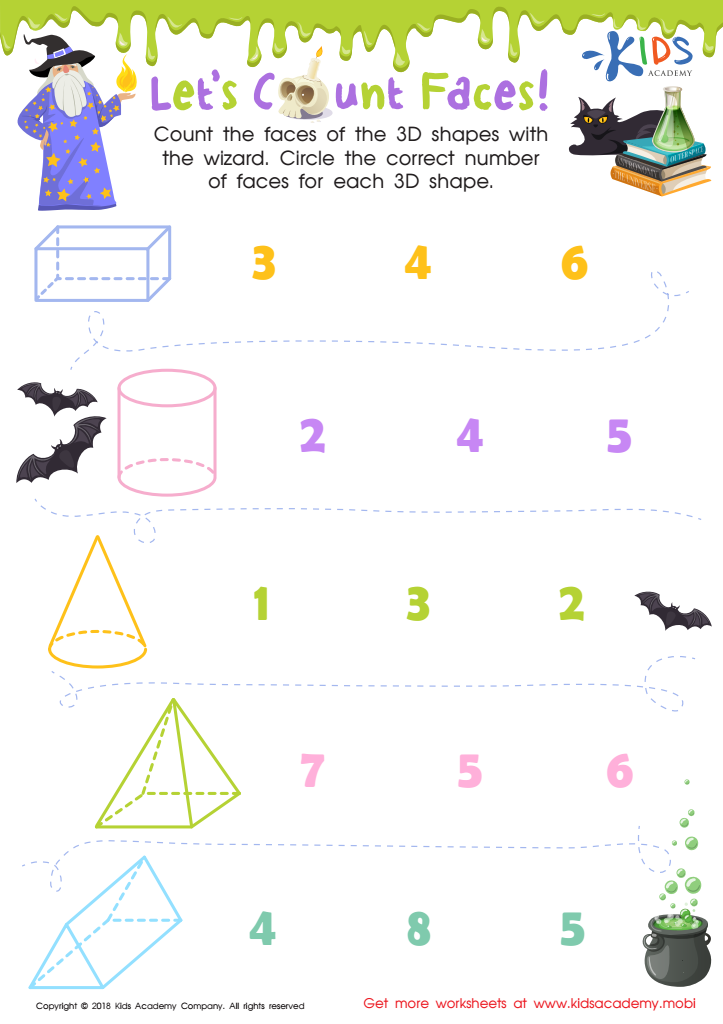
Let's Count Faces! Worksheet











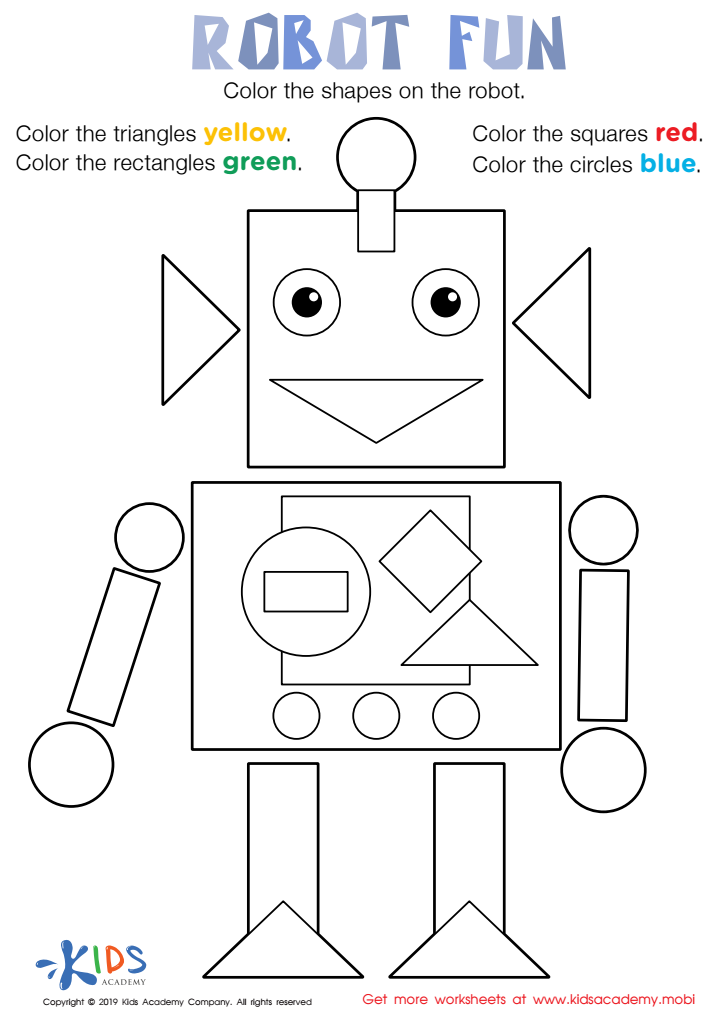
Robot Fun Worksheet
 Assign to My Students
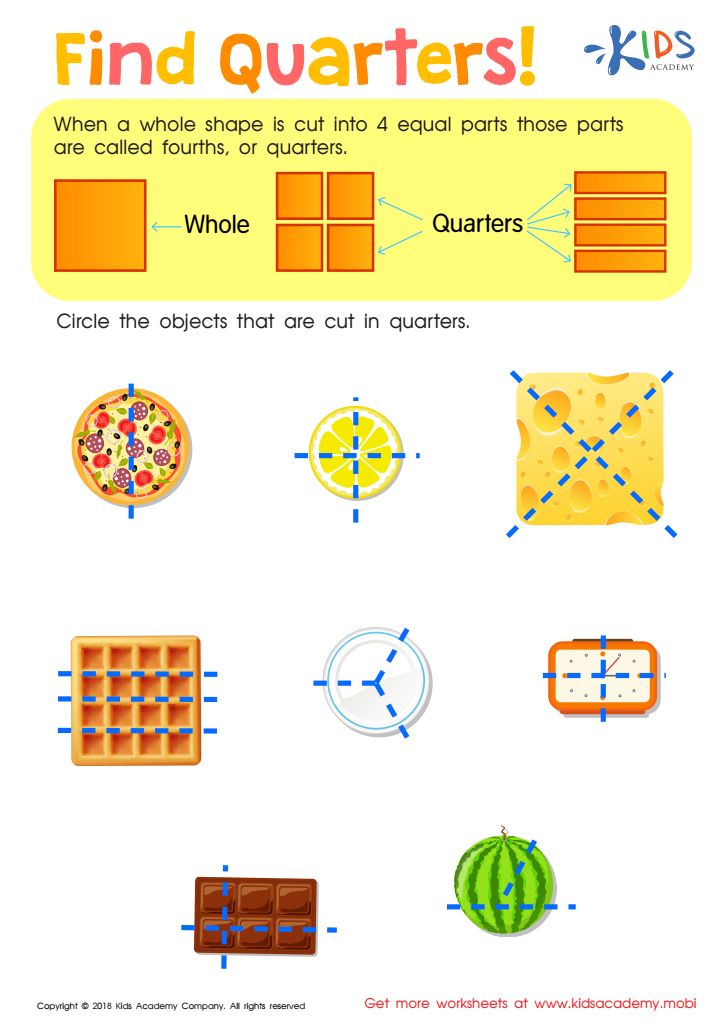
Find Quarters Worksheet








Counting and geometry are foundational elements in early childhood mathematics education, crucial for children aged 7-8. Parents and teachers should pay special attention to counting practice and basic geometry for several reasons.
First, counting is fundamentally tied to arithmetic skills. Children perfecting counting can seamlessly transition to addition, subtraction, and further mathematical operations. Counting fosters a deep understanding of number sequences, numerical order, and the relationship between numbers, which are critical in everyday life and future studies.
Geometry, at this developmental stage, introduces children to shapes, spatial relationships, and properties of space, which sharpen their visual and spatial awareness. Basic geometry involves recognizing, naming, and comparing shapes such as circles, squares, and triangles, providing a hands-on and tangible form of learning. It aids in developing fine motor skills through activities like drawing and manipulating geometric objects.
Both counting and geometry cultivate problem-solving skills and logical reasoning. Engaging activities and practical applications in daily life — like counting objects, organizing items by shape and size, or recognizing patterns in the environment — make learning meaningful and fun.
Supporting children in these areas ensures a solid foundation for more complex math concepts, stimulates cognitive development, and builds confidence in their abilities to grasp mathematical ideas. Encouraging consistent practice through fun and interactive approaches can vastly enrich their educational journey.








