Fraction comparison Geometry Worksheets for Ages 7-8
3 filtered results
-
From - To
Discover our engaging Fraction Comparison Geometry Worksheets designed specifically for children aged 7-8! These thoughtfully crafted worksheets provide a fun and interactive way to help young learners develop their understanding of fractions within geometric contexts. Students will practice comparing fractions through colorful visuals and relatable examples, enhancing their critical thinking and mathematical skills. Ideal for both classroom and home learning, these worksheets foster confidence and comprehension in young mathematicians as they master essential concepts. Empower your child’s learning journey with our easy-to-use resources that make mastering fractions enjoyable and effective! Start exploring now to unlock their potential in math!
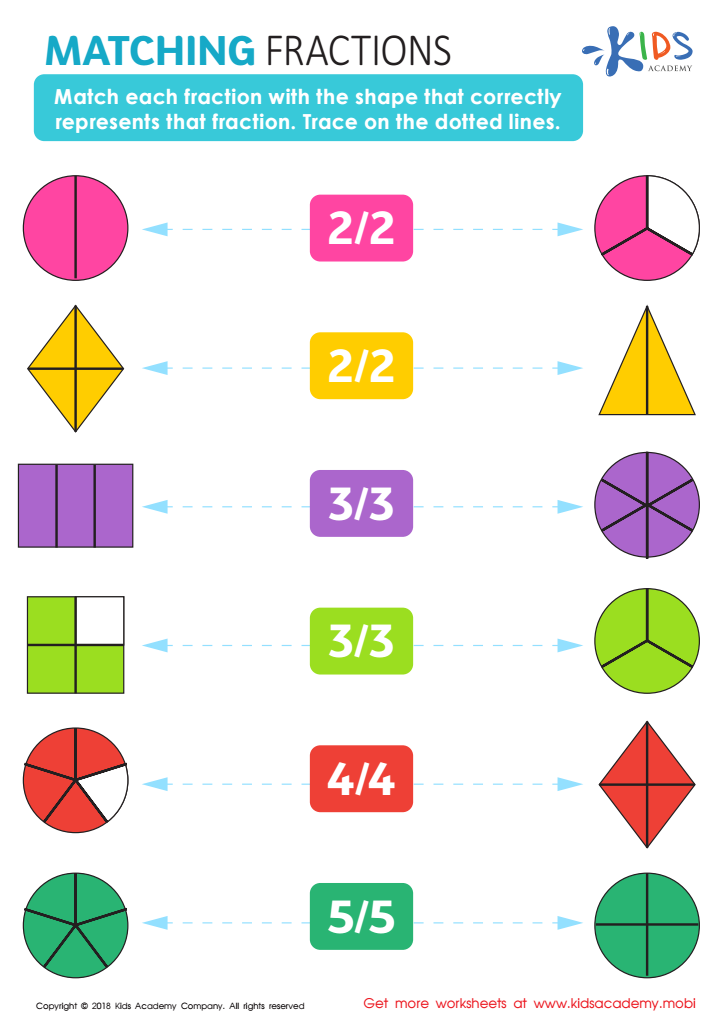
Matching Fractions Worksheet
 Assign to My Students











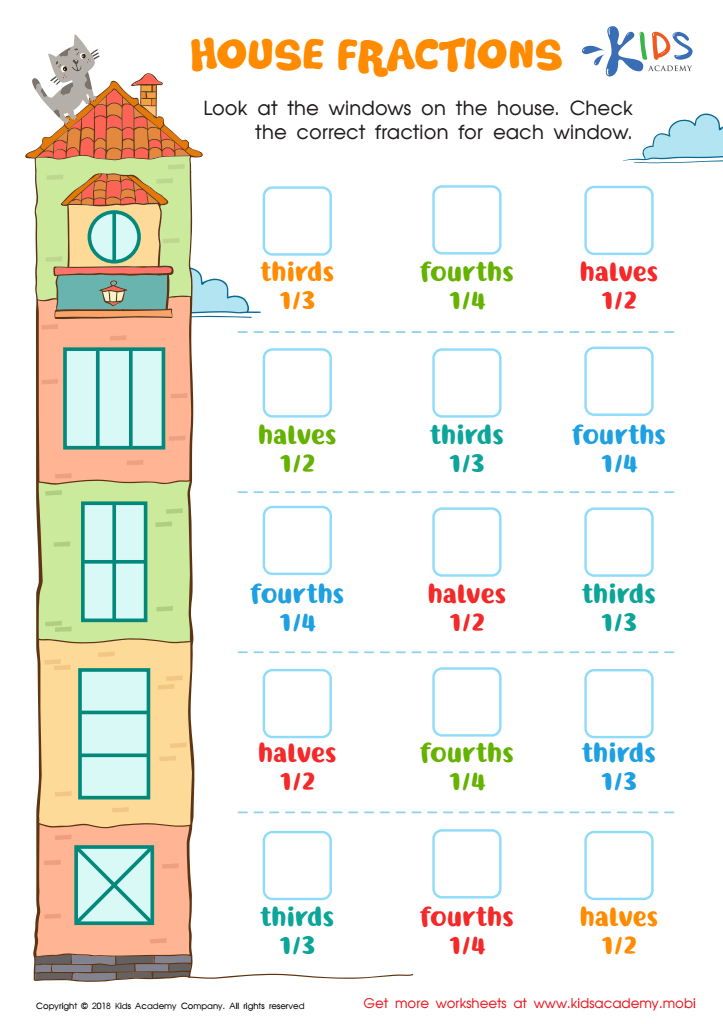
House Fractions Worksheet
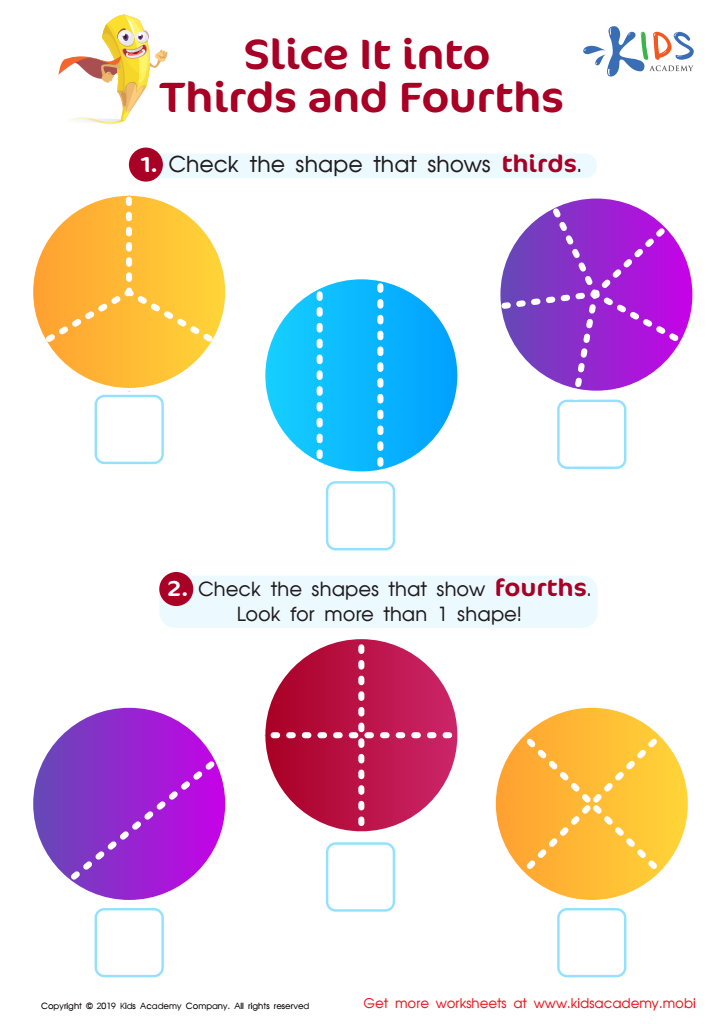
Slice in Thirds Fourths Worksheet








Understanding fraction comparison and geometry is crucial for children aged 7-8, as these concepts lay the foundation for future mathematical skills. At this age, children begin to grasp more abstract notions, and their ability to compare fractions helps them understand the relationships between different quantities. This skill is essential not only for performing calculations but also for real-world applications, such as measuring and dividing.
Geometry enhances spatial reasoning, which is vital for problem-solving in various areas of life. Teaching children about shapes, angles, and spatial relationships allows them to visualize and manipulate objects effectively. This is particularly important as they grow older and confront more complex math topics, like algebra and calculus, which often involve both fractions and geometric concepts.
Moreover, proficiency in these areas builds confidence and encourages a positive attitude toward math. Parents and teachers play a pivotal role in fostering this understanding through engaging lessons and practical activities. By prioritizing fraction comparison and geometry, adults can help children develop critical thinking skills and a strong mathematical foundation, ultimately contributing to their overall academic success and daily decision-making abilities. Nurturing these skills early on allows children to appreciate math as a valuable and enjoyable subject.








