Data analysis Graphs Worksheets for Ages 7-8
3 filtered results
-
From - To
Explore our engaging Data Analysis Graphs Worksheets designed for children ages 7-8! These worksheets provide an interactive way for young learners to understand and analyze data through fun and visually stimulating exercises. Your child will practice organizing information, interpreting graphs, and drawing conclusions—all while developing essential math skills. Featuring colorful charts, appealing visuals, and age-appropriate tasks, our resources foster critical thinking and enhance comprehension. Perfect for classroom use or homework assignments, these worksheets will empower your child to make sense of data in an enjoyable and accessible way. Dive into the world of data analysis and watch your child thrive!
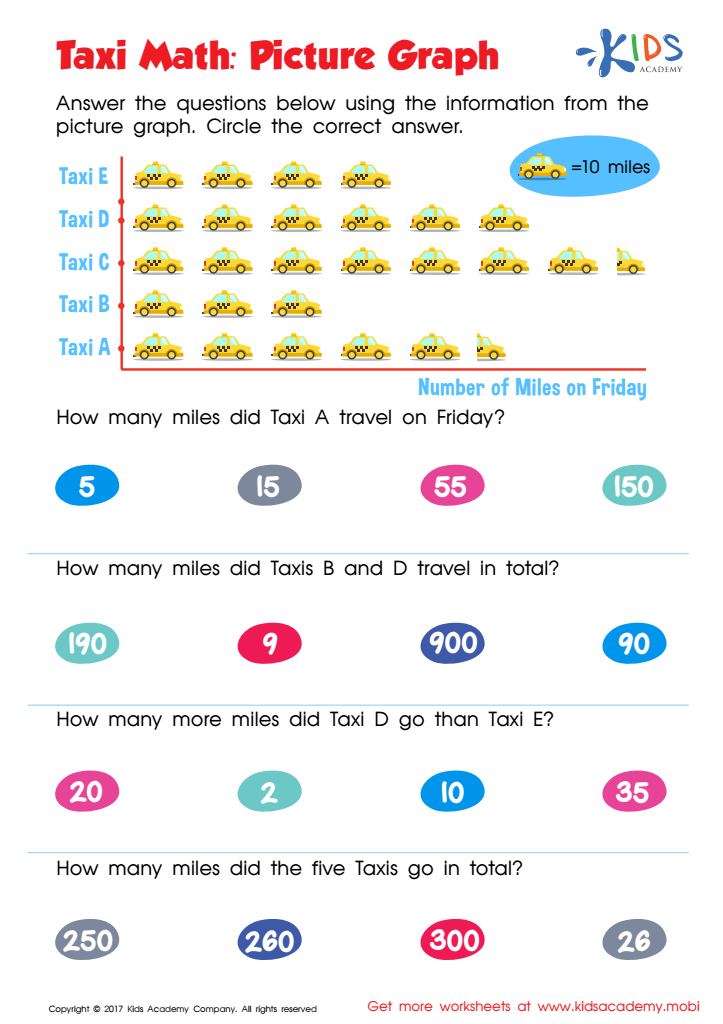
Taxi Math Worksheet
 Assign to My Students
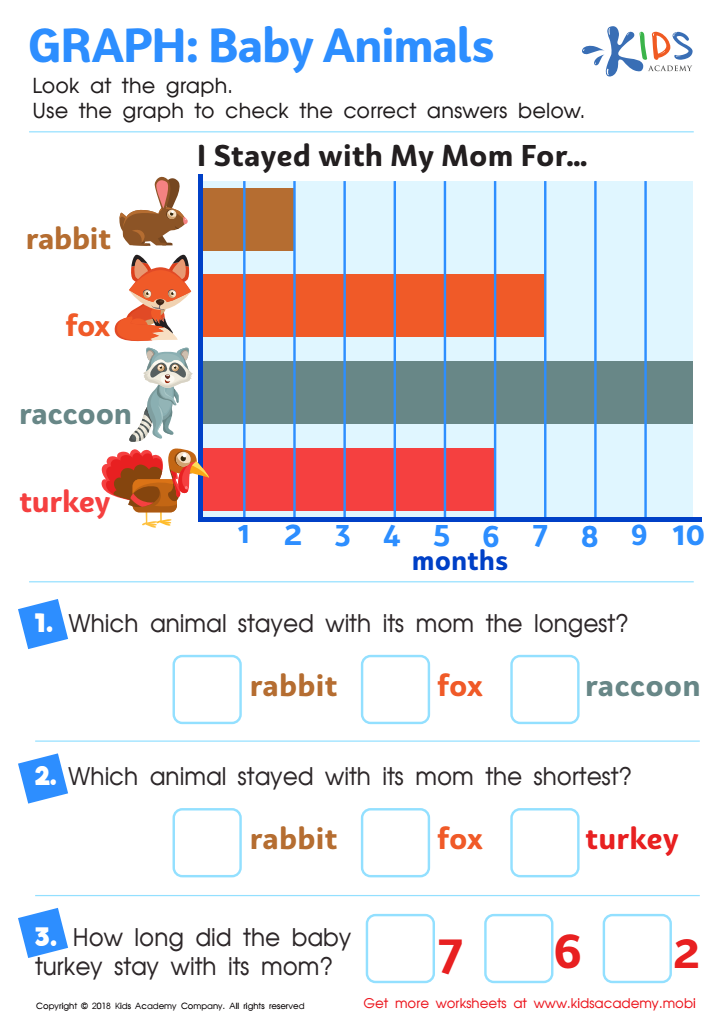
Graph: Baby Animals Worksheet
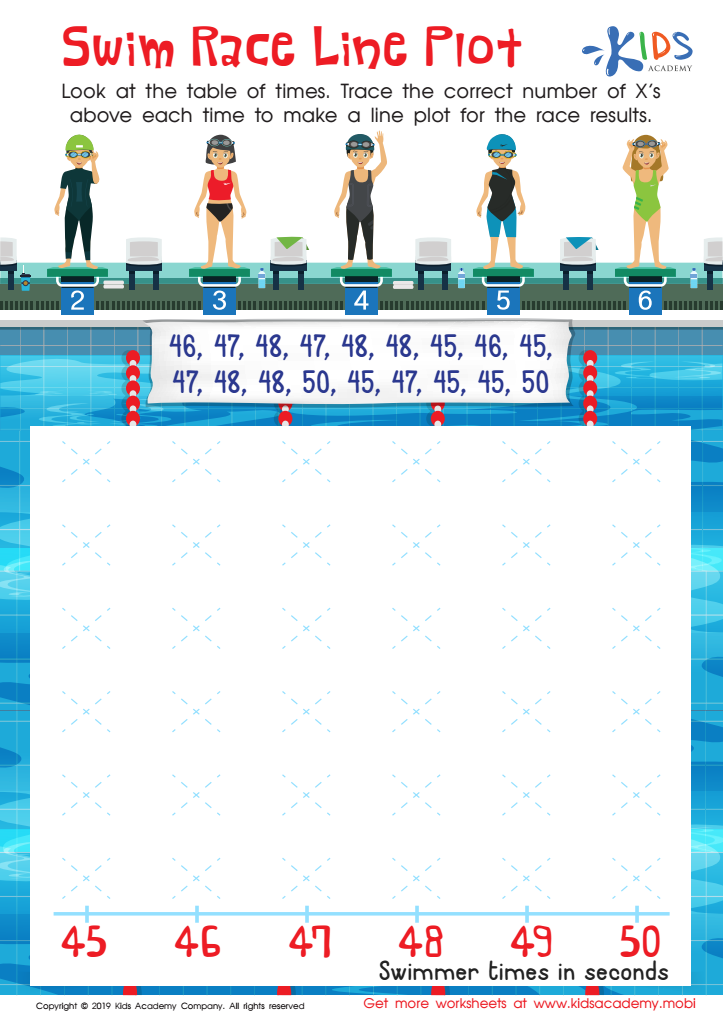
Swim Race Line Plot Worksheet








Parents and teachers should care about data analysis graphs for ages 7-8 because they provide critical foundational skills that support children's academic development and everyday decision-making. At this age, children are naturally curious and eager to understand the world around them. Introducing them to data analysis through graphs nurtures their analytical thinking, helping them to recognize patterns, relationships, and trends in information.
Graphs serve as visual aids that simplify complex data, making it accessible for young learners. When children engage with graphs, they enhance their mathematical skills, such as counting, comparing, and basic statistics, fostering a solid understanding of mathematics as they progress in school. Furthermore, interpreting graphs encourages critical thinking; children learn to question data and draw informed conclusions.
Beyond academics, the ability to analyze data is a crucial life skill. From understanding sports statistics to making choices about purchases, children equipped with these skills can become informed decision-makers. Teachers and parents can collaborate to create engaging, hands-on activities involving data collection and graphing, which supports these developments. Hence, by embracing data analysis graphs, they are not only enhancing academic performance but also preparing children for informed participation in an increasingly data-driven world.








