Mental math skills Numbers Worksheets for Ages 7-8
5 filtered results
-
From - To
Enhance your child's numerical fluency with our "Mental Math Skills Numbers Worksheets" for ages 7-8. Perfectly designed to boost mathematical confidence, these engaging worksheets cover addition, subtraction, multiplication, and division through fun exercises. Each worksheet provides practice problems that encourage quick thinking and problem-solving, preparing children for complex math concepts. Developed by early education experts, these printable resources support the development of key mental math skills, making learning enjoyable and effective. Visit Kids Academy for high-quality, teacher-approved materials that ensure your child's success in mathematics. Discover a world of love for numbers today!
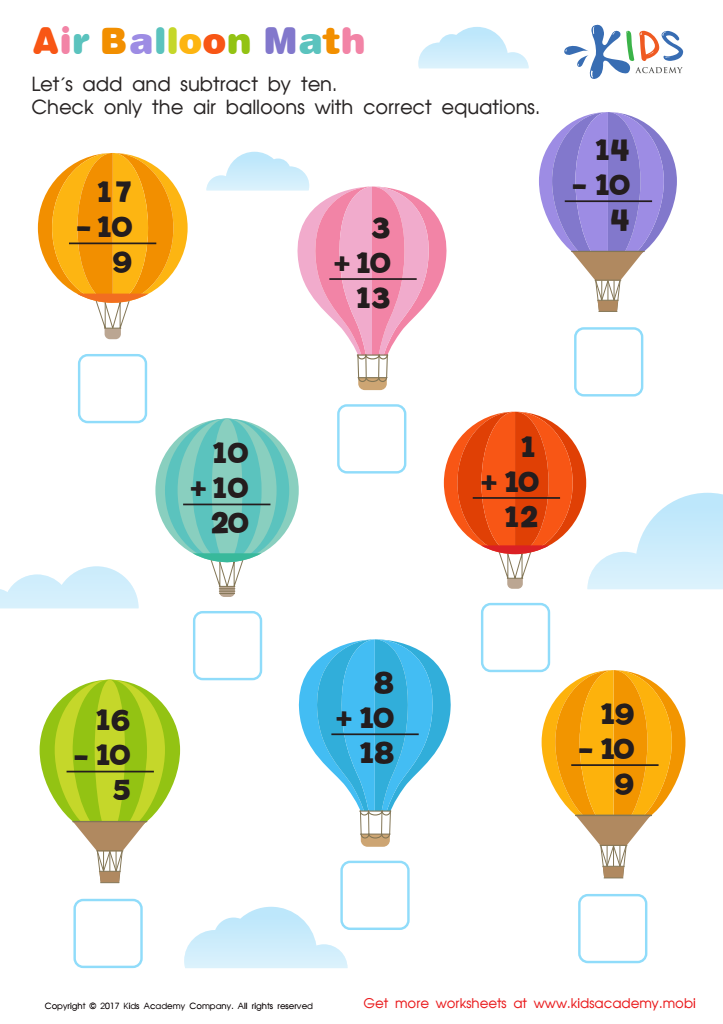
Air Balloon Math Worksheet
 Assign to My Students
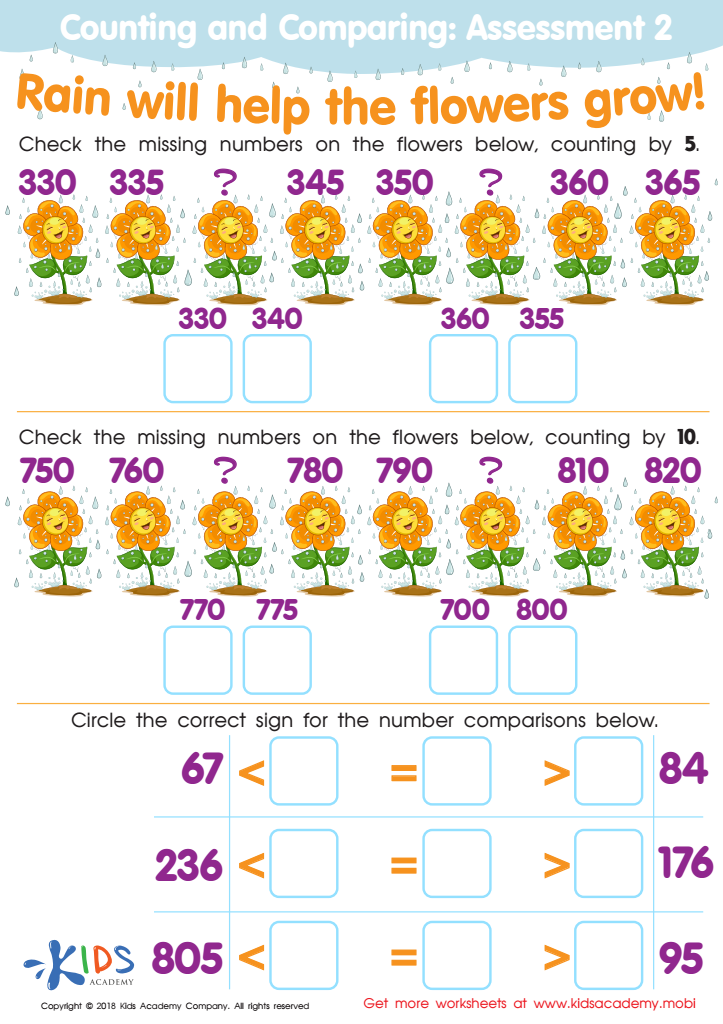
Counting and Comparing: Assessment 2 Worksheet
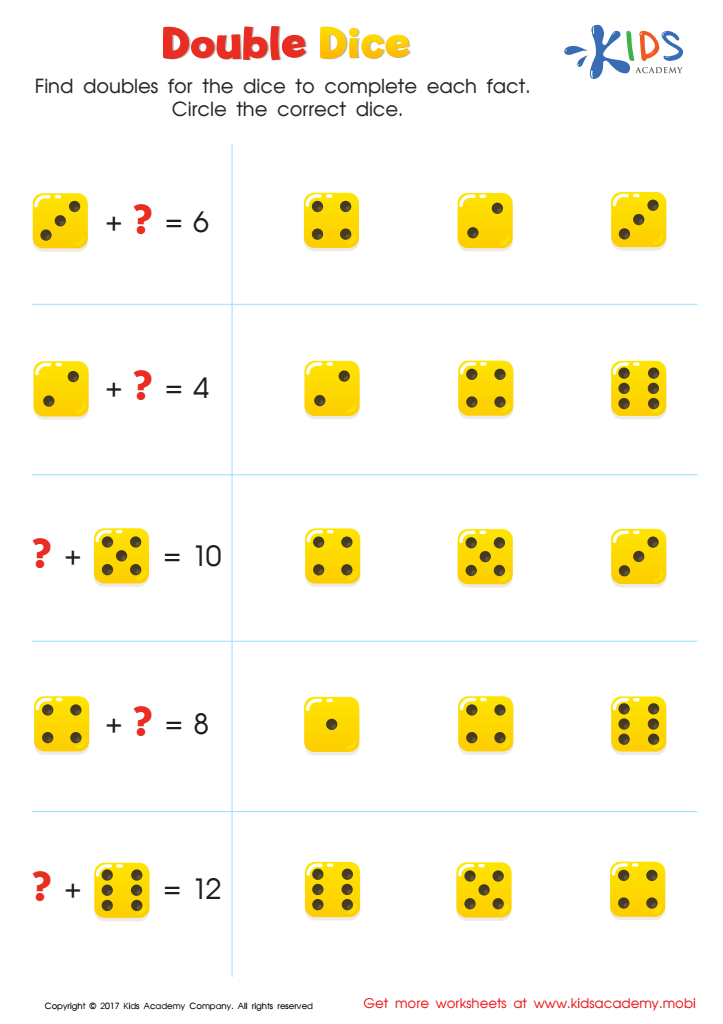
Addition Facts: Double Dice Worksheet
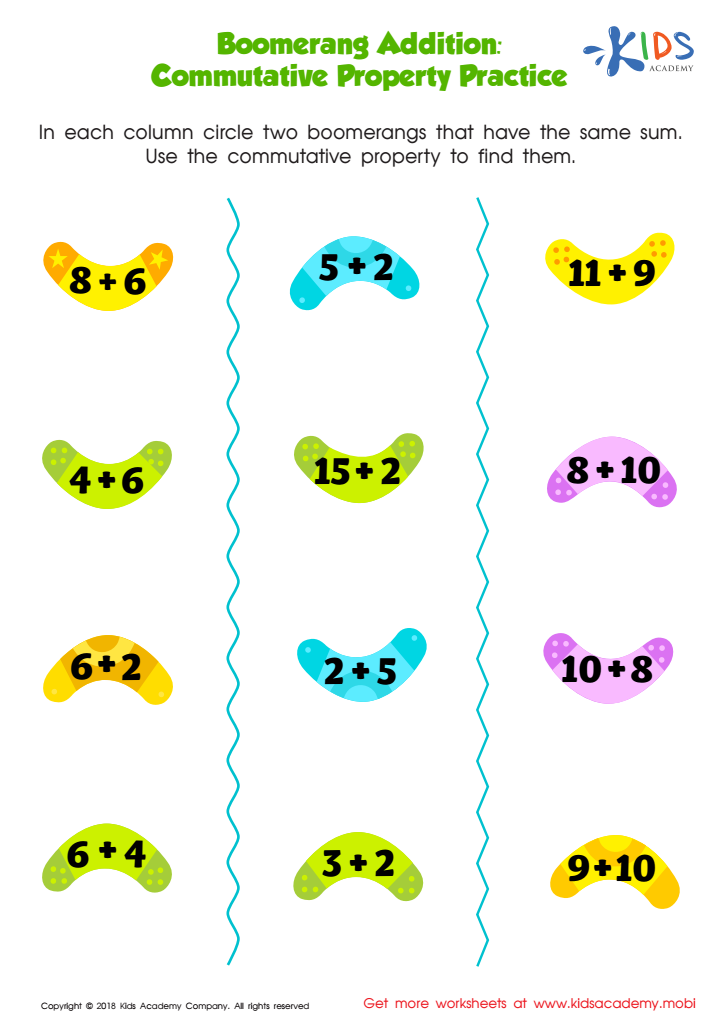
Boomerang Addition Worksheet
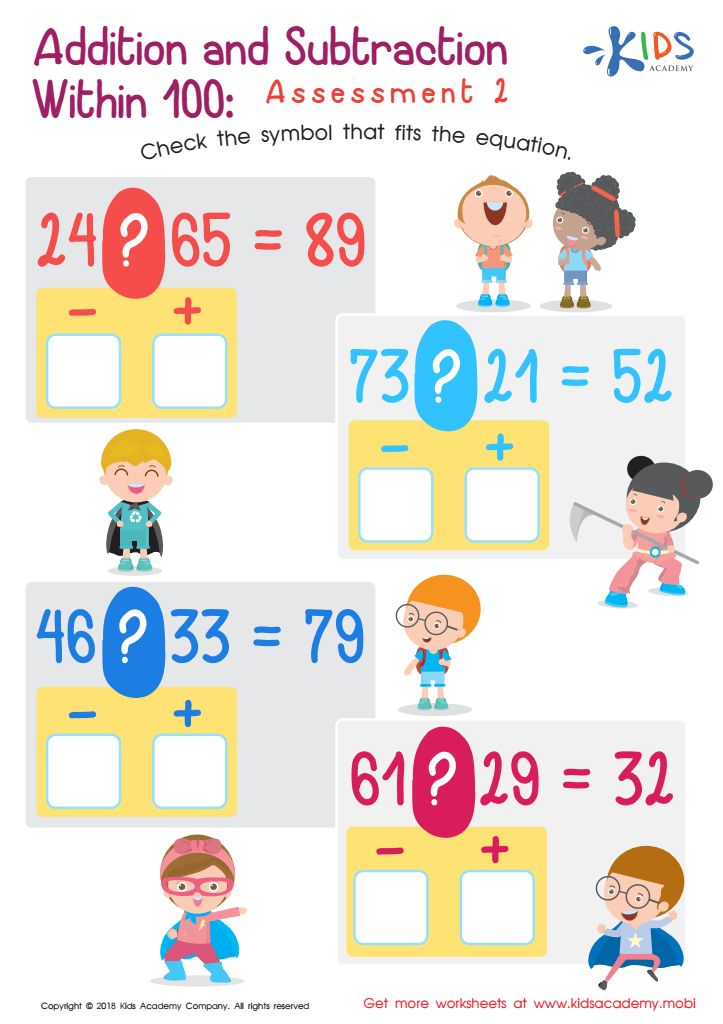
Addition and Subtraction Within 1: Assessment 2 Worksheet








Parents and teachers should care about mental math skills for children aged 7-8 because these skills form the foundation for future mathematical learning and overall cognitive development. At this age, children’s brains are highly receptive to new information and techniques, making it the perfect time to develop a strong number sense. Mental math helps children perform basic arithmetic operations quickly and accurately without relying on calculators or paper, fostering independence and confidence in their mathematical abilities.
Moreover, practicing mental math enhances critical thinking and problem-solving skills. As children learn to manipulate numbers in their heads, they develop a deeper understanding of mathematical concepts, patterns, and relationships. This ability to visualize and mentally organize information can lead to better performance in higher-level math and other subjects where logical reasoning is required.
In addition, strong mental math skills are highly practical for everyday activities such as telling time, making change, and measuring ingredients, which are crucial for real-world problem-solving. When parents and teachers prioritize mental math, they not only enhance a child's academic success but also equip them with lifelong skills necessary for daily decision-making and critical thinking. Encouraging and developing mental math thus opens doors to a world of opportunities, making it an essential component of early education.








