
Enhance counting skills Math Worksheets for Ages 7-8
13 filtered results
Difficulty Level
Grade
Age
-
From - To
Subject
Activity
Standards
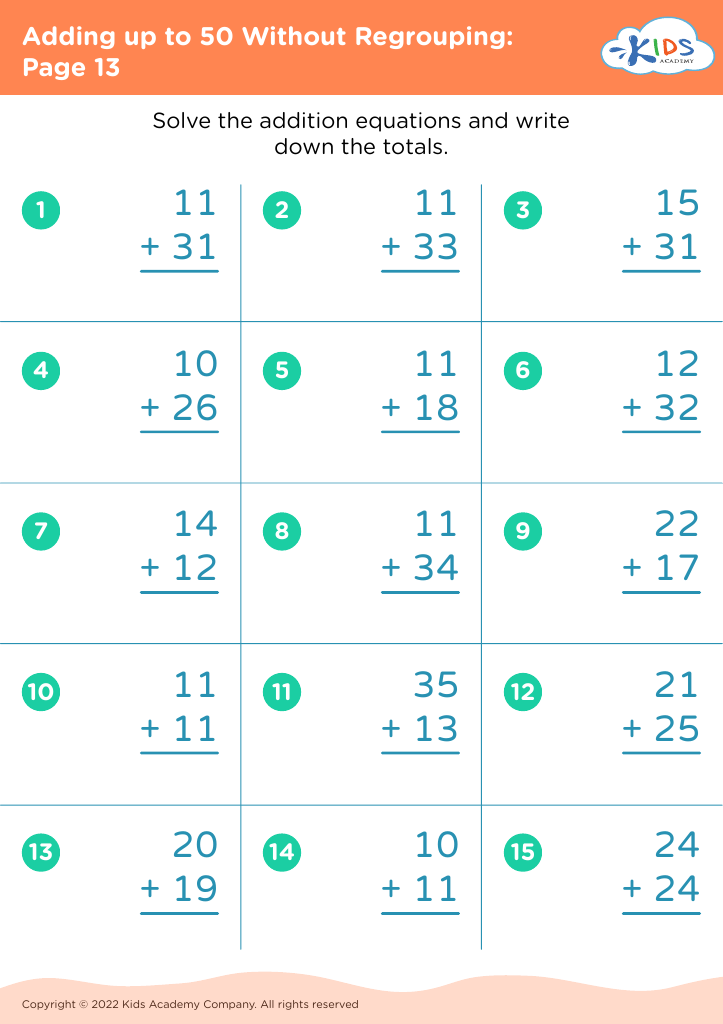
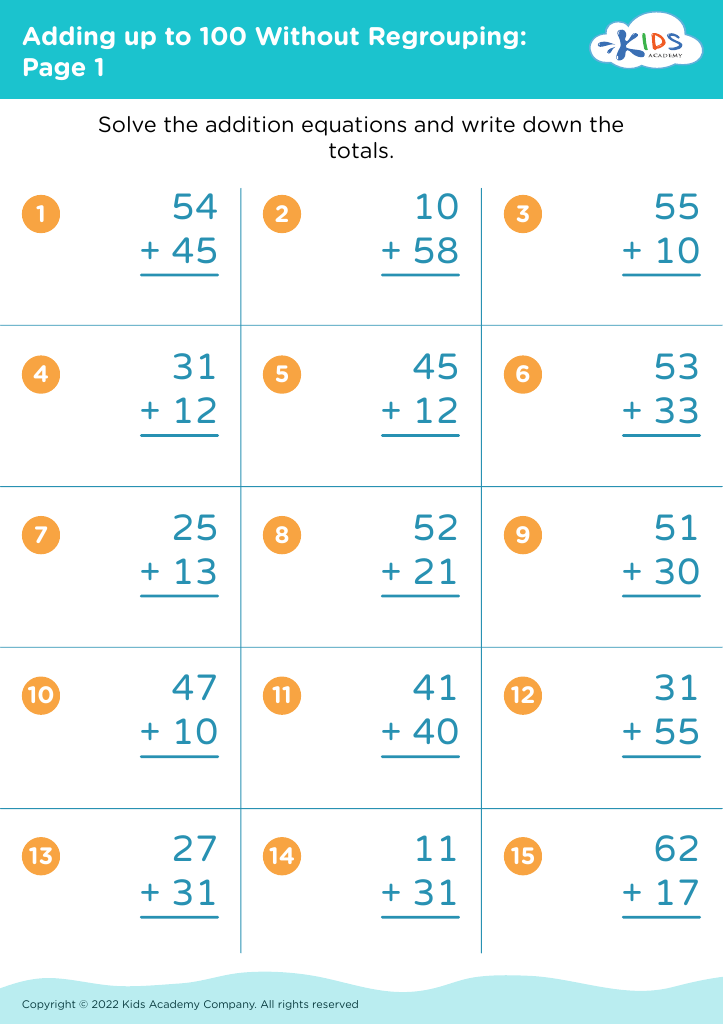
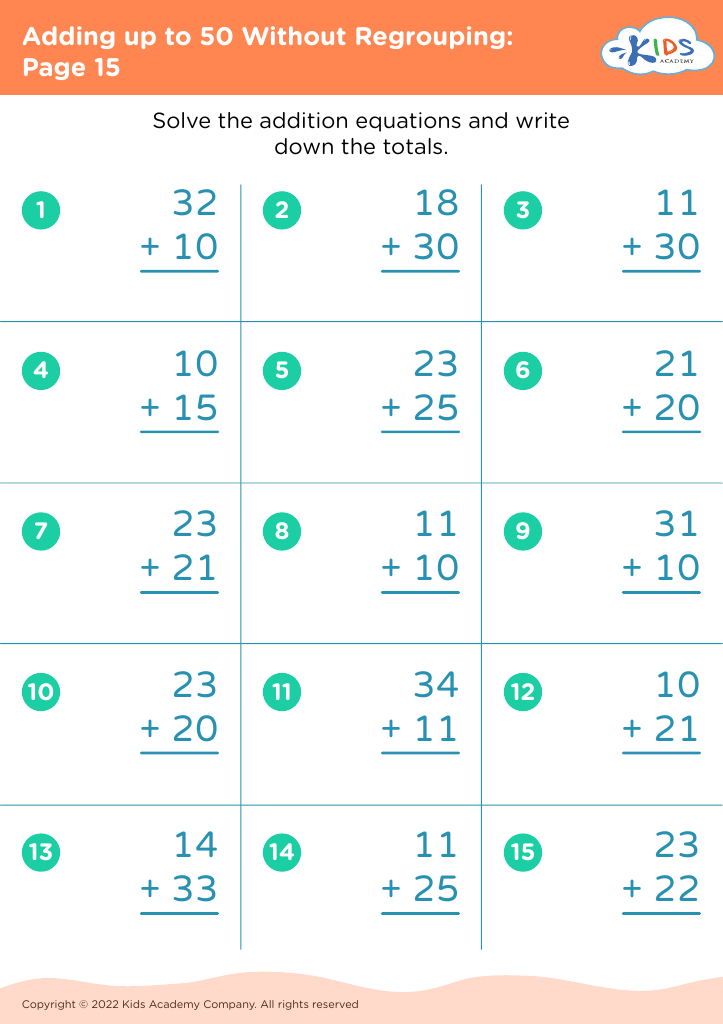
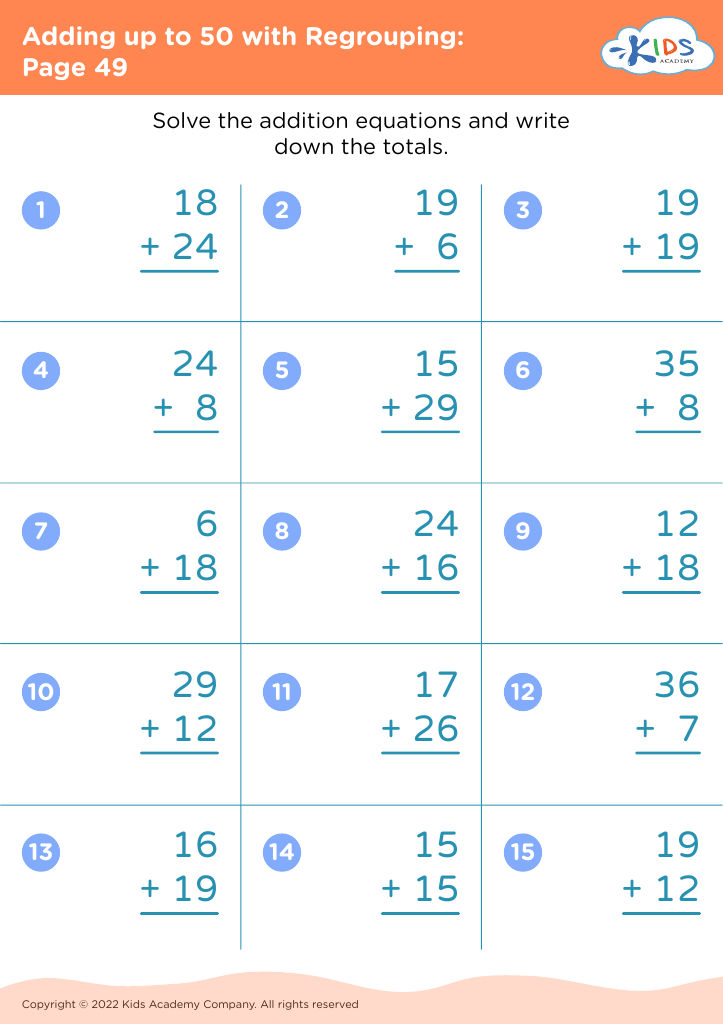
Unlock your child's mathematical potential with our "Enhance Counting Skills" Math Worksheets designed specifically for ages 7-8! These engaging, printable worksheets are perfect for helping young learners practice and master counting concepts. Featuring a variety of interactive activities that reinforce essential skills such as number recognition, sequencing, and addition, our resources make learning fun and effective. Designed for use at home or in the classroom, these worksheets encourage hands-on practice while building confidence in essential math concepts. Give your child the tools they need to succeed and improve their counting skills today with our thoughtfully designed math resources!
Favorites
With answer key
Interactive
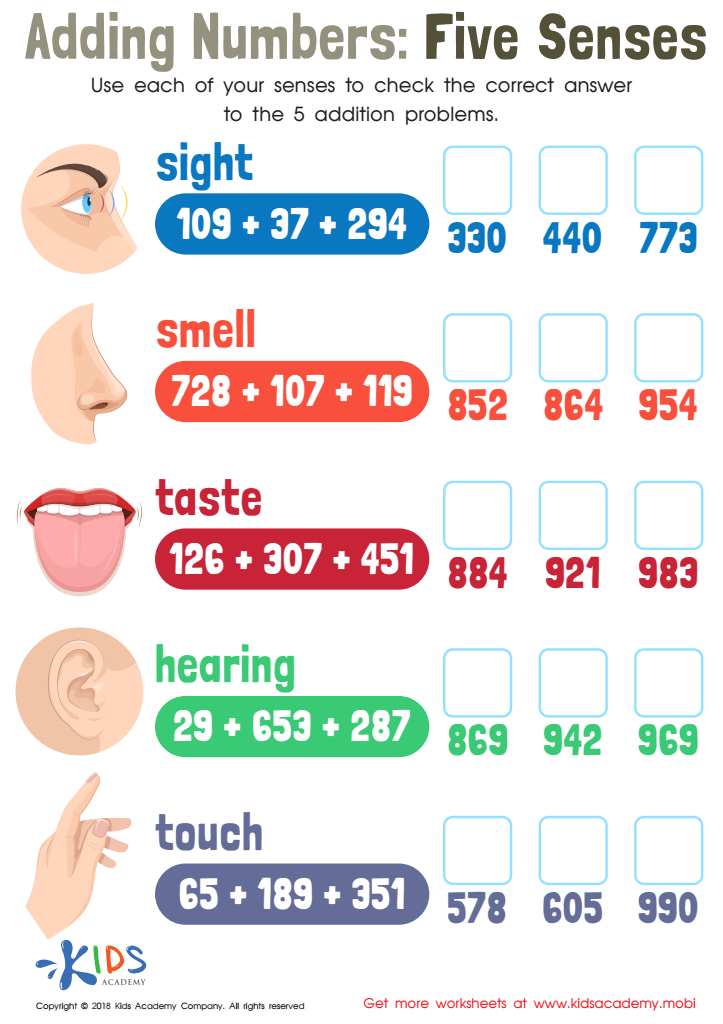
Adding Numbers: Five Senses Worksheet
Help your child identify the five senses on their body: eye, nose, tongue, ear, and skin. Explain that they're used for seeing, smelling, tasting, hearing and touching. Then, have them solve the five addition problems in the worksheet and check the correct answers.
 Assign to My Students
Adding Numbers: Five Senses Worksheet
Worksheet
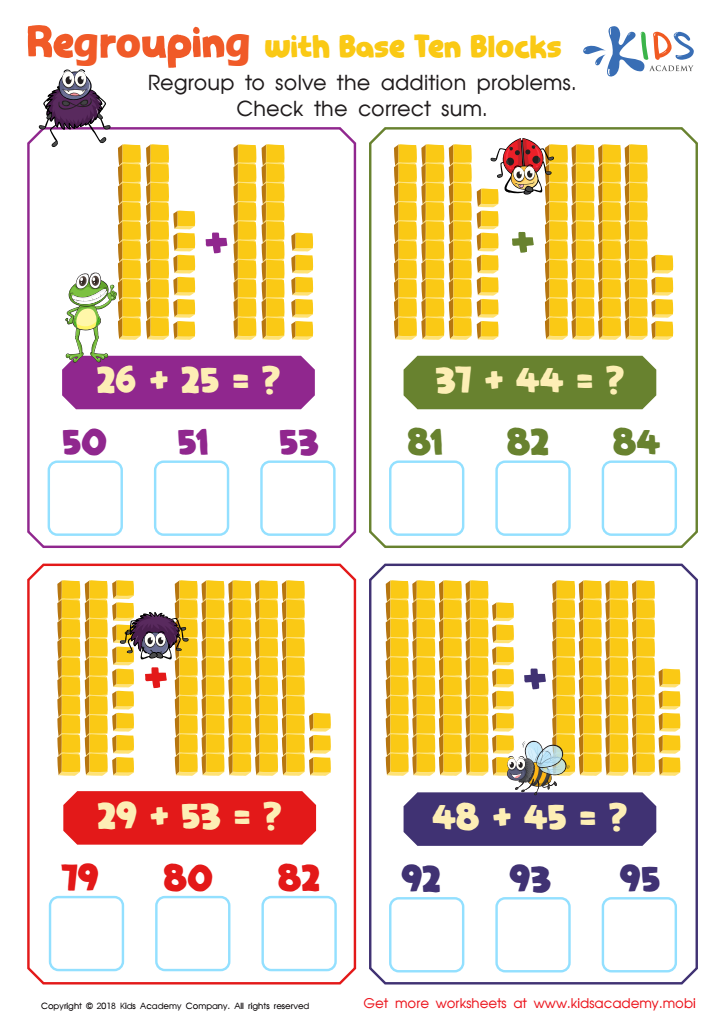
Regrouping With Base Ten Blocks Worksheet
Challenge your child to regroup the base ten blocks and solve the four equations in this worksheet. This exercise requires counting and adding up in base ten. When they are done, help them check the correct sum.
Regrouping With Base Ten Blocks Worksheet
Worksheet
Join Kids Academy for Free
Who is primarily going to use this learning content?








Parents and teachers should prioritize enhancing counting skills for children ages 7-8 because this foundational skill significantly impacts overall mathematical fluency. At this age, children are transitioning from concrete understanding to more abstract mathematical concepts. Mastering counting lays the groundwork for future learning, including addition, subtraction, and even early multiplication and division.
Strong counting skills also enhance a child's problem-solving abilities. Children who count confidently can tackle word problems, engage in budgeting, and manage time effectively, nurturing critical life skills. Furthermore, as counting often involves recognizing patterns and understanding numerical relationships, it fosters logical thinking—key for STEM-related subjects.
Moreover, counting exercises promote cognitive development and improve attention spans and memory. Engaging in fun counting activities allows children to remain motivated and curious about math, which is crucial for counteracting any math-anxiety they may experience. Parental and teacher involvement in these activities can enhance student confidence and reinforce learning.
Finally, when counting skills improve, students are more likely to enjoy math and approach it with a positive mindset, setting a precedent for lifelong learning. Therefore, prioritizing counting skills is not just about basic mathematics—it’s about equipping children with the tools they need for future academic and everyday success.








