Enhance fine motor skills Math Worksheets for Ages 7-8
3 filtered results
-
From - To
Welcome to our "Enhance Fine Motor Skills Math Worksheets for Ages 7-8"! These engaging and educational worksheets are specially designed to help young learners develop essential fine motor skills while mastering math concepts. Featuring fun exercises that combine counting, measuring, and drawing, our resources encourage children to practice hand-eye coordination and dexterity. These worksheets are perfect for both classroom learning and at-home practice, making math enjoyable and interactive. Foster your child’s confidence in math and motor skills with our thoughtfully crafted materials, ensuring they are well-prepared for their academic journey ahead. Explore the transformative power of hands-on learning today!
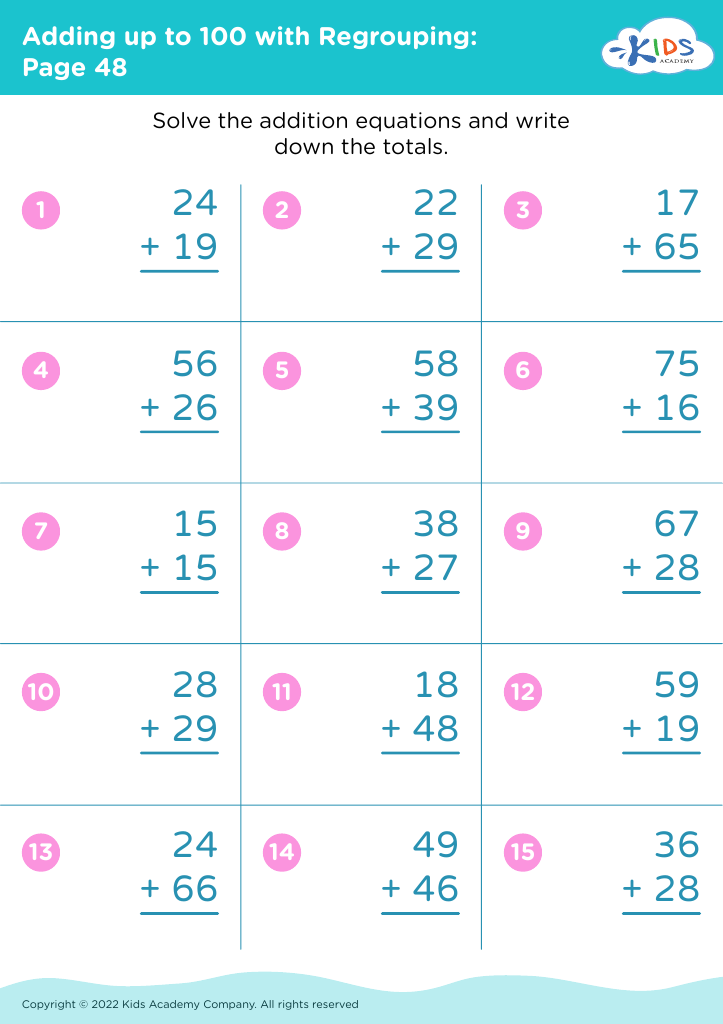
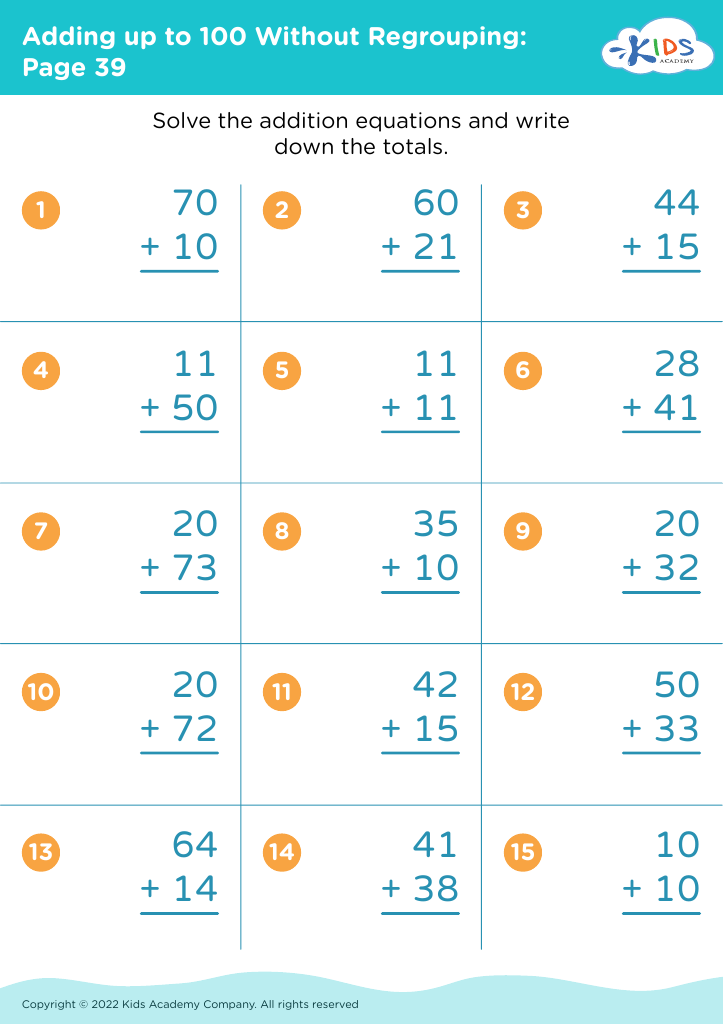
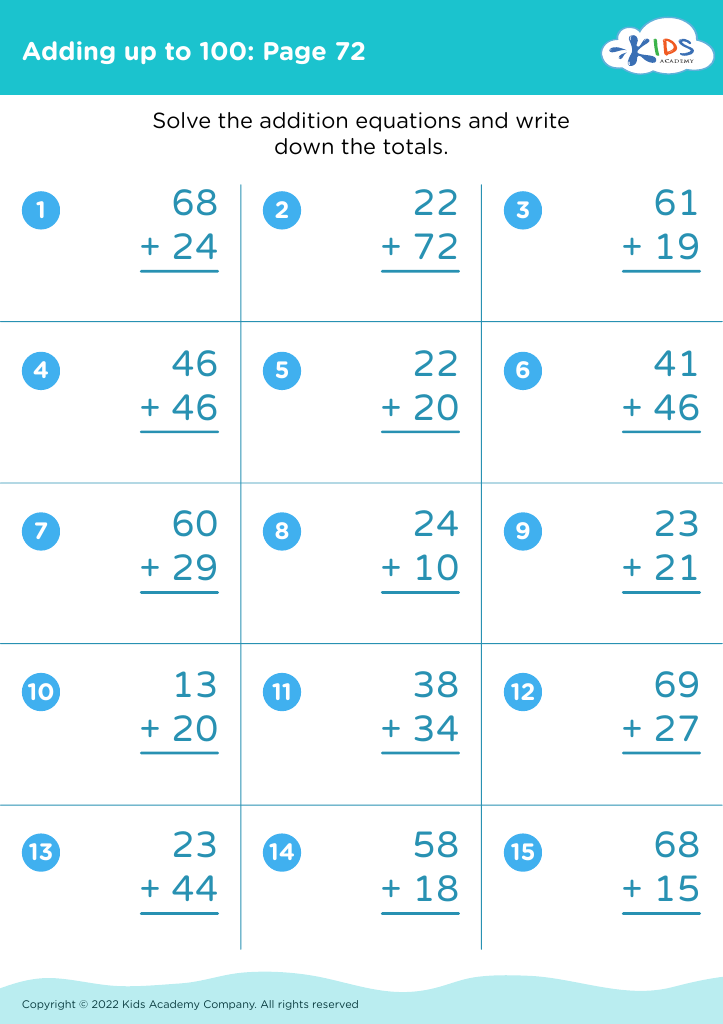






Enhancing fine motor skills in children aged 7-8 is crucial, particularly as these skills directly impact their mathematical learning and overall academic success. At this developmental stage, children's ability to manipulate objects with precision is rapidly evolving. Fine motor skills enable them to perform essential tasks such as writing numerals, measuring using rulers, and manipulating tools like scissors or calculators essential for math activities.
When fine motor skills are prioritized, children gain the confidence to engage with math concepts more effectively, as they can execute tasks requiring dexterity and coordination. This supports not just mathematical computations but also strengthens logical thinking and problem-solving skills essential for grasping advanced concepts like geometry and fractions.
Furthermore, the integration of fine motor skill development within math activities—like building shapes with blocks or drawing graphs—makes learning more engaging and enjoyable. This creative approach fosters a positive attitude towards math, reinforcing the idea that math is not just about numbers, but also about using our hands and minds together.
By nurturing fine motor skills, parents and teachers help build a strong foundation for children's mathematical understanding, contributing to their long-term success not only in academics but also in everyday problem-solving skills. Therefore, investing in fine motor development is a vital and worthwhile effort.








