Fine motor skills (writing) Math Worksheets for Ages 7-8
9 filtered results
-
From - To
Enhance your child's fine motor skills and math proficiency with our meticulously designed writing math worksheets for ages 7-8. These engaging resources from Kids Academy seamlessly blend handwriting practice with fundamental math exercises, ensuring a holistic development experience. By focusing on proper pencil grip, hand-eye coordination, and precise movements, these worksheets help improve both writing and arithmetic skills. Ideal for young learners, each activity is crafted to boost confidence and promote a love for learning. Prepare your child for academic success with our fun, educational, and effective fine motor skills math worksheets.
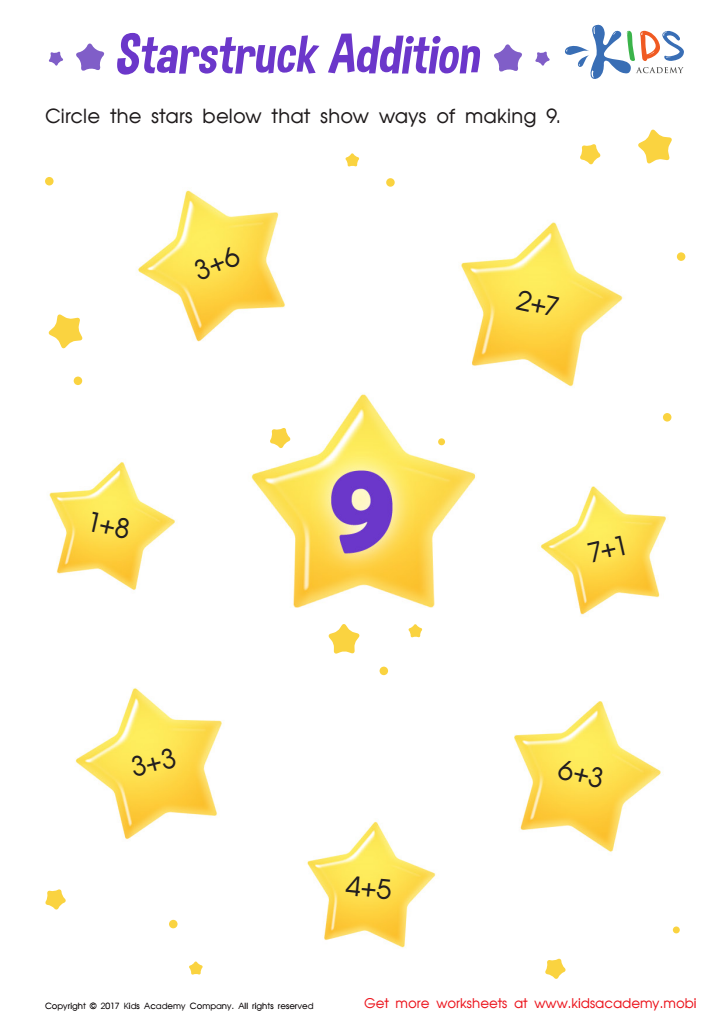
Starstruck Addition Printable
 Assign to My Students
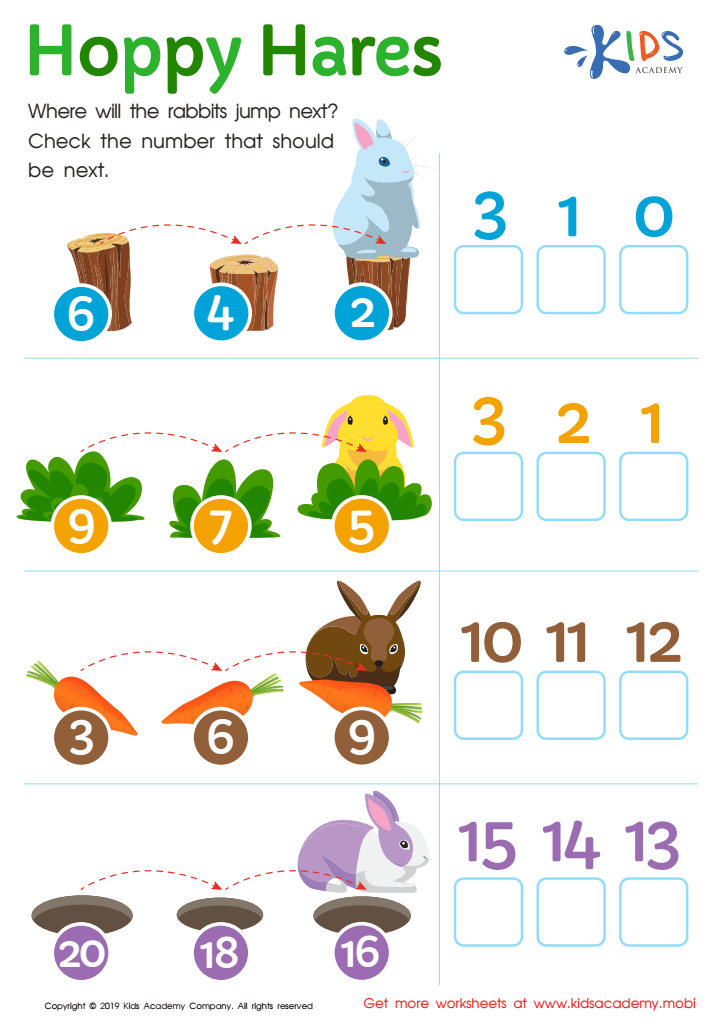
Hoppy Hares Worksheet
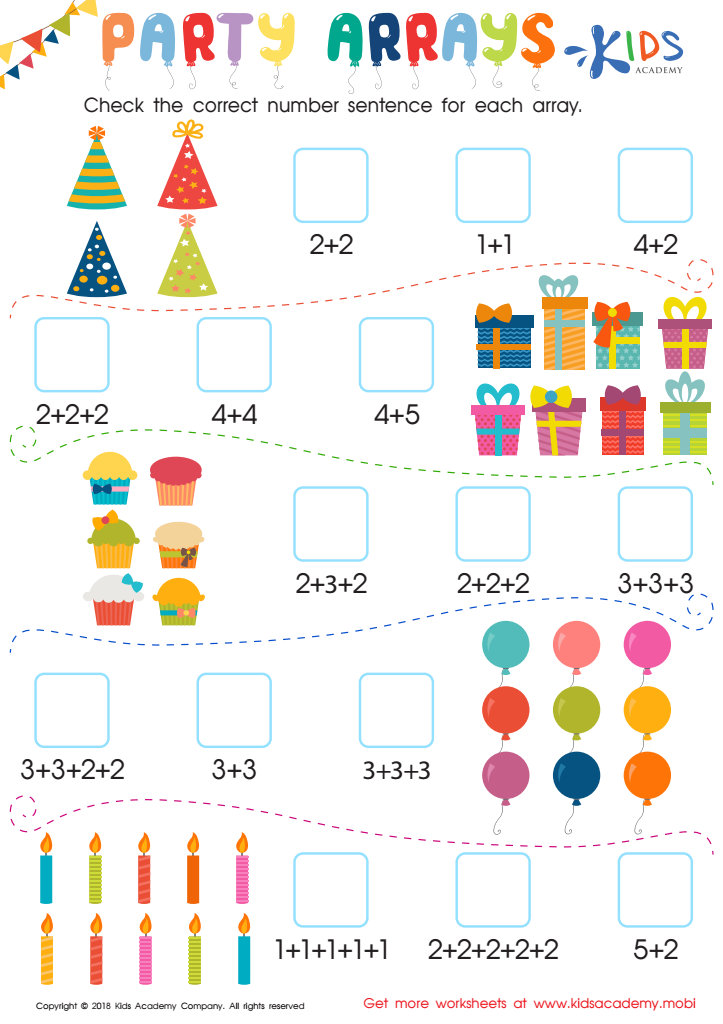
Party Arrays Worksheet
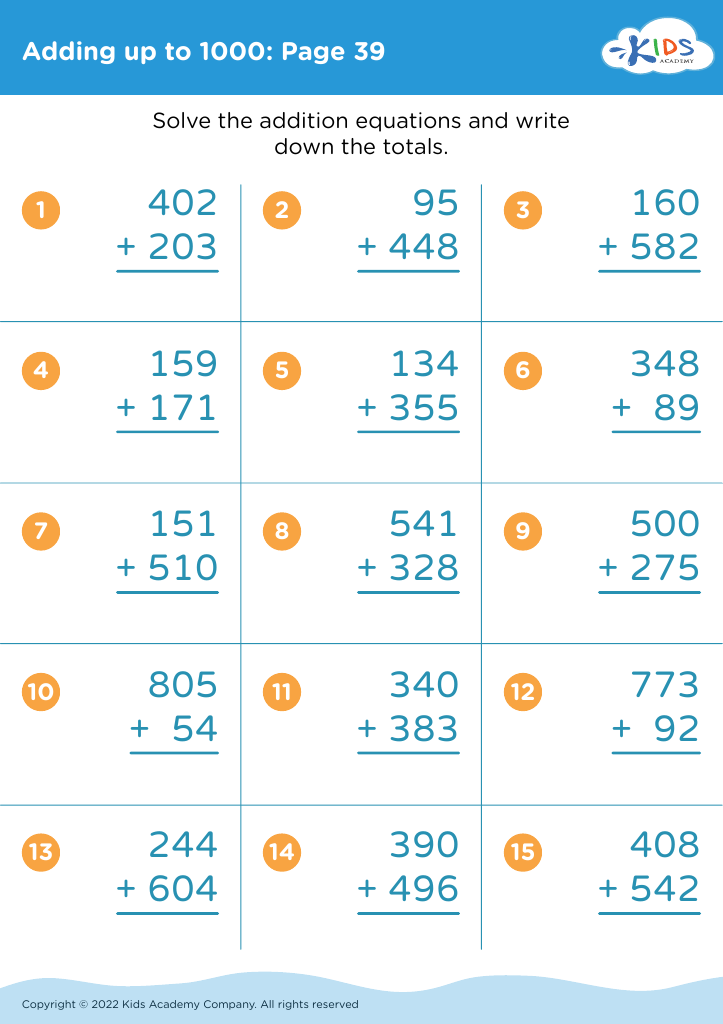
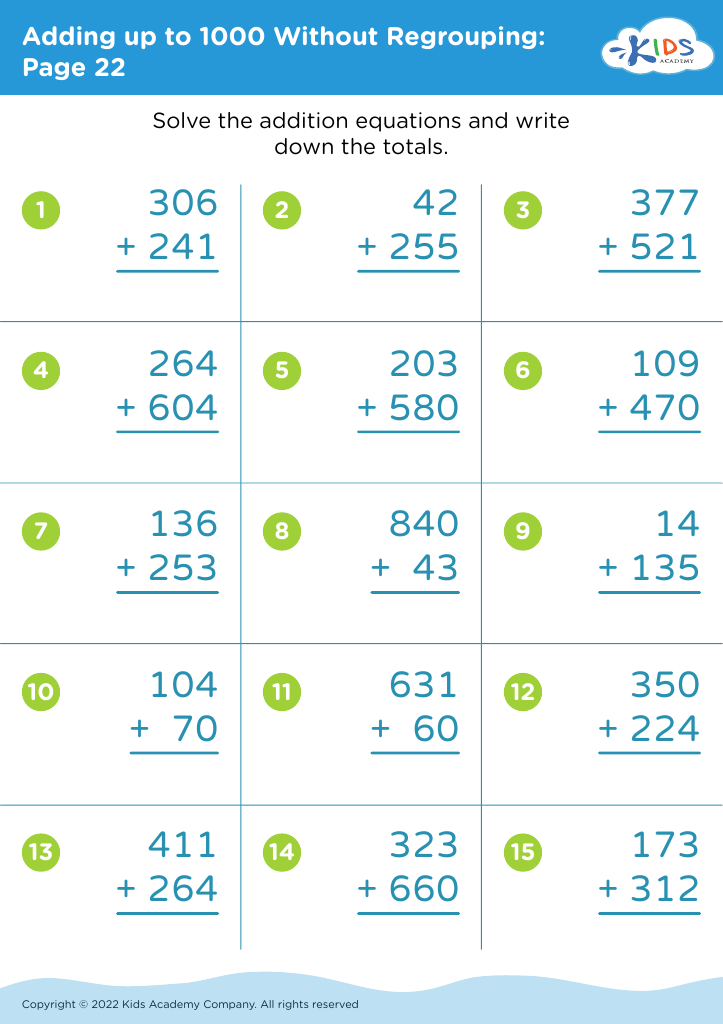
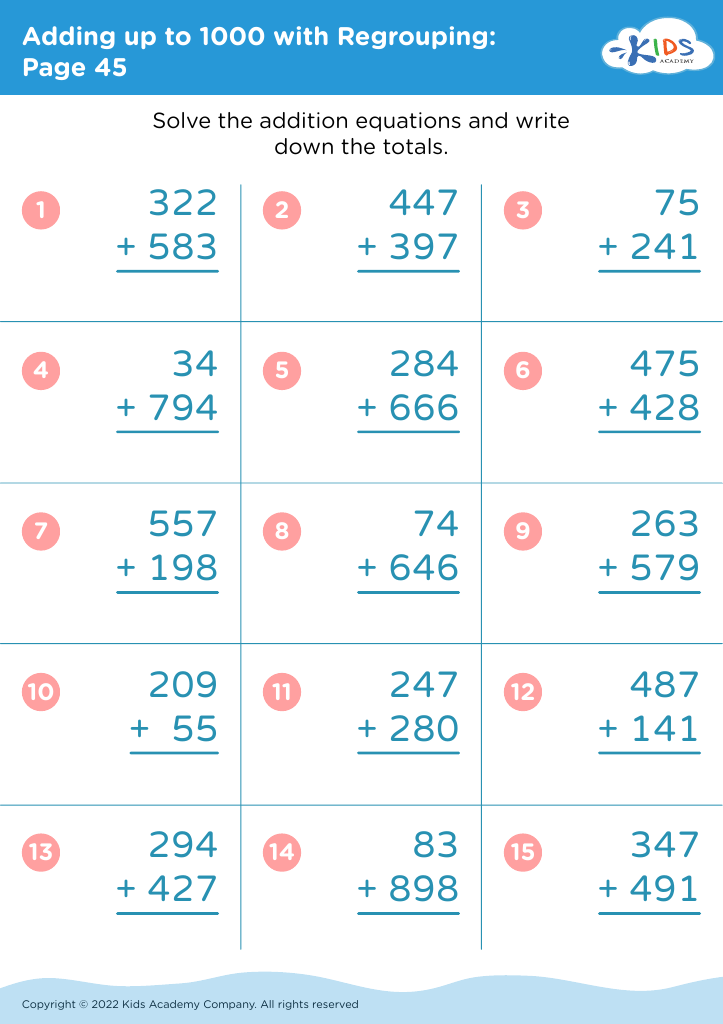
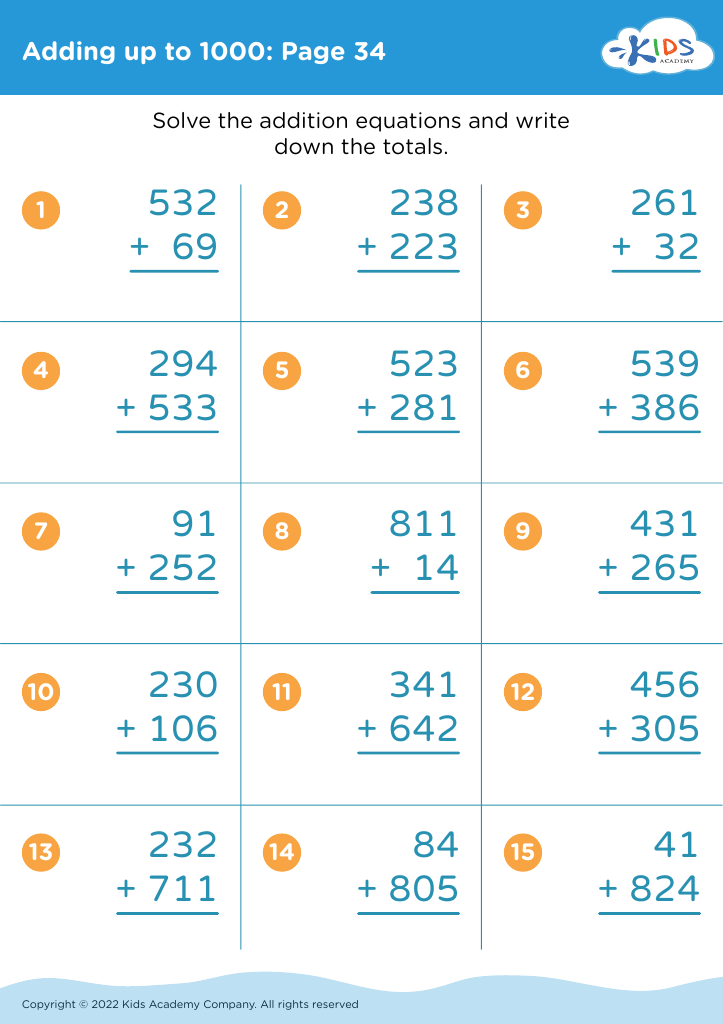
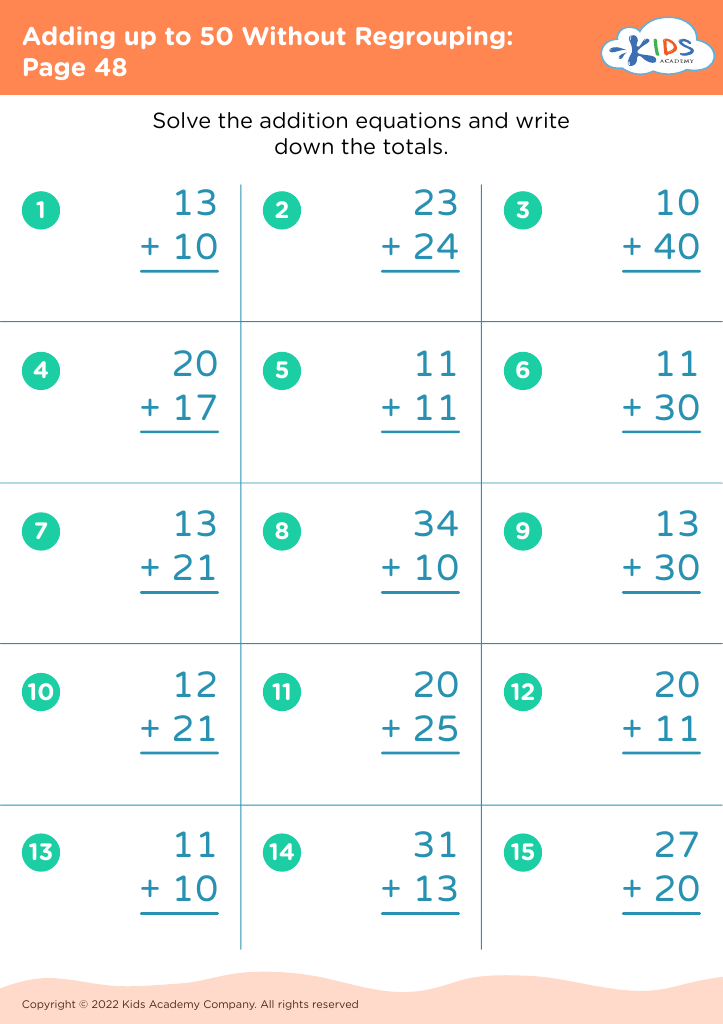








Fine motor skills, particularly those used in writing, are crucial for children aged 7-8 as they lay the foundation for educational success and everyday functioning. Developing these skills can significantly impact a child's math capabilities, an area of learning critical at this stage. Writing enables children to record and organize mathematical problems, work through calculations, and demonstrate problem-solving processes. Active practice in writing bolsters hand-eye coordination and strengthens small muscle movements, enhancing precision and accuracy in drawing graphs, lining up numbers for calculation, and recognizing geometrical shapes.
Moreover, strong fine motor skills contribute to confidence and independence in learning activities. Children who adeptly manage pencils and other writing tools can focus on understanding mathematical concepts rather than being hindered by the physical act of writing. As math becomes more complex in higher grades, a robust foundation in both fine motor skills and early mathematical understanding ensures that children are not left behind.
Furthermore, building these skills supports cognitive development, as writing math problems reinforces memory and spatial visualization, directly correlating with logical thinking and problem-solving abilities. Therefore, parents and teachers should prioritize and nurture fine motor development and math skills in these formative years to set children up for future academic and personal success.








