Fraction conversion Math Worksheets for Ages 7-8
3 filtered results
-
From - To
Our Fraction Conversion Math Worksheets for ages 7-8 make mastering fractions fun and engaging. Specially designed to build essential math skills, these worksheets cover the basics of converting fractions into decimals and percentages. Each worksheet features clear instructions and playful exercises that stimulate young minds, ensuring that children comprehend and retain key concepts. Whether at home or in the classroom, these worksheets provide ample practice opportunities, fostering confidence and proficiency in fraction conversion. Transform complex fraction problems into simple, understandable exercises with our expertly crafted materials, ensuring every child achieves math success rapidly.


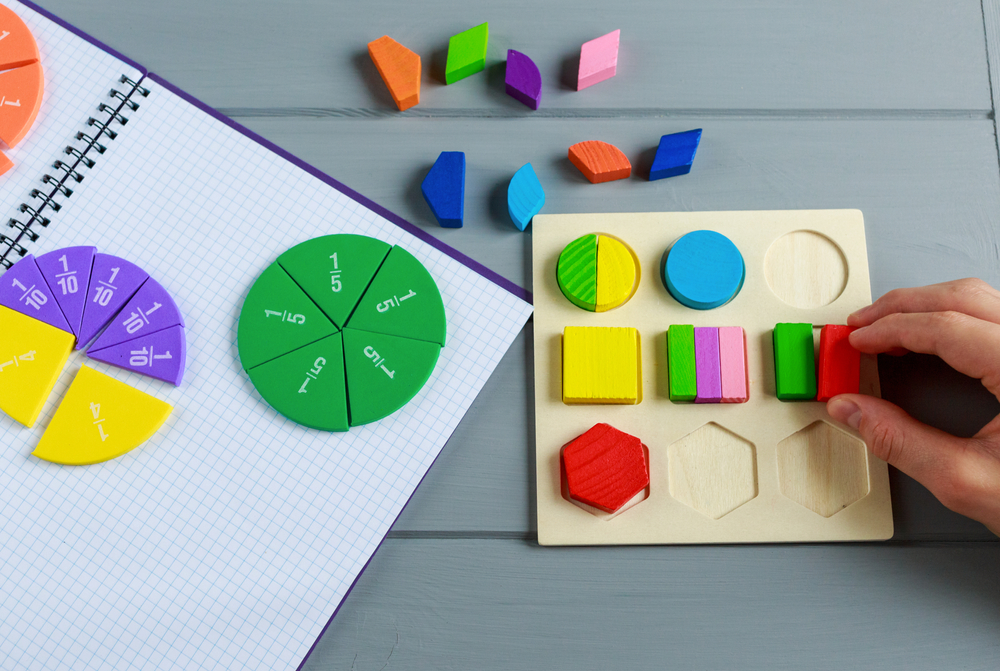





Understanding fraction conversion is a fundamental math skill that serves as the foundation for more advanced mathematical concepts. For children ages 7-8, grasping the basics of fraction conversion—where fractions are simplified or converted into different formats (e.g., ½ = 2/4 or 0.5)—is crucial.
At this age, children are developing their number sense, which is the ability to understand, relate, and connect numbers. Fraction conversion helps solidify their understanding of parts and wholes and enhances their problem-solving abilities. For instance, recognizing that ¾ is the same as 0.75 gives children a stronger grasp of how different forms of numbers represent the same value.
Moreover, skills in fractions and conversions translate into real-world applications. Cooking, time management, shopping, and even playing music often require an understanding of fractions. If children can fluidly change between different representations of fractions, they will find these everyday tasks more intuitive.
Developing these skills early also sets the stage for future mathematical learning. Concepts encountered in later grades, such as ratios, proportions, and algebra, all lean heavily on a strong understanding of fractions. Equipping children with these essential tools at an early stage enhances their confidence and ability to tackle more challenging mathematical problems in the future, making fraction conversion a critical focus for both parents and teachers.








