Improving addition skills Math Worksheets for Ages 7-8
3 filtered results
-
From - To
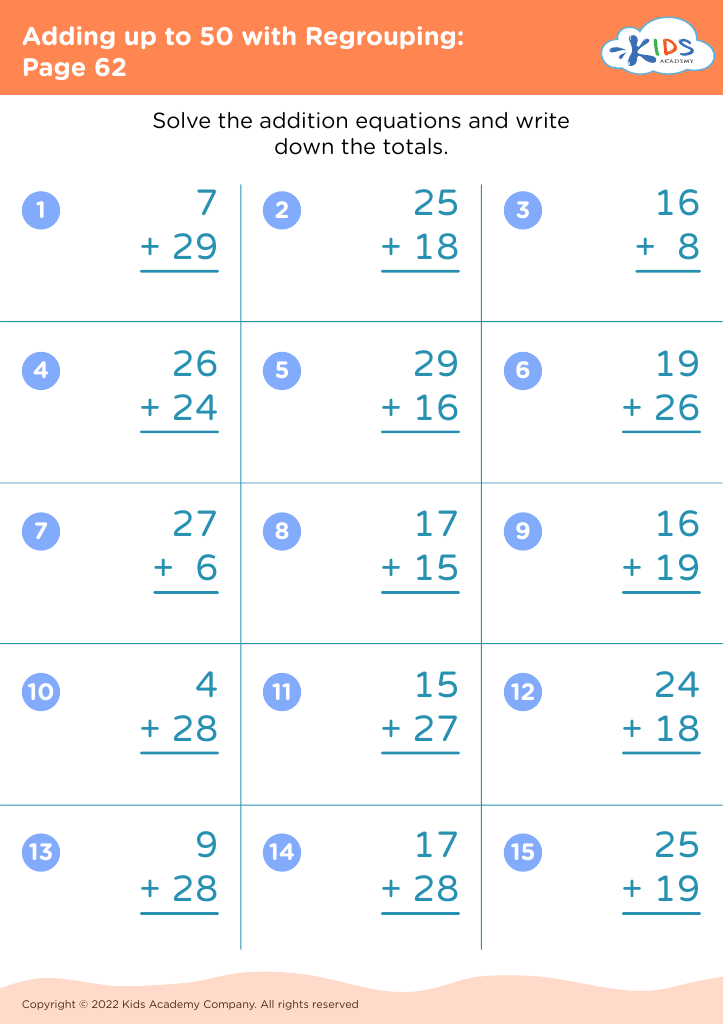
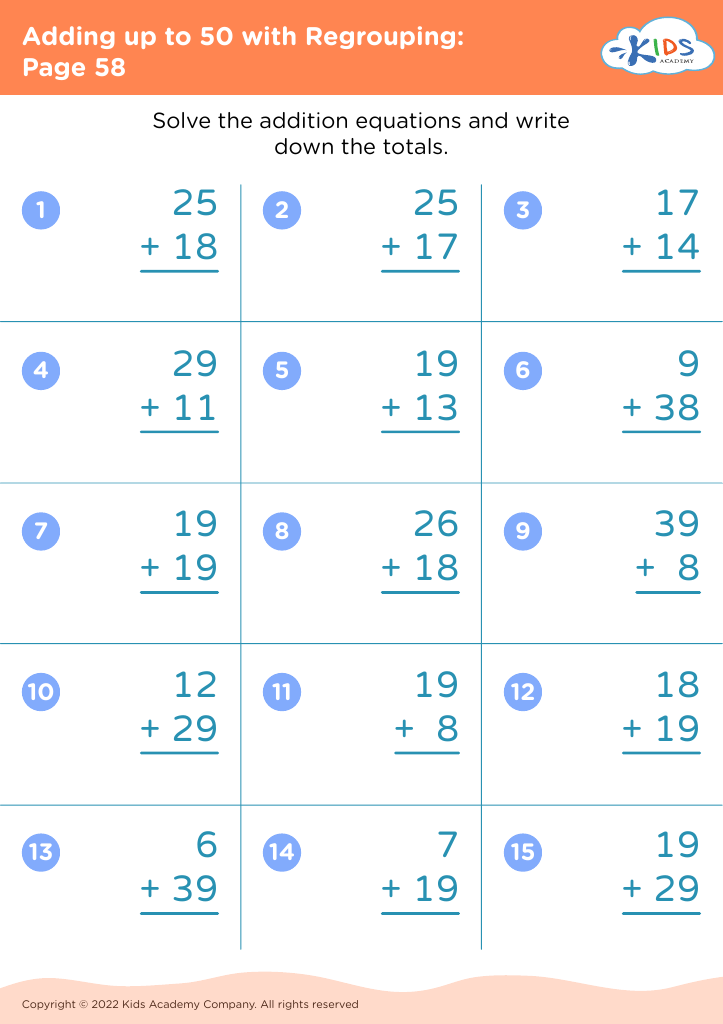
Boost your child's arithmetic prowess with our meticulously designed Math Worksheets for Ages 7-8, specially tailored to enhance addition skills. Our engaging activities incorporate challenge-rich exercises that make learning math fun and effective. Each worksheet encourages critical thinking and develops problem-solving abilities, ensuring your child builds a solid foundation in addition principles. Perfect for both classroom use and at-home practice, these worksheets cater to diverse learning styles, ensuring every student thrives. Empower your young learner to master addition with confidence and enthusiasm through our expertly crafted resources that turn learning into an exciting adventure!
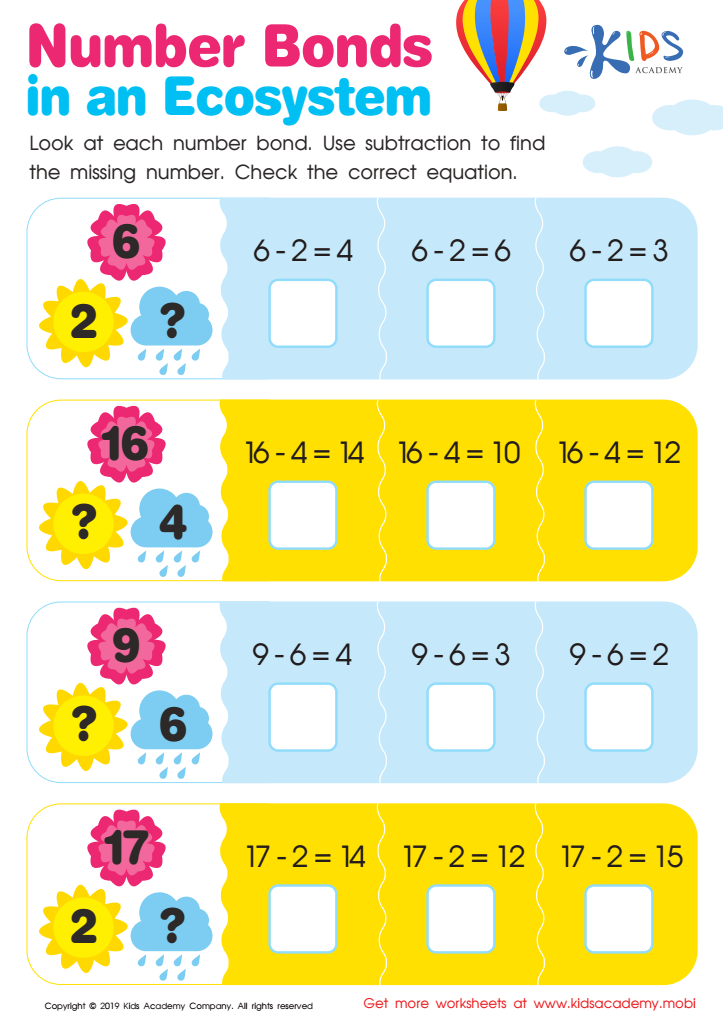
Number Bonds in an Ecosystem Worksheet
 Assign to My Students








Improving addition skills in children aged 7-8 is crucial for laying a strong mathematical foundation. At this age, students transition from basic counting to more complex arithmetic, and addition is a core component of this progression. Strong addition skills facilitate the understanding of more advanced mathematical concepts such as subtraction, multiplication, and division, which are integral as they advance in their education.
For parents and teachers, fostering these skills can significantly enhance a child’s confidence and independence in problem-solving situations. Proficiency in addition aids mental arithmetic, reducing reliance on calculators and enhancing quick-thinking abilities, valuable both in academics and everyday life. Moreover, children with strong addition skills are likely to perform better in other subjects which involve quantitative reasoning, such as science and economics.
Additionally, focusing on improving addition skills helps in nurturing a positive attitude towards mathematics. Children who struggle with basic math operations often develop math anxiety, which can deter their overall academic performance and reduce their enthusiasm for learning. By ensuring children are comfortable and proficient with addition, parents and teachers can help cultivate a generation of mathematically literate individuals, prepared to tackle future challenges with confidence and competence.








