
Improving observation skills Math Worksheets for Ages 7-8
6 filtered results
Difficulty Level
Grade
Age
-
From - To
Subject
Activity
Standards
Boost your child's mathematical prowess with our "Improving Observation Skills Math Worksheets for Ages 7-8." These engaging worksheets are meticulously designed to enhance your child's observation and analytical abilities, essential for strong math foundations. Through fun and interactive activities, kids can practice comparing, identifying patterns, and recognizing differences while reinforcing key math concepts. Perfect for early learners, these exercises make learning enjoyable and effective. Help your child build confidence and sharpen their observational skills today with Kids Academy's expertly crafted worksheets. Explore our collection and transform math learning into an exciting adventure!
Favorites
With answer key
Interactive
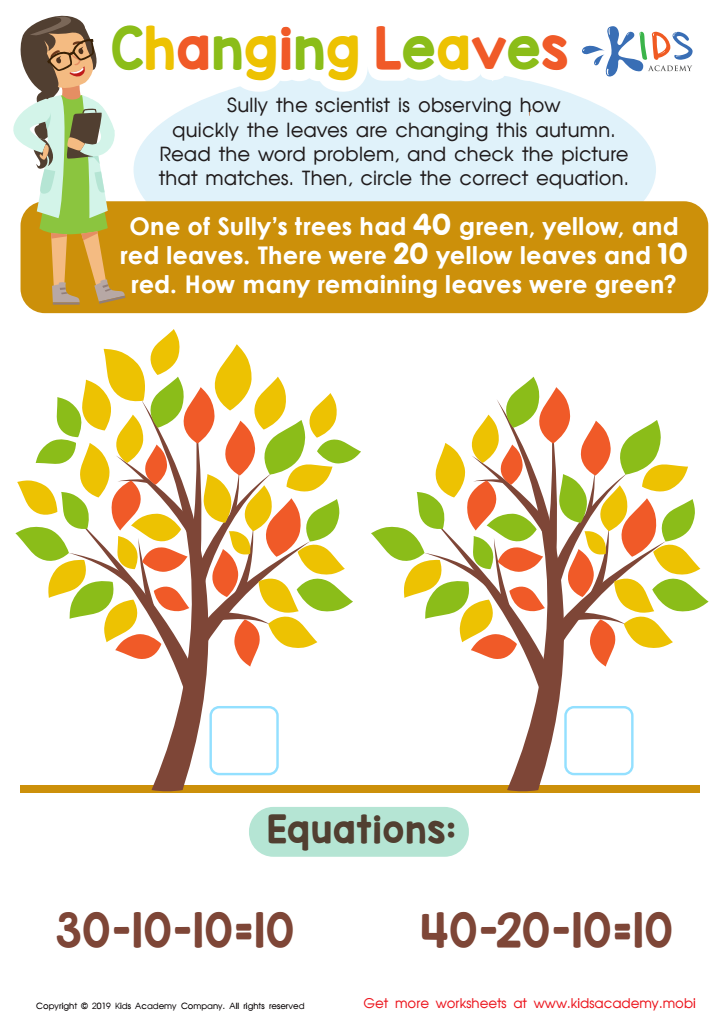
Changing Leaves Worksheet
Fall is the perfect time for kids to help Sully the scientist observe the changing leaves! Download the free worksheet with a subtraction word problem and bolded info to find the matching equation and picture. It's a fun way for your tots to learn while they admire the reddening, yellowing, and orange leaves.
 Assign to My Students
Changing Leaves Worksheet
Worksheet
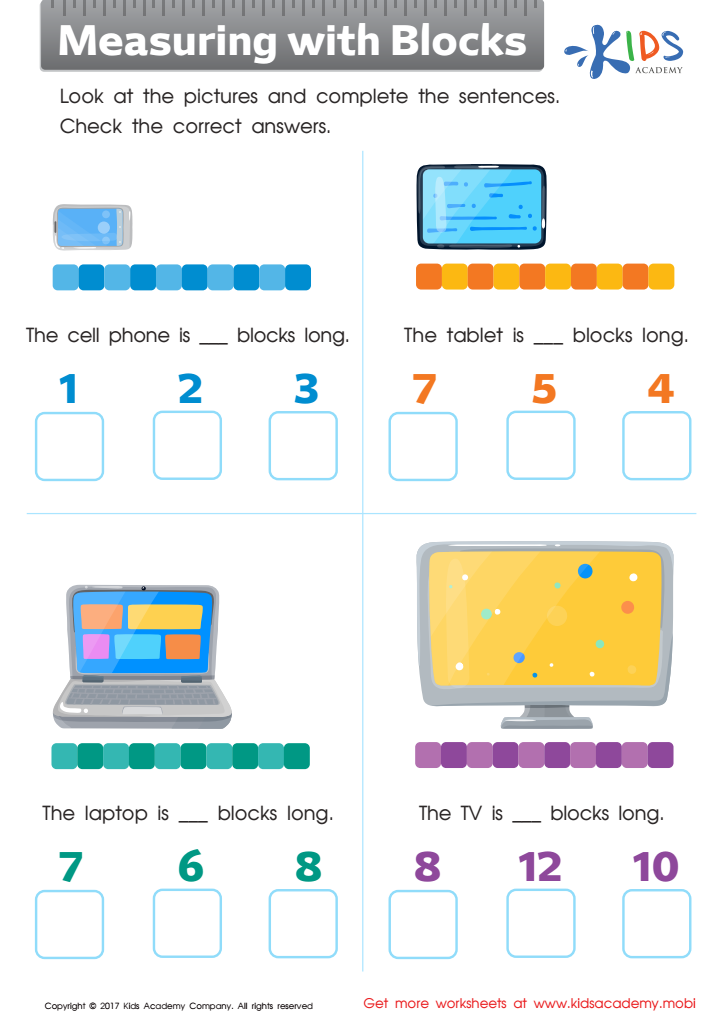
Measuring with Blocks Worksheet
Help your child get ready for math success with this Kids Academy worksheet. It provides colorful blocks to practice measuring objects. Coach them to count the boxes under each picture, then check the box with the right answer. It's a fun way to get acquainted with rulers!
Measuring with Blocks Worksheet
Worksheet
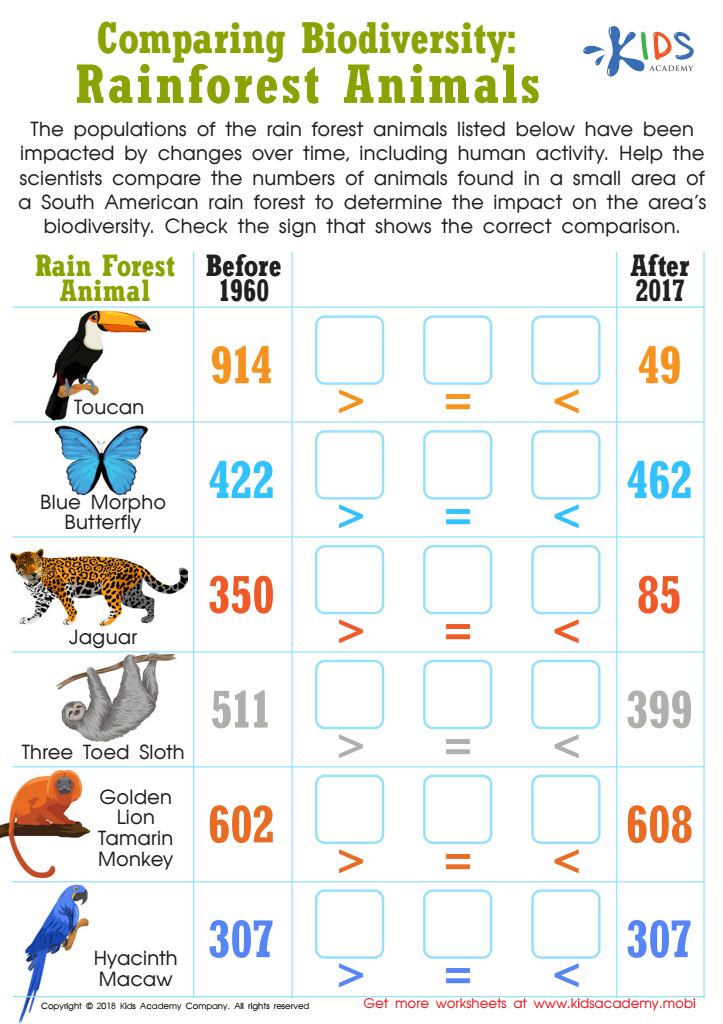
Comparing Biodiversity: Rainforest Animals Worksheet
This dynamic PDF worksheet combines fun and education. Kids will explore rainforest animals and biodiversity, comparing numbers from 1960 to 2017. They'll strengthen number sense and reasoning skills while learning about area biodiversity and its effects. A perfect mix of math and social science!
Comparing Biodiversity: Rainforest Animals Worksheet
Worksheet
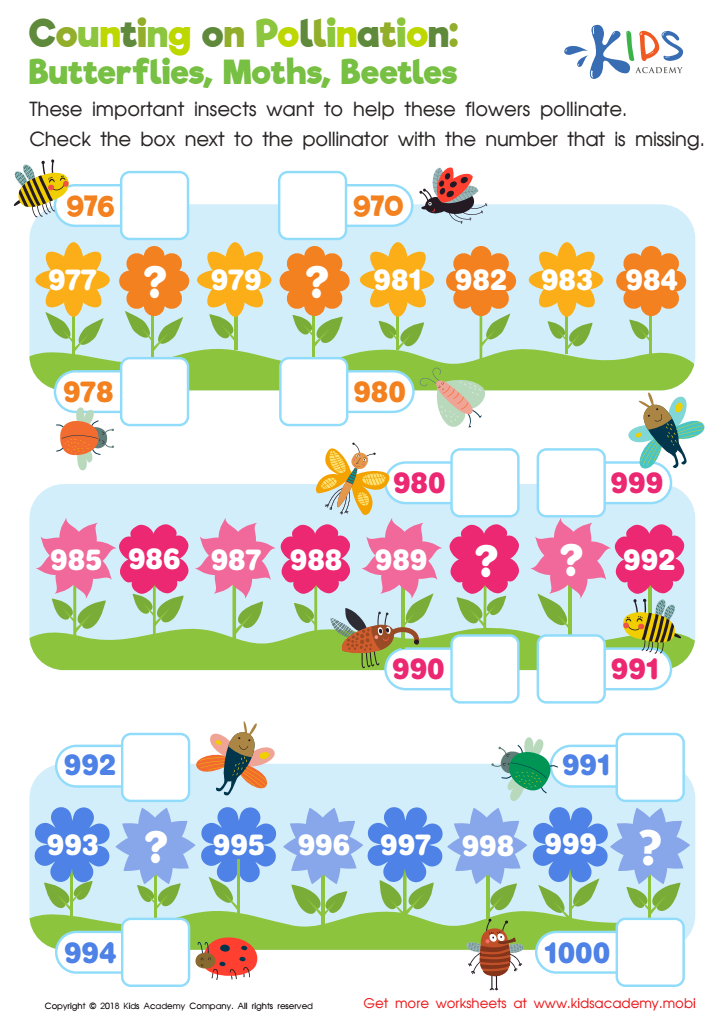
Counting on Pollination: Butterflies, Moths, Beetles Worksheet
A number line can help boost computation accuracy and efficiency. It can also be used with more advanced numbers. Help your child practice by having them identify missing numbers in sequences. This fun worksheet lets them help the pollinators in the process, as they strengthen their number sense.
Counting on Pollination: Butterflies, Moths, Beetles Worksheet
Worksheet
Join Kids Academy for Free
Who is primarily going to use this learning content?






.jpg)
Developing observation skills in math for children aged 7-8 is crucial for several reasons. At this developmental stage, honing attention to detail helps build a strong mathematical foundation. Observation skills in math allow children to recognize patterns, differences, and relationships between numbers and shapes, which is fundamental to arithmetic and geometry.
When kids observe closely, they learn to identify and analyze problems accurately, leading to more effective problem-solving. They can notice subtle errors in their calculations or misinterpretations of questions, and correct them promptly. This not only enhances accuracy but also boosts their confidence in handling math tasks.
Furthermore, good observation skills foster a greater understanding of real-life applications of math. For instance, spotting patterns in nature, understanding time, or using measurements in cooking all require keen observational abilities. Developing these skills early translates to better analytical and critical thinking abilities as they grow.
Teachers and parents play a vital role in cultivating these skills by engaging children in activities like puzzles, games, and practical exercises that require careful observation and reasoning. By prioritizing observation skills in math education, we prepare children not just to excel in school, but to face everyday challenges with a sharper, more inquisitive mind.








