Number writing Math Worksheets for Ages 7-8
3 filtered results
-
From - To
Enhance your child's numeracy skills with our Number Writing Math Worksheets for Ages 7-8 from Kids Academy! Designed specifically for young learners, these worksheets focus on perfecting number formation, fostering neat handwriting, and boosting confidence in math. Engaging and educational, they cover essential number writing techniques and offer plenty of practice opportunities. Perfect for classroom settings or at-home learning, these printables make math enjoyable and accessible. Give your child the foundation they need for future math success with Kids Academy’s Number Writing Math Worksheets for Ages 7-8. Start today and watch their skills flourish!
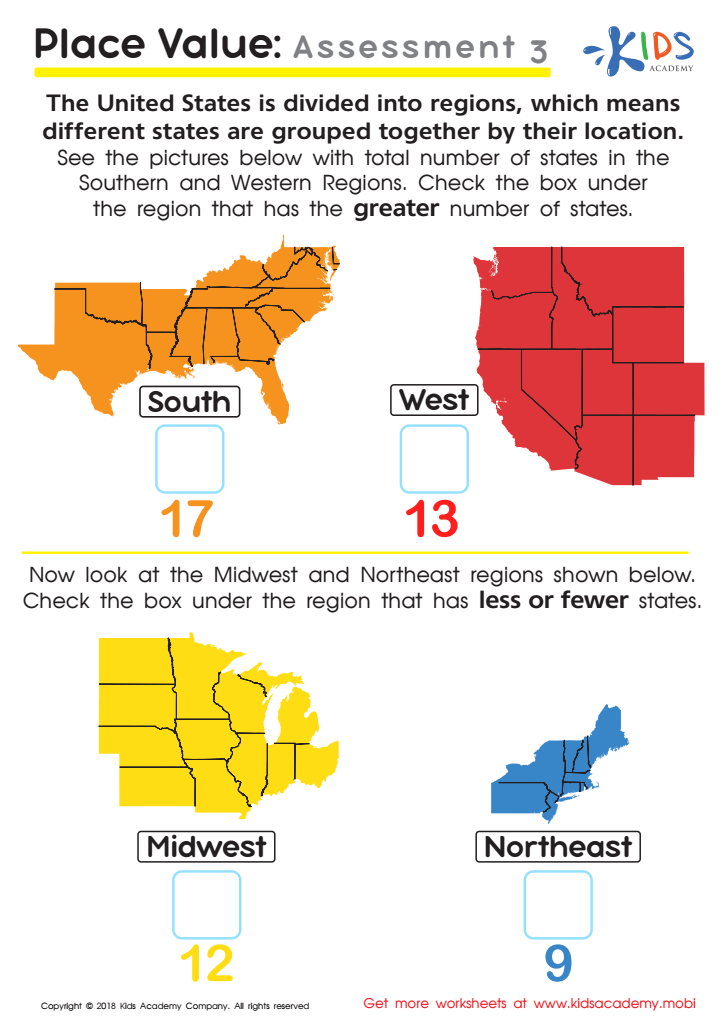
Place Value: Assessment 3 Worksheet
 Assign to My Students
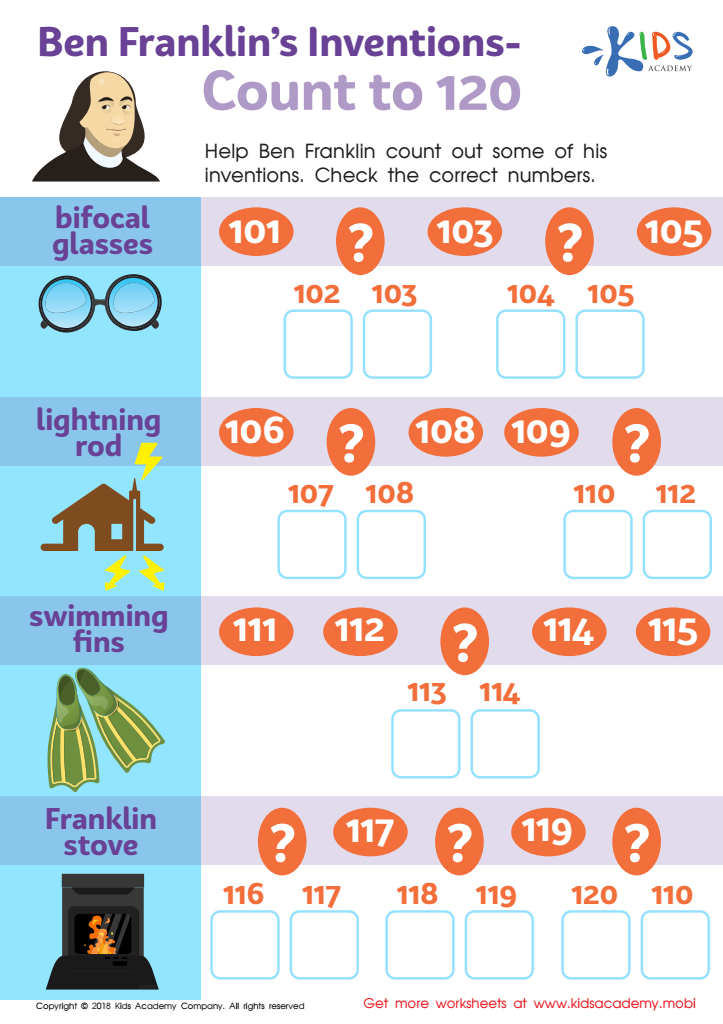
Ben Franklin’s Inventions – Count to 120 Worksheet








First and foremost, numeracy is an essential building block for a child's overall cognitive development. For children ages 7-8, ensuring they can write and understand numbers correctly is fundamental for future academic success. Writing numbers with accuracy fosters better comprehension in more complex mathematical concepts down the line, such as addition, subtraction, and, later on, multiplication and division.
Secondly, developing strong number-writing skills at this age supports a child's ability to follow academic instructions and participate in classroom activities with greater ease. Accurate number writing encourages confidence and lessens frustration, prompting children to engage more actively in lessons.
Moreover, number writing aids in developing fine motor skills. The physical act of writing numbers contributes to coordinated muscle movements in the hands and wrists, reinforcing learning in multiple domains concurrently.
In addition, strong numerical writing skills ensure that assignments and assessments accurately reflect a child’s true capabilities. Miswritten numbers can lead to misunderstandings between teachers and students and impede appropriate evaluations of a child’s performance.
Ultimately, by prioritizing number writing for young children, both parents and teachers can set them on a path toward solid mathematical proficiency, fostering a more positive and lasting relationship with learning as a whole.








