
Practicing subtraction Math Worksheets for Ages 7-8
5 filtered results
Difficulty Level
Grade
Age
-
From - To
Subject
Activity
Standards
Boost your child's subtraction skills with our Practicing Subtraction Math Worksheets designed for kids aged 7-8. These engaging worksheets offer a variety of fun and interactive subtraction problems that help reinforce essential math concepts. Perfect for both classroom and home use, they cater to different learning styles with colorful visuals and practical exercises. Watch your child gain confidence and improve their problem-solving abilities as they practice subtracting numbers step-by-step. Make learning subtraction enjoyable and effective with our thoughtfully crafted worksheets tailored for young learners. Download now and support your child’s educational journey.
Favorites
With answer key
Interactive
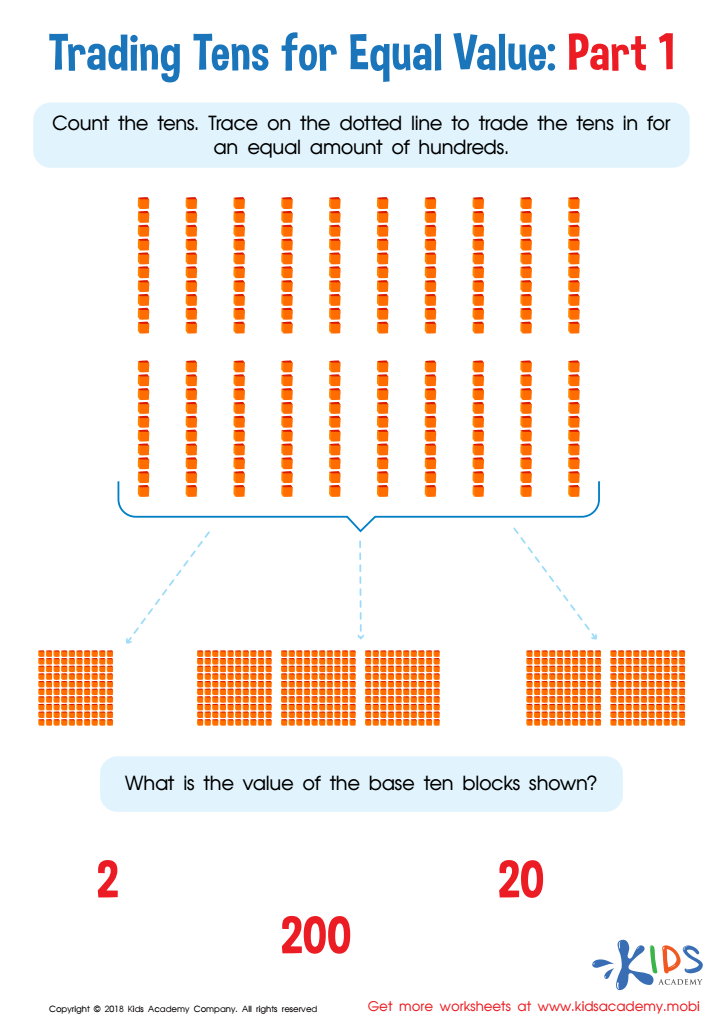
Trading Tens for Equal Value Worksheet: Part 1
This worksheet helps 3rd graders count large numbers and recognize base numbers. It lists 10 cubes and asks students to identify the hundreds, then circle the base blocks. This colorful pdf provides a fun, visual way to help students strengthen their math basics.
 Assign to My Students
Trading Tens for Equal Value Worksheet: Part 1
Worksheet
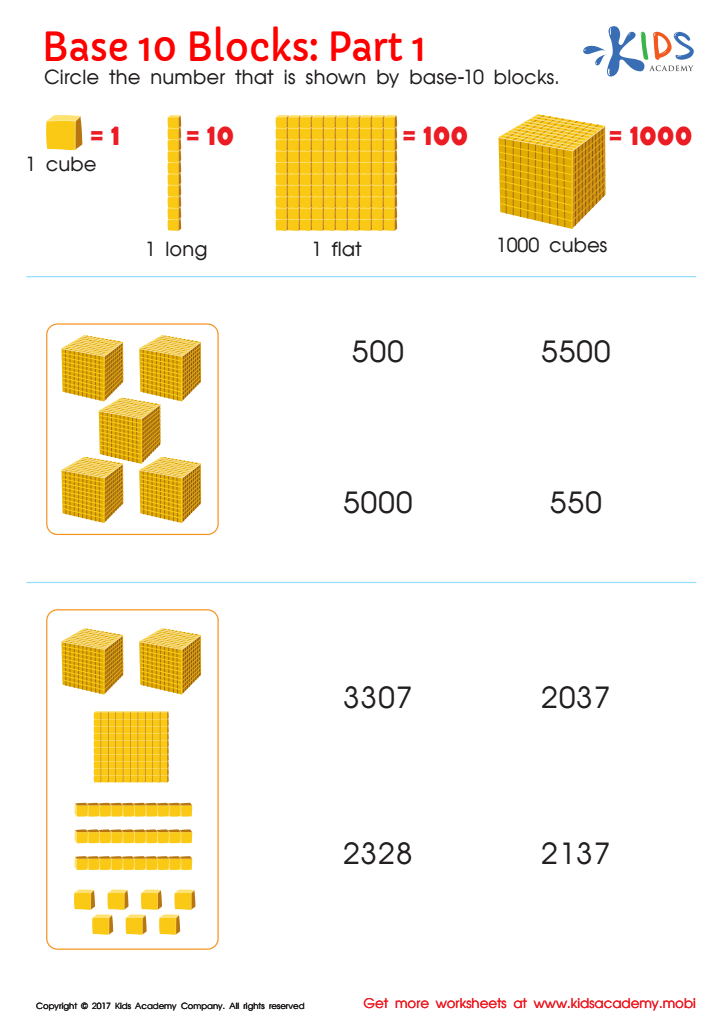
Place Value Thousands Worksheet
Kids aged 8+ can tackle the challenge of understanding place value with this thousands worksheet! It'll help develop their number sense and equip them with the skills to work with numbers up to the thousands.
Place Value Thousands Worksheet
Worksheet
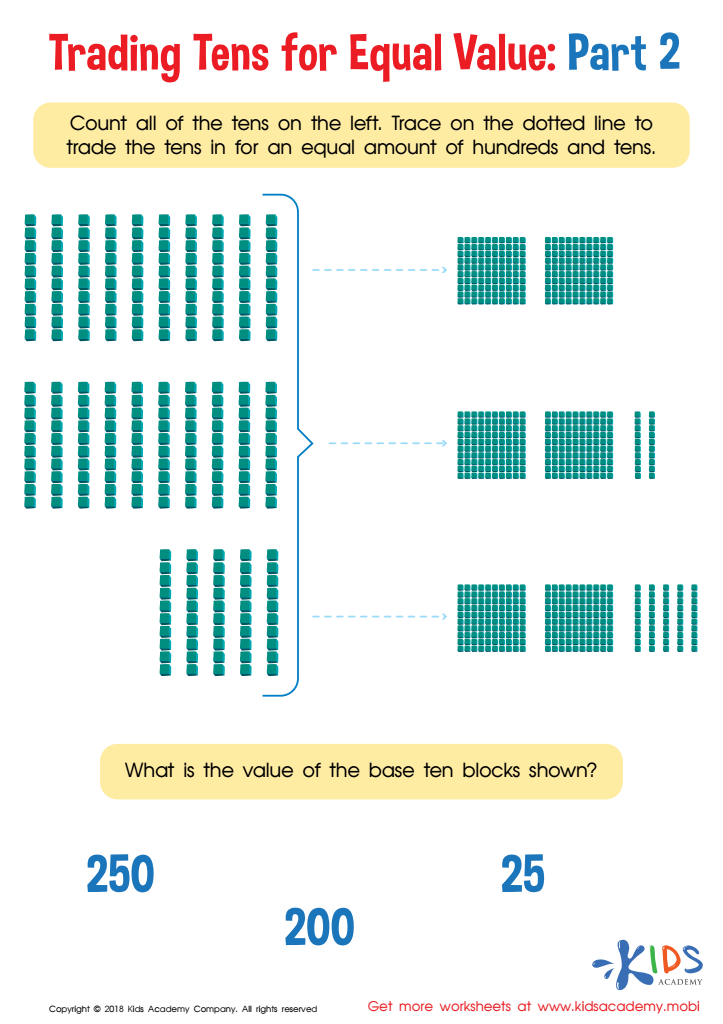
Trading Tens for Equal Value Worksheet: Part 2
Exchange coins for bills and cubes for longs or flats with this helpful place value worksheet! Encourage children to count all the tens, then trace the dotted line to the correct answer and determine the value. This concept can be tricky to teach in elementary math, but this worksheet can help!
Trading Tens for Equal Value Worksheet: Part 2
Worksheet
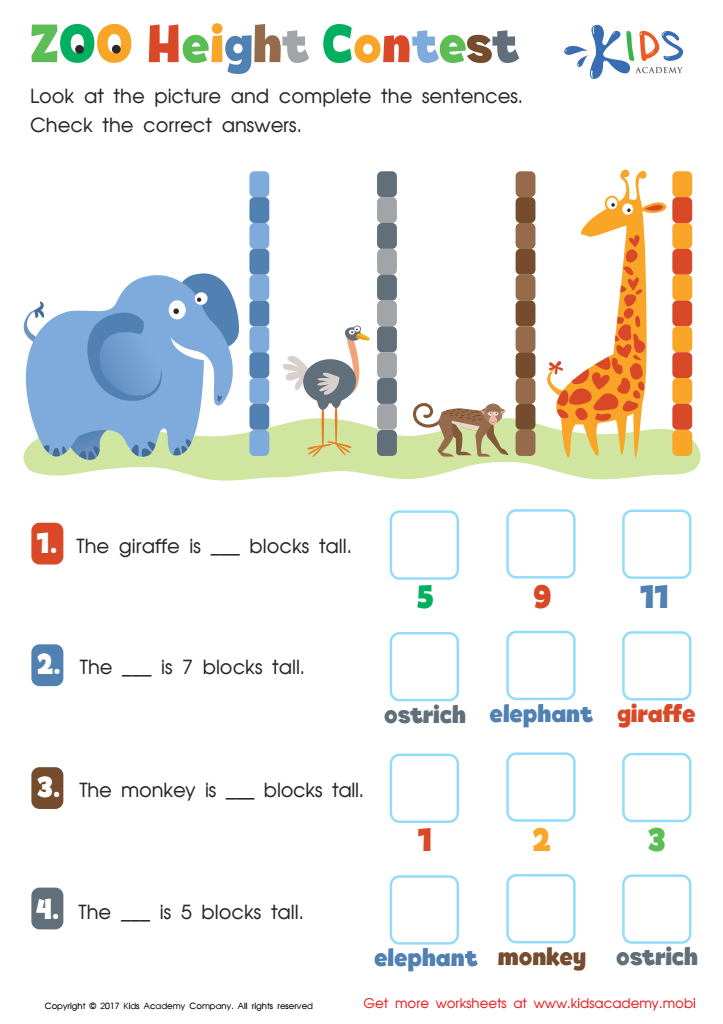
Zoo Height Contest Worksheet
Let's head to the zoo and use colorful blocks to measure your child's favorite animals! With this Kids Academy worksheet, help them practice and prepare for learning measurement. Guide them in looking at the zoo animals and counting blocks to find the height. Then, read the questions and check the box next to the correct answer.
Zoo Height Contest Worksheet
Worksheet
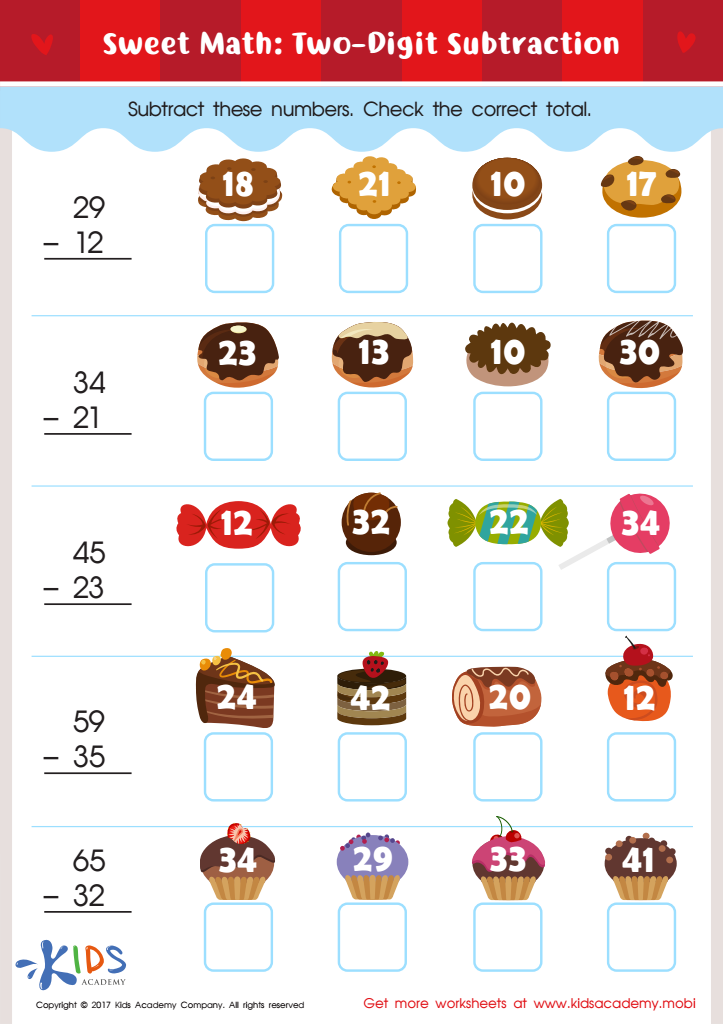
Two Digit Subtraction Worksheet
Make subtraction practice fun and easy with Kids Academy's delightful two digit subtraction worksheet PDF! Your child will love finding the sweet treat containing the correct answer to each 2-digit problem. Offer this quick practice and watch them learn!
Two Digit Subtraction Worksheet
Worksheet
Join Kids Academy for Free
Who is primarily going to use this learning content?








Practicing subtraction is critical for children ages 7-8 as it's foundational to arithmetic and overall mathematical competency. At this early stage, children are developing their basic math skills, and subtraction is a primary building block for more complex topics like multiplication, division, and problem-solving in daily life.
Firstly, mastering subtraction enhances number sense, vital for recognizing numerical relationships and patterns. This competency fosters confidence, reducing math anxiety and promoting a positive attitude toward learning. Additionally, subtraction skills are frequently applied in real-world scenarios, such as money management, time calculation, and understanding distances.
Engaging in regular practice supports cognitive development. It helps children develop logical thinking, improves concentration, and sharpens memory, all of which are essential for academic success beyond mathematics. Practice encourages perseverance, allowing students to encounter problems, errors, and solutions, fostering a growth mindset and resilience.
For teachers and parents, emphasizing subtraction practice lays a strong educational foundation, ensuring children are prepared to handle more advanced math topics. Supporting young learners in gaining these essential skills can lead to improved academic performance and a lifelong appreciation for mathematics, equipping them with critical tools for everyday decision-making and future learning.








