Times table familiarity Math Worksheets for Ages 7-8
3 filtered results
-
From - To
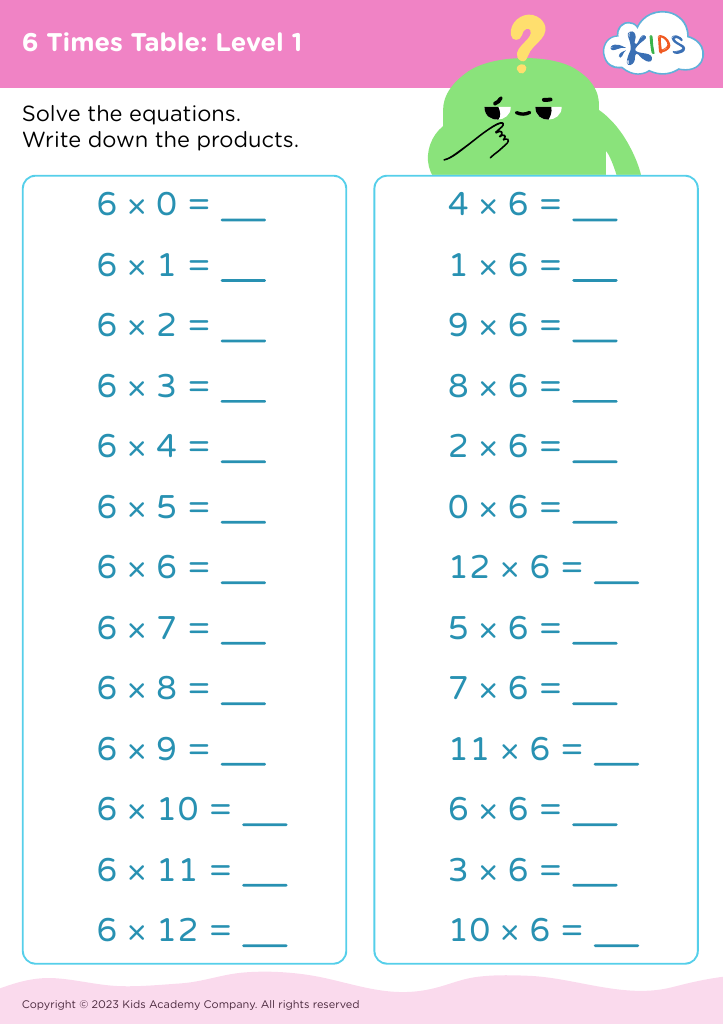
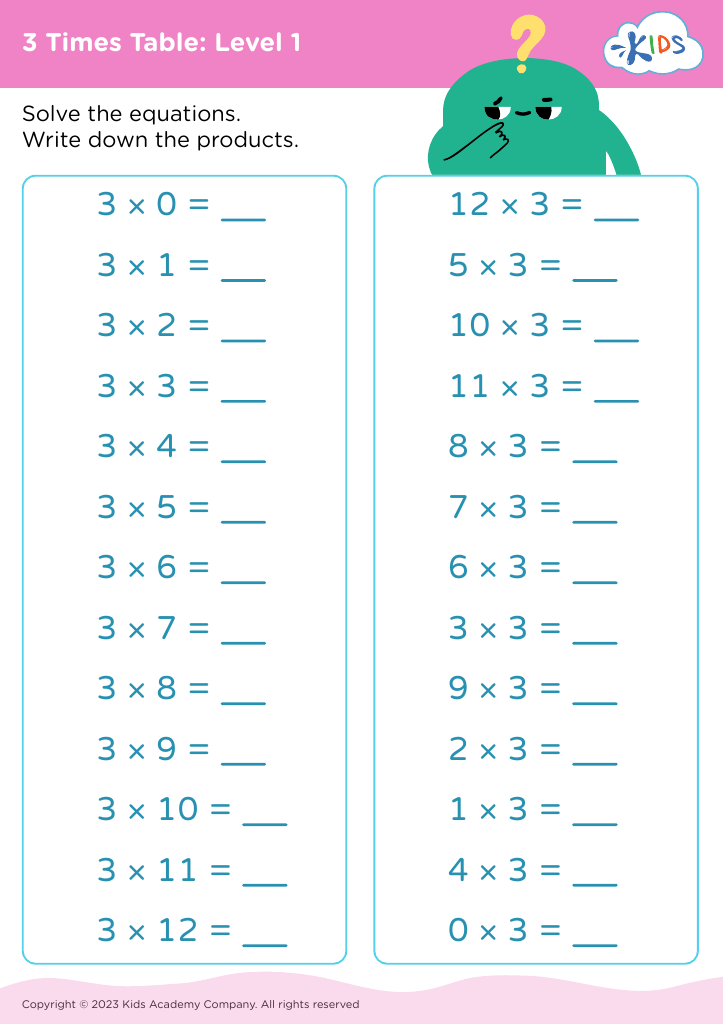
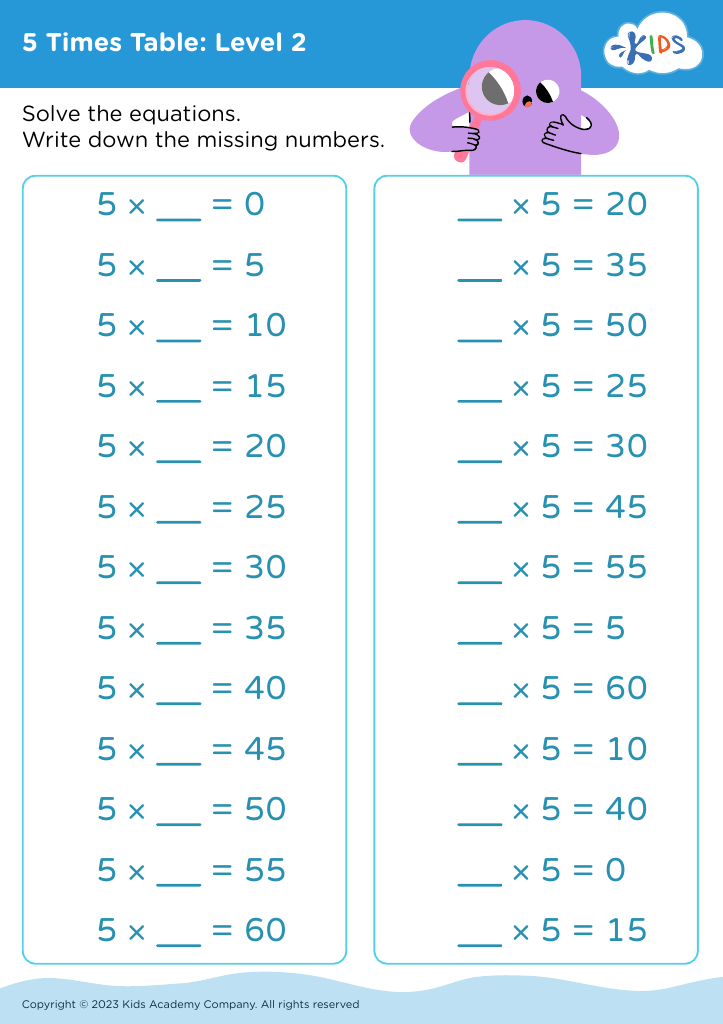
Boost your child's math skills with our Times Table Familiarity worksheets for ages 7-8! Designed to make learning multiplication fun and engaging, these printable resources help kids master essential times tables through interactive exercises and colorful visuals. Effective for both classroom use and at-home practice, our worksheets promote confidence in multiplication operations while developing critical problem-solving abilities. Each activity is tailored to fit the learning pace of developing learners, ensuring they grasp the material efficiently. By improving their times table familiarity, children will find math more enjoyable and meaningful. Start your child's math journey today with our comprehensive worksheets!


.jpg)



Familiarity with times tables is crucial for children aged 7-8, forming a foundational math skill that impacts their overall academic success. Mastering times tables enhances a child's numerical fluency, enabling them to perform basic calculations quickly and accurately. This proficiency is essential as it lays the groundwork for more complex math concepts, such as division, fractions, and algebra, which students will encounter later in their education.
Additionally, fluency in multiplication fosters confidence and a positive attitude towards math learning. When children can recall their times tables effortlessly, they experience less anxiety during assessments and problem-solving activities. This confidence encourages a growth mindset, leading to greater persistence and resilience in tackling challenging math problems.
Moreover, times table familiarity opens up opportunities for real-world application. Children use multiplication in everyday situations, such as calculating prices or understanding groupings, making math more relatable and engaging. Parents and teachers play a pivotal role in supporting this skill development through interactive activities, reinforcement tactics, and positive encouragement. Ultimately, ensuring students become proficient in their times tables not only enhances their current academic performance but also equips them with lifelong mathematical skills necessary for future success.








