Understanding mass Math Worksheets for Ages 7-8
3 filtered results
-
From - To
Explore our "Understanding Mass" math worksheets designed for children aged 7-8! These engaging resources help young learners grasp the concept of mass through practical activities and visual aids. By using our worksheets, kids will not only learn to measure and compare different weights but also develop critical thinking and problem-solving skills. Each worksheet is crafted to foster a fun and interactive learning environment, perfect for reinforcing classroom lessons or as enjoyable homework assignments. Help your child build a strong foundation in math more easily with our comprehensive selection of understanding mass worksheets suitable for this crucial developmental stage.
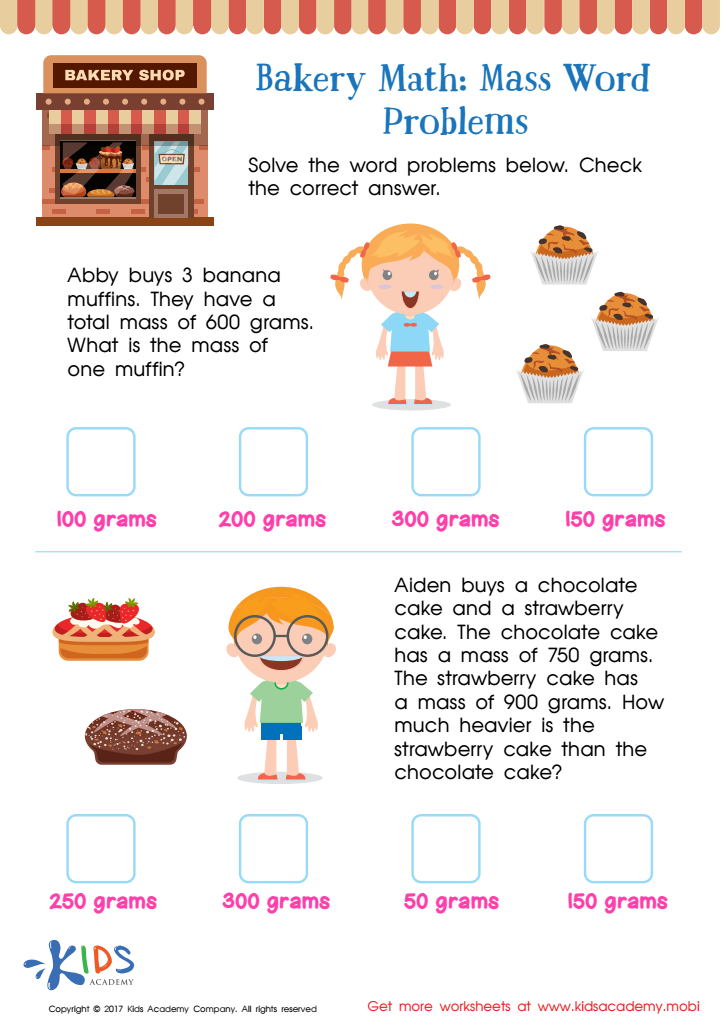
Mass Word Problems Worksheet
 Assign to My Students
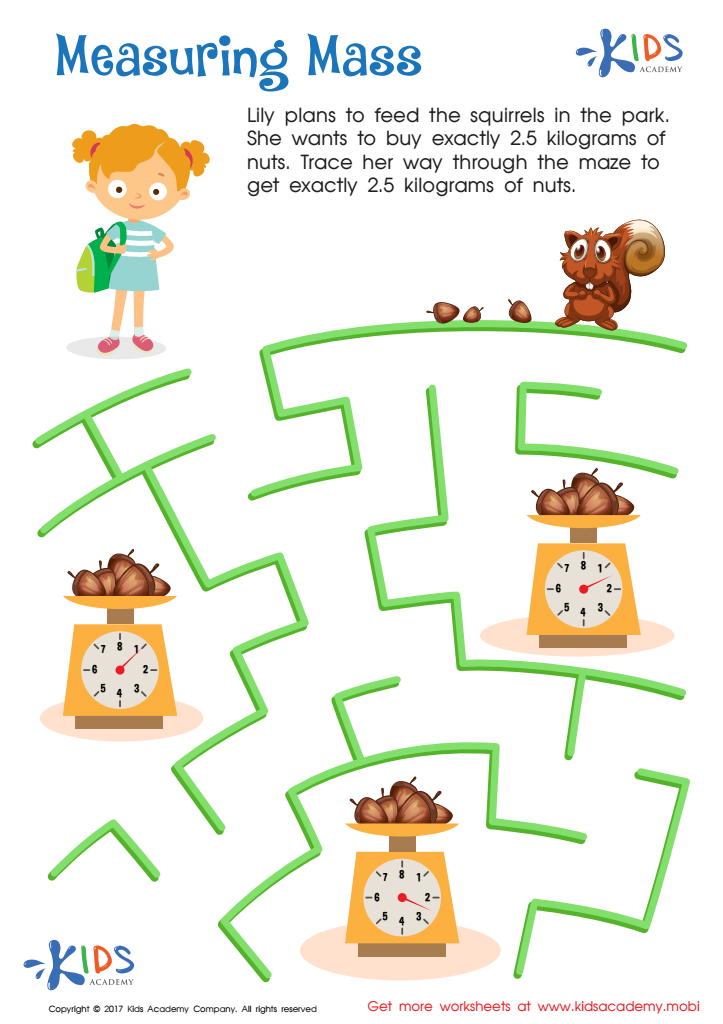
Measuring Mass Worksheet
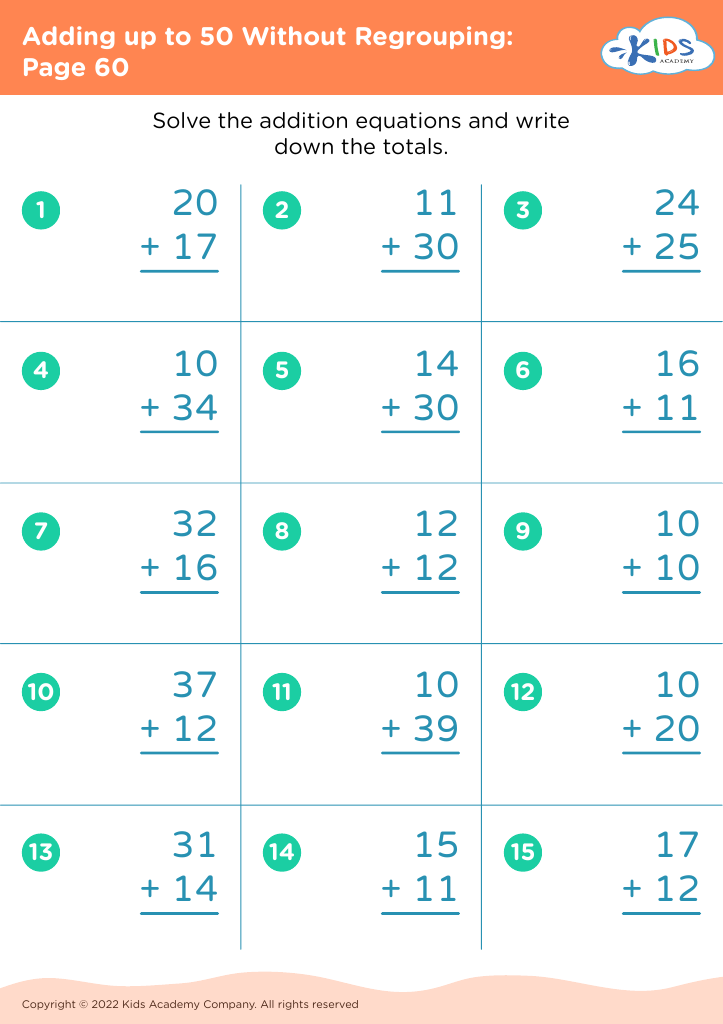








Understanding mass, particularly for children aged 7-8, is crucial for their development in mathematics and practical life skills. At this age, children begin to explore foundational concepts in measurement, which not only enhances their numerical abilities but also promotes critical thinking and reasoning.
Introducing mass concepts allows children to engage with real-world applications, such as cooking or grocery shopping, making math relatable and enjoyable. As they learn to measure weights, compare heavier and lighter objects, and understand units like grams and kilograms, they build a solid understanding of measurement that is essential for their future learning.
Furthermore, grasping mass is linked to other areas of math, such as addition, subtraction, and even more complex operations like multiplication and division. It also enhances their problem-solving skills. Teachers and parents can foster this understanding through hands-on activities—like using a scale to weigh fruits or participating in simple science experiments—which nurture curiosity and engagement.
Ultimately, nurturing a sound understanding of mass fosters confidence and ensures that students develop computational skills vital to navigating everyday scenarios and future academic challenges.








