Understanding number relationships Math Worksheets for Ages 7-8
5 filtered results
-
From - To
Discover our engaging "Understanding Number Relationships" math worksheets, specially designed for children aged 7-8. These resources help young learners build a strong foundation in essential math concepts, fostering critical thinking and problem-solving skills. Our worksheets feature fun activities that aid in understanding the connections between numbers, promoting a deeper grasp of addition, subtraction, and number patterns. Perfect for both classroom and home use, these worksheets encourage mastery through repetition and interactive tasks. Equip your child with the tools they need to thrive in mathematics while enjoying their learning journey! Access our collection today to inspire confidence and competence in math.
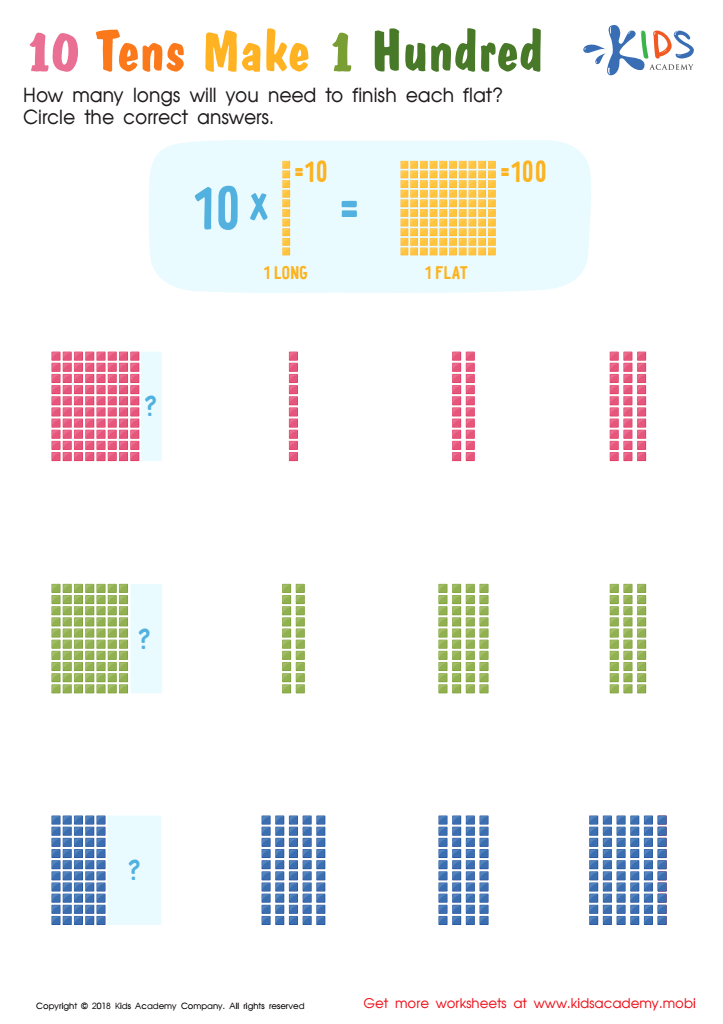
10 Tens Make 1 Hundred Worksheet
 Assign to My Students
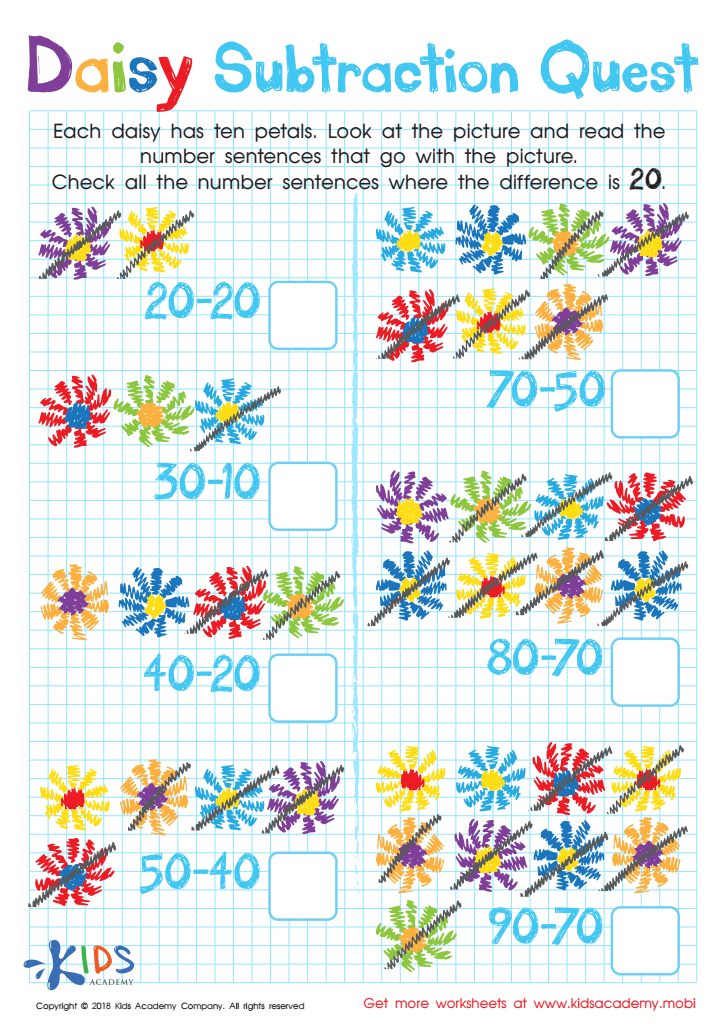
Daisy Subtraction Quest Worksheet
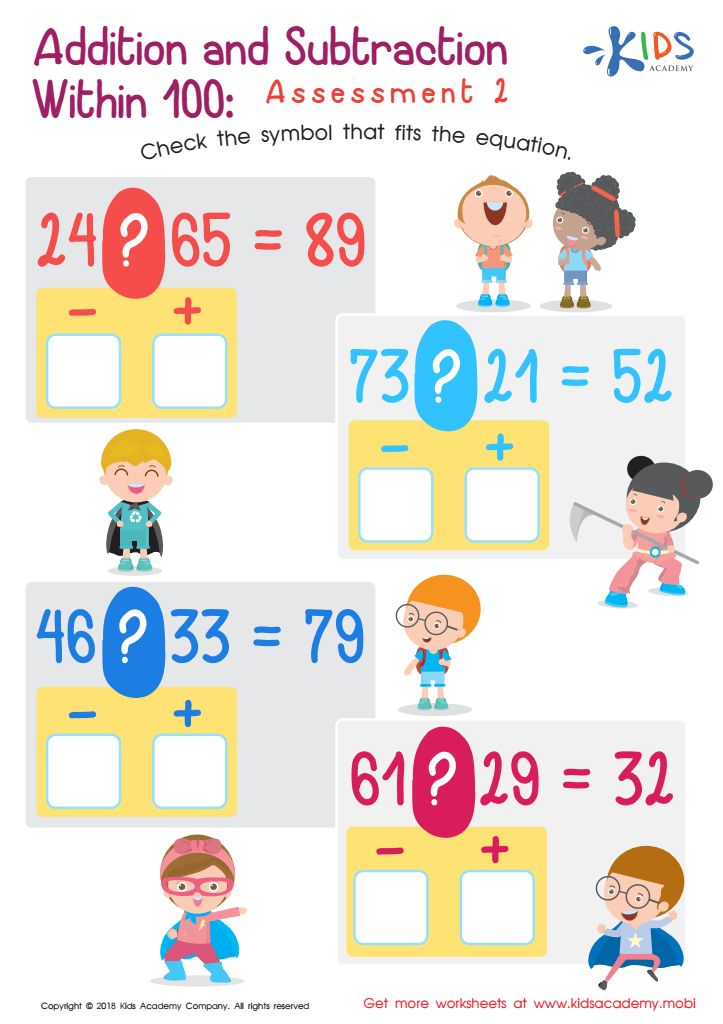
Addition and Subtraction Within 1: Assessment 2 Worksheet
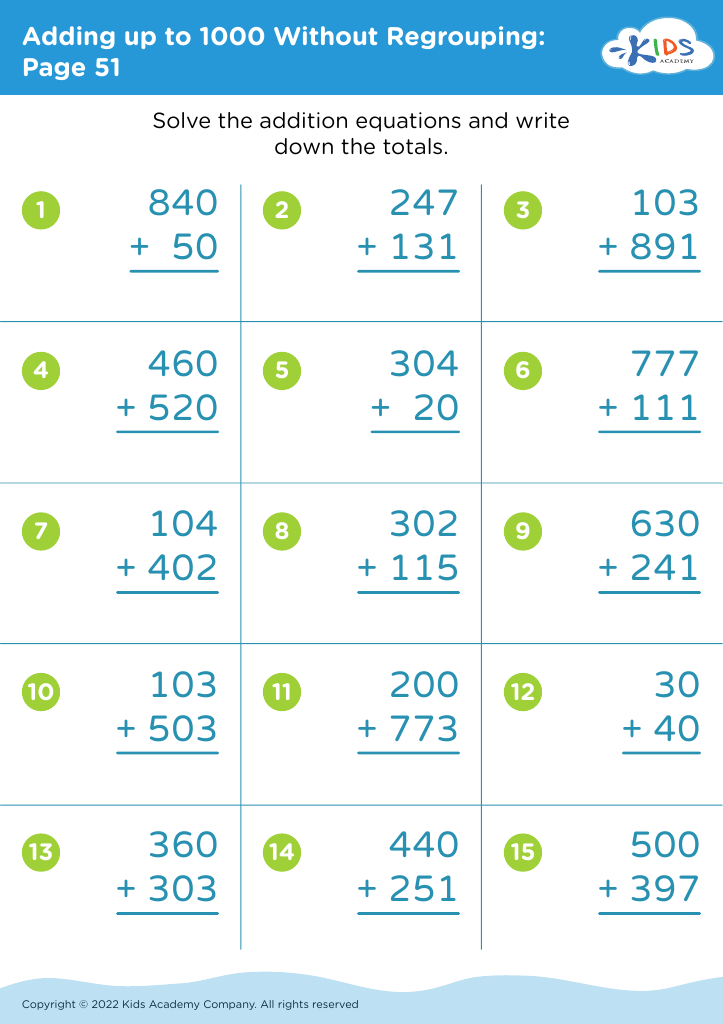
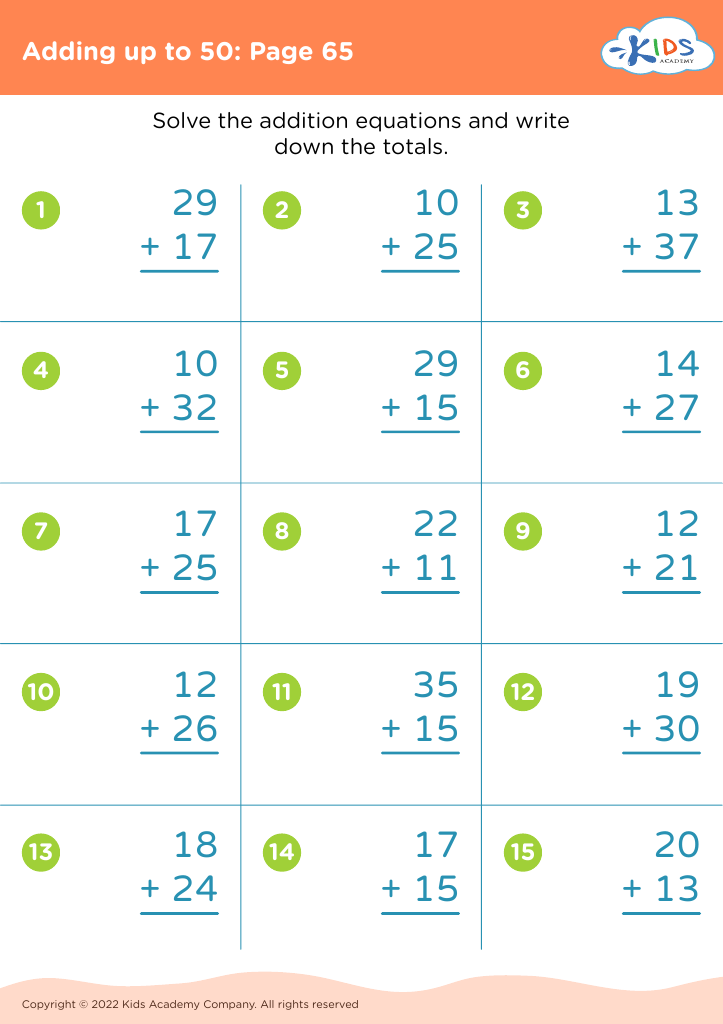







Understanding number relationships is crucial for children aged 7-8 as it lays the foundation for their future mathematical learning. At this stage, children transition from simple arithmetic to more complex concepts, such as addition, subtraction, multiplication, and division. Grasping number relationships helps them make connections between these operations, fostering a deeper understanding of how numbers interact with each other.
Parents and teachers should care about nurturing this understanding because it enhances critical thinking and problem-solving skills. When children comprehend how numbers relate — for example, realizing that the sum of two numbers can create different pathways to the same result — they become more versatile in their approach to math. This adaptability supports their ability to tackle word problems, develop estimating skills, and enhance their number sense.
Furthermore, a solid grasp of number relationships helps boost students' confidence in math, reducing anxiety and increasing their enjoyment of the subject. When children see math as connected and meaningful, they are more likely to engage in mathematical discussions, ask questions, and explore concepts beyond rote memorization. Ultimately, fostering number relationships prepares children not just for standardized testing, but for real-world applications and future academic success.








