Understanding quadrilaterals Math Worksheets for Ages 7-8
4 filtered results
-
From - To
Explore our engaging "Understanding Quadrilaterals" math worksheets designed specifically for children aged 7-8. These interactive resources help young learners identify and classify various quadrilaterals, such as squares, rectangles, and trapezoids. The worksheets encourage critical thinking and enhance spatial awareness through fun activities, including drawing, matching, and problem-solving exercises. Kids will gain confidence in geometry while honing their skills in recognition and classification. Our carefully crafted materials support educators and parents in nurturing mathematical understanding and ensuring a solid foundation in geometry for future learning. Dive into the world of quadrilaterals and watch your child's math skills flourish!
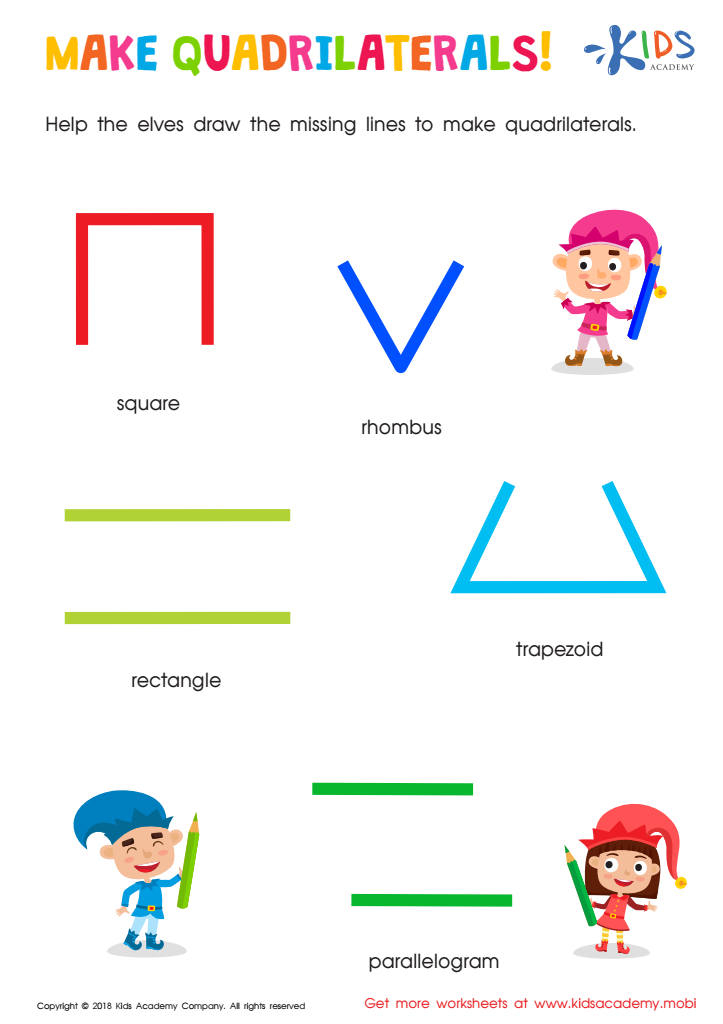
Make Quadrilaterals Worksheet
 Assign to My Students
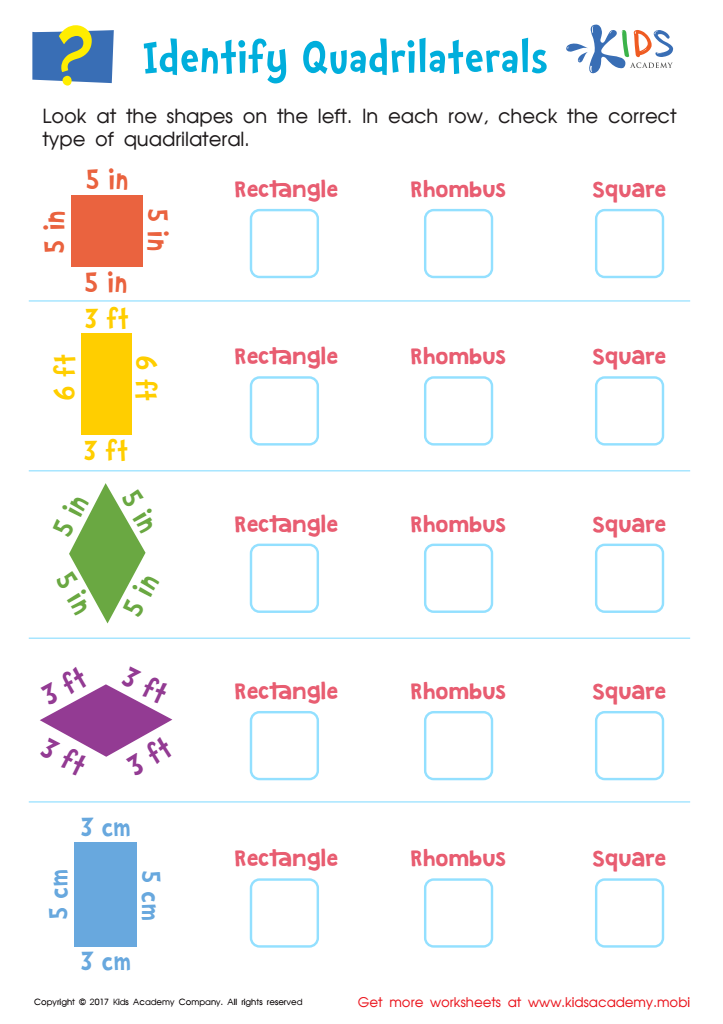
Identify Quadrilaterals Worksheet
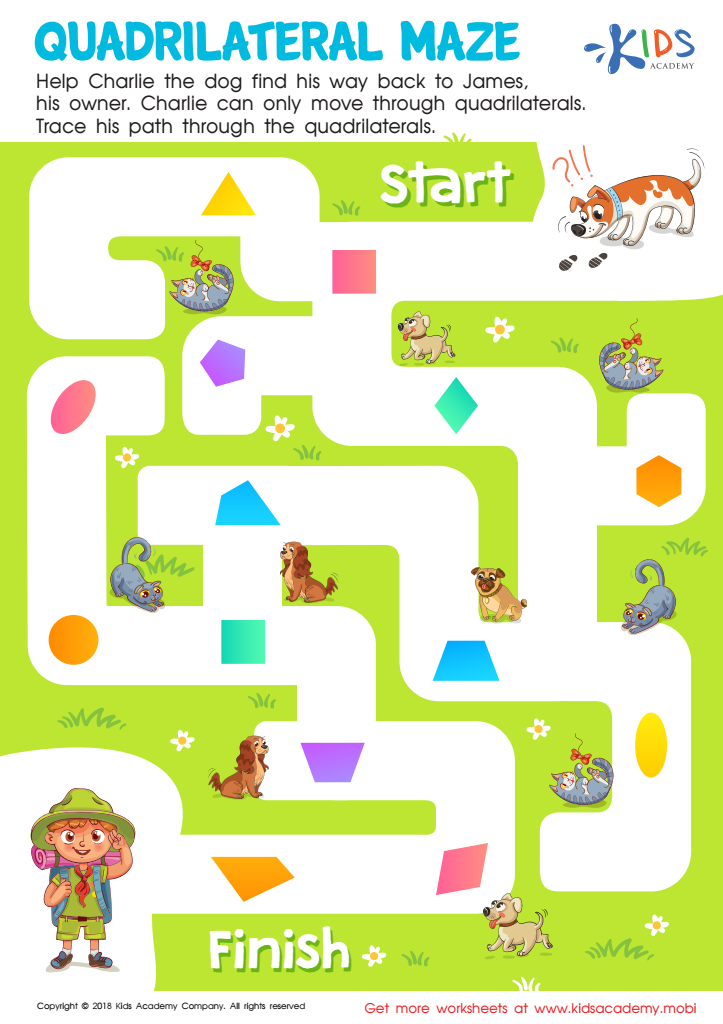
Quadrilateral Maze Worksheet
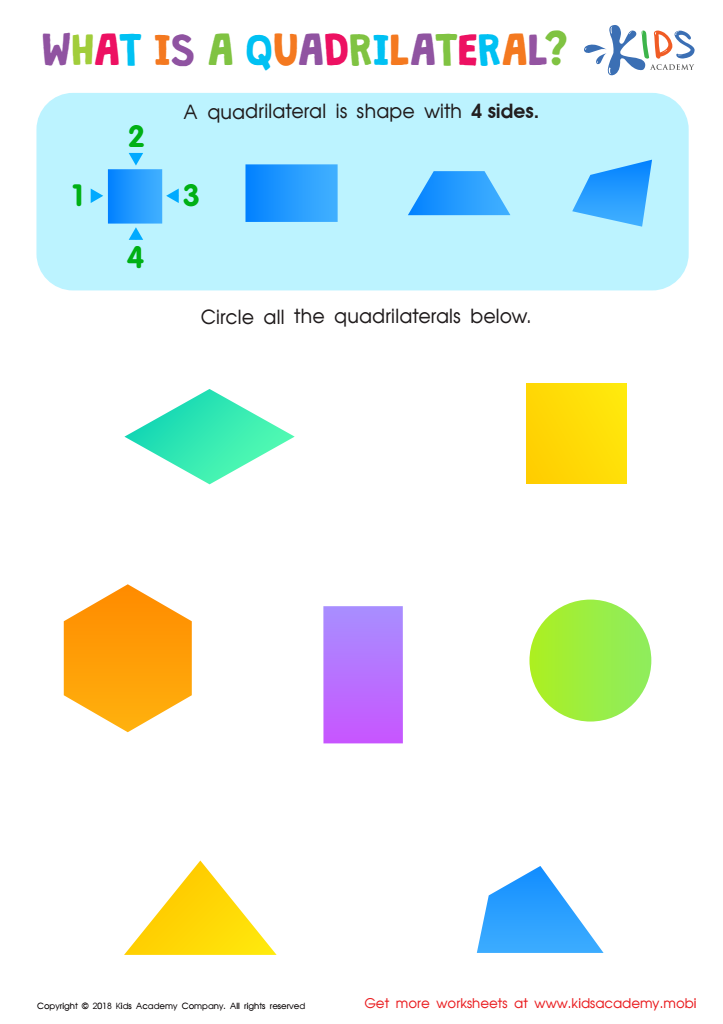
What Is a Quadrilateral? Worksheet





%20(1).jpg)


Understanding quadrilaterals is crucial for children aged 7-8, as it forms the foundation for their overall mathematical development. At this age, students are beginning to engage in geometry, which plays a significant role in Cognitive Skills and critical thinking. Recognizing various quadrilaterals—like squares, rectangles, parallelograms, and trapezoids—allows children to categorize and make sense of shapes they encounter in their surroundings.
Learning about quadrilaterals helps children increase their spatial awareness, making it easier for them to understand more complex geometric concepts as they progress in their education. It also boosts their problem-solving skills, as they learn to identify properties, such as parallel sides and angles, which are crucial for reasoning in mathematics.
Moreover, understanding quadrilaterals supports important cross-curricular connections, such as in art, where shapes are foundational for design and creativity. Engaging with geometry can enhance students' visual literacy, which is increasingly important in a visually driven world. Therefore, parents and teachers should encourage exploration and discussion of quadrilaterals to instill a strong mathematical foundation that will benefit students in many different areas of their academic and everyday lives.








