
Understanding Sequences Math Worksheets for Ages 7-8
16 filtered results
Difficulty Level
Grade
Age
-
From - To
Subject
Activity
Standards
Understanding Sequences Math Worksheets for Ages 7-8 are designed to help young learners master the concept of sequences through engaging and interactive exercises. These carefully crafted worksheets boost critical thinking and problem-solving skills by introducing students to pattern recognition, number sequences, and logical progression. Perfect for both classroom use and home practice, each worksheet provides a step-by-step approach, gradually increasing in complexity to ensure a solid understanding. Tailored for 7 to 8-year-olds, these worksheets enhance mathematical fluency and confidence, making learning sequences both fun and effective. Start your child's journey to math success with our expertly designed sequence worksheets.
Favorites
With answer key
Interactive
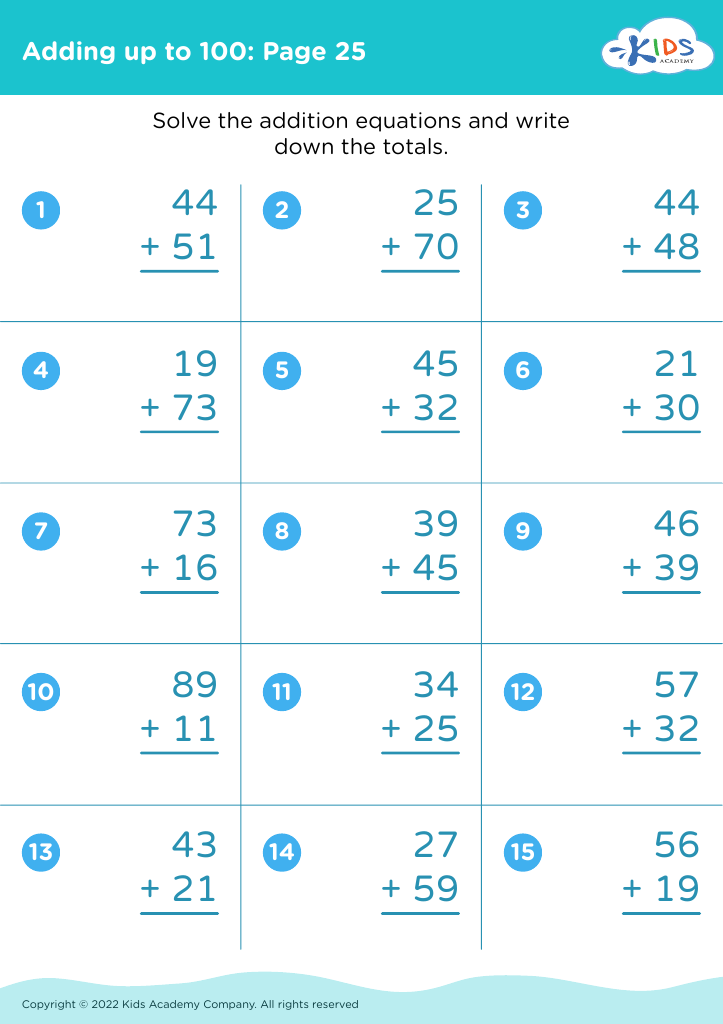
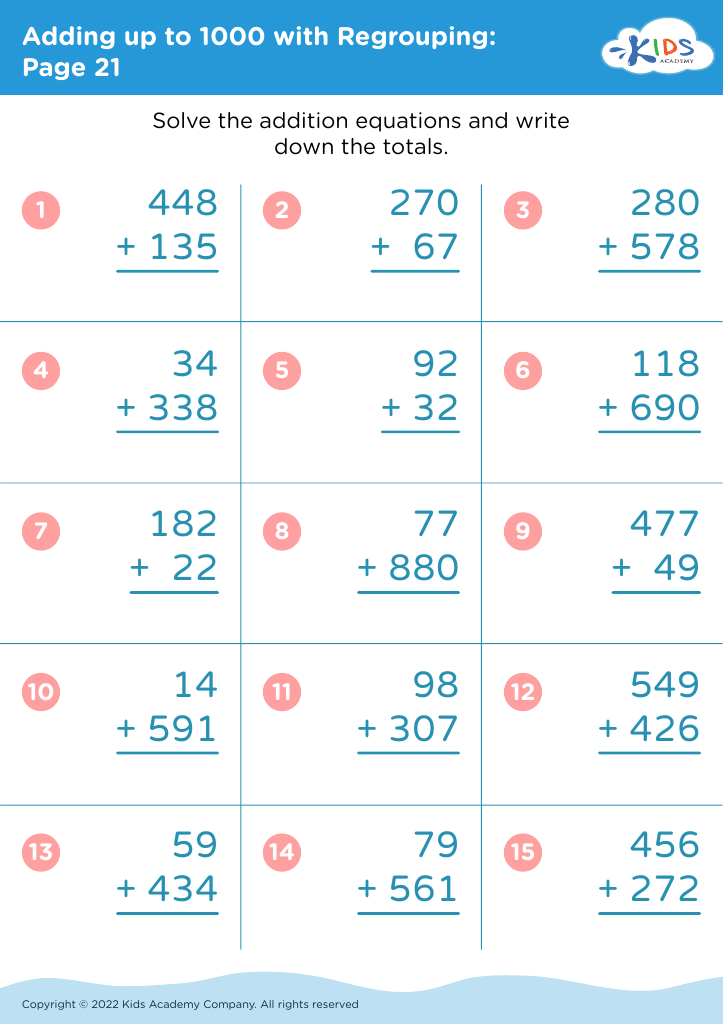
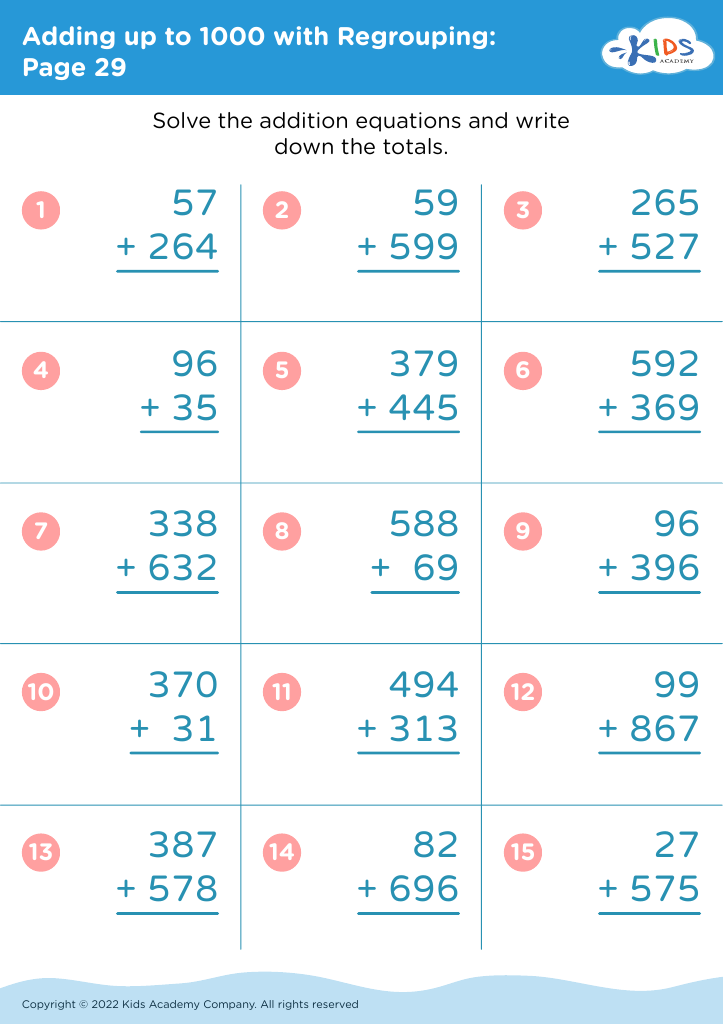
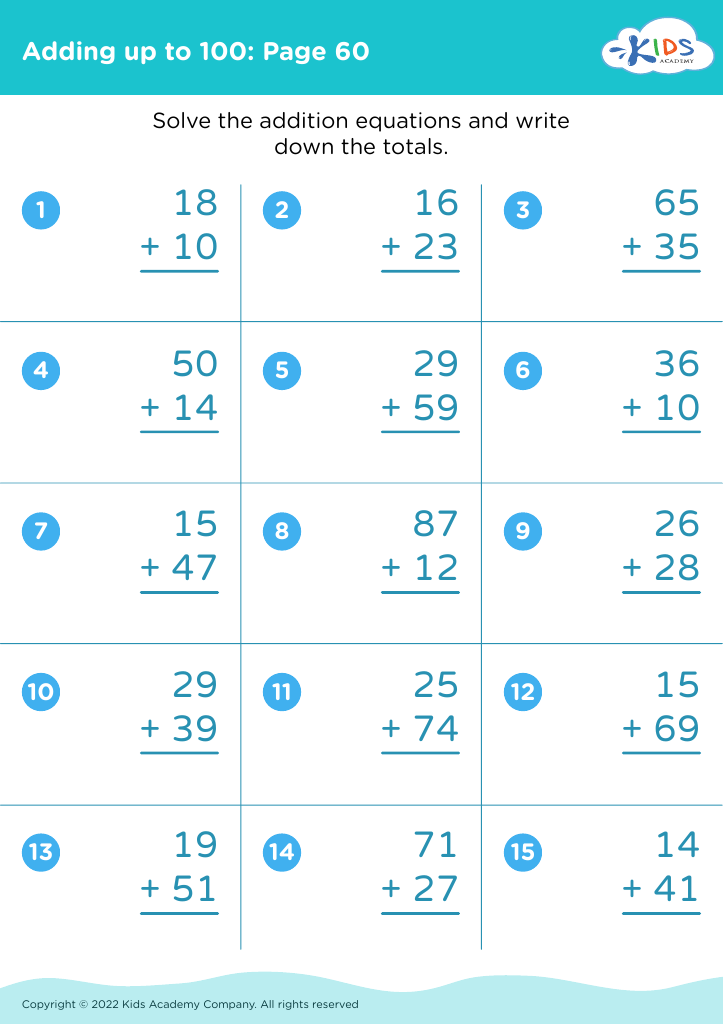
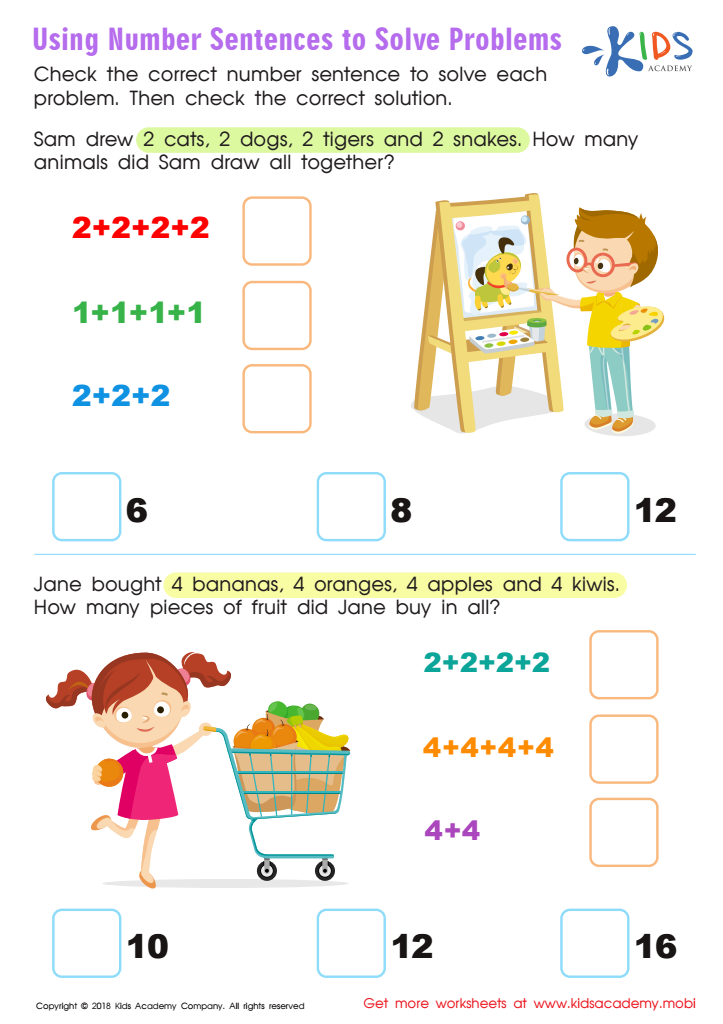
Using Number Sentences to Solve Problems Worksheet
Solving math problems requires an efficient strategy. Picture representation can help young mathematicians with basic addition problems, especially when it involves repeated addends. As they gain confidence, they'll be able to apply their number sentence solving abilities to more complex equations.
 Assign to My Students
Using Number Sentences to Solve Problems Worksheet
Worksheet
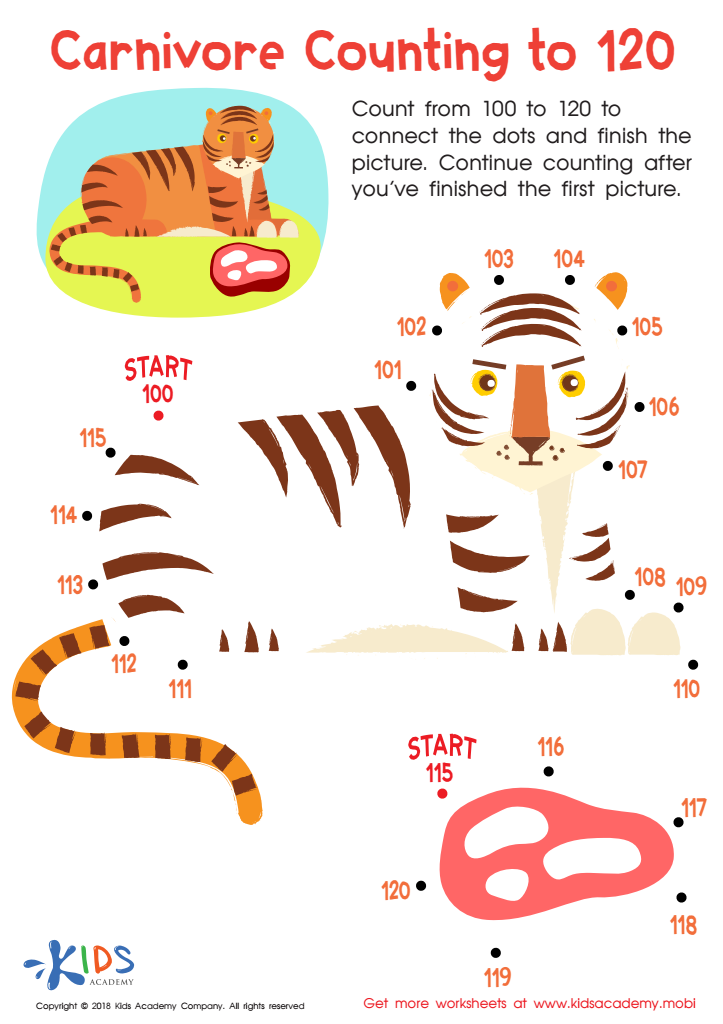
Carnivore Counting to 120 Worksheet
Ask your child to name some popular carnivores. Can they tell you what the animal in the worksheet is? A Tiger? Get them to count from 100 to 120 to connect the dots. After they finish the first picture, keep counting to help them practice!
Carnivore Counting to 120 Worksheet
Worksheet
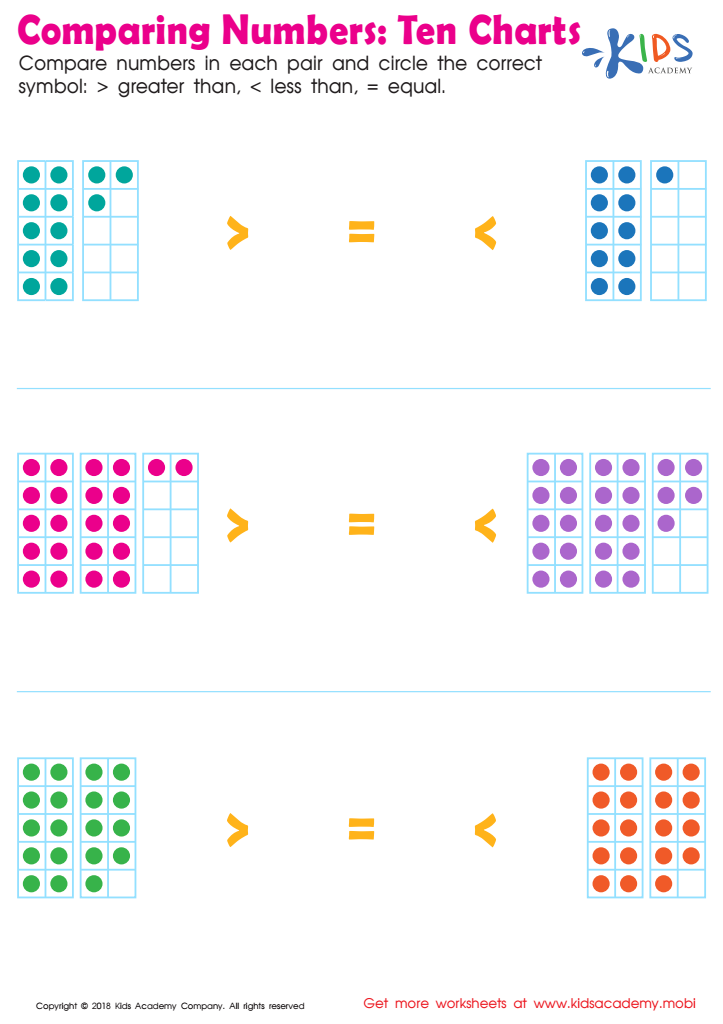
Ten Charts Worksheet
Help your child learn numbers in a creative way using this printable worksheet. They'll learn the difference between numbers, how to add them, and the symbols of "greater than", "less than" and "equals to". They can compare two sides, and identify which is greater, less or equal. Let their maths knowledge bloom!
Ten Charts Worksheet
Worksheet
Join Kids Academy for Free
Who is primarily going to use this learning content?







Understanding sequences in math is crucial for children aged 7-8 as it lays the foundation for higher-level mathematical concepts and critical thinking skills. At this stage, children are beginning to explore patterns and relationships in numbers, which are the building blocks for algebra and arithmetic fluency.
When children perceive and comprehend sequences, they learn to recognize order, predict future events, and develop problem-solving abilities. These skills are essential not just in math, but in daily life. For example, recognizing the sequence of days in a week or the steps required to complete a task promotes organizational skills and time management.
Moreover, early mastery of sequences enhances cognitive development by encouraging logical thinking and the ability to make connections between concepts. This understanding fosters confidence as children approach more complex subjects, knowing they can break down problems into manageable parts.
Teachers and parents play a pivotal role in nurturing this foundational knowledge. By providing hands-on activities, engaging puzzles, and real-life examples, adults can make learning interactive and enjoyable. A strong grasp on sequences allows children to tackle future mathematical challenges with ease, creating a positive and robust relationship with math that endures throughout their academic journey and beyond.








