
Visual recognition Math Worksheets for Ages 7-8
3 filtered results
Difficulty Level
Grade
Age
-
From - To
Subject
Activity
Standards
Enhance your child's math skills with our Visual Recognition Math Worksheets for ages 7-8. Perfectly tailored for young learners, these engaging worksheets help children grasp essential math concepts through fun, visual activities. Designed to boost memory and pattern recognition, they focus on numbers, shapes, and problem-solving techniques. Each worksheet incorporates colorful illustrations to make learning interactive and enjoyable. Ideal for reinforcing classroom lessons or practicing at home, our Visual Recognition Math Worksheets build a strong mathematical foundation in early learners, fostering confidence and a love for math. Unlock your child's potential with these captivating and educational resources.
Favorites
With answer key
Interactive
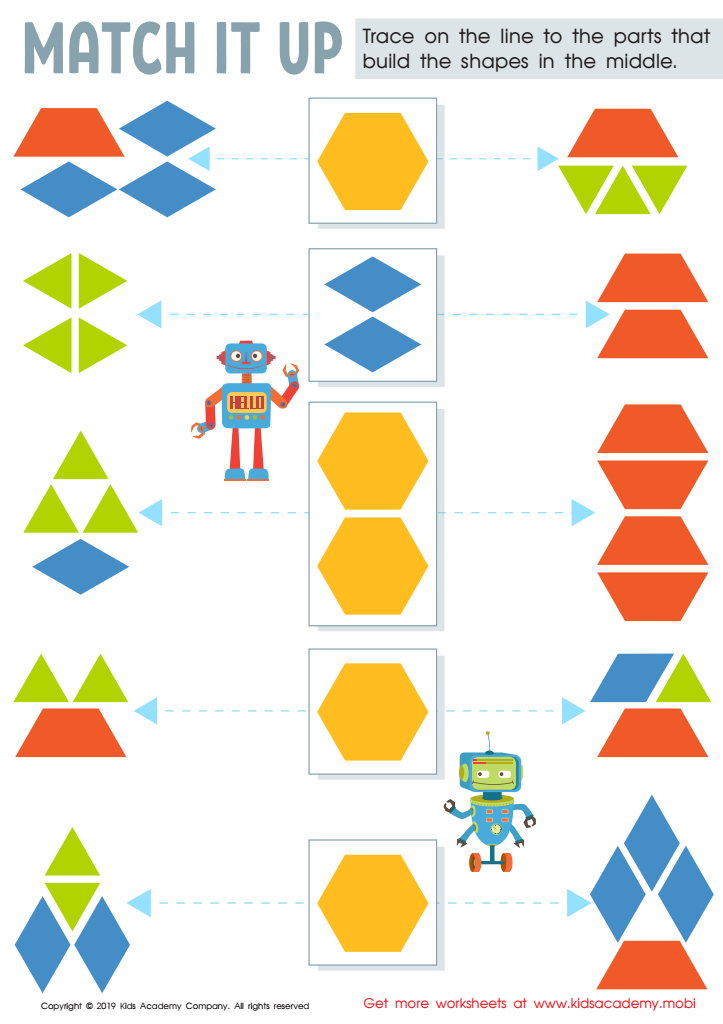
Match It up Worksheet
If your kids are into robots, they'll be thrilled to work on this worksheet. Ask them to name shapes they know, and help them draw and identify these shapes. Look at the shapes in the middle, and the sides. Finally, help your kids trace the lines to build the shapes in the middle.
 Assign to My Students
Match It up Worksheet
Worksheet
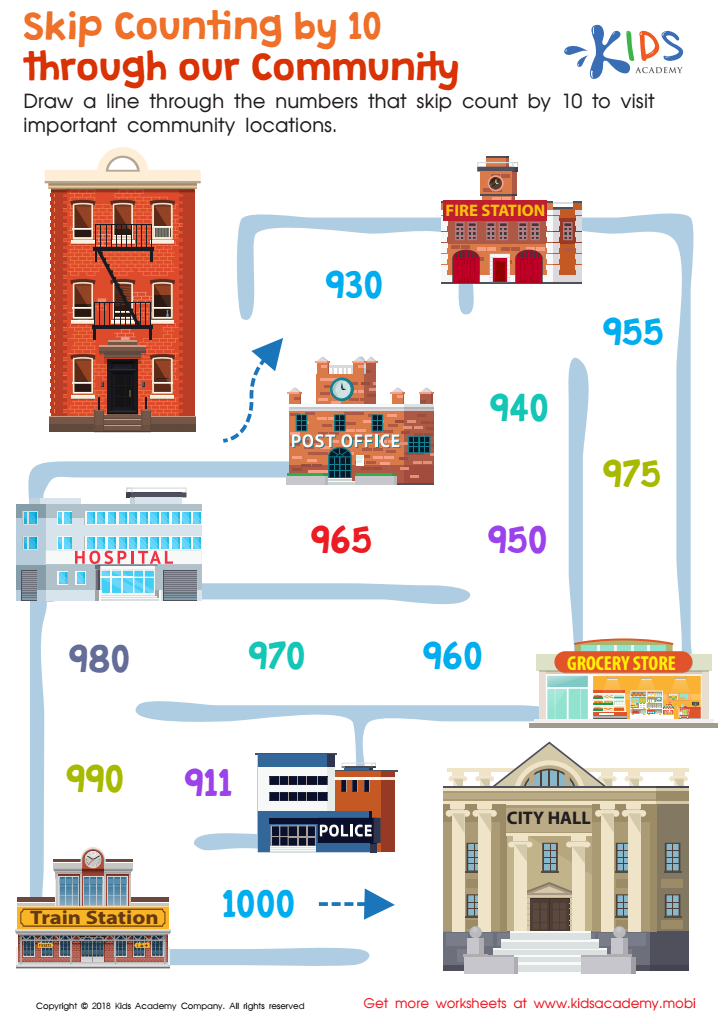
Skip Counting by 10 Through Our Community Worksheet
Our kids need to 'make a ten' and skip count by tens to boost their speed and accuracy in math. This cool, free worksheet takes them on a journey through their local community to practice counting by tens. They'll work on social studies and fine motor skills while having fun with the maze they get to count by tens in!
Skip Counting by 10 Through Our Community Worksheet
Worksheet
Join Kids Academy for Free
Who is primarily going to use this learning content?




.jpg)

Visual recognition in math is vital for children ages 7-8 because it lays a solid foundation for their future mathematical understanding. At this stage, kids are transitioning from concrete to more abstract thinking. Visual tools such as diagrams, shapes, and pattern recognition help bridge this gap. They make abstract concepts tangible, aiding in comprehension.
Research shows that integrating visual elements into math lessons enhances memory retention and understanding. For instance, using visual aids to teach addition and subtraction helps kids grasp the concept of quantity and difference. Recognizing patterns not only helps in solving problems faster but also builds a child's analytical thinking skills.
Moreover, visual recognition stimulates multiple areas of the brain, promoting cognitive development. This can boost a child's confidence and enjoyment in learning as they can "see" their progress. For example, using colorful blocks to visualize multiplication can make an otherwise daunting task more approachable and fun.
Involvement from parents and teachers in fostering visual recognition aids reinforces the importance of math in daily life and can lead to improved academic outcomes. By making math more engaging and accessible through visual methods, parents and teachers help children build a robust mathematical foundation, arming them with the skills they need for higher-order math and other academic subjects.








