
Understanding patterns Times Tables Worksheets for Ages 7-8
3 filtered results
Difficulty Level
Grade
Age
-
From - To
Subject
Activity
Standards
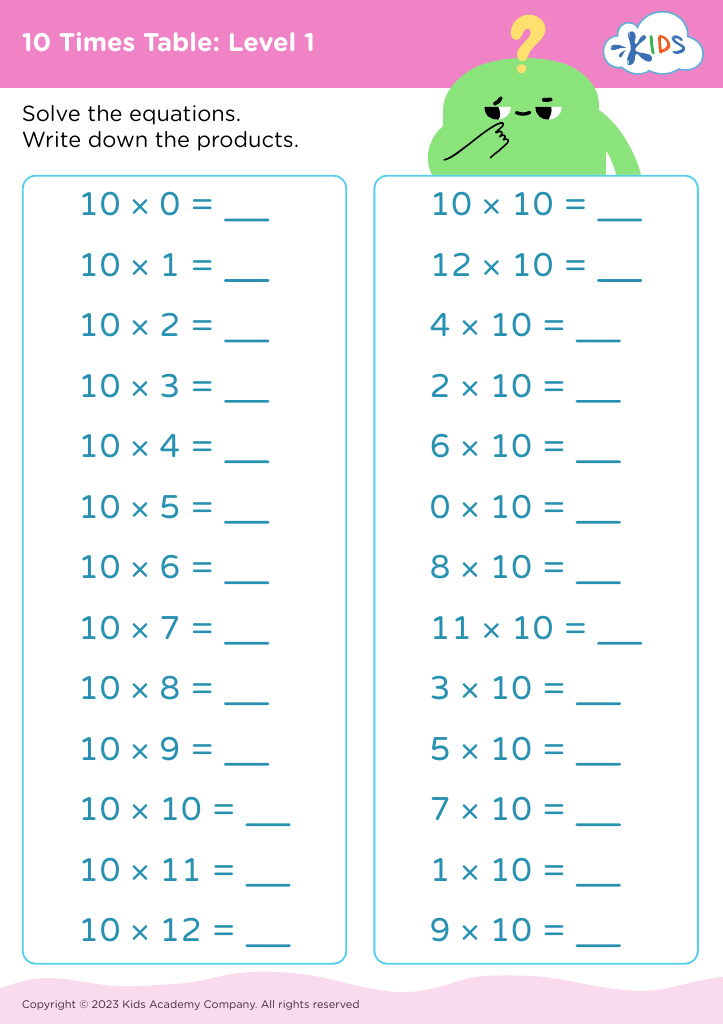
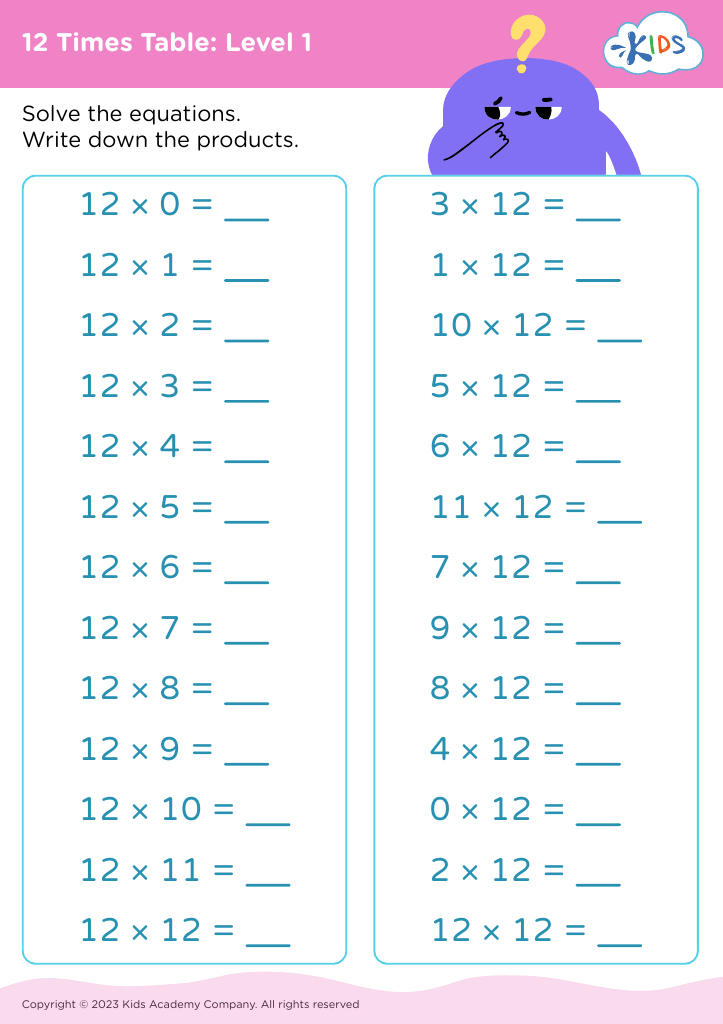
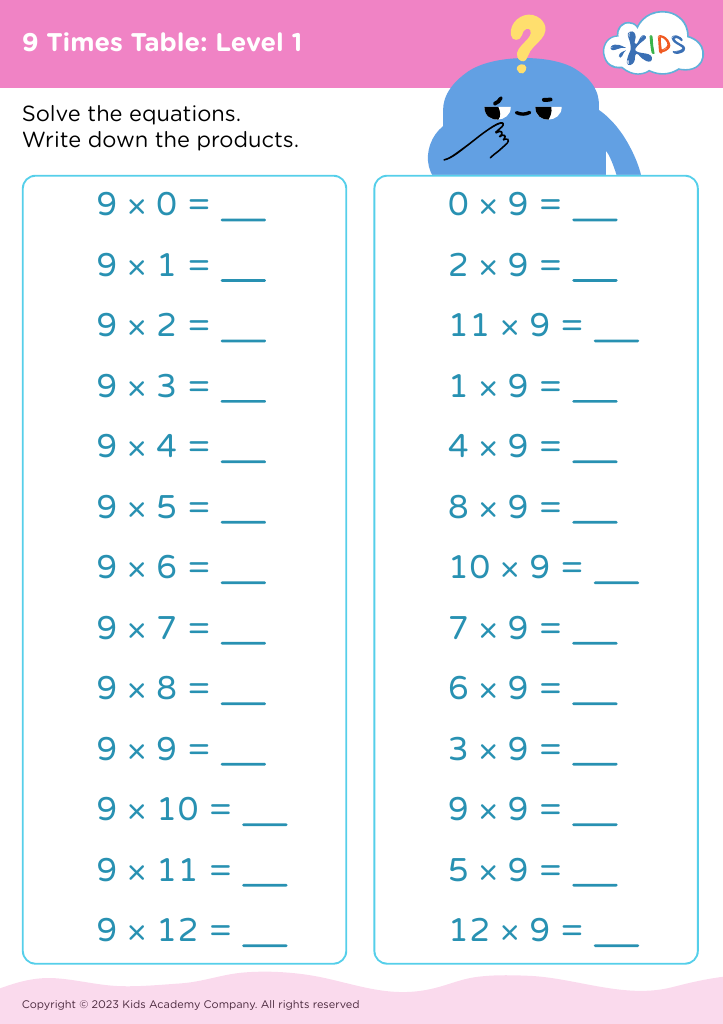
Discover our "Understanding Patterns Times Tables Worksheets" designed specifically for children ages 7-8. These engaging resources help young learners grasp the foundational concepts of multiplication by highlighting the patterns within times tables. With activities that encourage critical thinking, students will develop their number sense and improve their multiplication skills. Each worksheet is carefully crafted to make learning enjoyable, ensuring that kids can recognize patterns, enhance their memorization abilities, and apply their knowledge in practical scenarios. Ideal for classroom use or at-home practice, our worksheets provide the perfect blend of fun and educational value, making multiplication mastery a manageable goal!
Favorites
With answer key
Interactive
Join Kids Academy for Free
Who is primarily going to use this learning content?





Understanding patterns in times tables is crucial for children ages 7-8, as it forms the foundation for their mathematical skills. At this stage, children begin to explore multiplication not merely as a series of rote facts but as a relational concept. Recognizing patterns helps learners see the connections in numbers, which enhances their problem-solving abilities and mathematical reasoning.
For example, recognizing that the multiplication of 5 has a consistent pattern (5, 10, 15, etc.) reinforces not just recitation but an understanding of the relationships between numbers. It aids in developing their ability to calculate quickly and increases confidence in math.
Moreover, understanding these patterns helps children not just in multiplication but also in division, fractions, and even more advanced concepts later on. This lays the groundwork for future success in math and related subjects.
When parents and teachers emphasize these connections, they not only make learning more engaging but also empower children to approach math with curiosity and resilience. Ultimately, fostering a deep understanding of patterns assists children in becoming independent learners, preparing them for more complex mathematical concepts in subsequent grades. This foundational knowledge is essential for lifelong mathematical proficiency.








