Reading Improvement Building Vocabulary Worksheets for Ages 7-8
5 filtered results
-
From - To
Enhance your child's reading and vocabulary skills with our engaging "Reading Improvement Building Vocabulary Worksheets" designed specifically for ages 7-8. These worksheets offer a fun and interactive way for young learners to expand their vocabulary, improve comprehension, and boost their confidence in reading. With a variety of activities such as matching words, word searches, and contextual exercises, children will enjoy dynamic learning experiences that make vocabulary building exciting. Perfect for use at home or in the classroom, these worksheets are aligned with educational standards and cater to diverse learning styles. Help your child unlock the world of words today!
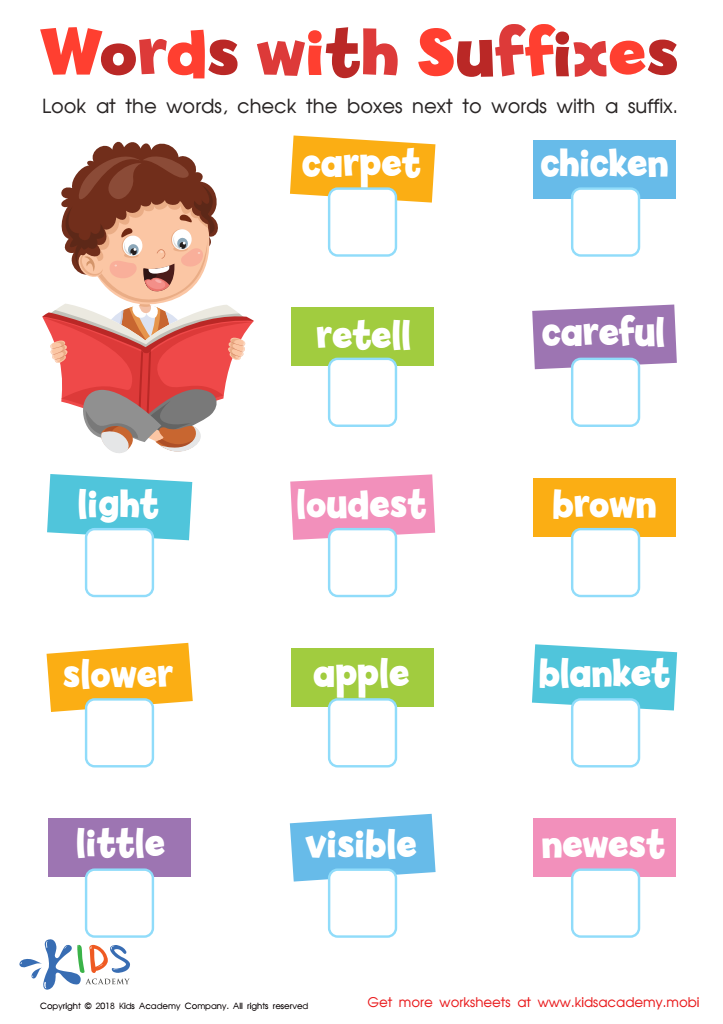
Reading: Words With Suffixes Worksheet
 Assign to My Students











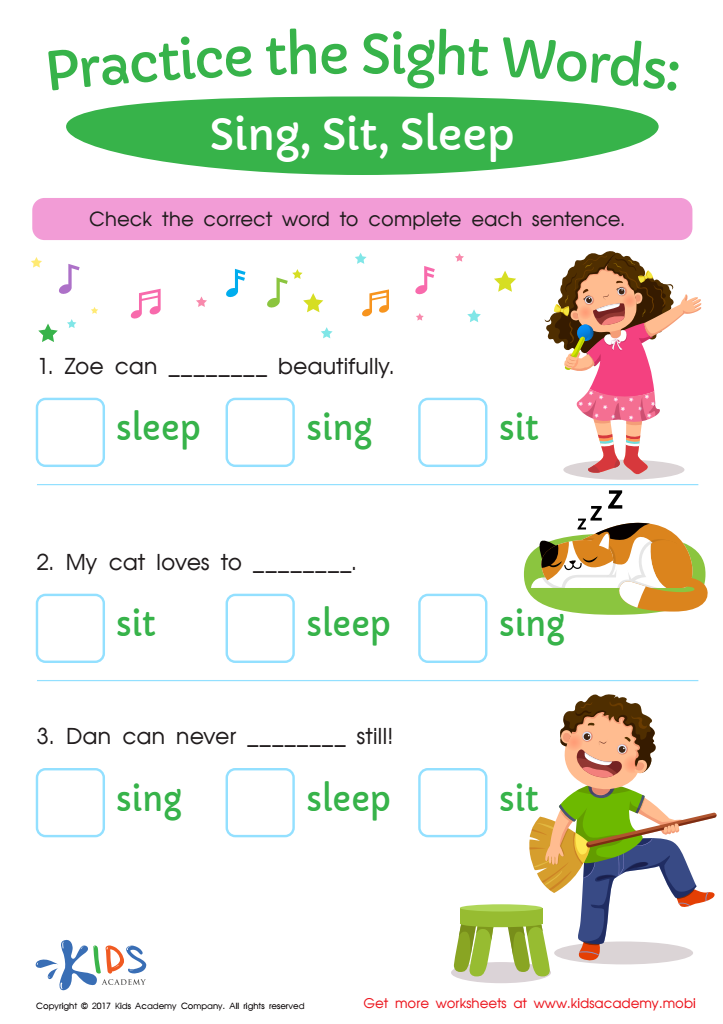
Sing, Sit, Sleep Sight Words Worksheet
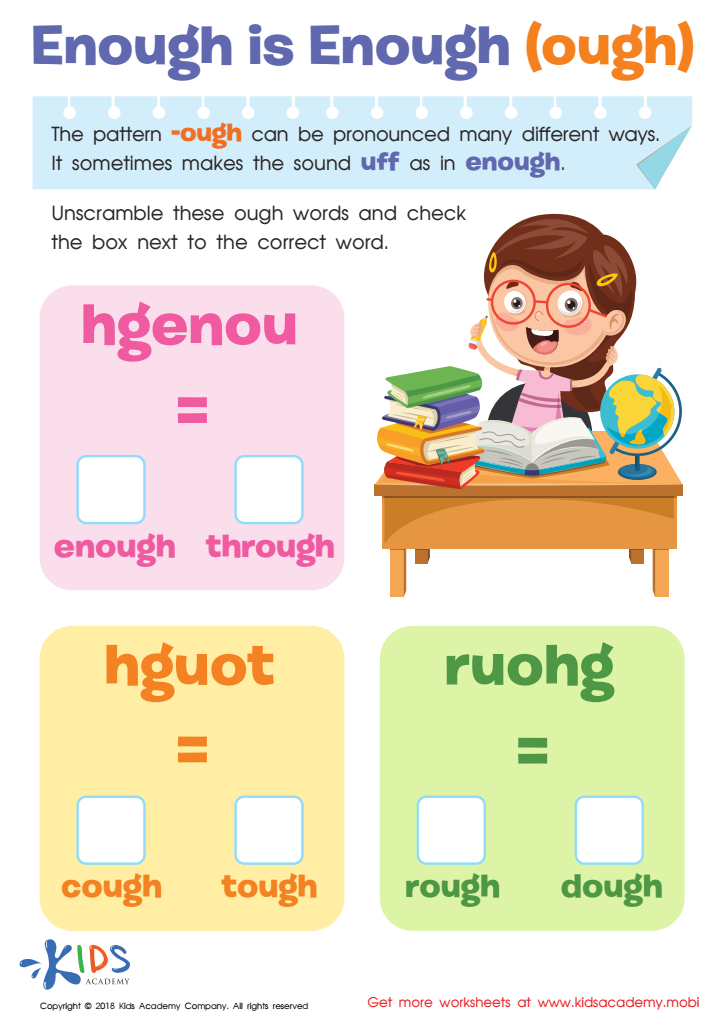
Enough Is Enough (ough) Worksheet
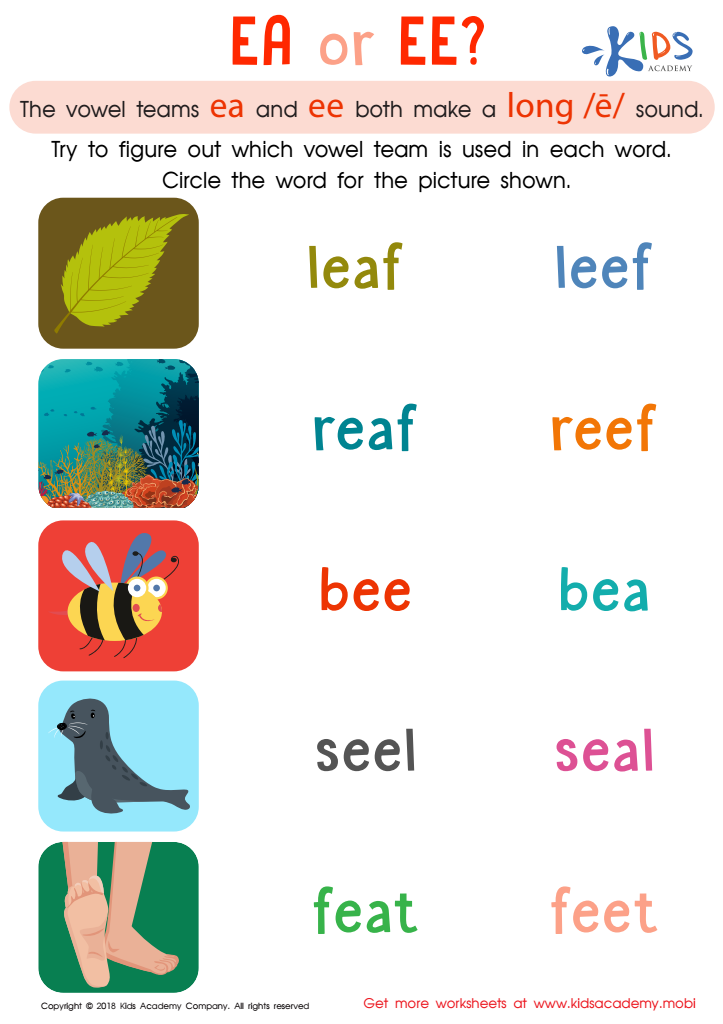
Reading: EA and EE Worksheet
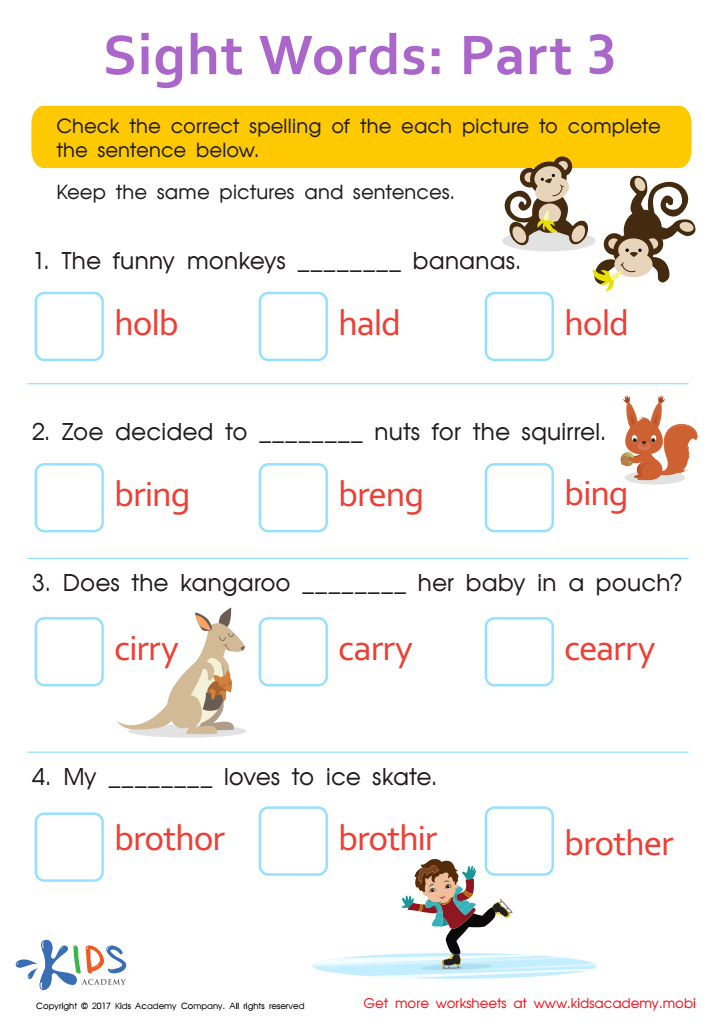
Hold, Bring, Carry, Brother Sight Words Worksheet




.jpg)



Parents and teachers should prioritize reading improvement and vocabulary building for children aged 7-8 because these skills are foundational for academic success and lifelong learning. At this developmental stage, children are transitioning from learning to read to reading to learn, making it essential for them to encounter a rich vocabulary that enhances comprehension. A robust vocabulary not only helps children understand what they read but also enables them to express their thoughts and ideas more clearly.
Building vocabulary at an early age influences children's reading fluency, spelling, and writing abilities. Engaging in diverse reading materials exposes children to new words and contexts, fostering curiosity and critical thinking. Moreover, a strong vocabulary improves students' performance in all subjects, including math and science, where understanding terminology is crucial.
Furthermore, strong reading skills are linked to better classroom engagement and self-confidence, encouraging children to participate actively in discussions. The positive correlation between vocabulary development and social skills means that children are better equipped to communicate, collaborate, and form relationships with peers. Thus, sustained efforts in reading improvement and vocabulary building not only enrich children's academic lives but also contribute significantly to their overall personal development.








