Story analysis Reading Fiction Worksheets for Ages 7-8
3 filtered results
-
From - To
Discover the enriching world of story analysis with our engaging reading fiction worksheets designed specifically for children ages 7-8. These worksheets help young learners deepen their understanding and appreciation of literature by guiding them to explore key story elements such as characters, plot, and settings. Through interactive activities, students will enhance their critical thinking skills and develop the ability to interpret and analyze stories effectively. Our story analysis worksheets not only promote literacy development but also nurture a lifelong love for reading. Ignite your child's imagination and comprehension with these fun, educational resources that make story analysis a delightful adventure!
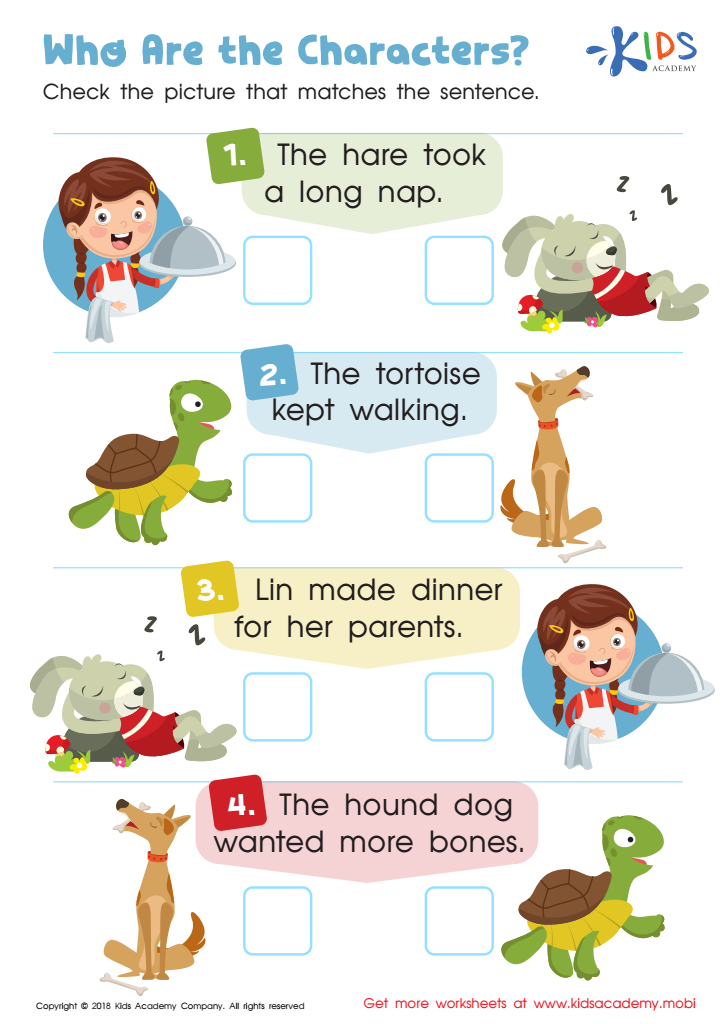
Who Are The Characters Worksheet
 Assign to My Students
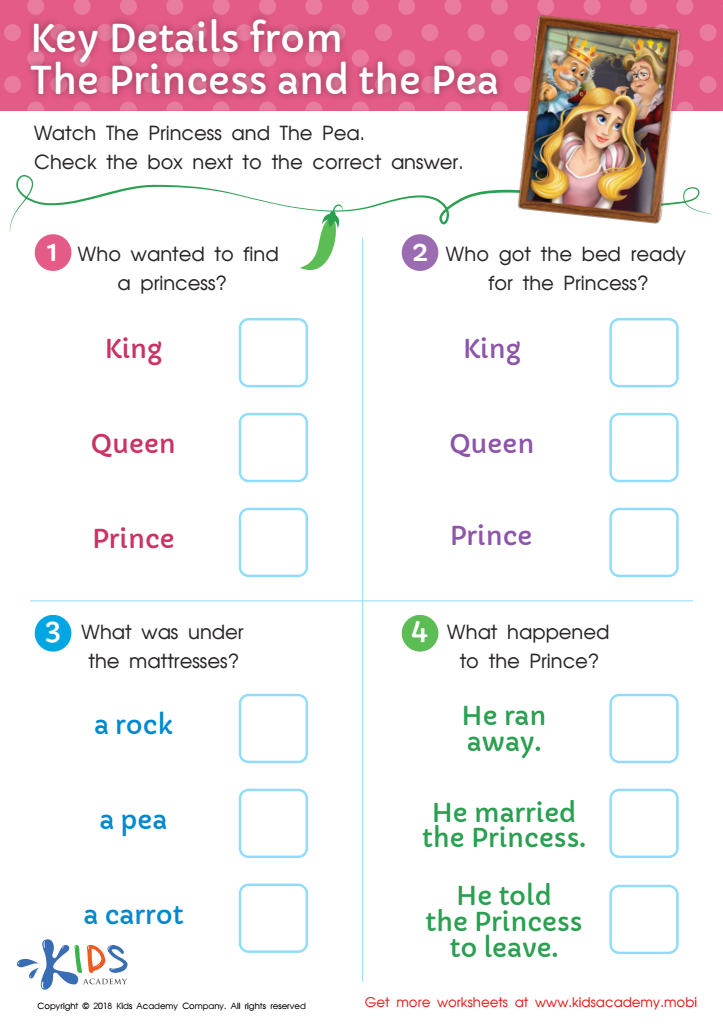
Key Details from the Princess and the Pea Worksheet
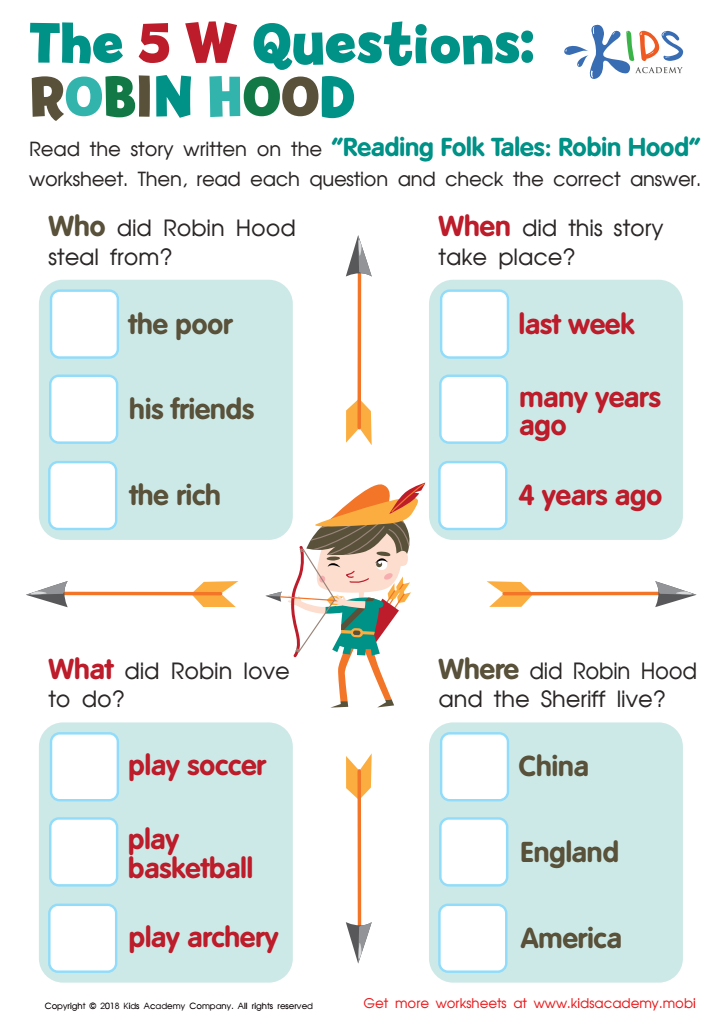
The 5 W Questions: Robin Hood Worksheet



.jpg)




Story analysis in reading fiction is essential for children ages 7-8 as it fosters critical thinking, comprehension, and emotional intelligence. During this stage, kids are beginning to engage more deeply with narratives, making it a prime time to introduce them to the elements of storytelling, such as characters, settings, and plot structures. By encouraging children to analyze stories, parents and teachers help them develop the ability to interpret themes and understand the motivations behind characters’ actions.
This skill not only enhances reading comprehension but also promotes empathy as children learn to see perspectives beyond their own. Discussing stories allows kids to articulate their thoughts, improving their verbal and analytical skills. Furthermore, story analysis cultivates a love for reading, encouraging kids to explore diverse genres and cultures.
Additionally, involvement in story analysis activities strengthens the bond between parents, teachers, and children through shared discussions and lessons. The skills gained through analyzing fiction also lay a foundation for future academic success across subjects, as they learn to approach texts critically and thoughtfully. Therefore, parents and educators should prioritize story analysis in their reading practices to empower children as thoughtful readers and motivated learners.








