Understanding perspectives Reading Fiction Worksheets for Ages 7-8
3 filtered results
-
From - To
Discover our engaging "Understanding Perspectives Reading Fiction Worksheets for Ages 7-8," designed to develop critical thinking and empathy in young readers. These worksheets challenge children to see the world through different characters' eyes, enhancing their comprehension and interpretative skills. Perfect for home or classroom use, each activity encourages students to discuss and write about varied viewpoints within stories, fostering a deeper connection to the text. By exploring diverse perspectives, your child will not only improve their reading abilities but also gain invaluable life skills that promote understanding and appreciation of others' experiences. Unlock the magic of reading with these enriching exercises!
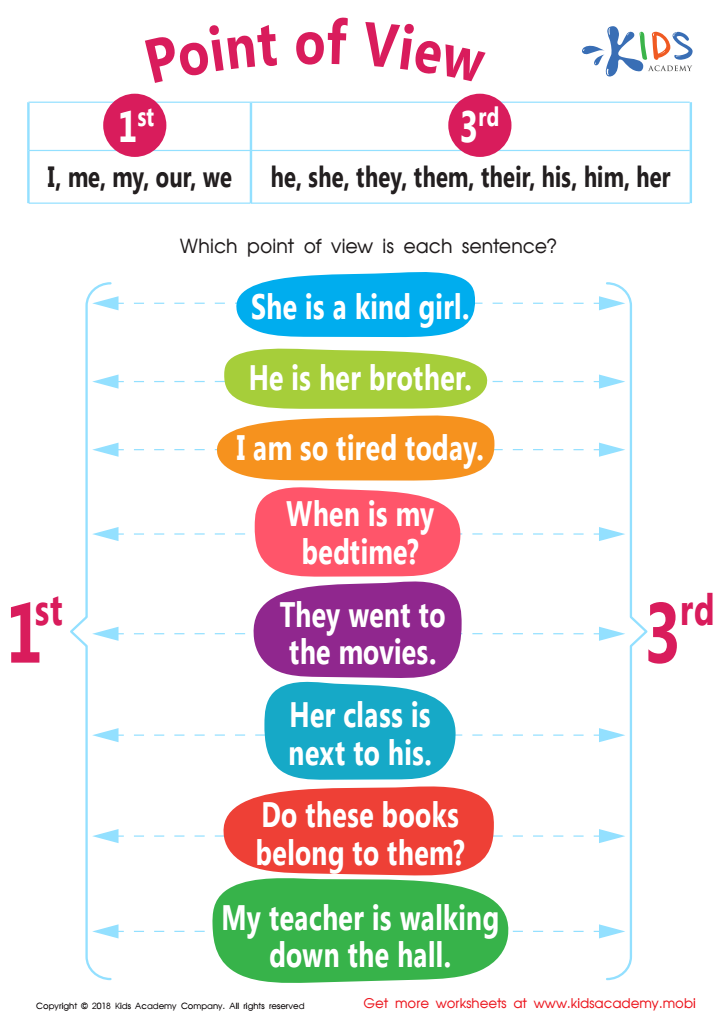
Point of View Worksheet
 Assign to My Students
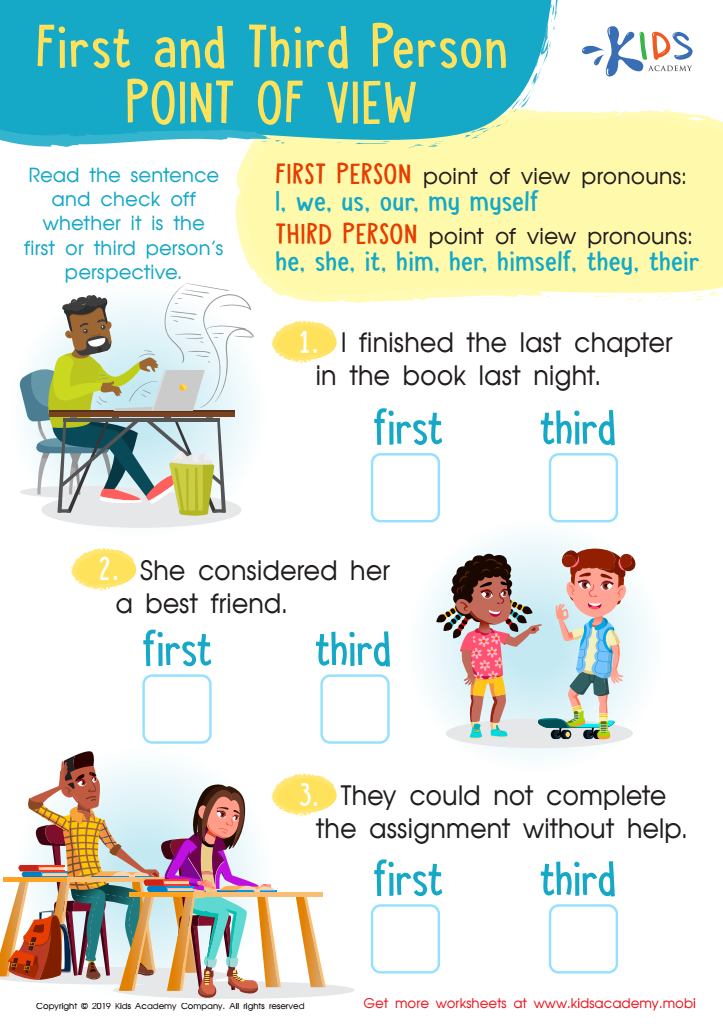
First and Third Person Point of View Worksheet
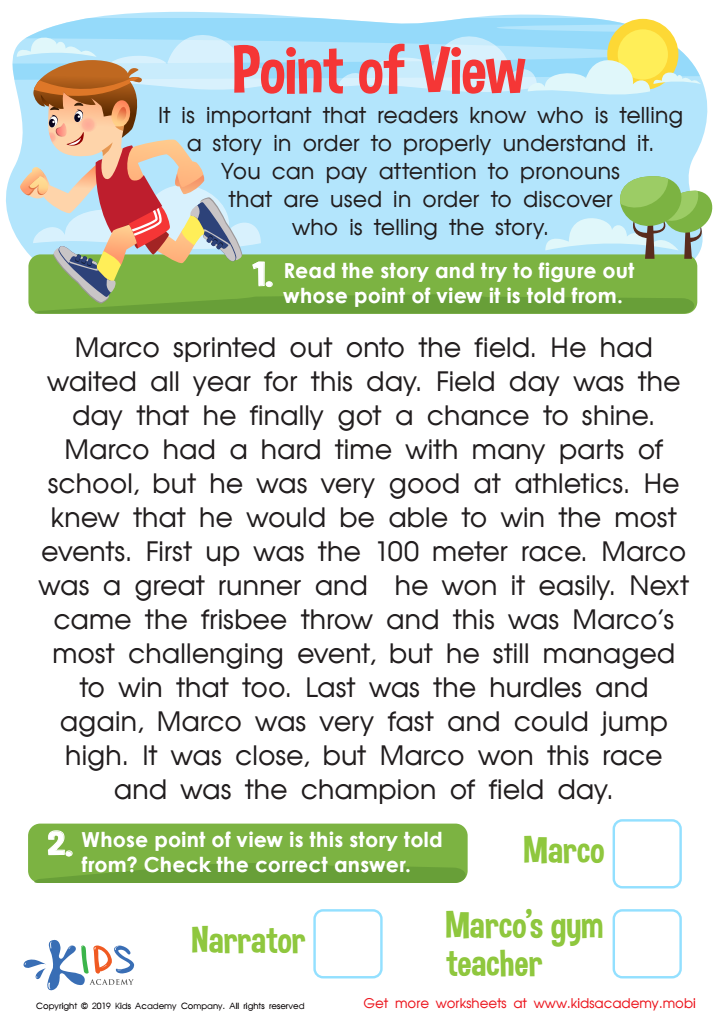
Point of View Worksheet








Understanding perspectives while reading fiction is essential for children aged 7-8 for various reasons. At this developmental stage, children are forming their social and emotional intelligence, and being exposed to different viewpoints can significantly aid this process. When parents or teachers engage children in stories that highlight diverse characters, backgrounds, and experiences, they nurture empathy and compassion.
The ability to see the world through another's eyes helps children to understand that their thoughts and feelings are not the only ones that matter. This cultivation of empathy leads to better conflict resolution skills and promotes cooperation in social settings, such as playdates or classroom activities. Furthermore, understanding perspectives enhances critical thinking. Young readers learn to analyze situations and characters from various angles, fostering open-mindedness and problem-solving abilities.
Additionally, in a multicultural world, being exposed to different perspectives helps children appreciate and celebrate diversity. By reading fiction that represents a range of cultures, ideas, and lifestyles, they become more inclusive and less likely to harbor prejudices as they grow.
So, encouraging children to read and comprehend different perspectives isn’t just about improving literacy skills; it’s about shaping well-rounded, emotionally intelligent, and socially responsible individuals. This forms a solid foundation for lifelong personal and academic success.








