Critical Thinking Sight Words Worksheets for Ages 7-8
4 filtered results
-
From - To
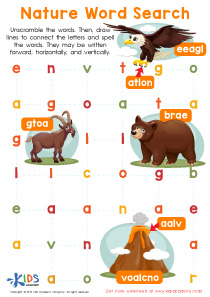
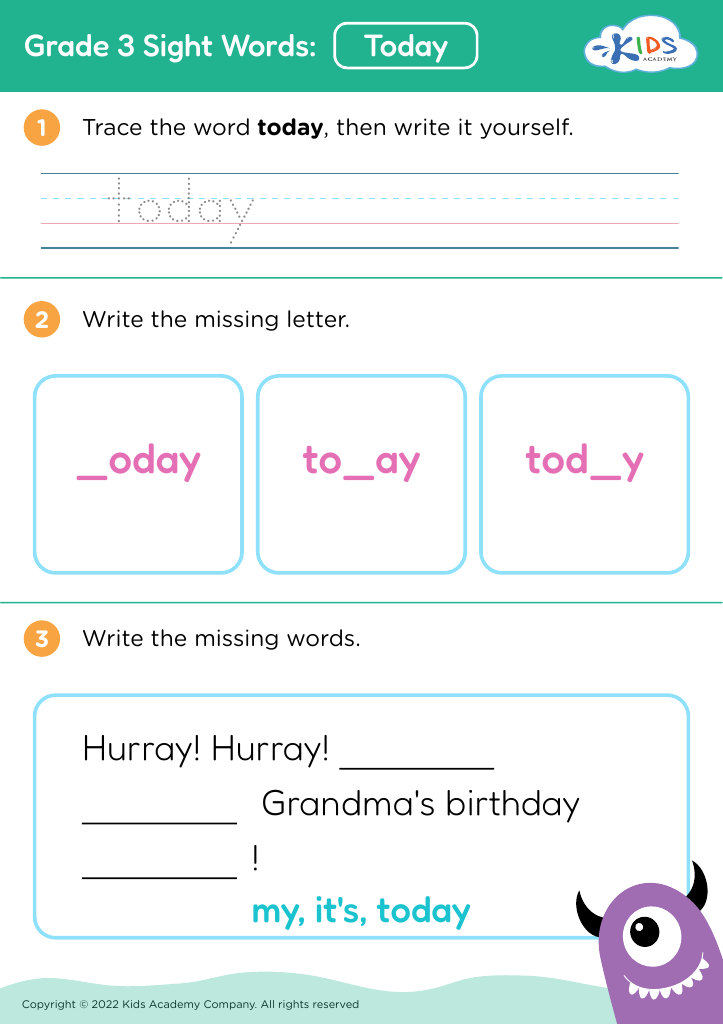
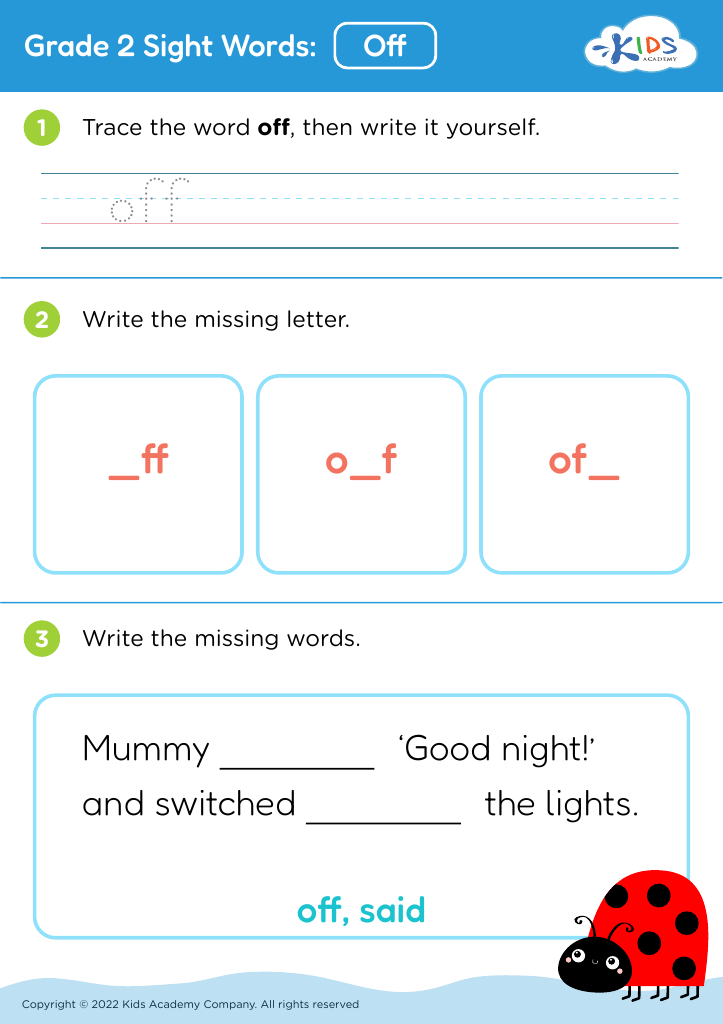
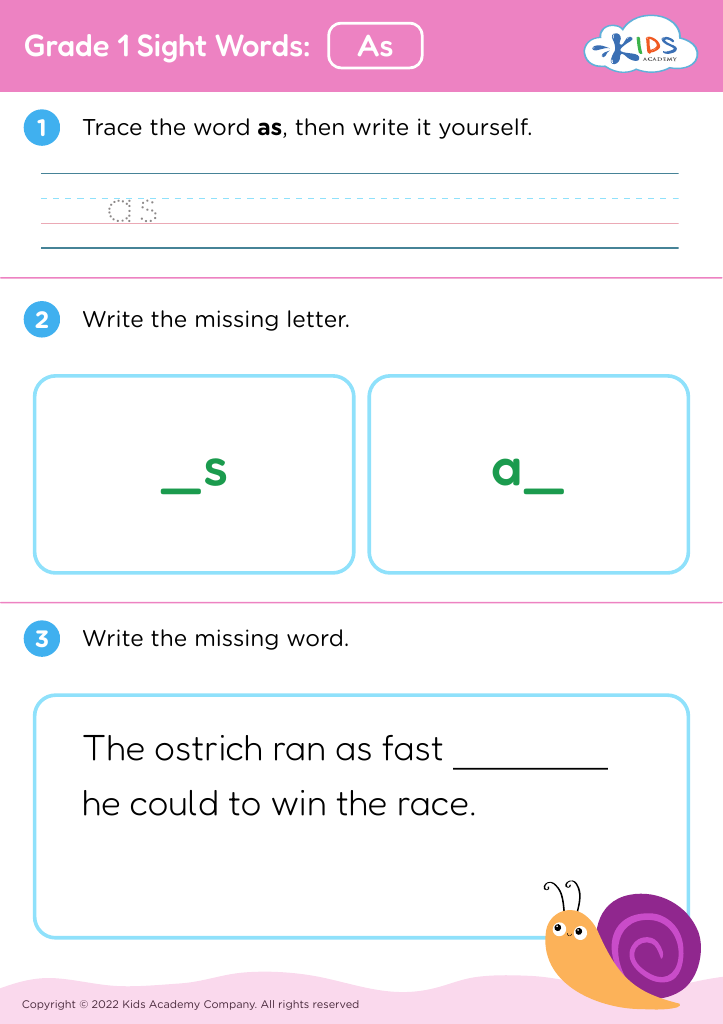
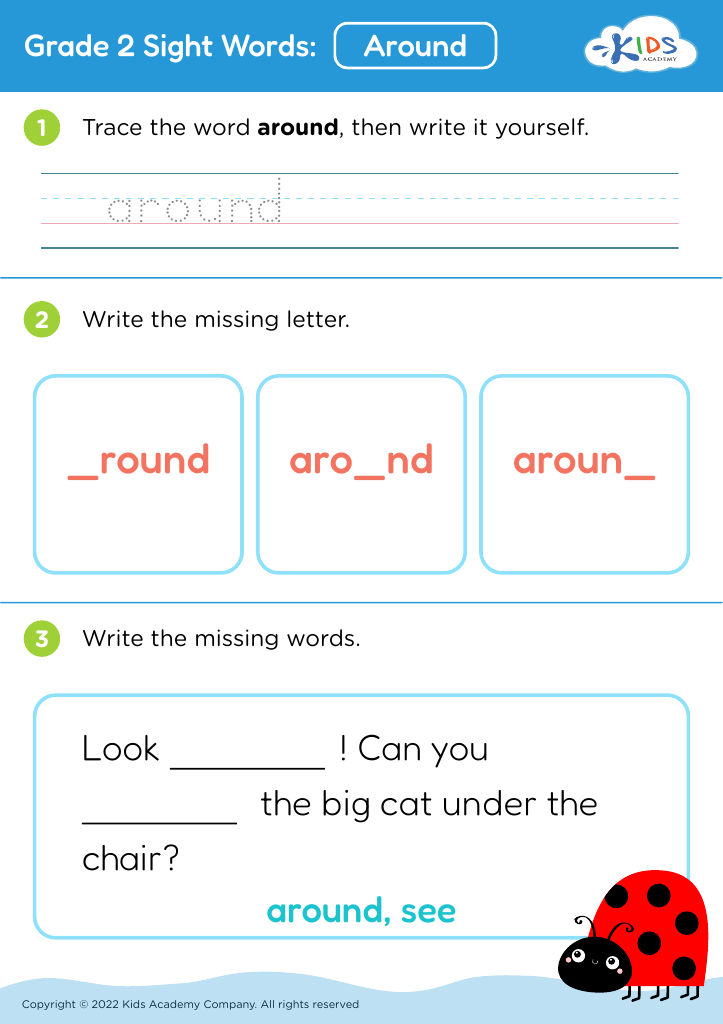
Enhance your child's reading skills with our "Critical Thinking Sight Words Worksheets" designed for ages 7-8. These engaging worksheets focus on essential sight words while promoting critical thinking abilities through fun activities. Kids will not only practice recognizing sight words but also learn to ask questions, make connections, and draw conclusions from the texts. Perfect for home or classroom use, our resources encourage analytical thinking and enhance comprehension skills. Nurture your child's love for learning with dynamic exercises that make reading exciting and meaningful. Explore our collection to boost literacy and cognitive development in young learners today!















Parents and teachers should prioritize Critical Thinking Sight Words for children aged 7-8 because these foundational terms significantly enhance language comprehension, storytelling skills, and independent problem-solving abilities. At this stage, children are transitioning from learning to read to reading to learn. Incorporating critical thinking into sight word education can transform passive recognition into active engagement. When children learn not just to recognize words, but also to analyze their meanings and contextual uses, they develop deeper comprehension skills.
By associating sight words with questions and discussions, educators and parents can encourage children to think critically about text. This heightens curiosity, fosters a love for reading, and reinforces connections to their experiences and knowledge. Additionally, integrating critical thinking activities with sight words promotes creativity, enabling children to use language more fluidly in expressing their ideas.
Furthermore, these skills are indispensable beyond the classroom. As children express thoughts about what they read, question information, and articulate their understanding, they build confidence in their communication skills and prepare for more complex literary analysis in later grades. Thus, fostering critical thinking in conjunction with sight word mastery nurtures a well-rounded, literate individual equipped to navigate an increasingly complex world.