Fraction comparison Sight Words Worksheets for Ages 7-8
5 filtered results
-
From - To
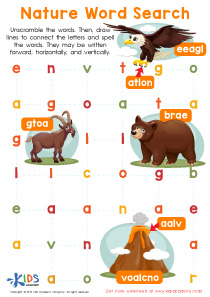
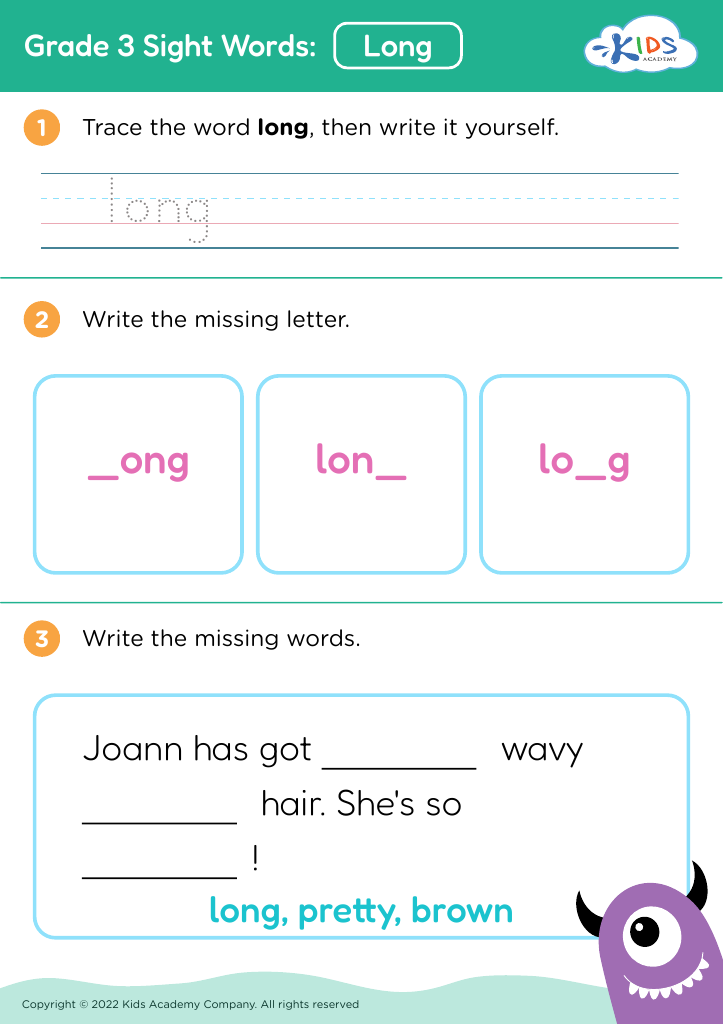
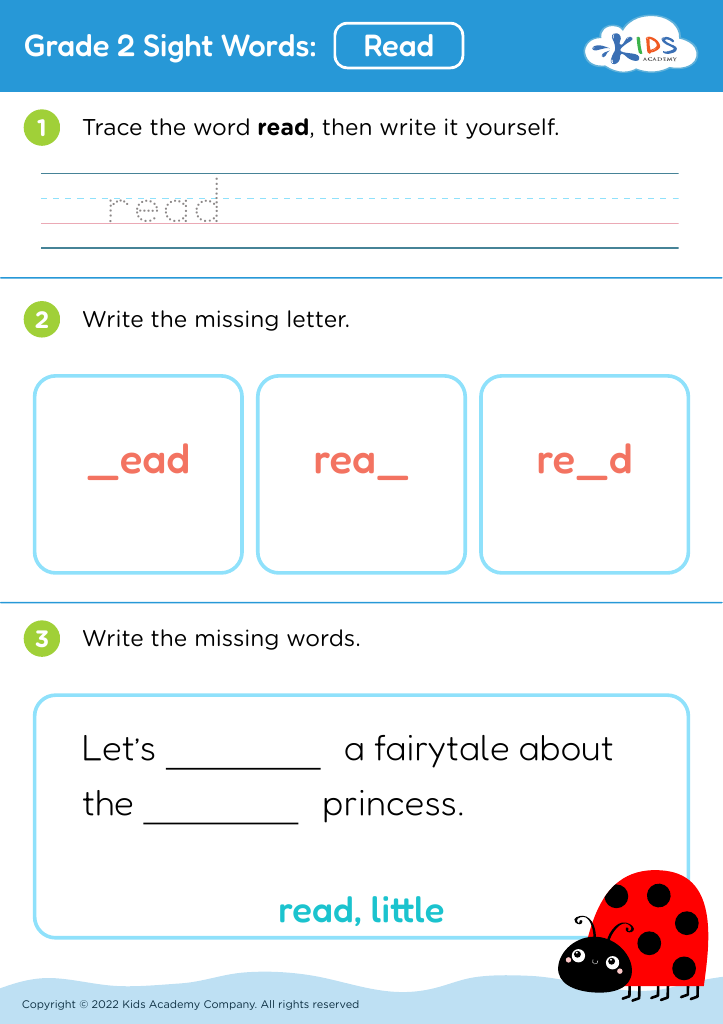
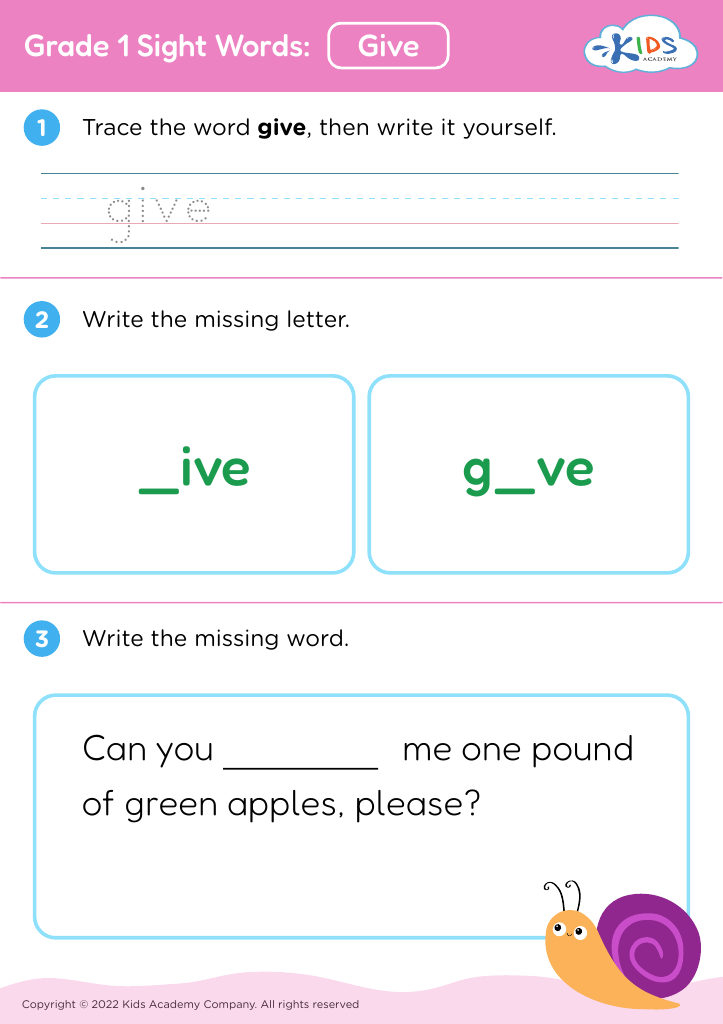
Introduce your child to foundational math concepts with our engaging Fraction Comparison Sight Words Worksheets tailored for ages 7-8! These printable resources not only enhance their understanding of fractions but also reinforce essential sight word recognition. Designed to make learning fun, each worksheet features interesting activities that encourage young learners to compare fractions while building their vocabulary. Perfect for homeschooling or classroom use, our worksheets cater to various learning styles, ensuring every child grasps these crucial skills. Enhance your child's math proficiency and reading fluency today with our thoughtfully created materials, setting them on a path to success in both subjects!

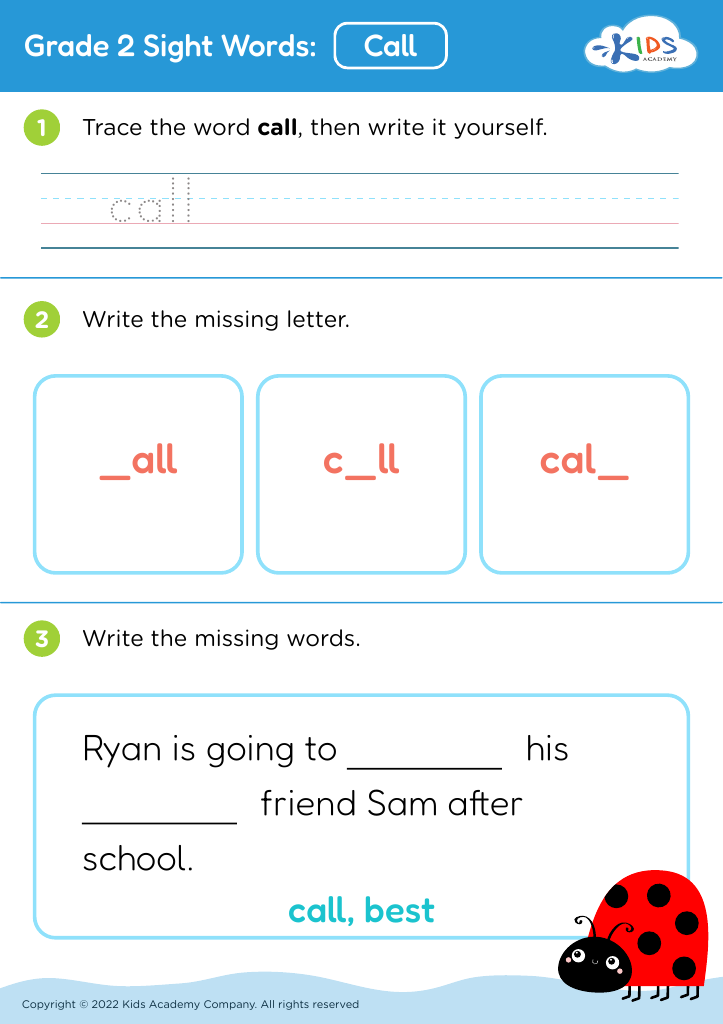
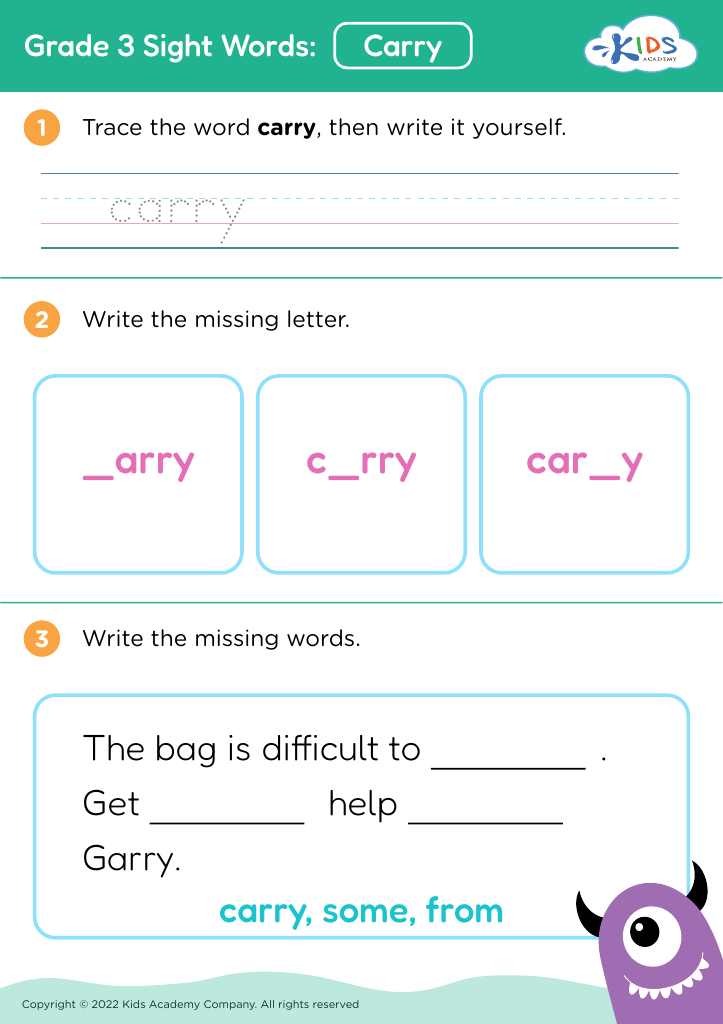








Understanding fraction comparison sight words is crucial for children aged 7-8 as they lay the foundation for more complex mathematical concepts. At this developmental stage, students are introduced to fractions, and familiarizing them with specific terminology enhances their ability to grasp concepts and engage in discussions about comparisons, parts of a whole, and equivalencies.
When parents and teachers emphasize fraction comparison sight words such as “greater than,” “less than,” “equal to,” and “half,” they help children build a strong mathematical vocabulary. This vocabulary aids in fostering confidence, critical thinking, and problem-solving skills. Effective communication using these terms allows students to express their understanding clearly and collaborate with peers.
Moreover, mastering fraction comparison can also support children in real-world applications, such as cooking or sharing, enriching their everyday experiences with math. Developing fluency in these terms contributes to better performance in assessments and provides a seamless transition into more complex operations involving fractions.
By prioritizing fraction comparison sight words, parents and teachers not only enhance mathematical understanding but also cultivate a positive attitude towards learning, motivating students to explore mathematics with enthusiasm and curiosity. This preparation can set the stage for future mathematical success.