Recognizing Patterns Sight Words Worksheets for Ages 7-8
3 filtered results
-
From - To
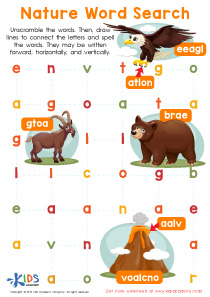
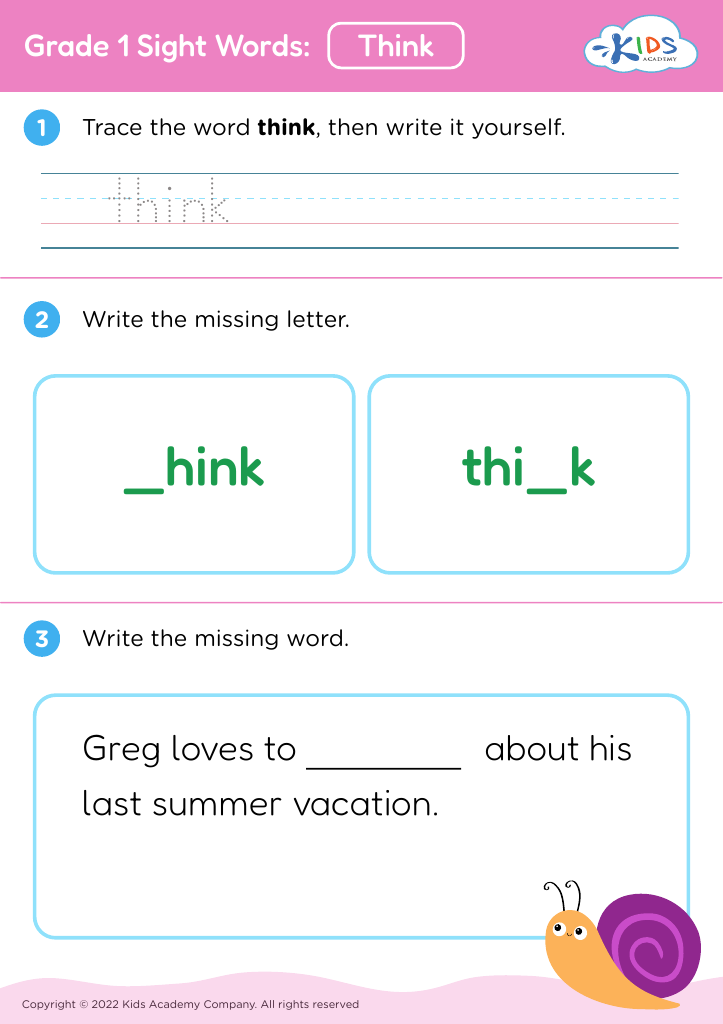
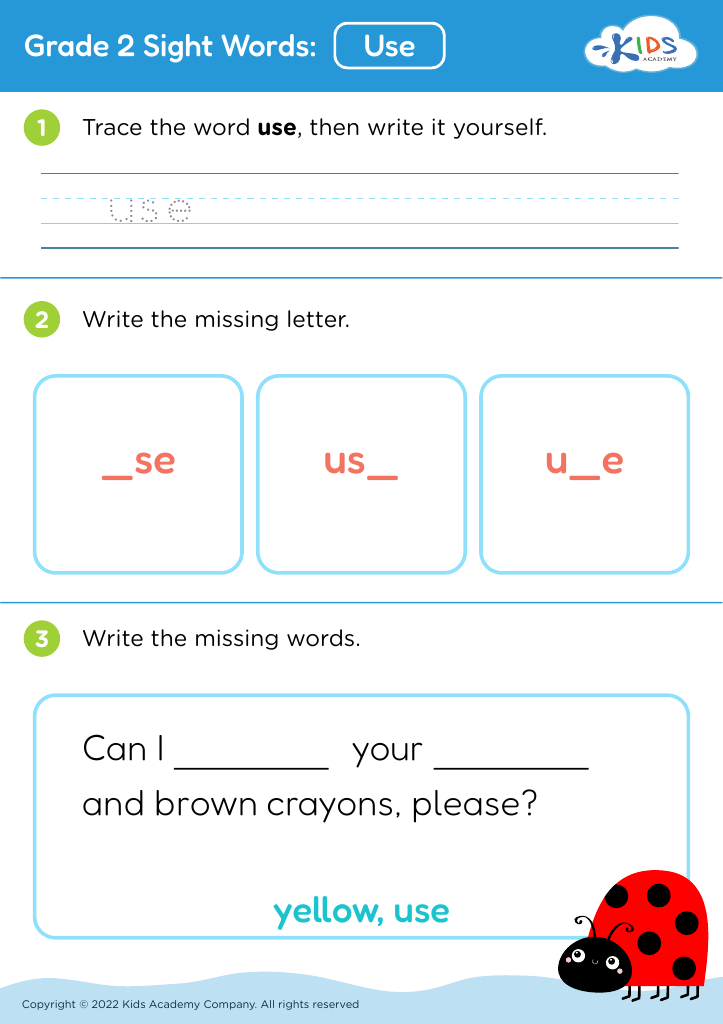
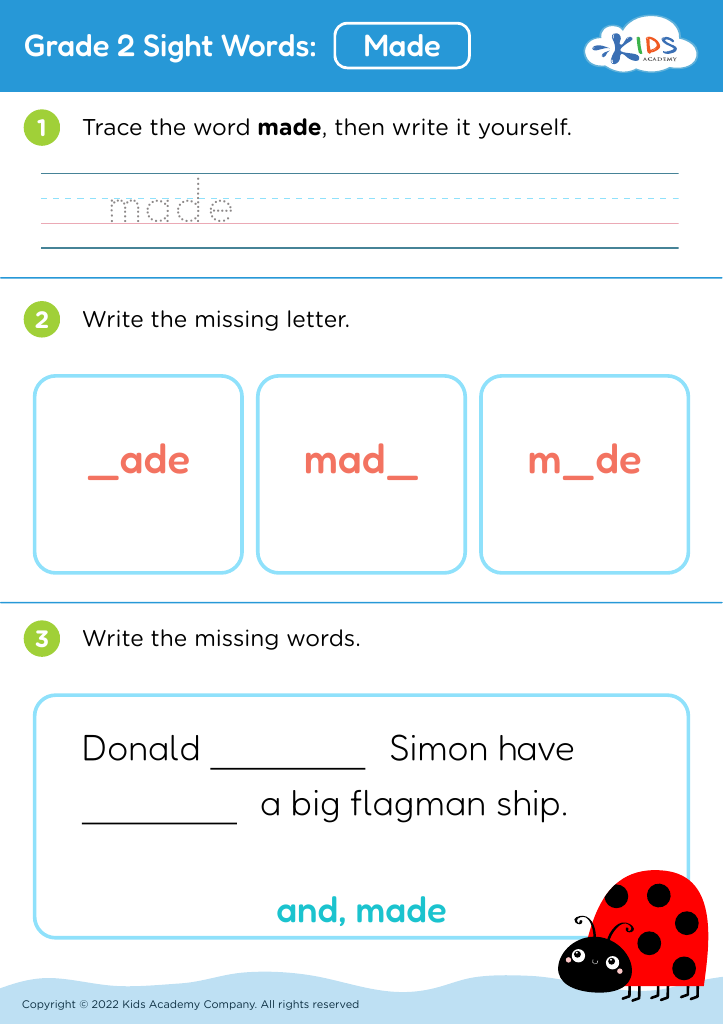
Unlock your child's reading potential with our "Recognizing Patterns Sight Words Worksheets" tailored for ages 7-8! These engaging worksheets are designed to help young learners identify and develop vital sight word patterns, fostering strong reading skills. Through a variety of fun activities and exercises, children will gain confidence in recognizing word groups and enhancing their overall literacy. Our easy-to-use printables stimulate critical thinking while keeping learning enjoyable. Perfect for home use or classroom settings, these worksheets ensure every child can flourish in their reading journey. Explore the world of sight words with our kid-friendly, educational resources today!










.jpg)


.jpg)

Recognizing patterns in sight words is crucial for children aged 7-8 as it lays the foundation for developing reading fluency and comprehension. At this age, many students transition from learning to read to reading to learn. By understanding common sight word patterns, children can quickly identify and decode unfamiliar words, reducing frustration and increasing confidence.
When parents and teachers emphasize pattern recognition, they help students make connections between words, enhancing their vocabulary retention and spelling skills. This method encourages critical thinking and analytical skills, as children begin to recognize subsets of words that share common endings, prefixes, or phonetic sounds.
Additionally, embracing pattern-based learning aligns with educational standards that focus on literacy development, enabling educators to implement effective instructional strategies. It fosters a positive learning environment where children feel empowered to tackle increasingly complex texts.
Moreover, when sight words are recognized through pattern instruction, children experience less cognitive load, allowing them to focus on understanding the content rather than struggling with word identification. Ultimately, promoting pattern recognition among sight words supports holistic language growth, leading to better academic performance and encouraging a lifelong love for reading. Parents and teachers play a pivotal role in harnessing this essential literacy skill.