Addition skills Worksheets for Ages 7-9 - Page 2
47 filtered results
-
From - To
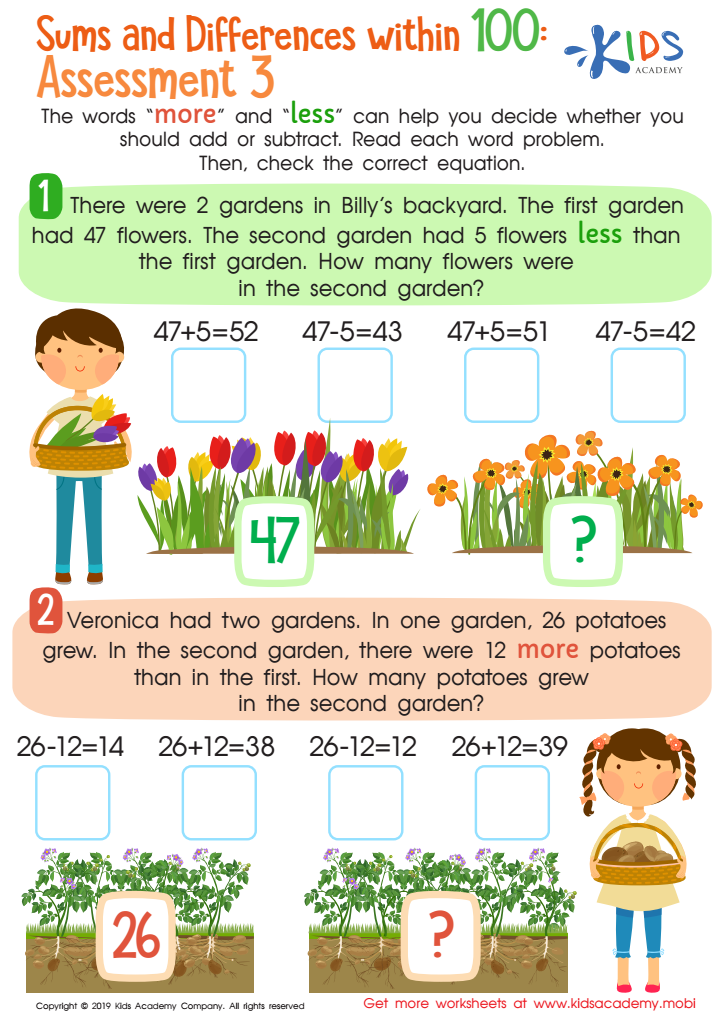
Sums and Differences Within 1 - Assessment 3 Worksheet
 Assign to My Students

Grocery Store Worksheet
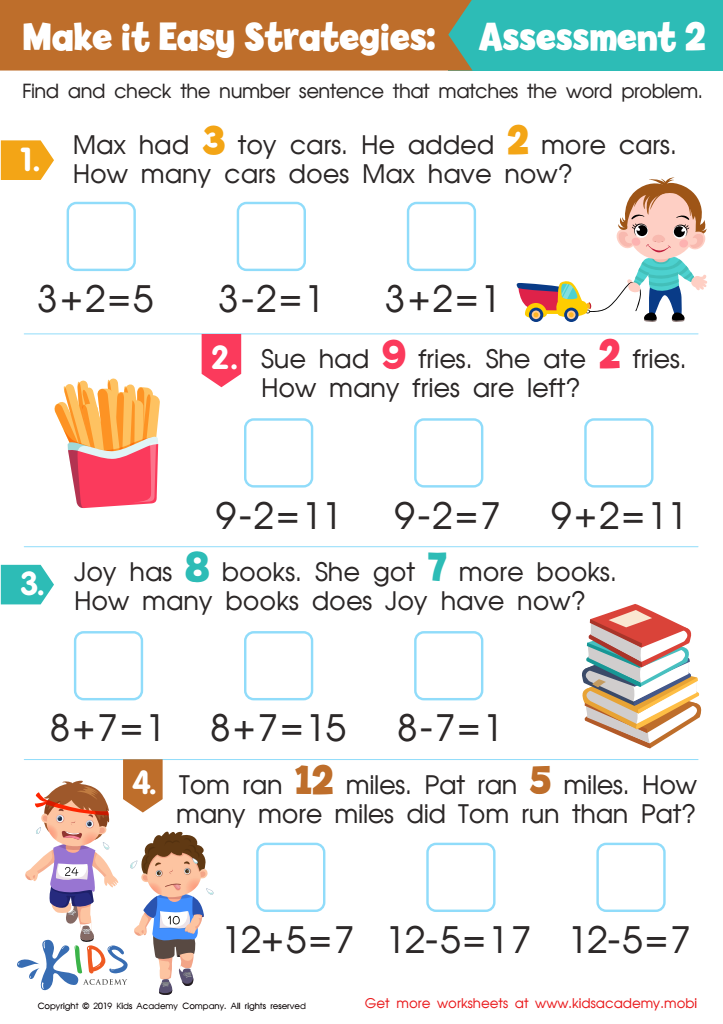
Make it Easy Strategies: Assessment 2 Worksheet
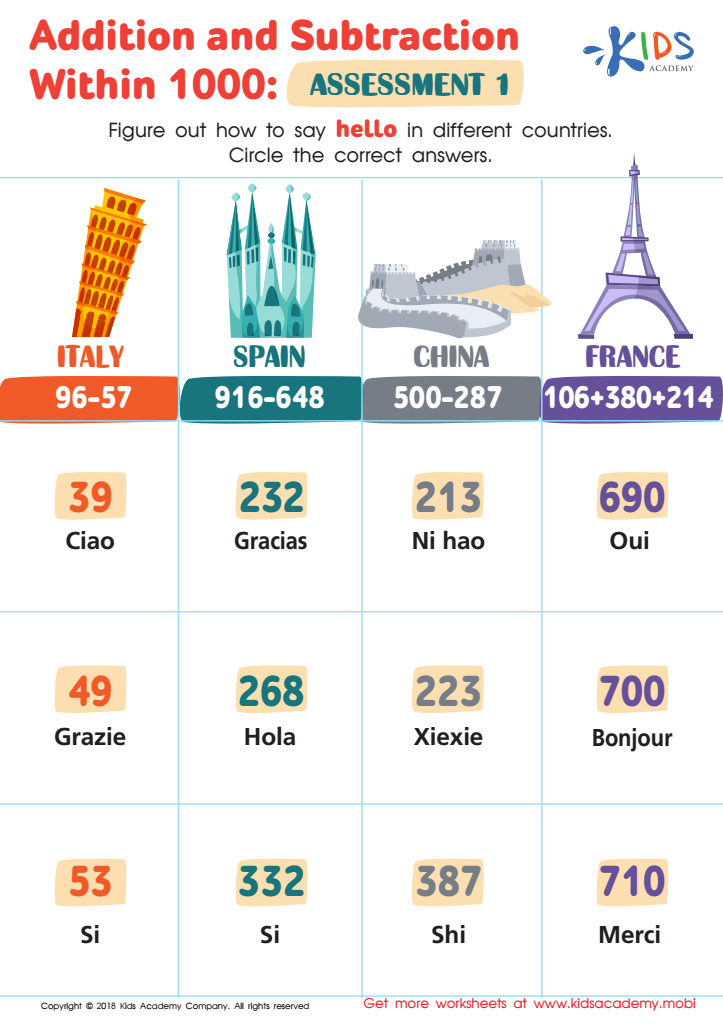
Addition and Subtraction Within 1000: Assessment 1 Worksheet
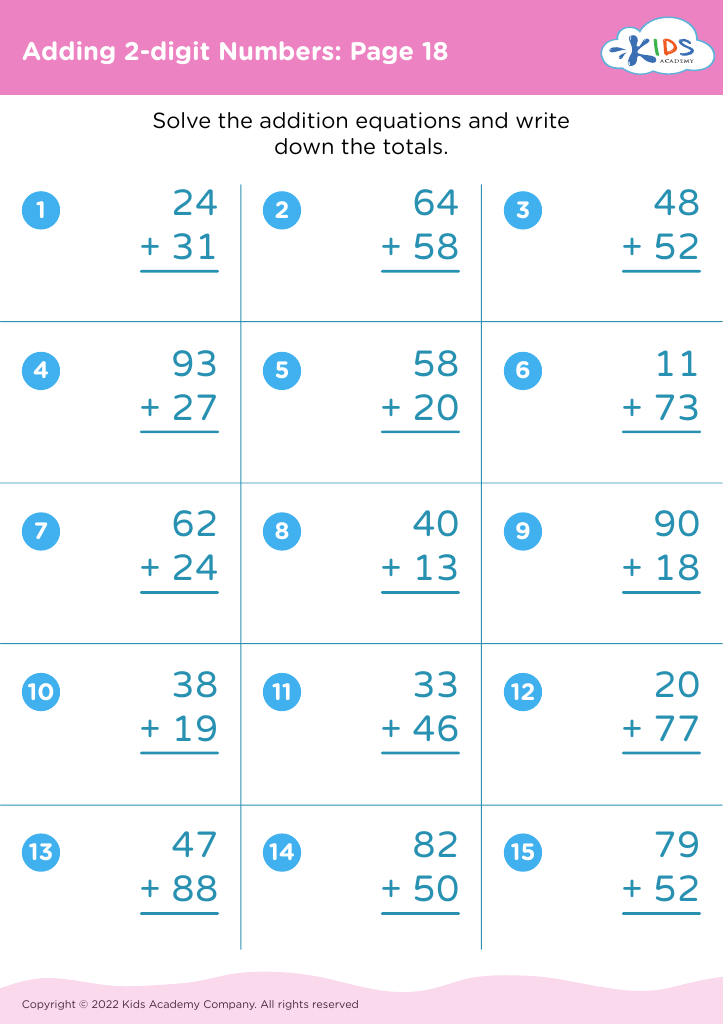
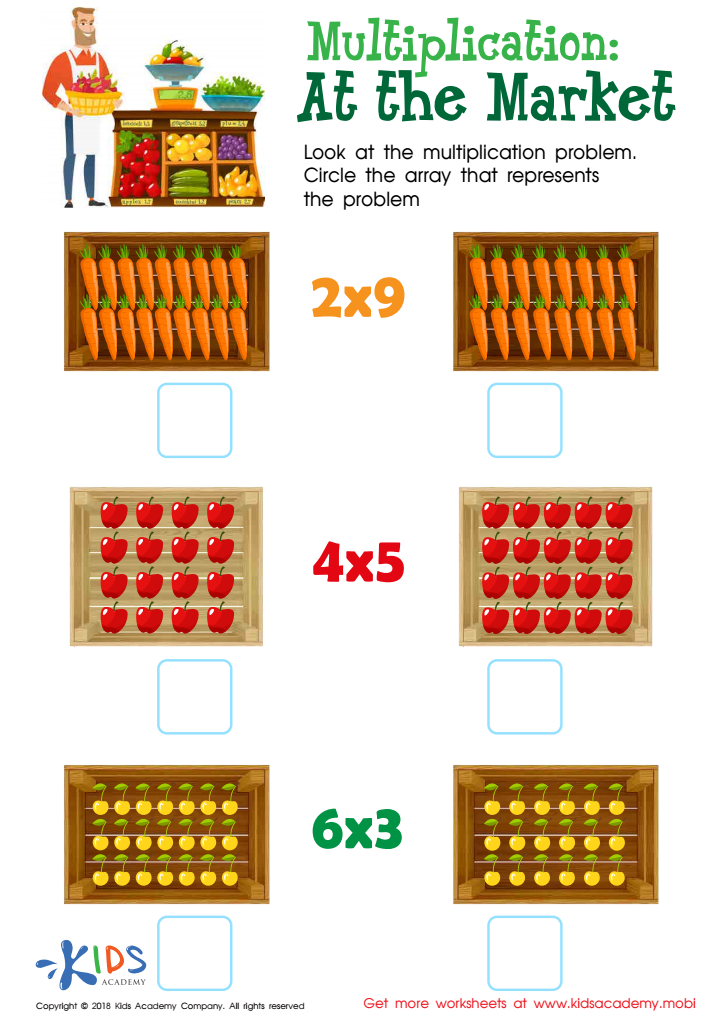
At the Market Worksheet
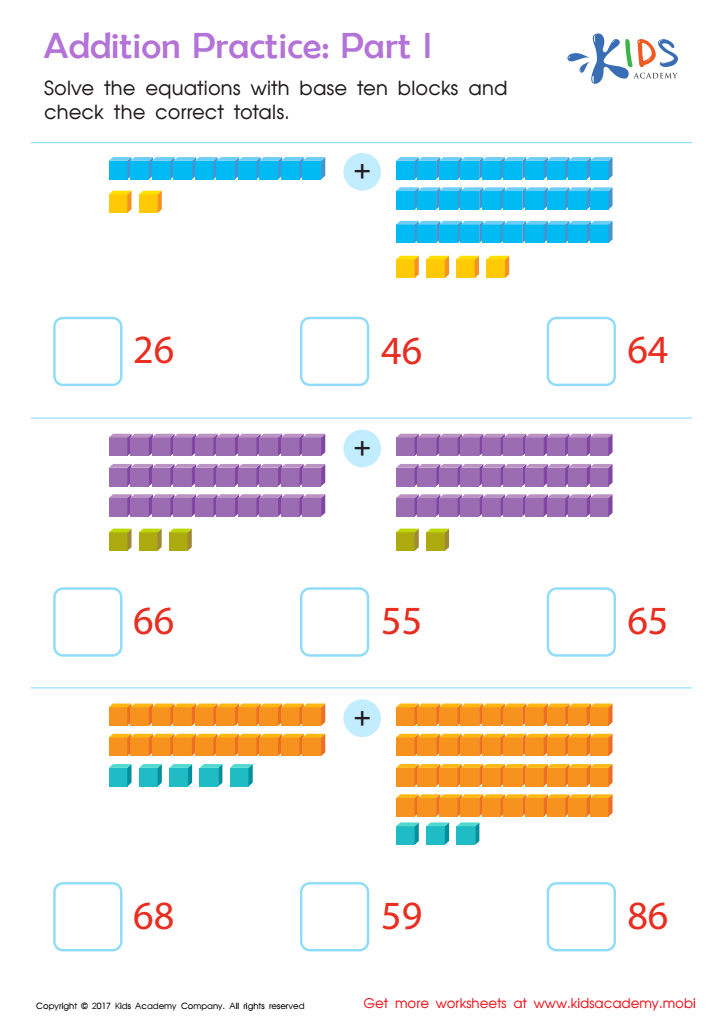
Addition Practice Sheet: Part 1
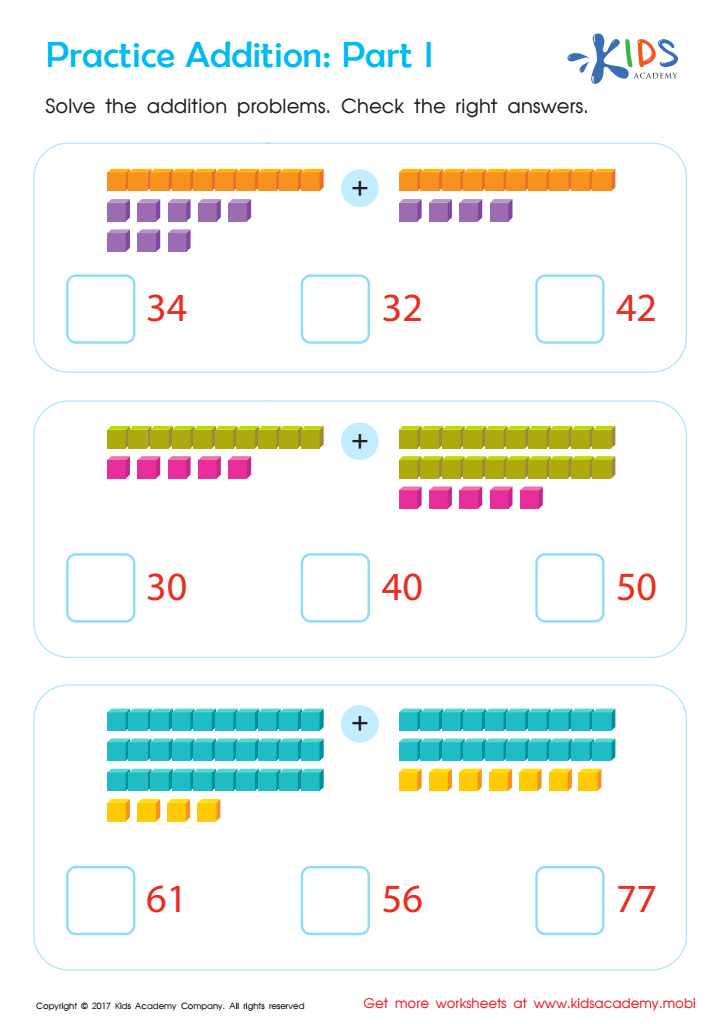
Practice Addition: Part 1 Worksheet
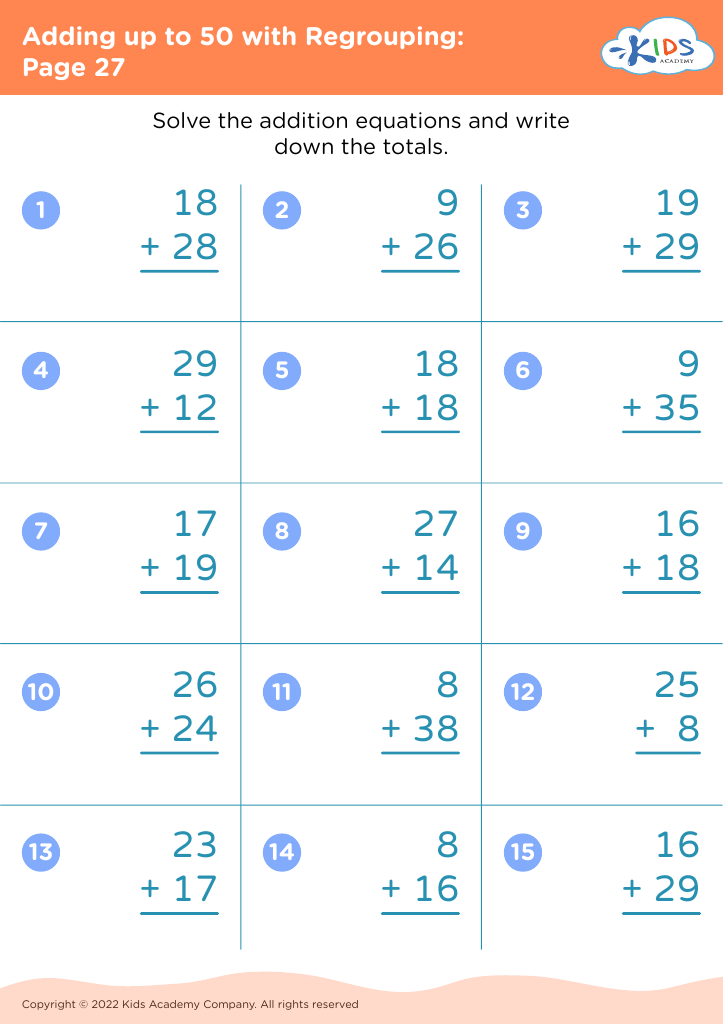
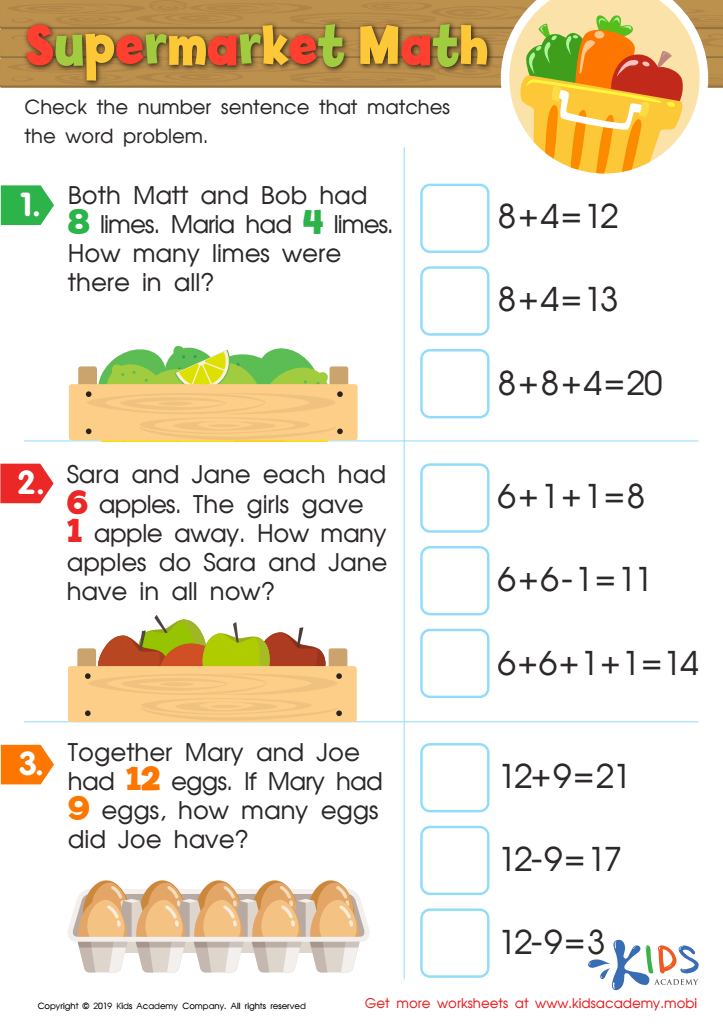
Supermarket Math Worksheet
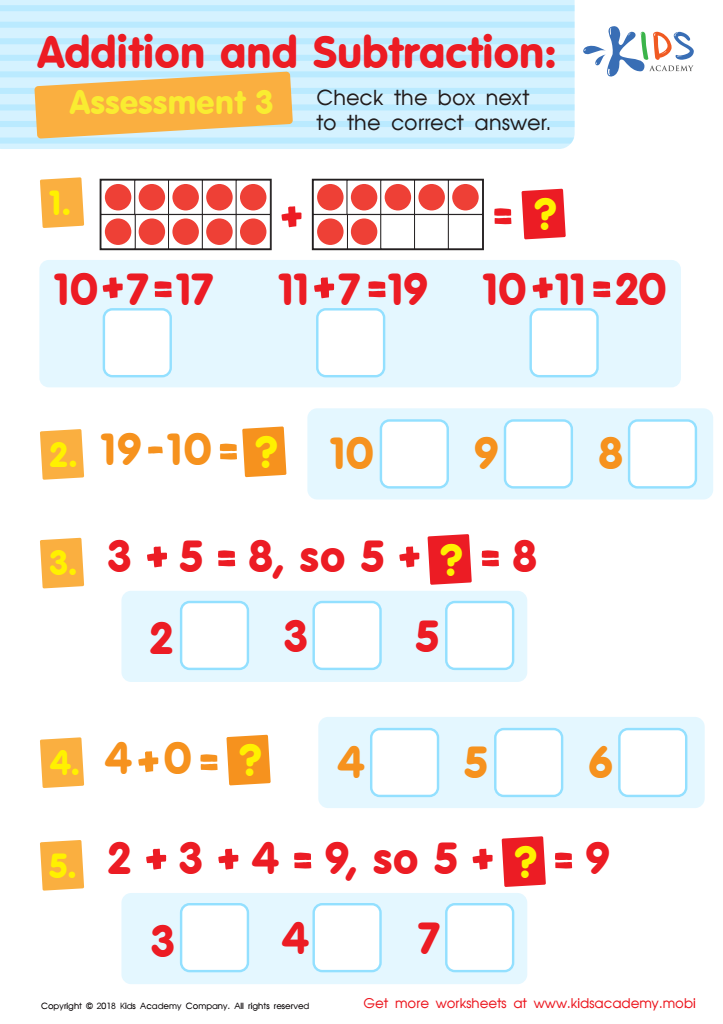
Addition and Subtraction Assessment 3 Worksheet
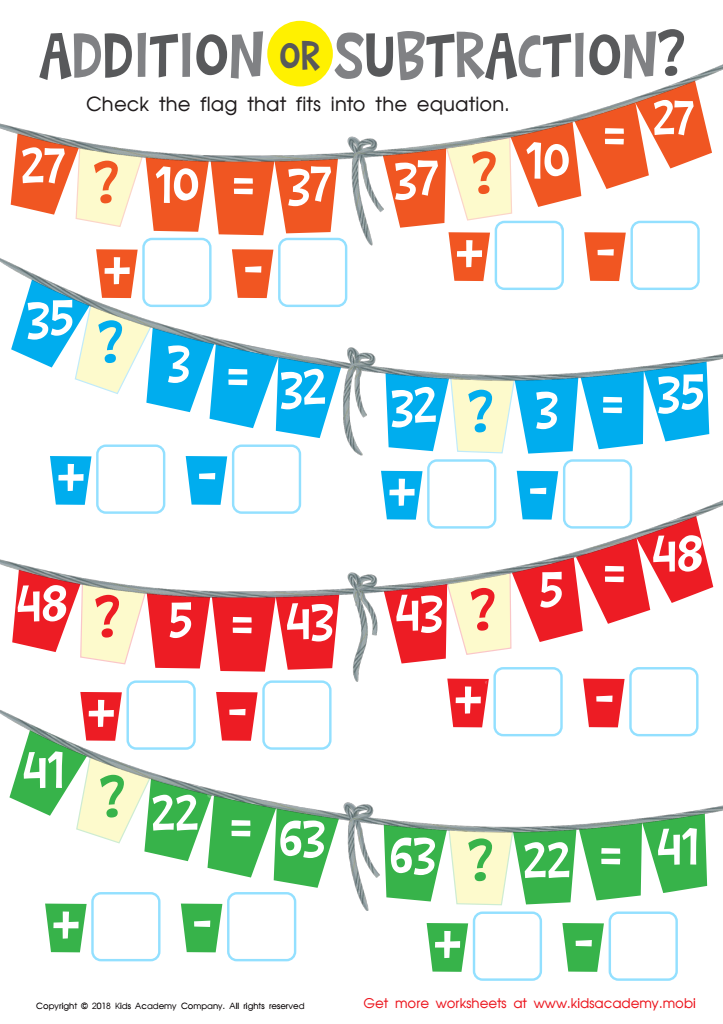
Addition or Subtraction? Worksheet
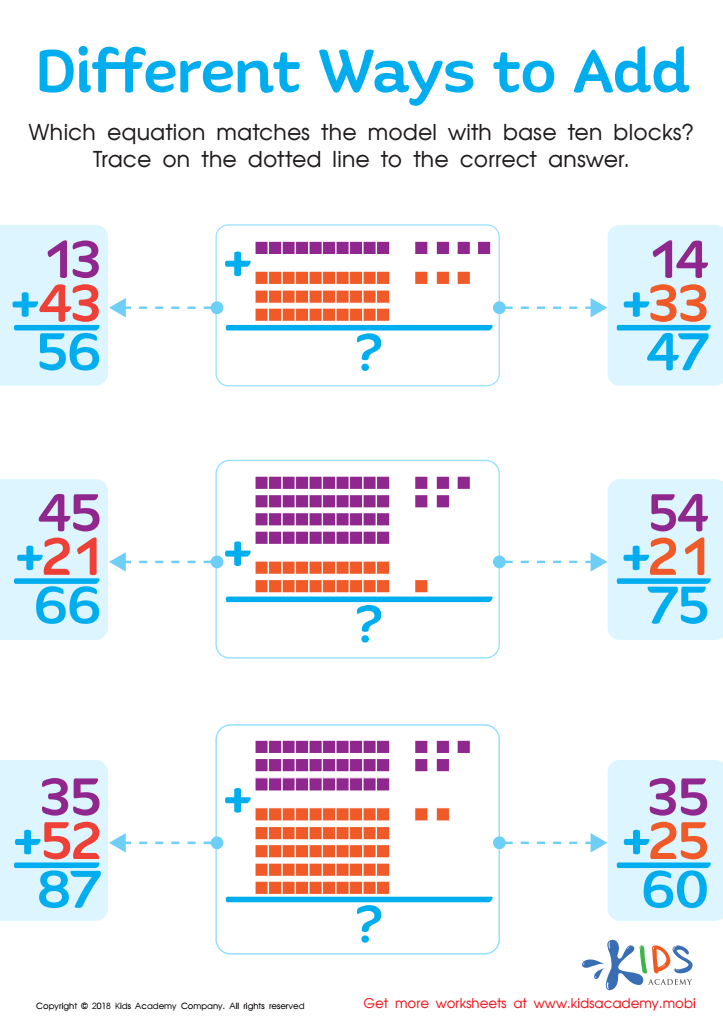
Different Ways to Add Worksheet
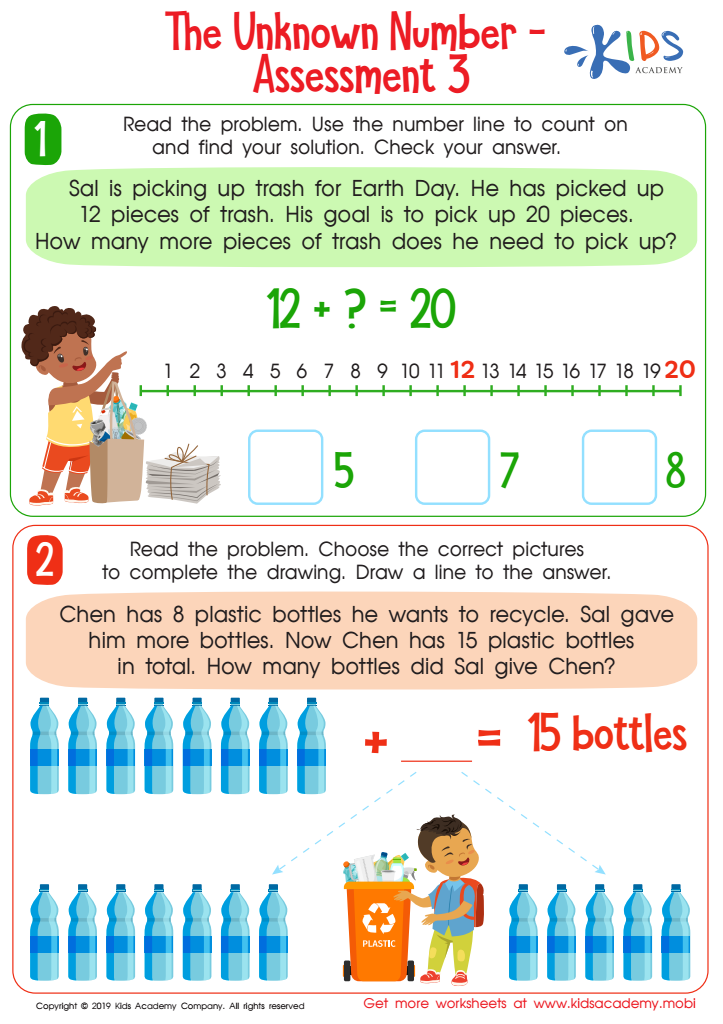
The Unknown Number - Assessment 3 Worksheet
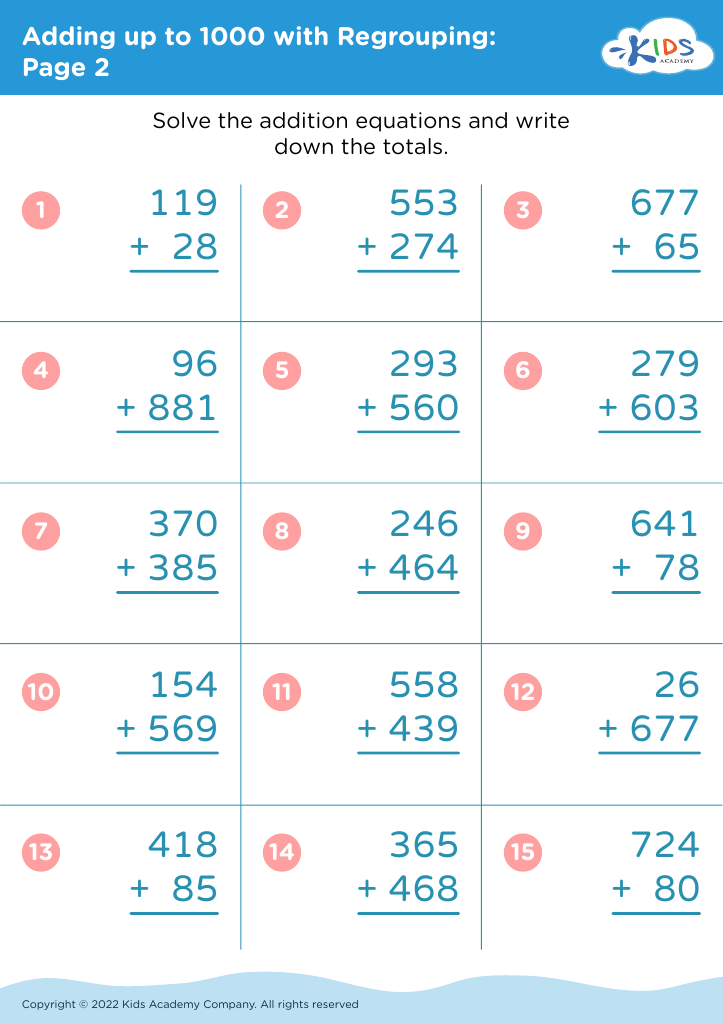
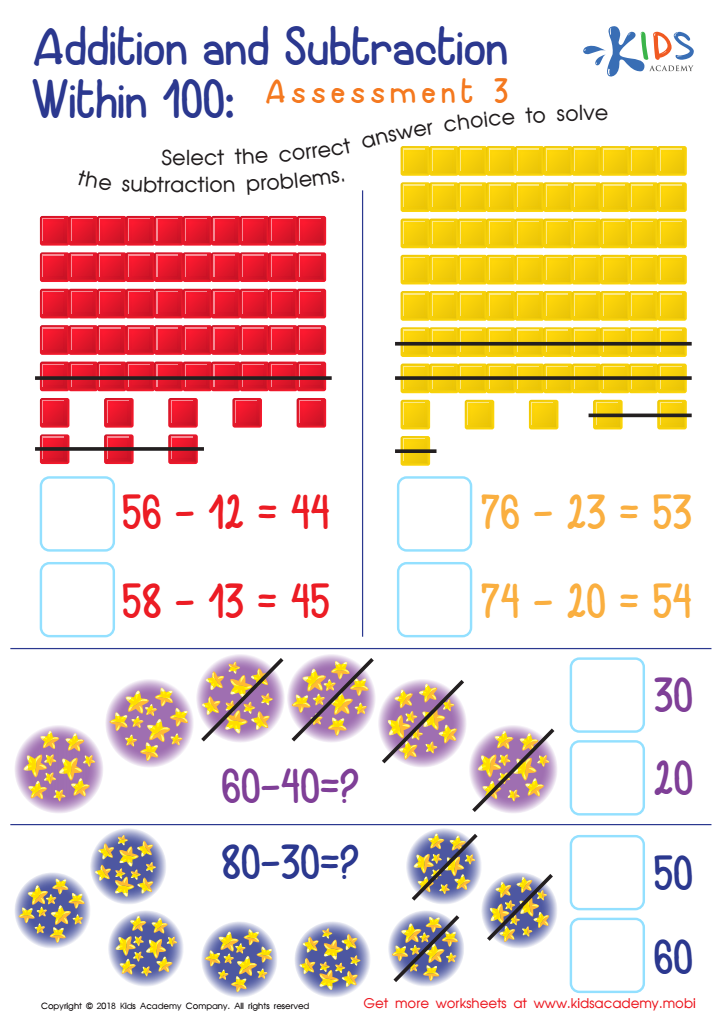
Addition and Subtraction Within 1: Assessment 3 Worksheet

Shopping for Sweets Worksheet
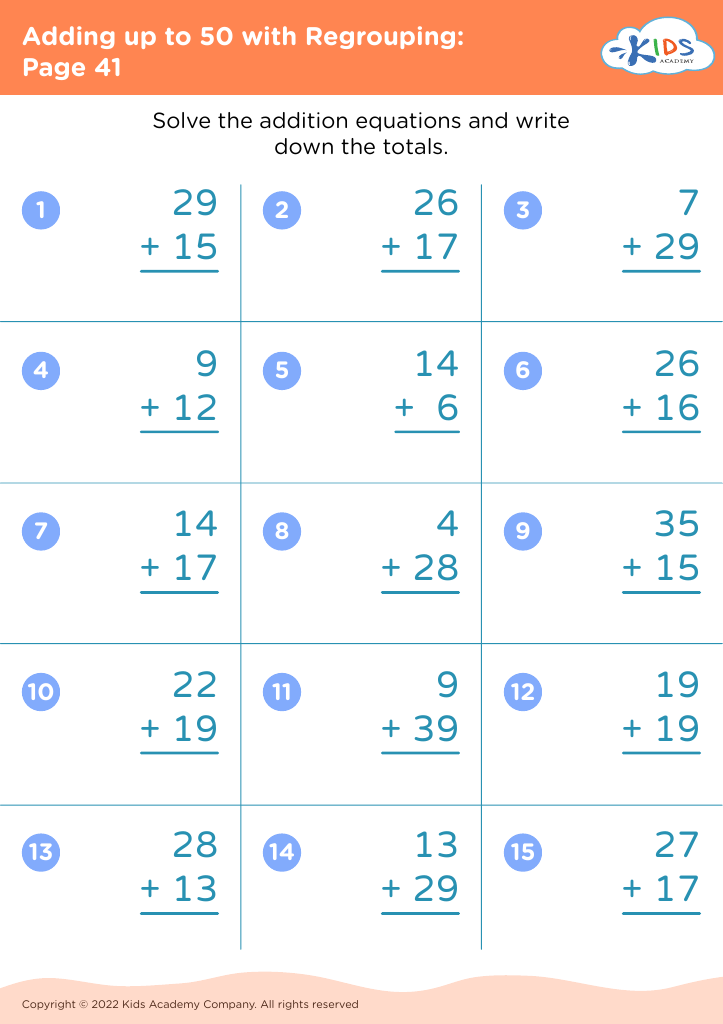








Addition skills for children aged 7-9 are foundational for their mathematical development and everyday problem-solving abilities. During this critical developmental stage, children transition from basic arithmetic to more complex mathematical concepts. Mastery of addition not only enhances their confidence in math but also sets the groundwork for future skills, such as multiplication and division, vital for advanced problem-solving in higher grades.
Furthermore, strong addition skills contribute to children's overall cognitive development. Engaging with numbers enhances logical reasoning, critical thinking, and the ability to approach problems systematically. Teachers and parents who emphasize addition help children develop patterns of thinking that are beneficial across subjects, including science and economics.
In practical terms, effective addition skills are crucial for everyday tasks like budgeting allowances and calculating time and distance. By encouraging these skills, educators and caregivers not only aid academic achievement but also equip children with tools necessary for future independence in adult life.
Moreover, the ability to add quickly and accurately boosts children's self-esteem and reduces anxiety around math. When children experience success in these fundamental skills, it fosters a love for learning and lays the foundation for lifelong academic engagement and resilience. Therefore, both parents and teachers should prioritize the development of addition skills in children aged 7-9.








