Alphabetical understanding Worksheets for Ages 7-9
3 filtered results
-
From - To
Develop essential alphabetical skills with our Alphabetical Understanding Worksheets for Ages 7-9! Designed to make learning engaging and effective, these worksheets help children master the order of the alphabet, enhance their vocabulary, and boost their language arts proficiency. Each worksheet offers fun, interactive activities ranging from alphabet sorting and matching exercises to more complex tasks like creating alphabetical lists and practicing dictionary skills. Tailored specifically for 7-9 year-olds, our printable resources make learning not only enjoyable but also a pivotal step in your child's educational journey. Start building a strong alphabetical foundation today!
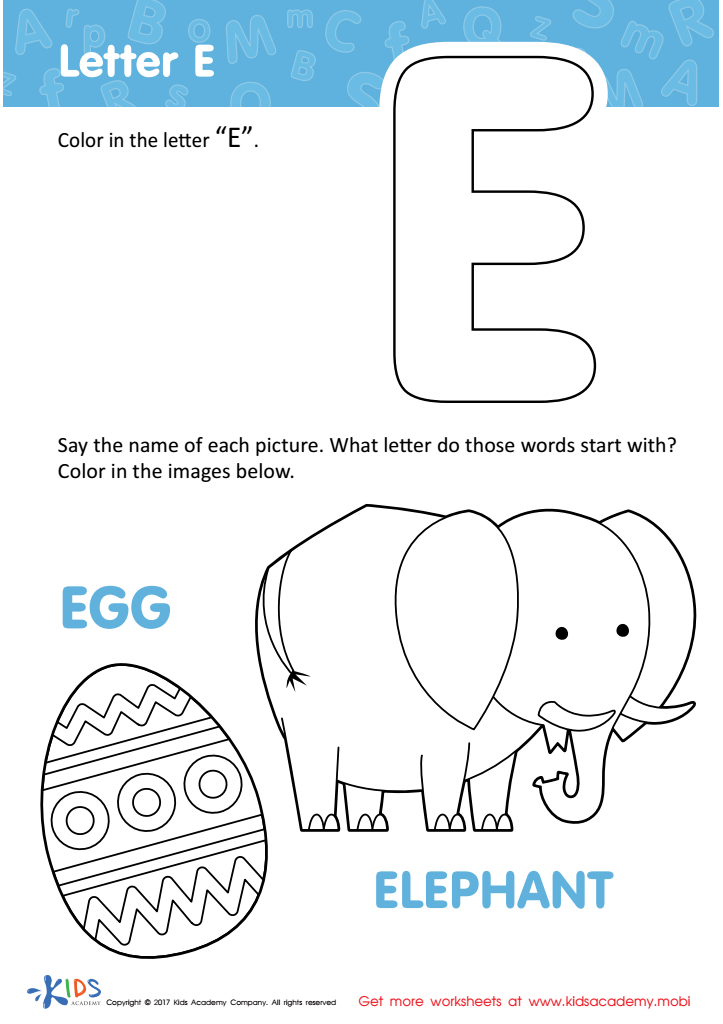
Letter E Coloring Sheet
 Assign to My Students
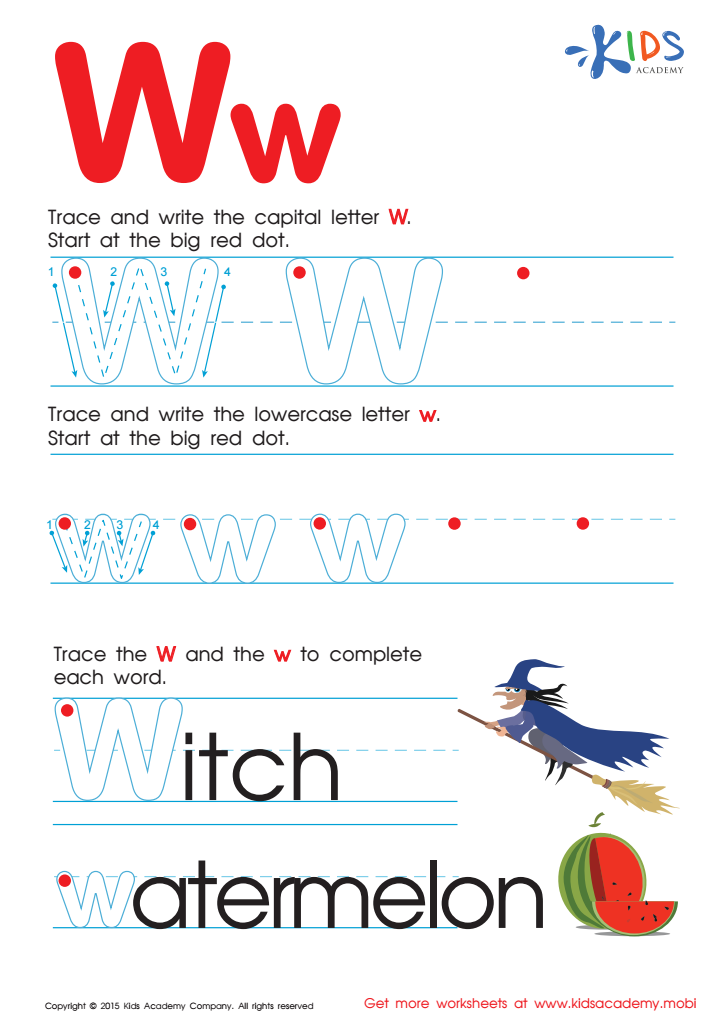
Letter W Tracing Page
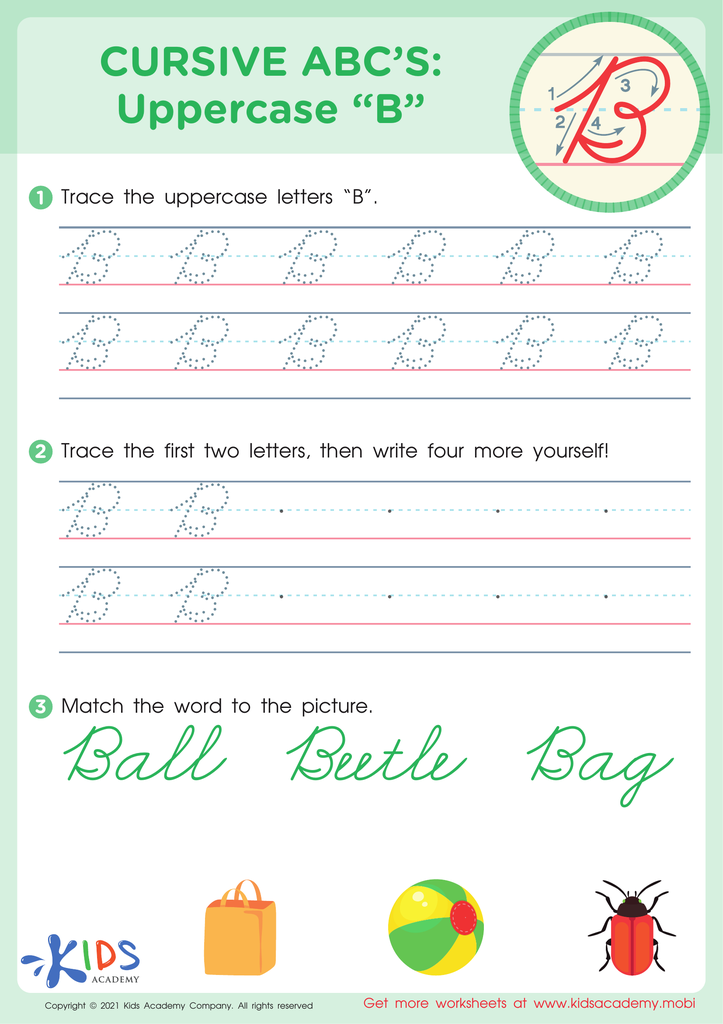
Cursive ABCs: Uppercase B








Alphabetical understanding in children aged 7-9 is crucial for several key reasons. At this developmental stage, children are rapidly acquiring foundational literacy skills that will impact their academic success and lifelong learning. First, a solid grasp of the alphabet helps with reading fluency. Knowing the order of the letters aids in quickly identifying words, which fosters smoother reading and better comprehension. This fluency also makes it easier for children to decode new words, expanding their vocabulary.
Moreover, alphabetical skills are essential for writing and spelling. When children understand letter sequences, they can better organize their thoughts and ideas on paper, leading to improved written communication skills. This organization extends to tasks requiring alphabetic order, such as using dictionaries or indexes, which are invaluable academic tools.
Alphabetical proficiency also nurtures cognitive development. It enhances memory, sequencing abilities, and pattern recognition. These cognitive skills are transferable to other areas, such as mathematics and problem-solving, further enriching a child's educational experience.
Lastly, fostering alphabetical understanding builds confidence. Mastery of these fundamental skills gives children a sense of achievement and motivation to tackle more complex literacy challenges. Thus, parents and teachers should prioritize alphabetical learning to create a strong, confident, and well-rounded learner.








