Basic problem-solving Worksheets for Ages 7-9
3 filtered results
-
From - To
Nurture critical thinking in your child with our Basic Problem-Solving Worksheets for ages 7-9. These engaging, age-appropriate worksheets are designed to build foundational skills in logic, analysis, and creative thinking. Through a variety of fun and challenging exercises, such as puzzles, word problems, and pattern recognition, kids can develop essential problem-solving abilities while enjoying the process of learning. Perfect for classroom use or extra practice at home, these printable worksheets will help your child become a confident and proficient problem solver. Unlock your child's potential today with targeted and interactive activities!
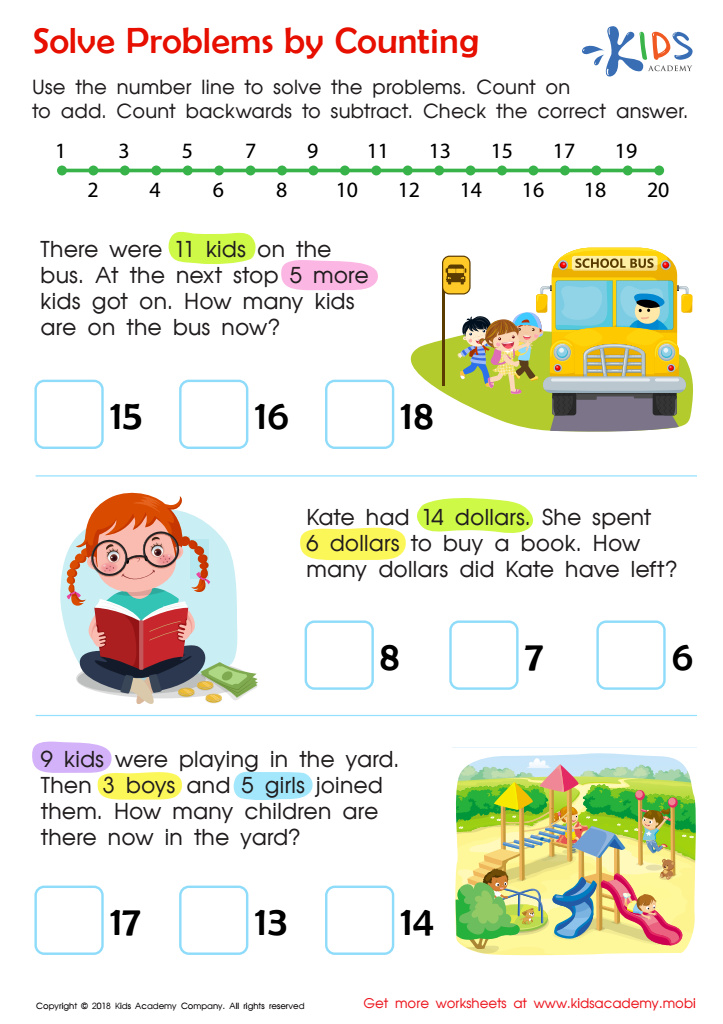
Solve Problems by Counting Worksheet
 Assign to My Students
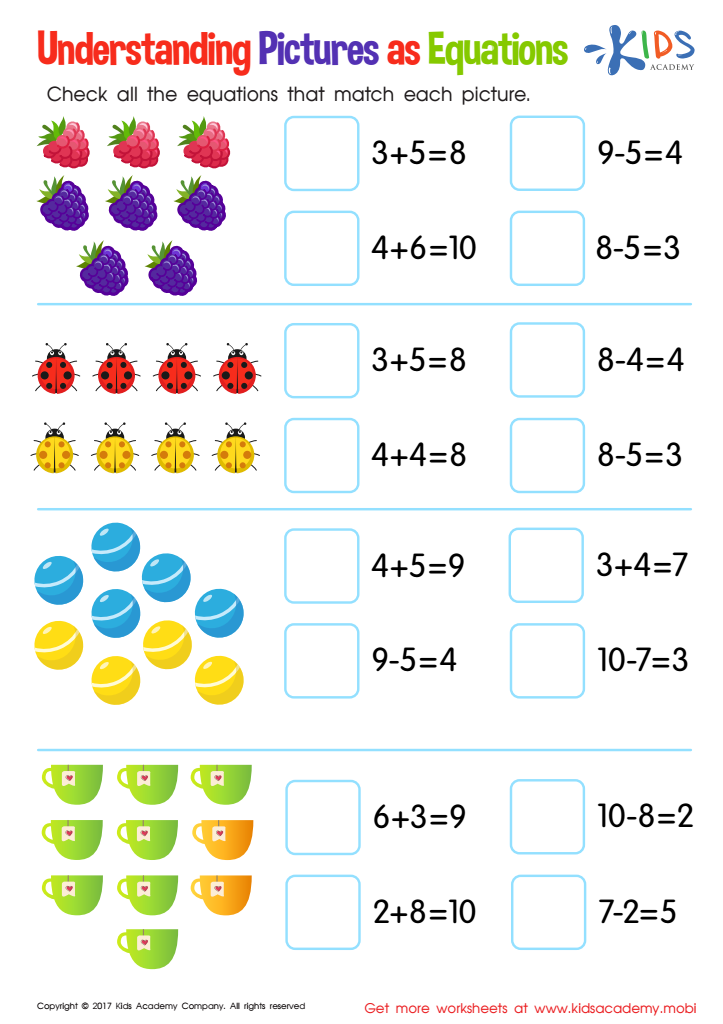
Understanding Pictures as Equations Worksheet



.jpg)



Parents and teachers should care about basic problem-solving skills for children aged 7-9 as these skills lay the groundwork for future academic and life success. At this age, children's brains are highly adaptable and receptive, making it an ideal time to introduce methods of thinking critically and solving problems effectively. Problem-solving aids in the development of cognitive abilities such as logic, reasoning, and concentration. These capabilities are essential not just for mathematics and science, but across various subjects and everyday scenarios.
Equipping children with these skills early on fosters independence and resilience. As kids learn to overcome challenges, they build confidence, a sense of accomplishment, and are less likely to experience frustration or helplessness when faced with difficulties. Additionally, problem-solving activities promote creativity. Whether through puzzles or project-based learning, children learn to think outside the box and come up with innovative solutions.
Moreover, collaborating on problem-solving tasks encourages teamwork and communication skills. Children benefit from listening to different perspectives, defending their ideas, and finding common ground. This empathy and cooperation prepare them for interpersonal relationships in the school environment and beyond.
Therefore, integrating problem-solving practices into early education is crucial for developing well-rounded, capable, and confident individuals ready to tackle life's challenges.








