Cursive handwriting practice Worksheets for Ages 7-9
4 filtered results
-
From - To
Enhance your child’s cursive writing skills with our engaging cursive handwriting practice worksheets designed specifically for ages 7-9. Our printable resources offer a fun and effective way for kids to learn and perfect their cursive letters, words, and sentences. With intuitive traceable lines and carefully crafted exercises, these worksheets help young learners develop fine motor skills and gain confidence in their handwriting. Perfect for use at home or in the classroom, our practice sheets cater to various skill levels, ensuring everyone progresses at their own pace. Help your child master cursive writing with these excellent, educational resources.
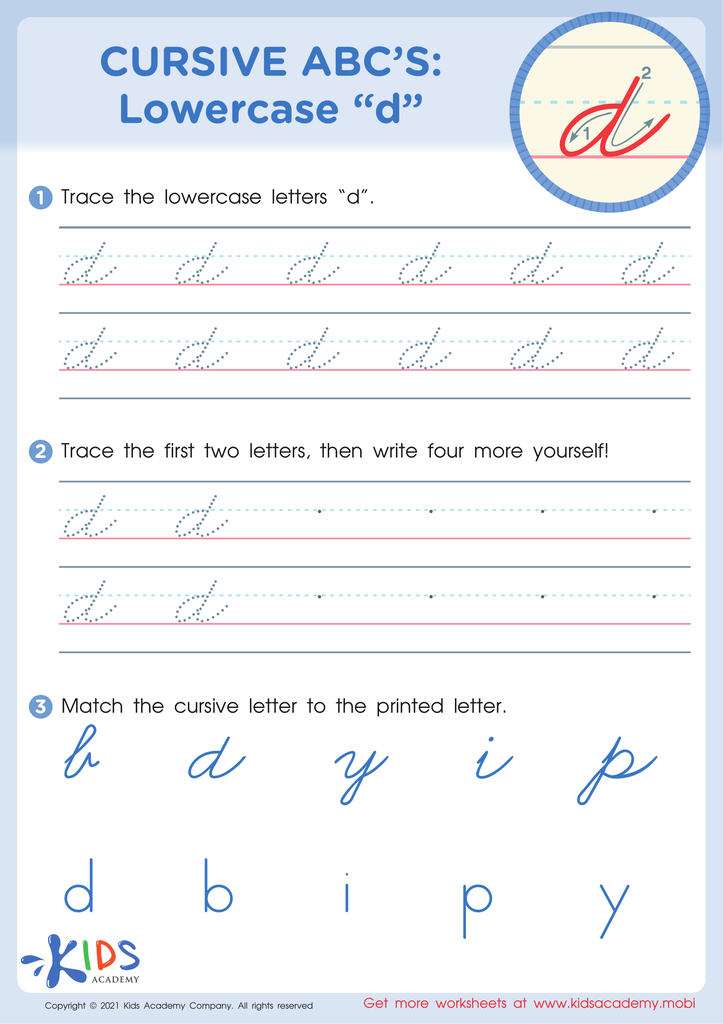
Cursive ABCs: Lowercase d
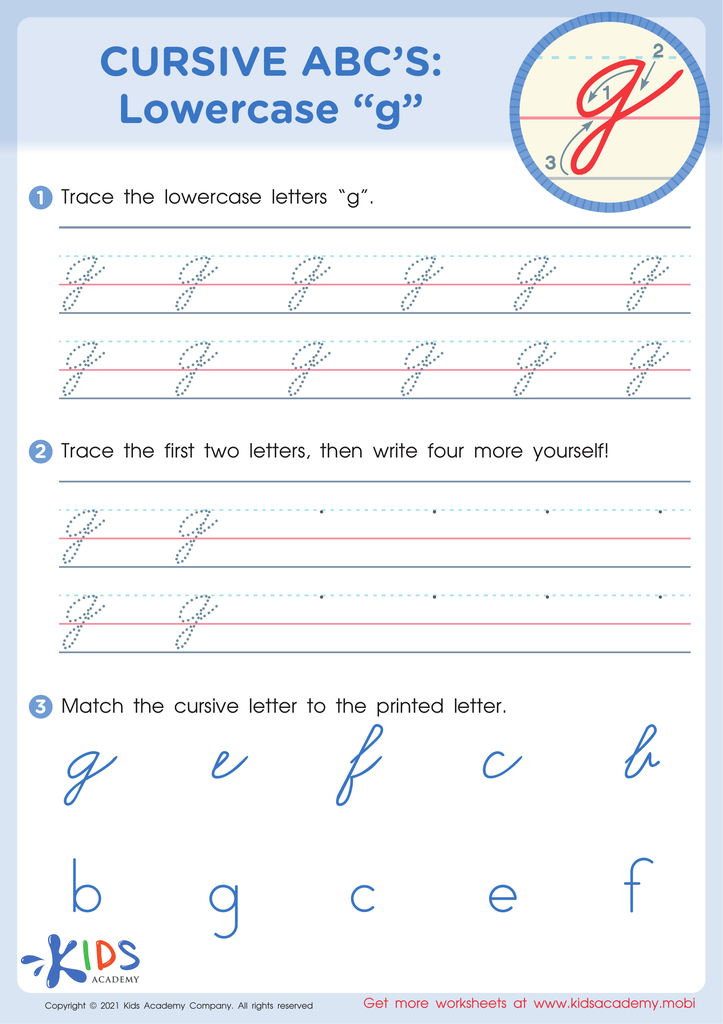
Cursive ABCs: Lowercase g
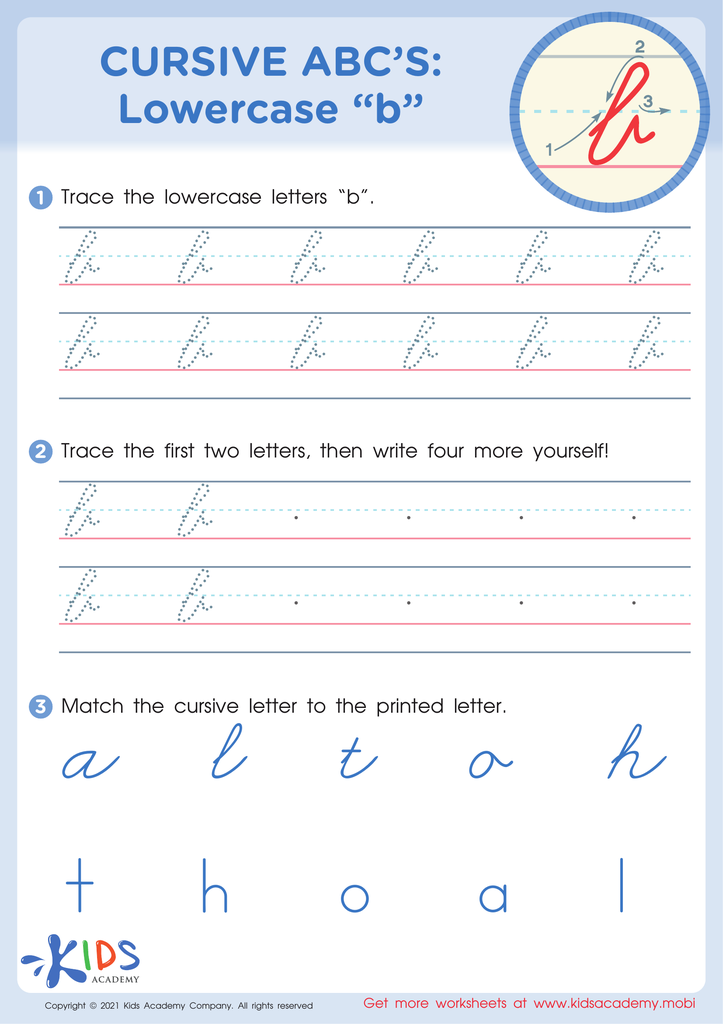
Cursive ABCs: Lowercase b
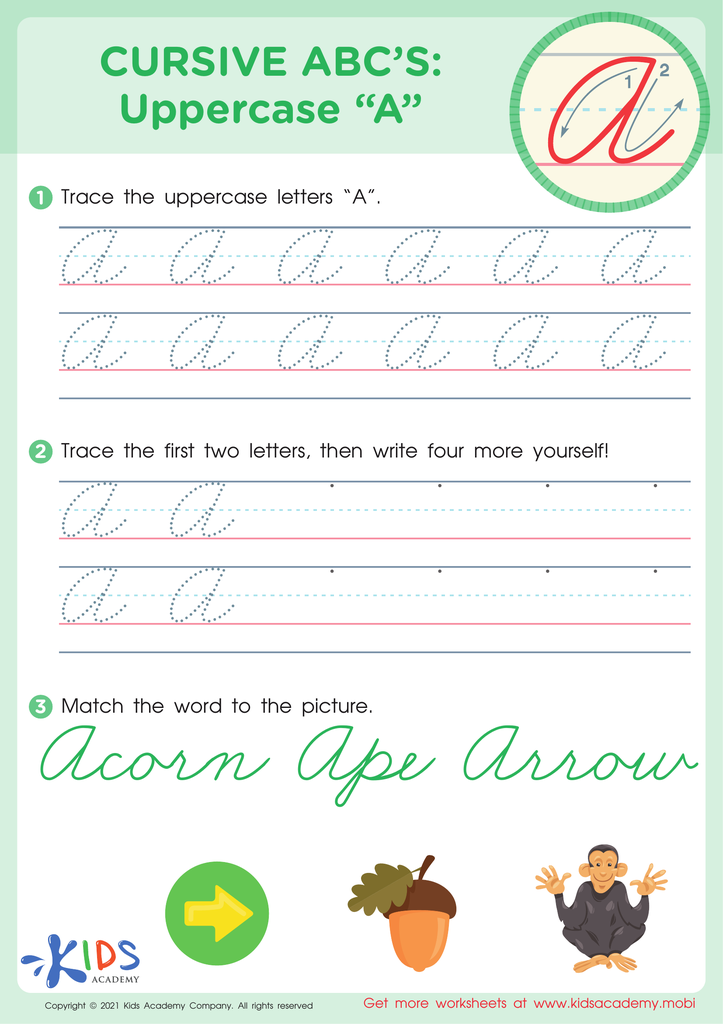
Cursive ABCs: Uppercase A








Cursive handwriting practice is important for children ages 7-9 because it fosters fine motor skills, cognitive development, and academic success. At this developmental stage, children are refining their motor skills; cursive writing enhances hand-eye coordination and muscle memory. This practice also helps strengthen the neural connections in the brain, improving overall cognitive function.
Moreover, cursive writing can positively impact language skills. Writing fluidly in cursive requires a child to think carefully about letter formation and sentence structure, promoting better understanding of syntax and vocabulary. This, in turn, can improve reading comprehension and spelling.
Cursive writing also supports learning differences. Some children with dyslexia, for example, find cursive writing easier because the connected letters reduce the likelihood of letter reversals, a common difficulty.
Despite the rise of technology, legible handwriting remains relevant. Neat cursive writing is often required in formal settings such as legal documents and signatures. Cursive writing can instill a sense of pride and accomplishment in children, enhancing their self-esteem and confidence. By valuing cursive handwriting practice, parents and teachers can provide a well-rounded education that fosters both cognitive and motor development, offering children essential skills for life.








