
History knowledge Worksheets for Ages 7-9
5 filtered results
Difficulty Level
Grade
Age
-
From - To
Subject
Activity
Standards
Explore our engaging History Knowledge Worksheets tailored for kids aged 7-9! These interactive resources are designed to spark curiosity about historical events, figures, and cultures. Each worksheet incorporates fun activities that strengthen critical thinking and reading comprehension skills. Ideal for both classroom and home learning, our worksheets foster a love for history through exciting projects and captivating questions. Parents and teachers can easily download and print these materials, making them readily accessible for your little learners. Help your children discover the wonders of the past while developing essential knowledge and skills with our thoughtfully crafted worksheets.
Favorites
With answer key
Interactive
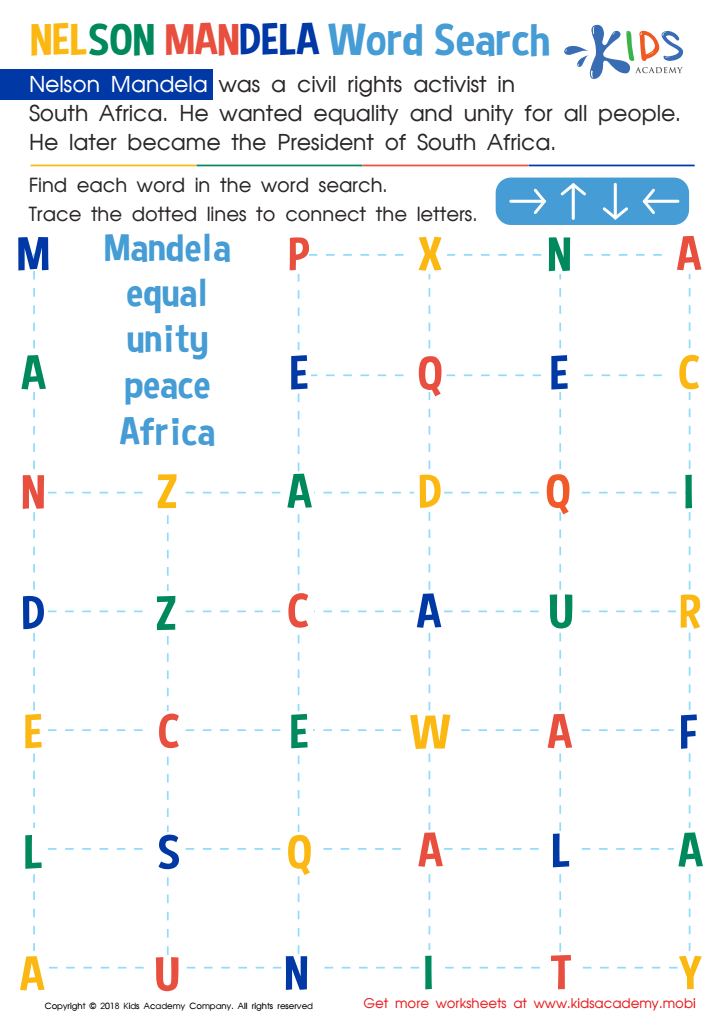
Nelson Mandela Word Search Worksheet
Kids love word searches! This fun, free worksheet teaches about the civil rights activist Nelson Mandela. It includes traceable lines and words related to him, helping improve fine motor skills. A great way to learn about a great man!
 Assign to My Students
Nelson Mandela Word Search Worksheet
Worksheet
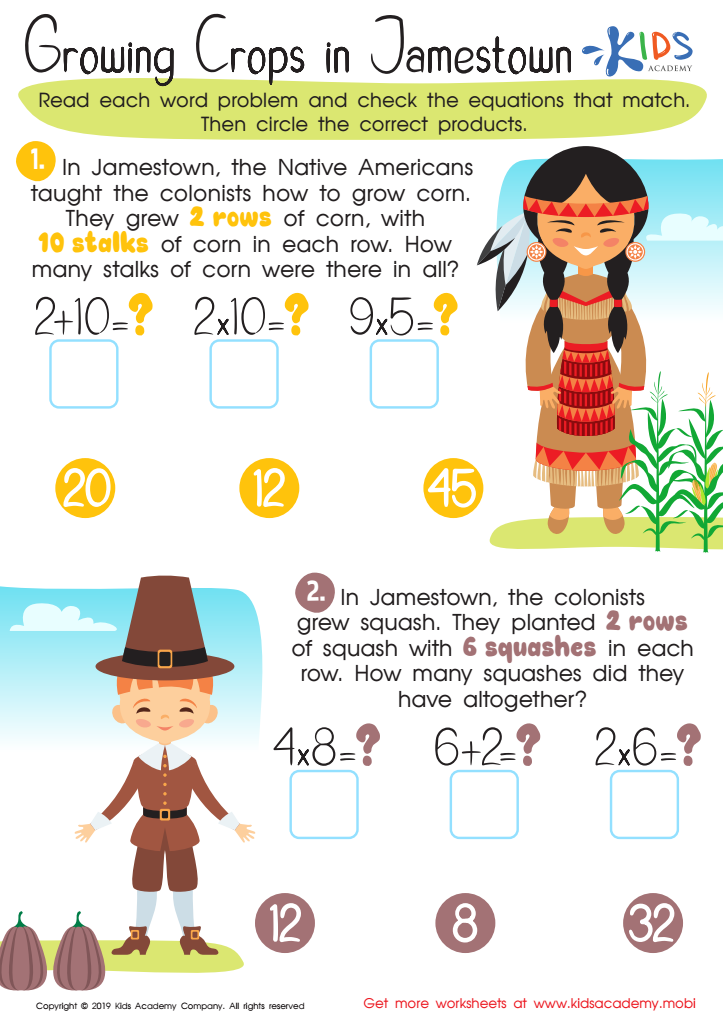
Growing Jamestown Worksheet
This exciting multiplication worksheet from Kids Academy uses American history facts as its theme. Kids learn about Native Americans helping early Americans at Jamestown, then read the word problems, match the equations and solve for the product. Finally, circle the correct answer!
Growing Jamestown Worksheet
Worksheet
Join Kids Academy for Free
Who is primarily going to use this learning content?








Understanding history is essential for children aged 7-9 for several reasons. Firstly, it cultivates a sense of identity and belonging. By learning about their own history and the broader world, children discover where they fit into the tapestry of human experience, enriching their sense of self. This young age is crucial for fostering curiosity and critical thinking skills, which history inherently encourages. Engaging with stories from the past stimulates imagination and inquiry, helping children understand cause and effect, develop analytical skills, and grasp the complexity of human behavior.
Additionally, knowledge of history teaches empathy and social awareness. By exploring diverse cultures and historical figures, children learn to appreciate different perspectives, fostering tolerance and respect for others in a multicultural world. History also helps them understand today’s world—a foundation for informed citizenship.
Lastly, early historical knowledge aids in literacy development, as reading about various events and figures enhances vocabulary and comprehension skills. By incorporating history into their education, parents and teachers empower children not only to learn from the past but also to shape a better future. This foundational understanding is crucial for developing engaged, informed citizens who appreciate the complexity of society.








