Learn number patterns Worksheets for Ages 7-9
3 filtered results
-
From - To
Discover our engaging and interactive "Learn Number Patterns Worksheets" designed specifically for children aged 7 to 9. These worksheets foster critical thinking and enhance mathematical skills by introducing various patterns, including number sequences and visual pattern recognition. Kids can enjoy a variety of fun activities that strengthen their understanding of number relationships while improving their problem-solving abilities. Our thoughtfully crafted materials encourage independent learning and creativity, making math enjoyable and accessible. Perfect for classroom settings or at-home practice, these worksheets are an excellent resource for educators and parents alike to help young learners master number patterns confidently. Start exploring today!
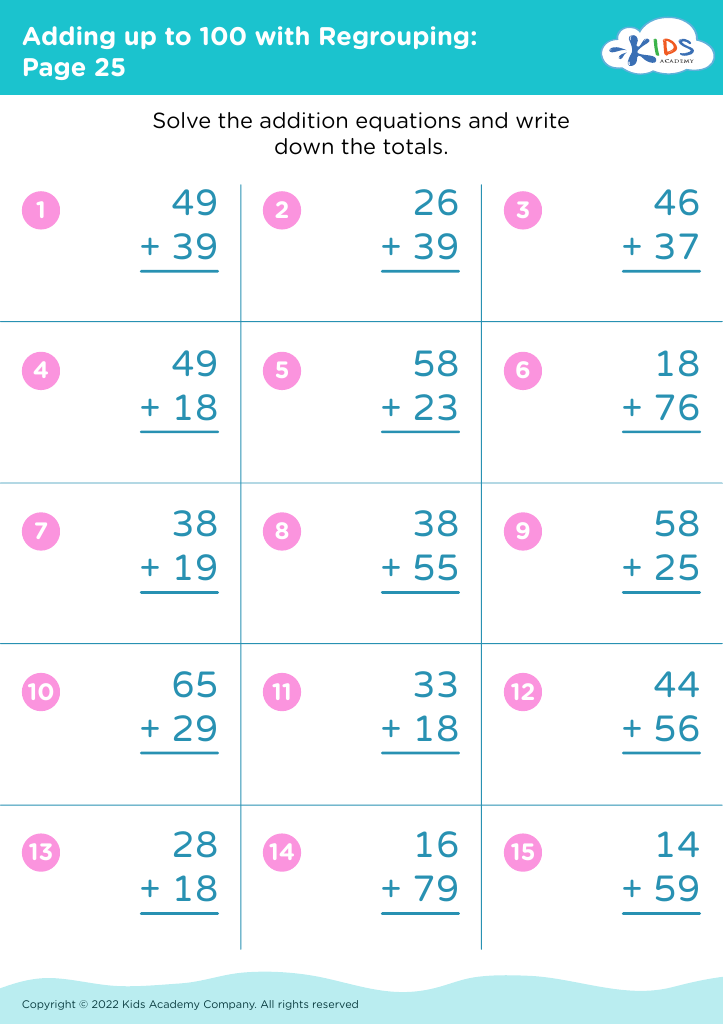
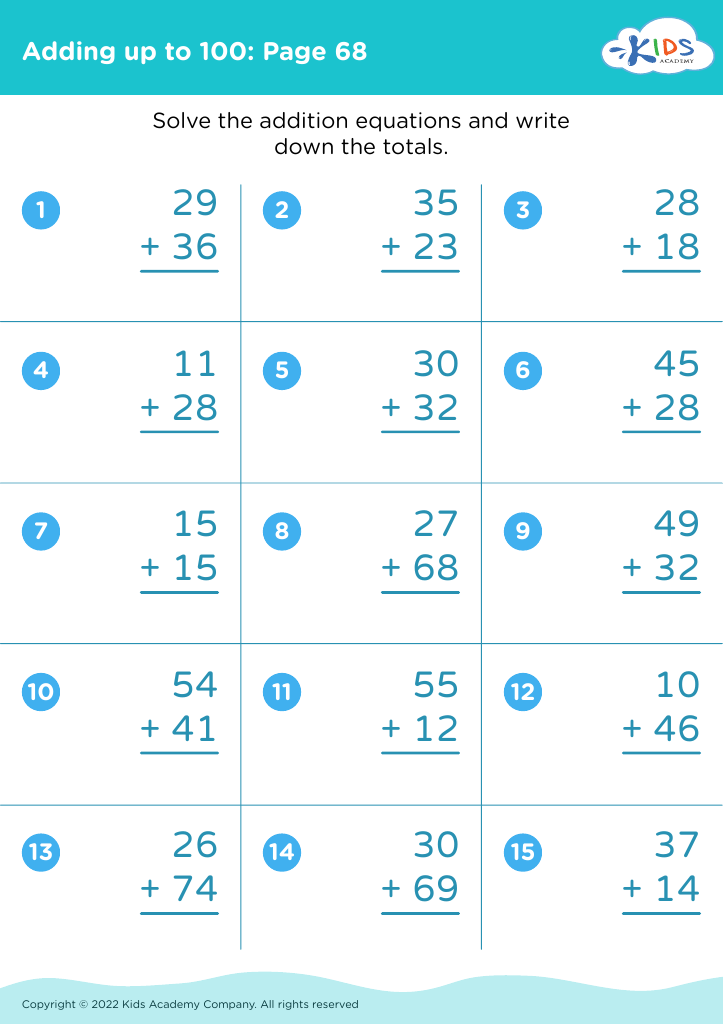



.jpg)



Understanding number patterns is crucial for children aged 7-9, as it forms a foundational element of mathematical fluency. At this stage, students transition from basic arithmetic to more complex mathematical concepts. Learning number patterns helps them recognize relationships between numbers, enabling them to predict outcomes and solve problems more efficiently.
Parents and teachers should care about this developmental milestone because it enhances critical thinking and problem-solving skills. Through exploring patterns, children develop the ability to make connections, which is vital in subjects like algebra, geometry, and data analysis. Recognizing patterns also reinforces their understanding of sequences and operations, which supports their performance in future mathematical endeavors.
Moreover, engaging with number patterns fosters cognitive growth and boosts confidence. Children who grasp these concepts tend to feel more competent in math, reducing anxiety often associated with the subject. Additionally, incorporating number patterns into learning can make math more fun and interactive, promoting a positive attitude towards mathematics that can last a lifetime.
Overall, supporting children in learning number patterns equips them with essential skills, leading to academic success and empowering them to approach mathematics with curiosity and confidence.








