Learning times tables Worksheets for Ages 7-9
3 filtered results
-
From - To
Discover our engaging learning times tables worksheets designed specifically for children aged 7 to 9. These resources provide a fun, interactive approach to mastering multiplication skills, crucial for building a solid math foundation. With a variety of activities, such as fill-in-the-blank tables, matching games, and quizzes, your child will find joy in learning while developing confidence in their math abilities. Our printable worksheets cater to different learning styles, ensuring every child can thrive. Equip your young learners with essential skills for academic success and a lifelong love of math. Start exploring our collection today and watch their skills soar!
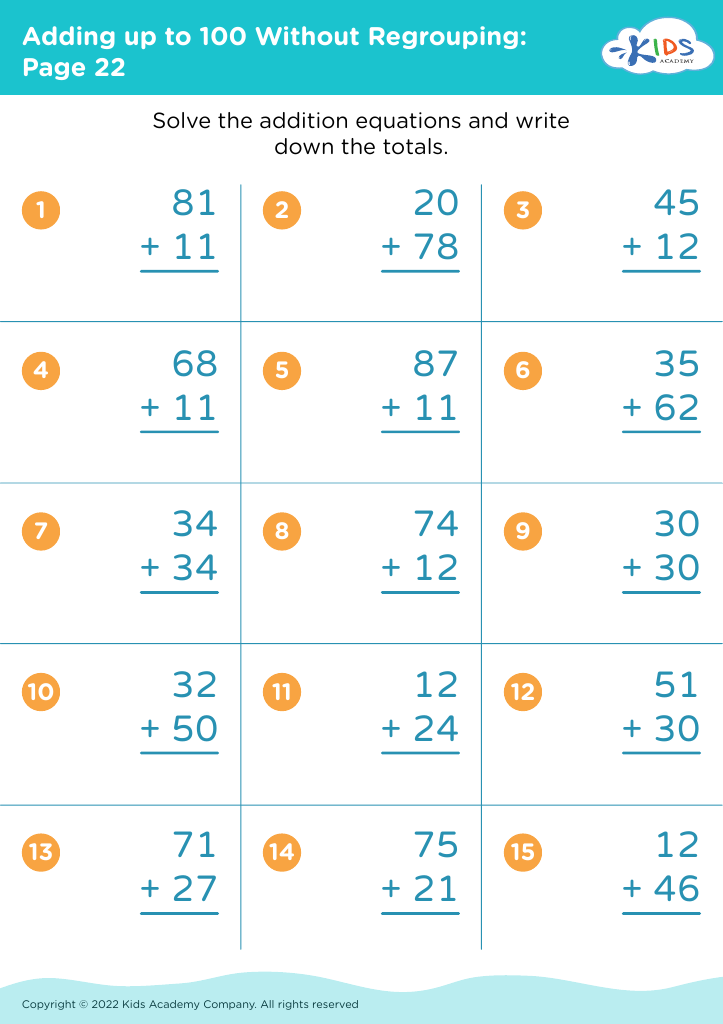
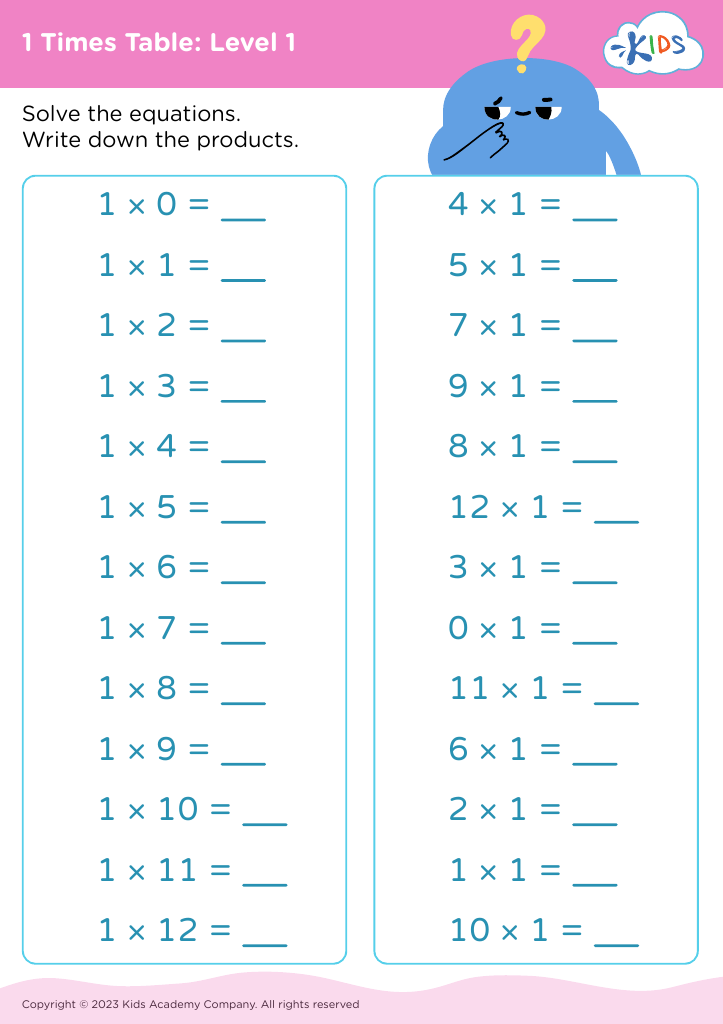
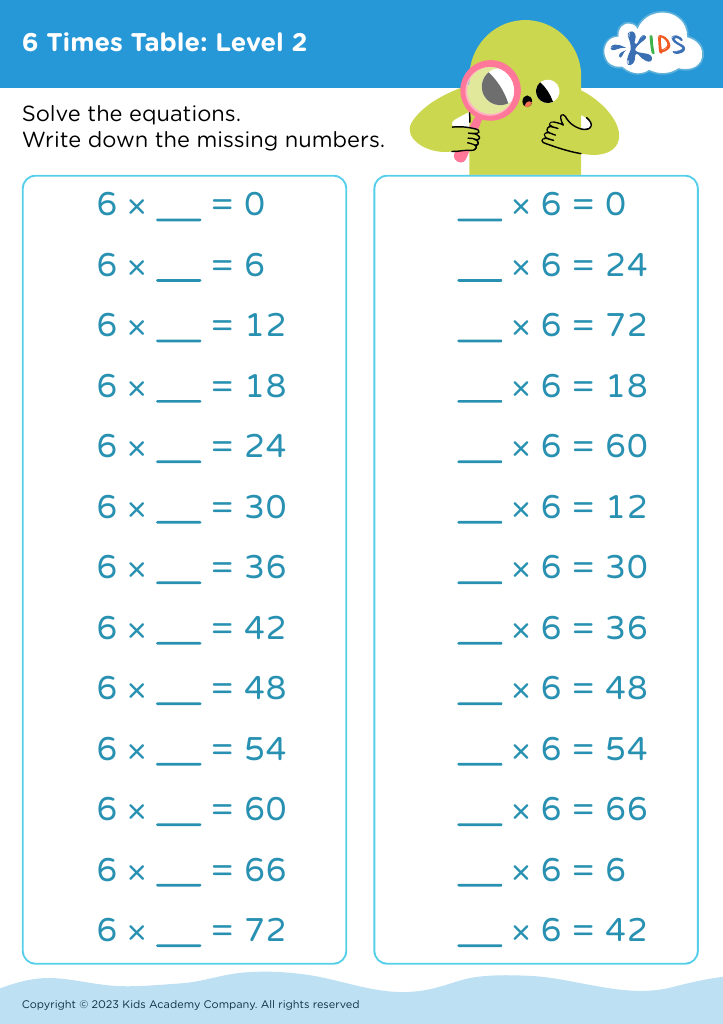







Learning times tables is crucial for children aged 7-9 as it lays the foundation for their mathematical understanding and problem-solving skills. At this age, children are transitioning from basic arithmetic to more complex concepts, such as division, fractions, and even early algebra. Mastery of times tables helps them perform calculations more quickly and accurately, enhancing their confidence in math.
Moreover, a solid grasp of multiplication fosters greater mathematical fluency and comprehension in everyday situations, such as budgeting, cooking, or planning events. This skill supports their ability to tackle higher-level math in later years, making it a vital building block in their education.
From a practical standpoint, knowing their times tables empowers students during assessments and reduces anxiety, allowing them to focus on developing further skills rather than struggling with basic facts. For parents and teachers, emphasizing this learning helps children develop perseverance and cognitive ability, which are essential traits for success in any subject.
Ultimately, fostering an environment where children can practice and apply their times tables encourages a lifelong appreciation for mathematics and equips them with the tools they need for future academic challenges.








