Logical thinking Worksheets for Ages 7-9 - Page 2
27 filtered results
-
From - To
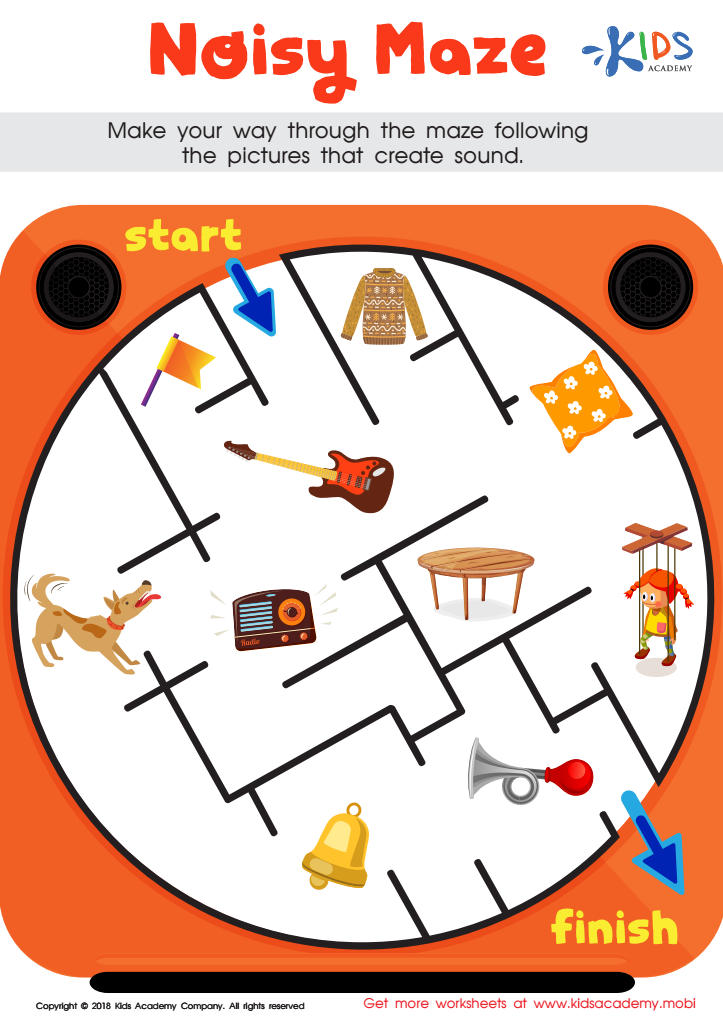
Noisy Maze Worksheet
 Assign to My Students




.jpg)

Logical thinking is a crucial skill for children ages 7-9, and it offers numerous benefits to their cognitive and emotional development. During these formative years, children begin to develop the ability to reason and form judgments based on the information available to them. Encouraging logical thinking helps them understand cause-and-effect relationships, enhances decision-making, and fosters critical thinking skills which are essential in navigating day-to-day situations.
For parents, nurturing logical thinking in their children equips them with problem-solving tools. Children learn to approach problems methodically, consider multiple aspects of a situation, and devise solutions that are both practical and creative. This early foundation in logic aids their academic performance across subjects, notably in mathematics and science, where structured thinking and systemic problem solving are essential.
Teachers play a vital role in embedding logical thinking within the curriculum. By integrating activities that build this skill, such as puzzles, pattern recognition games, and reasoning exercises, teachers help students become independent learners. Being able to think logically also improves students' confidence and their ability to argue their viewpoints respectfully and coherently.
In a world that increasingly values critical reasoning and problem-solving skills, establishing a strong base in logical thinking at this impressionable age sets children up for a lifetime of more sophisticated cognitive abilities and adaptive learning.








