Numerical reasoning Worksheets for Ages 7-9
4 filtered results
-
From - To
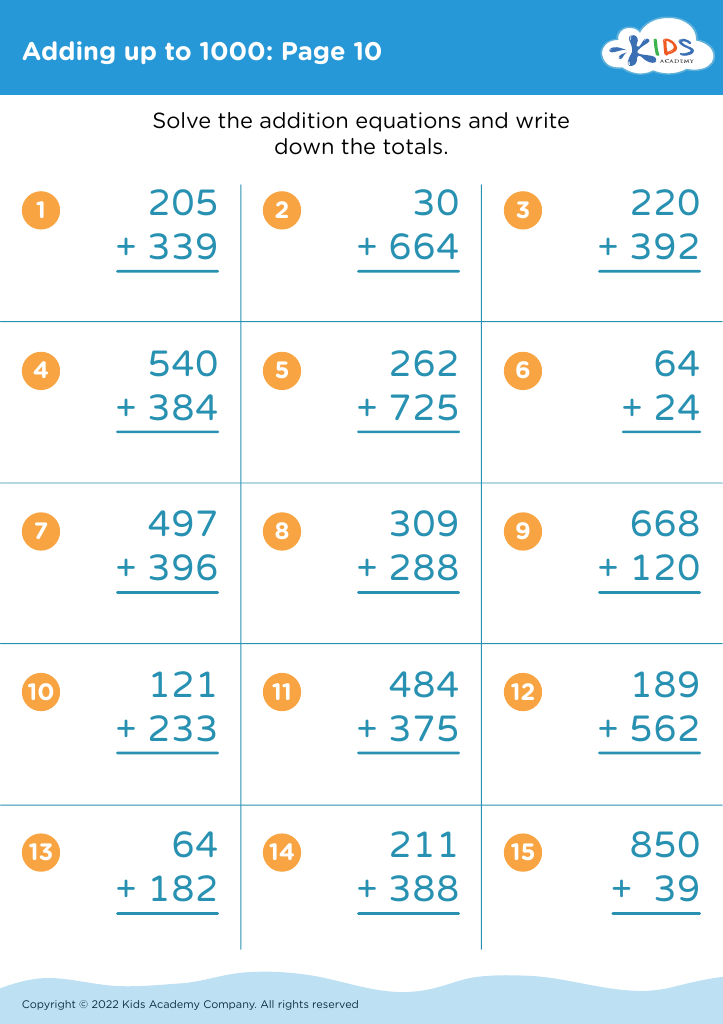
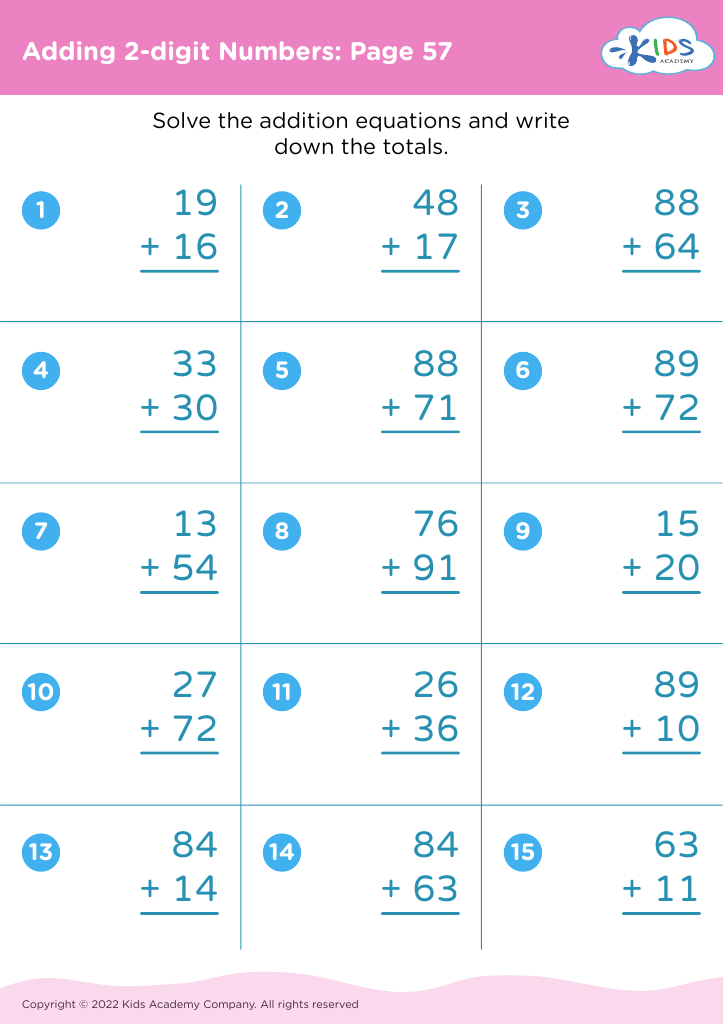
Our "Numerical Reasoning Worksheets for Ages 7-9" provide engaging activities designed to strengthen young learners' math skills while making learning fun. Tailored for children in this age group, these worksheets cover essential topics including addition, subtraction, multiplication, and basic problem-solving. Each worksheet fosters critical thinking through a variety of exercises that challenge students to apply their numerical understanding in different contexts. Ideal for home practice or classroom use, our resources help build confidence while ensuring mastery of key concepts. Explore our user-friendly printable worksheets and set your child on a path towards numerical competence and academic success!
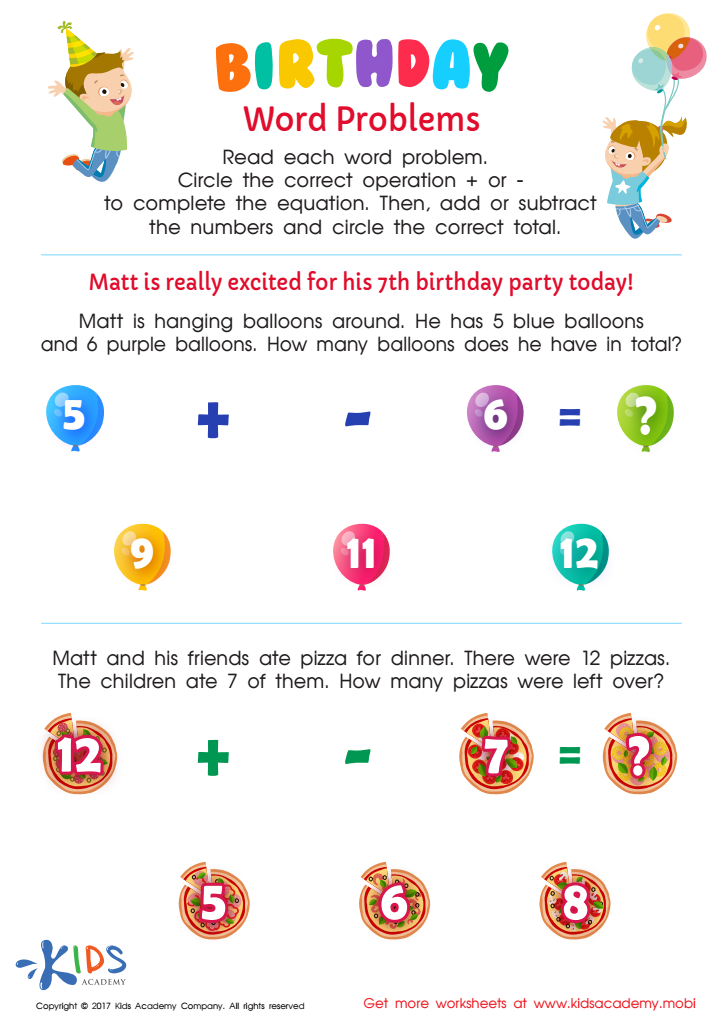
Birthday Word Problems Substraction Worksheet
 Assign to My Students








Numerical reasoning is a critical skill for children aged 7-9, forming the foundation for future academic success in mathematics and problem-solving. At this age, children's cognitive abilities and understanding of mathematical concepts rapidly develop. Strengthening their numerical reasoning encourages logical thinking, adaptability, and the ability to approach complex problems creatively.
Parents and teachers should prioritize this skill, as it aids in both everyday decision-making and more abstract mathematical tasks. By enhancing numerical reasoning, children learn to understand relationships between numbers, identify patterns, and apply their knowledge to real-world situations, such as managing money or estimating measurements.
Additionally, numerical reasoning fosters confidence in mathematical abilities, reducing anxiety around the subject. Engaging students through games and practical activities helps maintain their interest and motivation. In this digital age, where technology and analytical skills are heavily emphasized, strong numerical reasoning serves as a pivotal advantage.
Investing time and resources into numerical reasoning not only equips children with vital skills for higher education but also shapes their overall approach to learning and problem-solving, nurturing lifelong learners poised to navigate complexities in an increasingly data-driven world. Thus, prioritizing numerical reasoning in the early years is crucial for developmental educational reform.








