Practice writing numbers Worksheets for Ages 7-9
6 filtered results
-
From - To
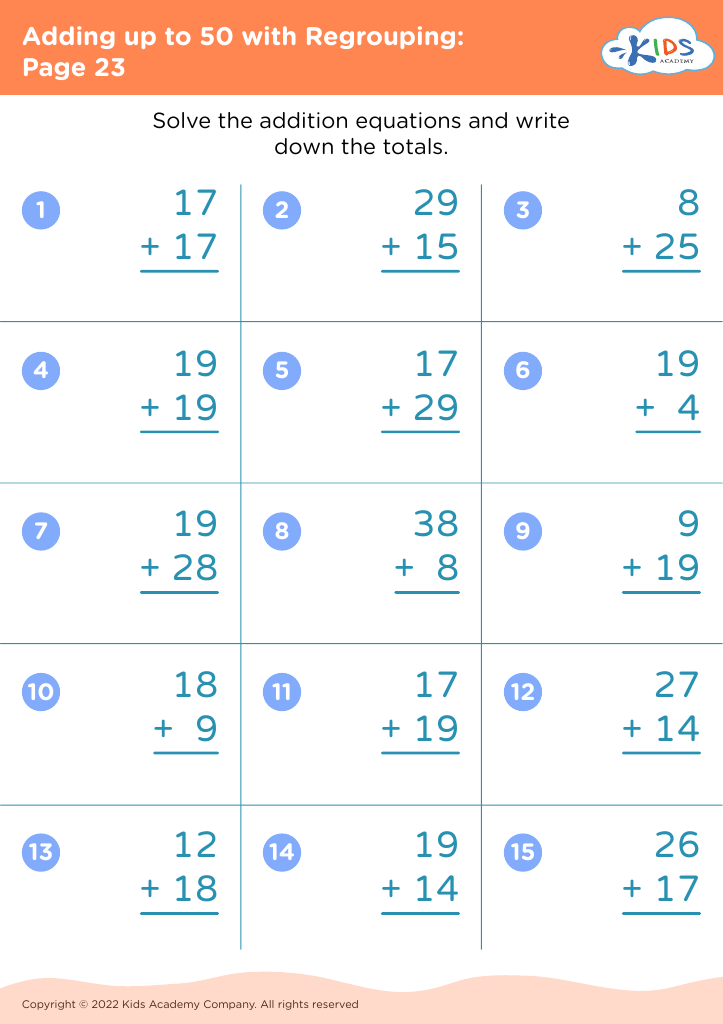
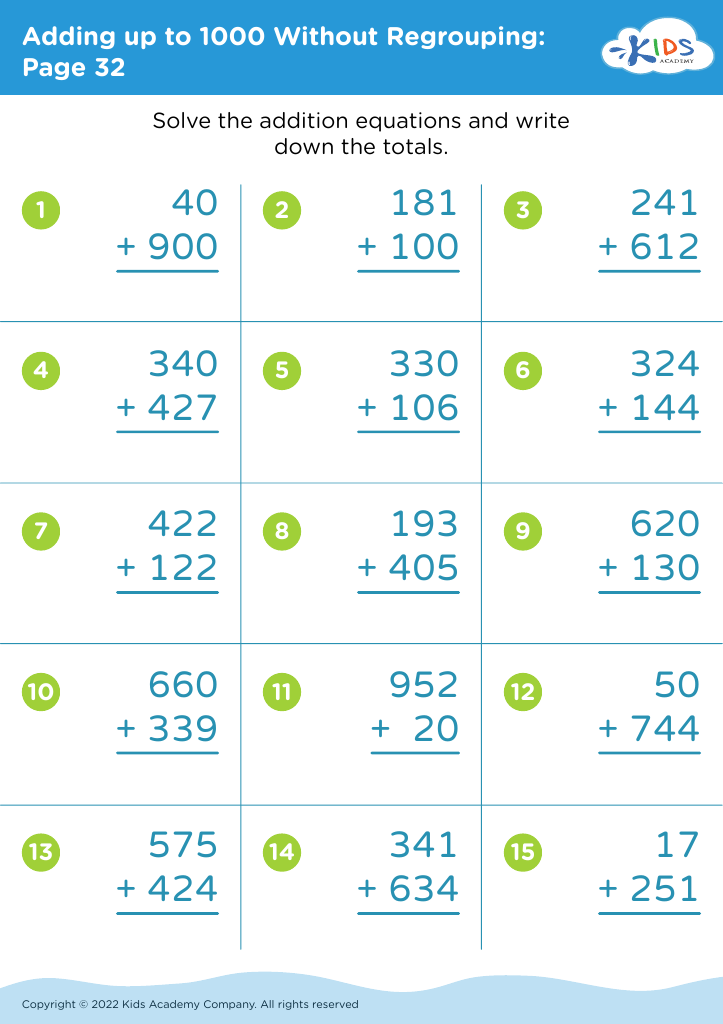
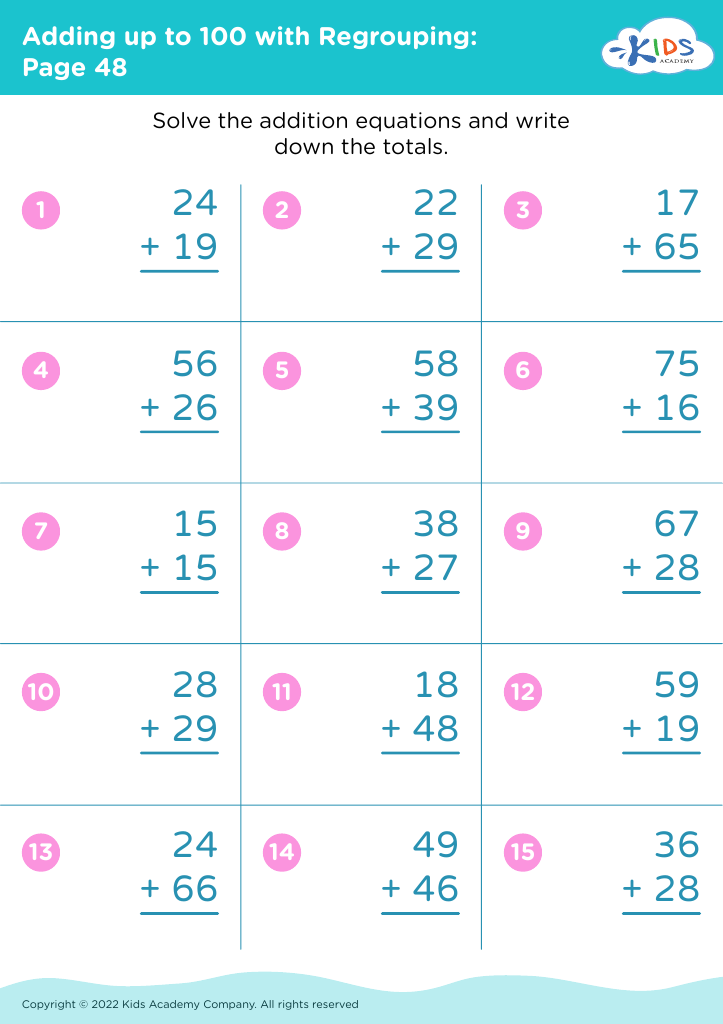
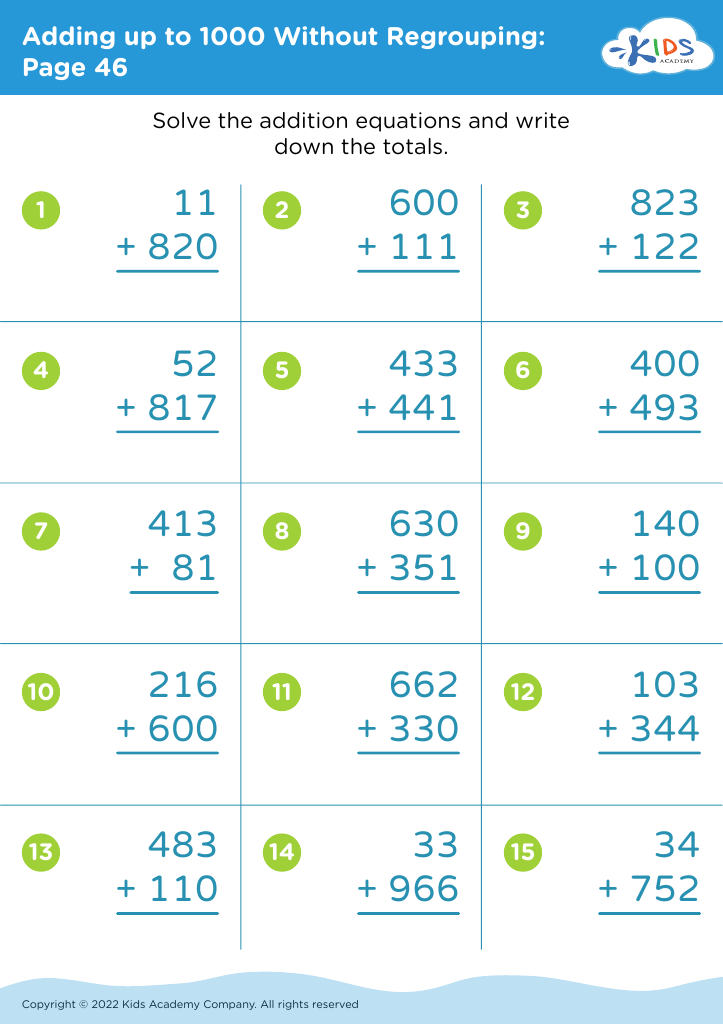
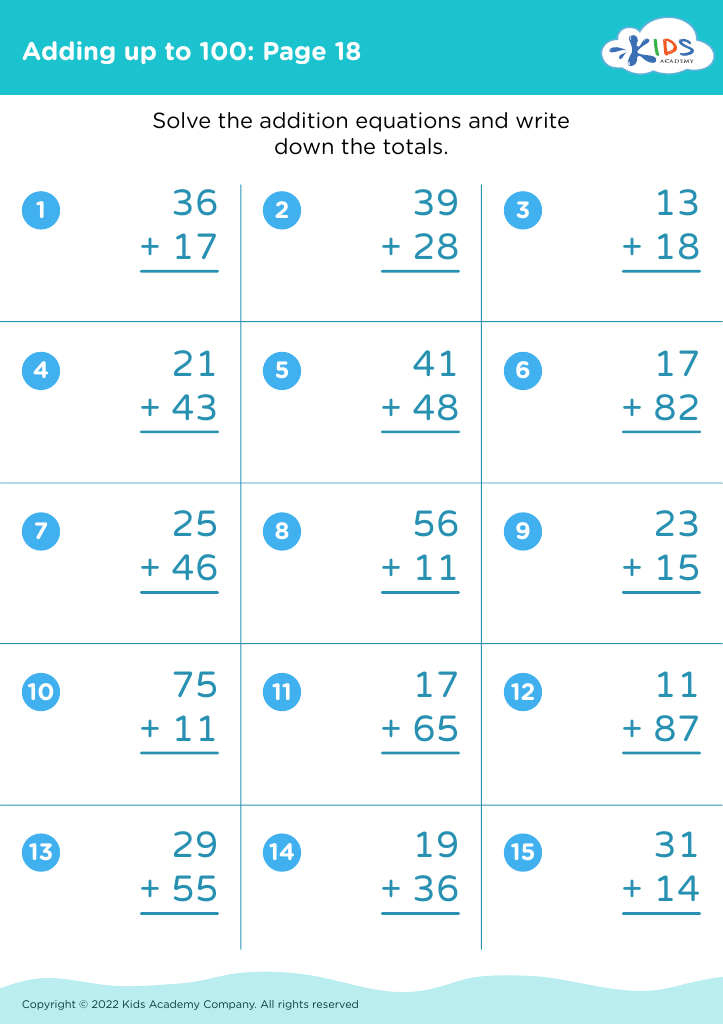
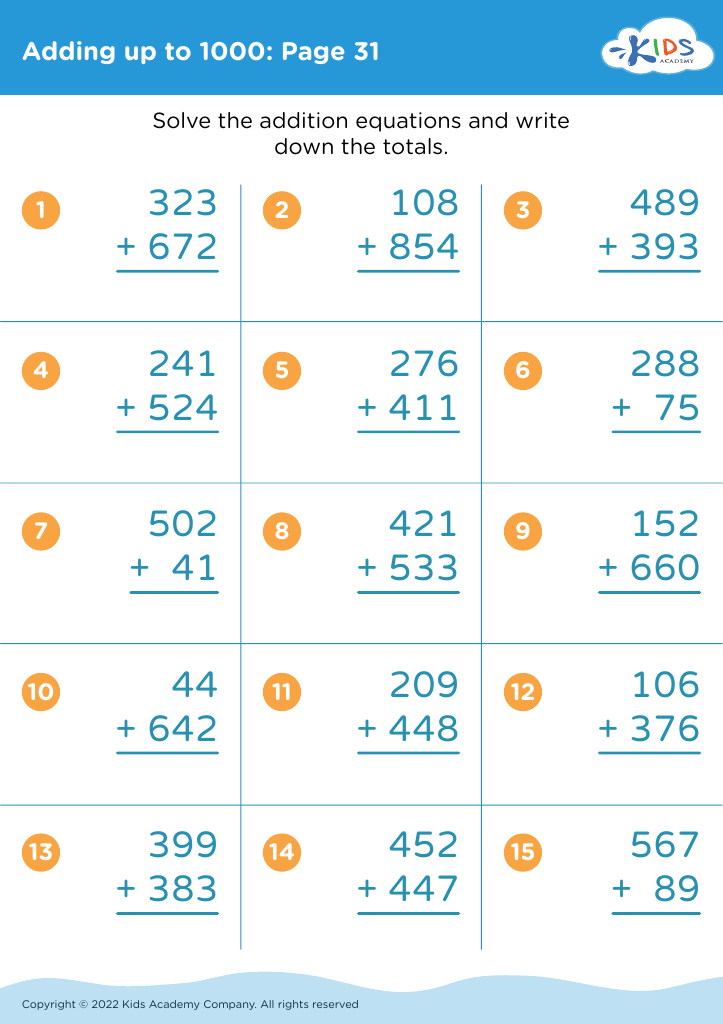
Welcome to our "Practice Writing Numbers Worksheets" section for ages 7-9! These engaging worksheets are designed to help young learners enhance their number writing skills through fun and interactive exercises. Each worksheet features a variety of activities including tracing, writing, and practicing number formation, all tailored to boost confidence and fluency in mathematics. By participating in these activities, children will improve their number recognition while developing fine motor skills. Ideal for use at home or in the classroom, our worksheets aim to make learning numbers enjoyable and effective, supporting your child's mathematical journey. Explore our collection and watch your child's skills flourish!



.jpg)


Practicing writing numbers for children aged 7-9 is crucial for several reasons. At this age, students are transitioning from foundational skills to more complex mathematical concepts. Writing numbers helps solidify their understanding of place value, number formation, and the basic principles of math. It reinforces fine motor skills, enhancing their overall handwriting abilities, which is important for clear communication in school.
Consistency in writing numbers also helps improve a child’s confidence when tackling math problems. Children who practice writing numbers often demonstrate better retention of concepts and research shows that those who can express numbers clearly on paper tend to excel in mathematics. Furthermore, number writing fosters critical thinking, as younger students learn to differentiate between various types of numbers (whole numbers, decimals, and fractions).
By integrating number writing regularly into both classroom activities and homework, teachers and parents can provide essential support in building a strong mathematical foundation. This not only aids academic progress but also nurtures a positive attitude towards learning. Ultimately, promoting this practice equips children not just for their current grades but also sets the stage for future success in more advanced mathematical fields.








