Sorting skills Worksheets for Ages 7-9
6 filtered results
-
From - To
Strengthen your child's critical thinking with our "Sorting Skills Worksheets for Ages 7-9". Designed to enhance logic and categorization abilities, these engaging worksheets offer various activities like matching, grouping, and organizing objects based on different attributes. Kids will have fun while learning essential skills that foster attention to detail and analytical thinking. Perfect for both classroom and home use, these worksheets turn learning into an exciting and educational adventure. Help your child build a strong foundation for future academic success with these expertly crafted sorting exercises from Kids Academy!
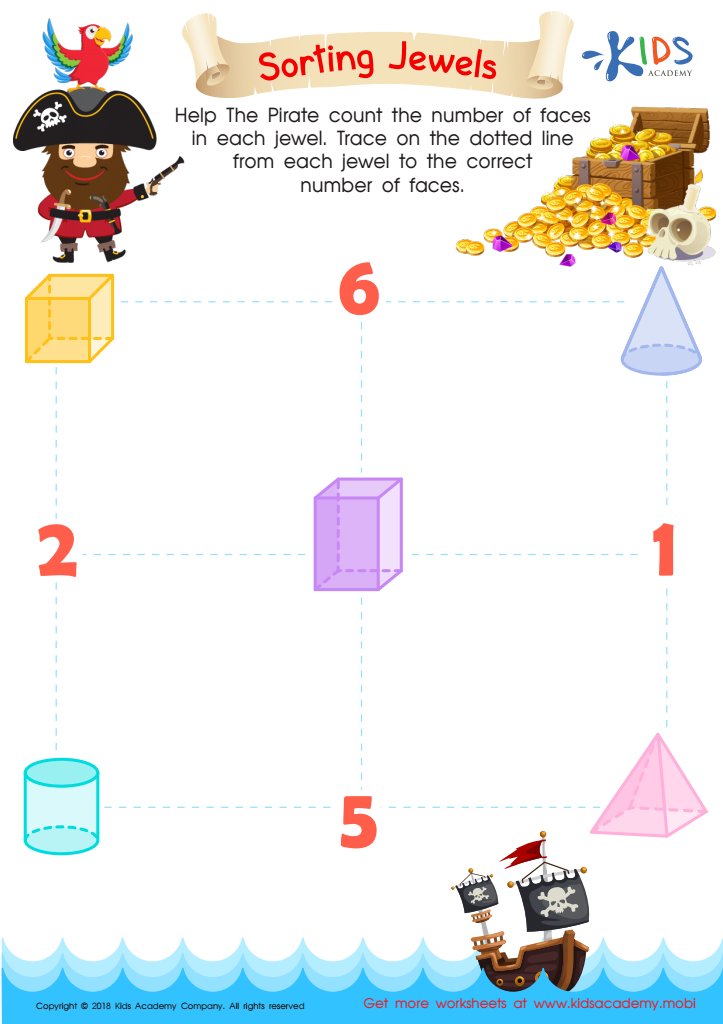
Sorting Jewels Worksheet
 Assign to My Students
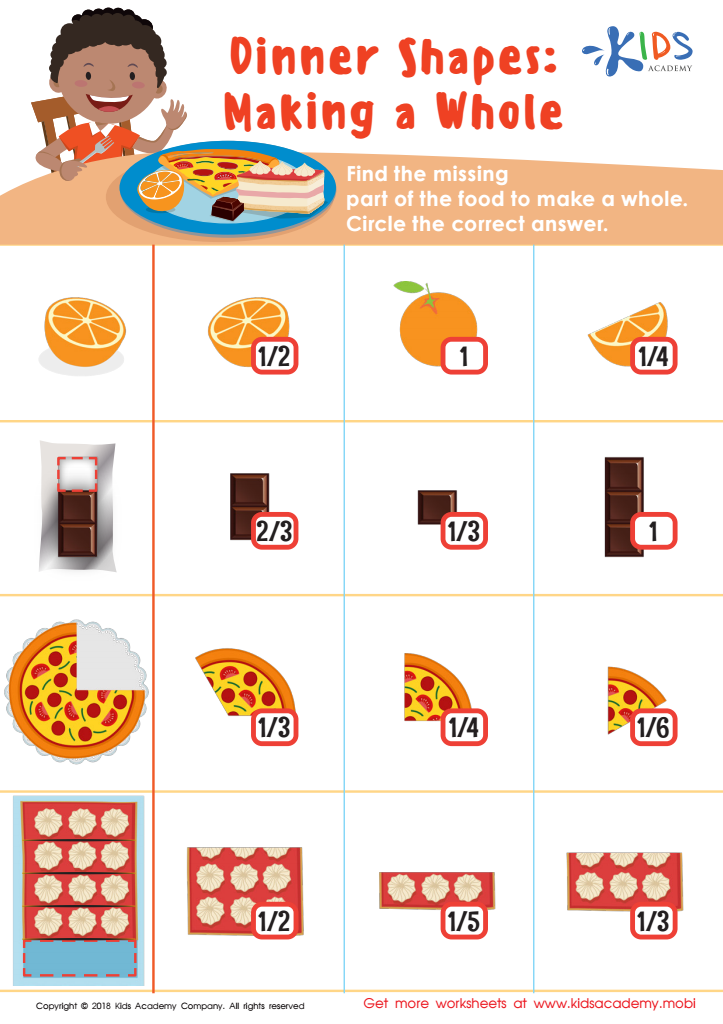
Dinner Shapes: Making a Whole Worksheet
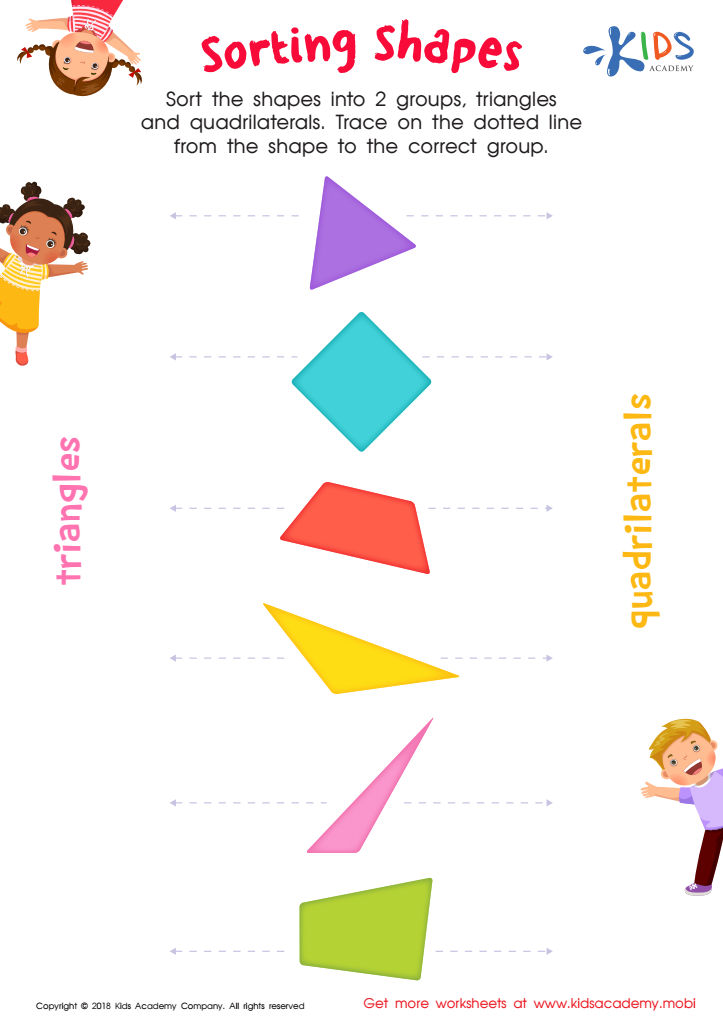
Sorting Shapes Worksheet
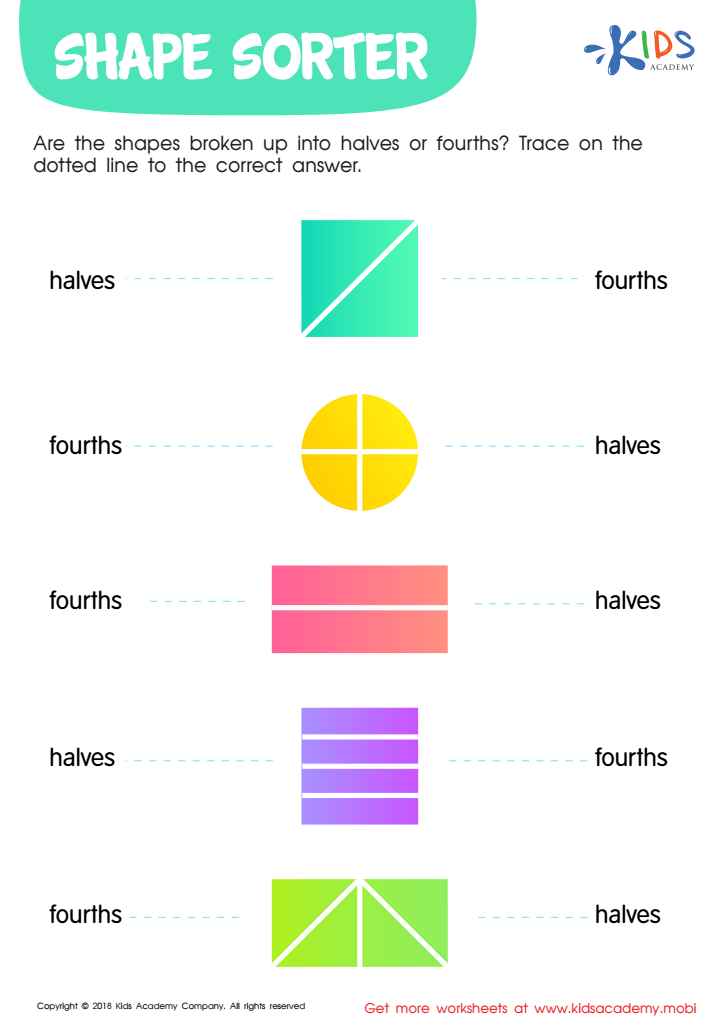
Shape Sorter Worksheet





Parents and teachers should place significant importance on developing sorting skills in children aged 7-9, as these skills serve as foundational building blocks for cognitive development. At this stage, children are rapidly expanding their understanding of the world and beginning to engage in more complex thought processes. Sorting tasks teach them to observe attributes, categorize objects, and recognize patterns, which boosts their analytical and critical thinking abilities.
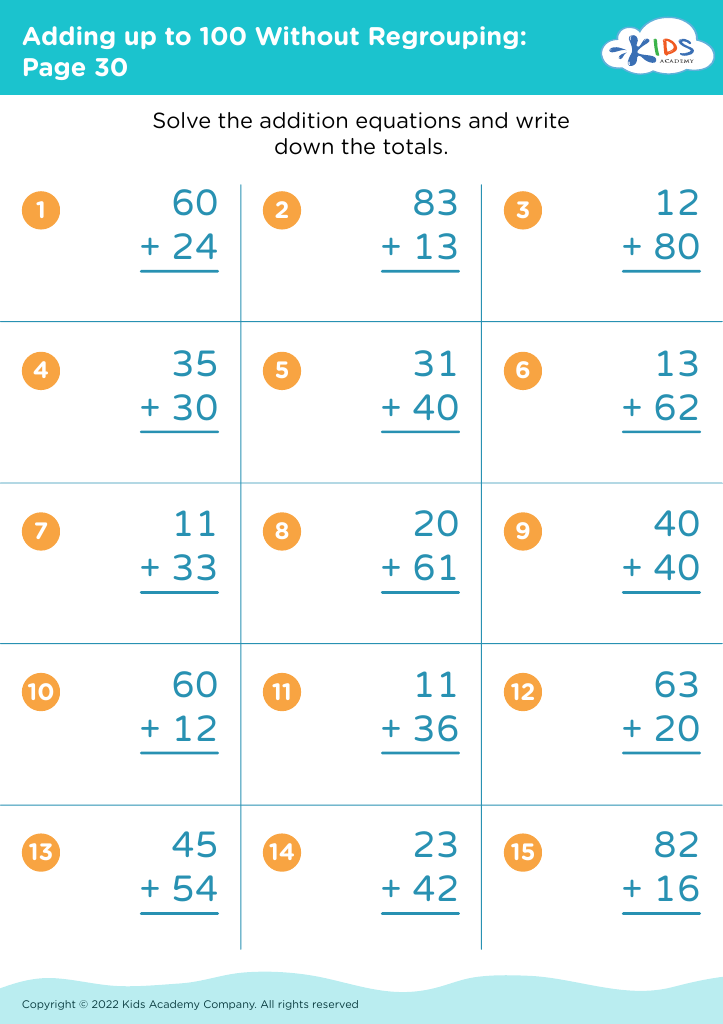
Sorting is closely linked to early math skills, helping children grasp concepts such as counting, classification, and problem-solving. When children sort objects by size, color, or shape, they are effectively organizing data in a systematic way. This primes them for future mathematical operations like addition, subtraction, and even early data analysis.
Furthermore, sorting exercises enhance language abilities by introducing new vocabulary as children describe and justify their sorting choices. This interaction not only strengthens verbal skills but also encourages logical reasoning.
Socially, sorting in collaborative settings fosters teamwork and improves communication skills. It also bolsters executive functioning by requiring focus, planning, and persistence.
Therefore, nurturing sorting skills goes beyond mere organization— it provides children with essential tools for academic success and daily life problem-solving, making it a crucial aspect of their developmental journey.








