Understanding mass Worksheets for Ages 7-9
3 filtered results
-
From - To
Welcome to our "Understanding Mass Worksheets" designed specifically for children aged 7-9! These engaging and interactive worksheets are perfect for young learners eager to grasp the concept of mass and measurement. With a variety of activities such as comparing weights, measuring objects, and solving practical problems, students will gain a solid foundational understanding of mass. Each worksheet is tailored to encourage critical thinking and application of knowledge in real-world scenarios, fostering confidence in math skills. Enhance your child's learning experience with our fun, easy-to-use resources that make exploring mass an enjoyable adventure. Unlock their potential today!
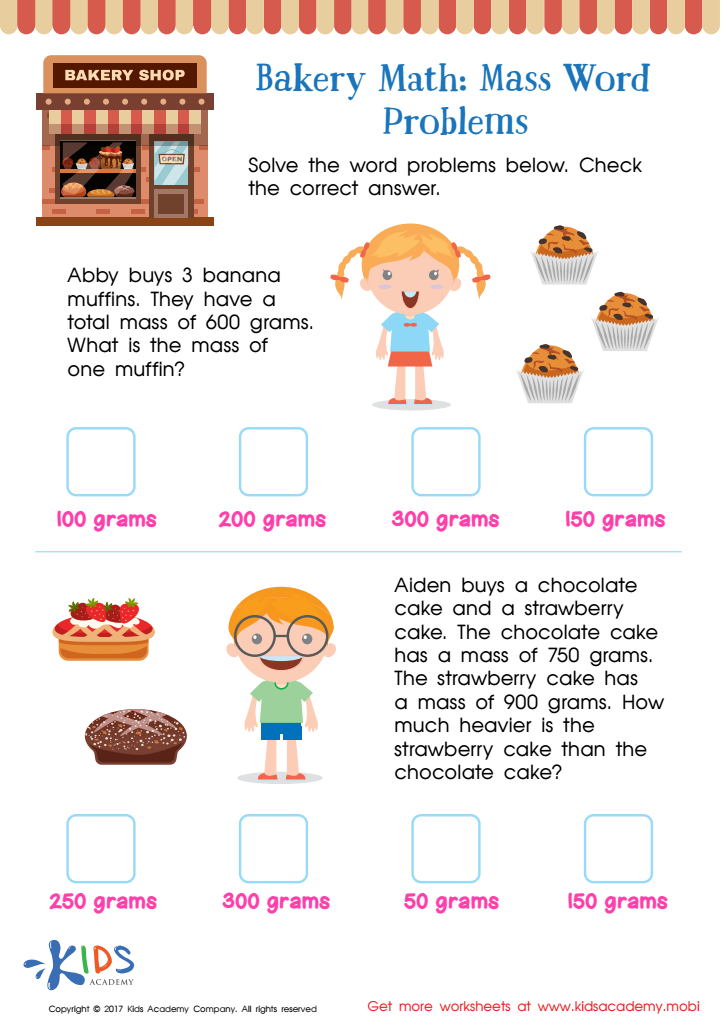
Mass Word Problems Worksheet
 Assign to My Students
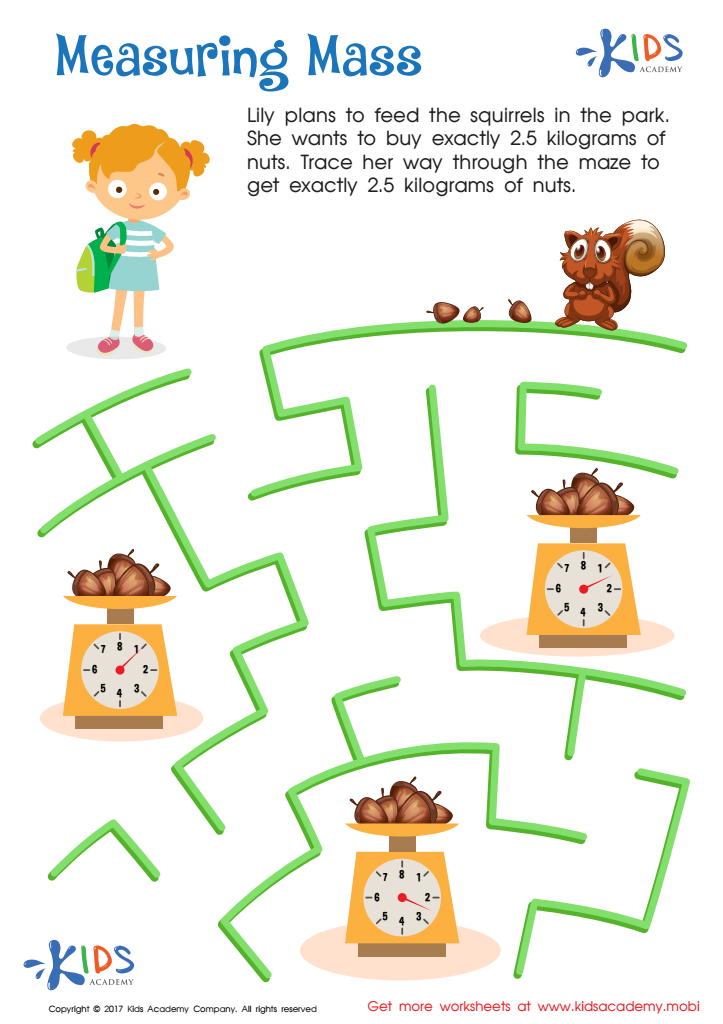
Measuring Mass Worksheet
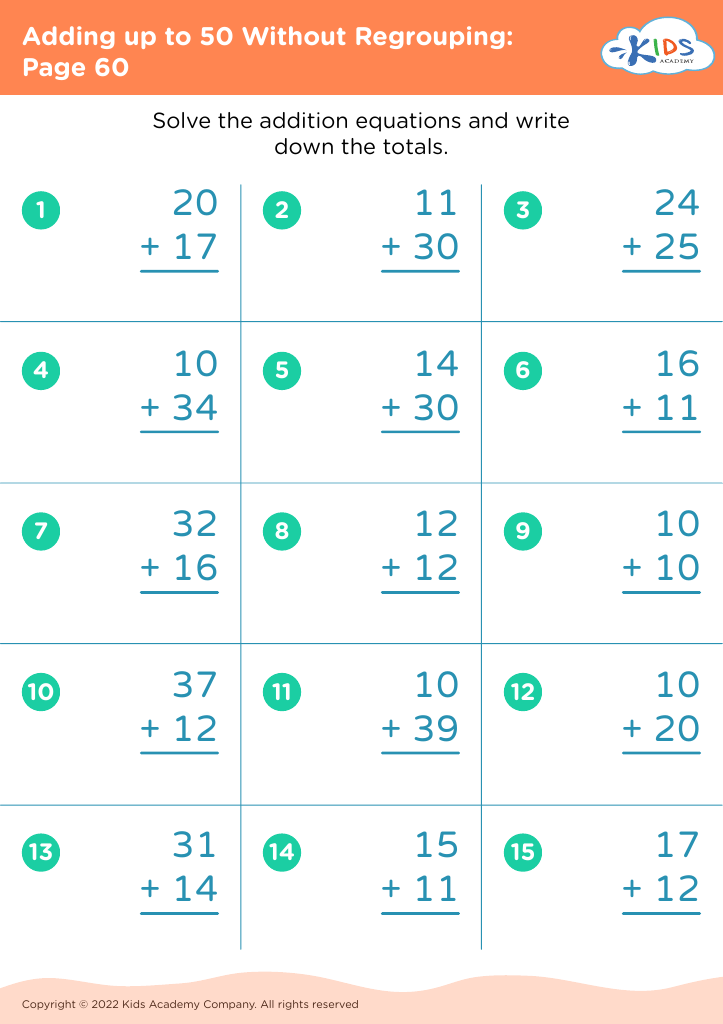







Understanding mass is crucial for children aged 7-9 as it forms a foundational concept in their early scientific education. Mastery of this idea helps students grasp the differences between weight and mass, which is essential for comprehending everyday phenomena, from cooking to understanding the physics of objects around them.
At this age, children are naturally curious and eager to explore their environment. When parents and teachers engage them in discussions about mass, they stimulate critical thinking and analytical skills. For example, comparing the mass of different objects can lead to hands-on learning experiences that promote exploration, measurement, and observation.
Moreover, lessons on mass also introduce essential math skills, such as addition, subtraction, and unit conversion. These activities not only enhance students’ understanding of mass but also foster practical applications of mathematics in real-life situations.
Furthermore, knowledge of mass supports future learning across multiple disciplines, including science, technology, engineering, and mathematics (STEM). By instilling proficiency in measuring mass, parents and teachers encourage a lifelong interest in science and nurtures the next generation of problem solvers and innovators. Ultimately, prioritizing this understanding helps equip children with the tools they need for personal growth and academic success.








