Understanding matter states Worksheets for Ages 7-9
3 filtered results
-
From - To
Explore our engaging "Understanding Matter States" worksheets tailored for kids aged 7-9. These carefully crafted resources simplify key scientific concepts about solids, liquids, and gases through fun activities and illustrations. Enhance your child's learning as they dive into identifying, comparing, and experimenting with different states of matter. Perfect for classroom lessons or at-home practice, our worksheets support young learners in building a solid foundation in science. Boost STEM skills and curiosity with exercises designed to inspire and educate. Download today for an enjoyable learning adventure!
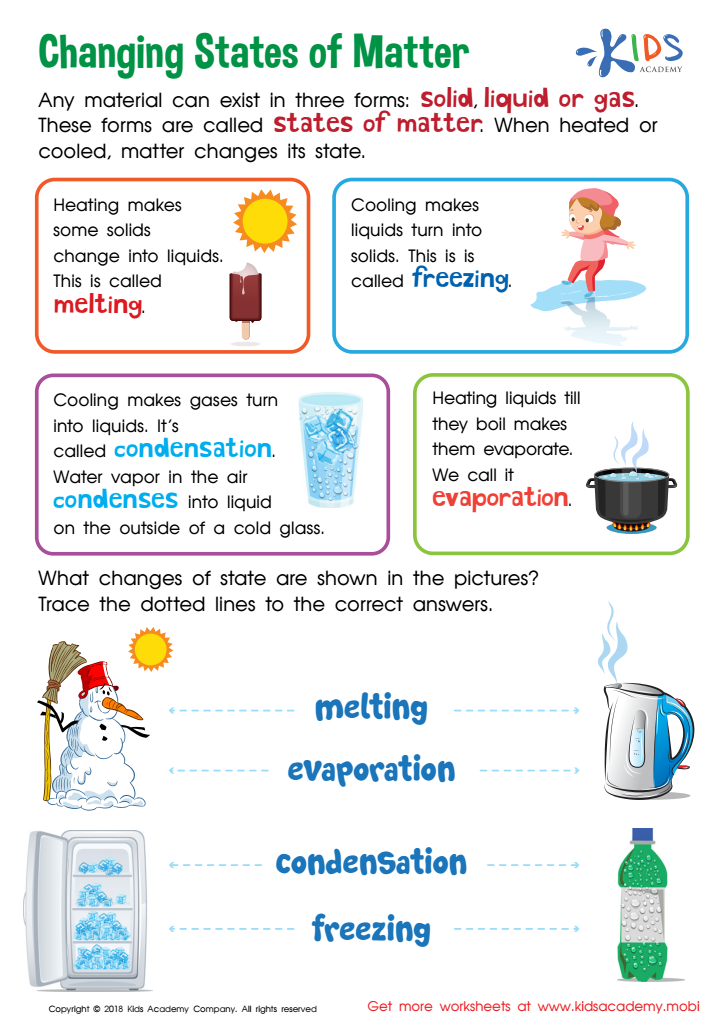
States of Matter Worksheet
 Assign to My Students
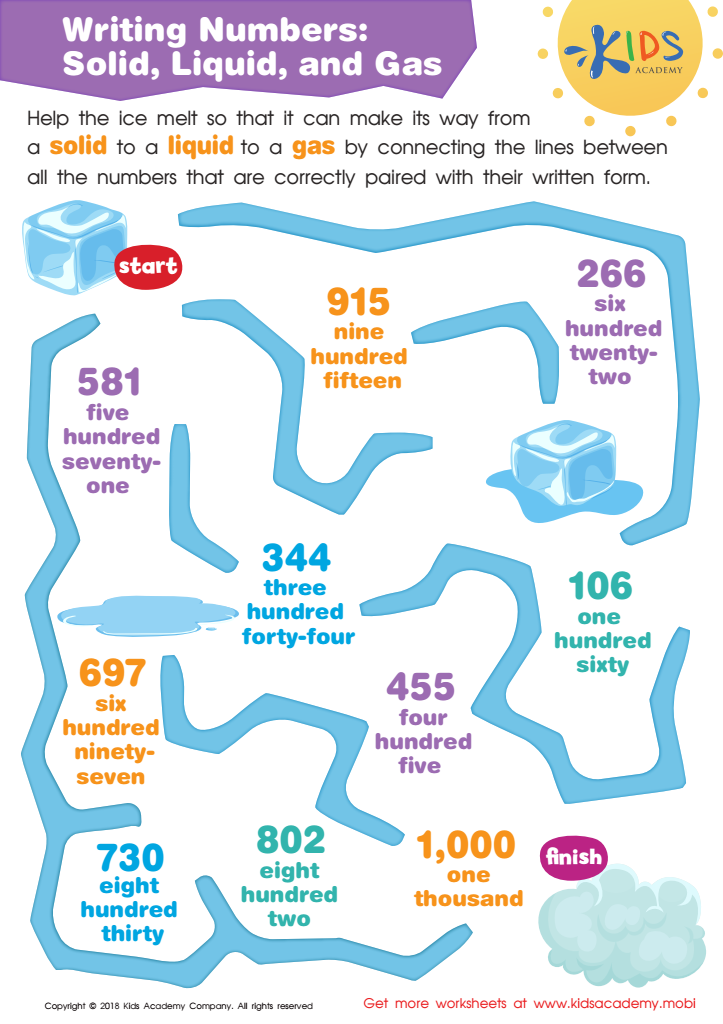
Solid, Liquid, and Gas Writing Numbers Worksheet
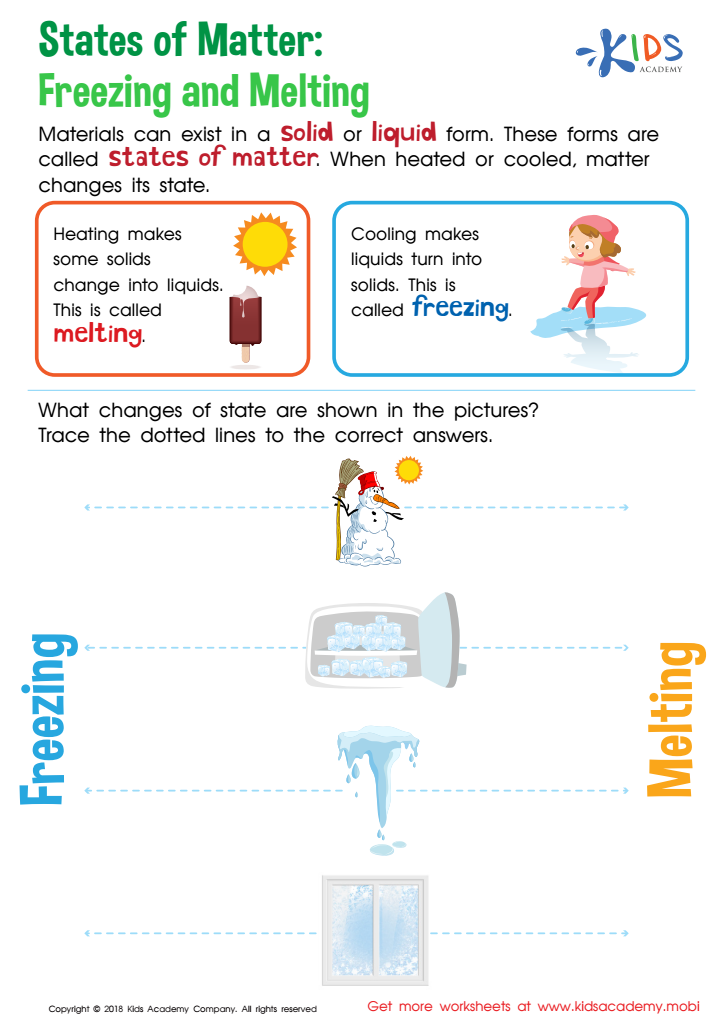
States of Matter: Freezing and Melting Worksheet







Understanding matter states—solid, liquid, and gas—is essential for children ages 7-9 as it lays the groundwork for scientific literacy and critical thinking. When children comprehend how matter changes from one state to another (e.g., water freezing into ice), they develop a curiosity about the world around them. This basic scientific knowledge equips them to understand more complex concepts in later education.
For both parents and teachers, fostering an interest in science at a young age has long-term benefits. Research shows that early exposure to scientific thinking can improve problem-solving skills and cognitive development. Grasping the differences between solids, liquids, and gases also helps children make sense of everyday phenomena. For instance, knowing why ice melts into water can spark fascination and wider conversations about temperature and the environment.
Moreover, by engaging in simple experiments, such as melting chocolate or observing water evaporation, children learn through hands-on experiences, which reinforces learning and retention. Such activities encourage observation, questioning, and inference, all key elements of the scientific method.
In essence, understanding matter states enriches young minds, positioning them to thrive academically while also nurturing a lifelong love for science and discovery. Thus, parents and teachers play a pivotal role in fostering an early interest and comprehension in this foundational aspect of physical science.








