Understanding Rhymes Worksheets for Ages 7-9
3 filtered results
-
From - To
Explore our "Understanding Rhymes Worksheets" designed specifically for kids aged 7-9! These engaging worksheets help young learners grasp the concept of rhyming through fun activities, promoting language development and literacy skills. Each worksheet features age-appropriate exercises that encourage children to identify, complete, and create rhymes, enhancing their phonemic awareness. Perfect for both classroom settings and at-home learning, these resources support critical thinking and creativity. Dive into the delightful world of words and let your child discover the joy of rhyming! Browse our collection today to make learning entertaining and effective!
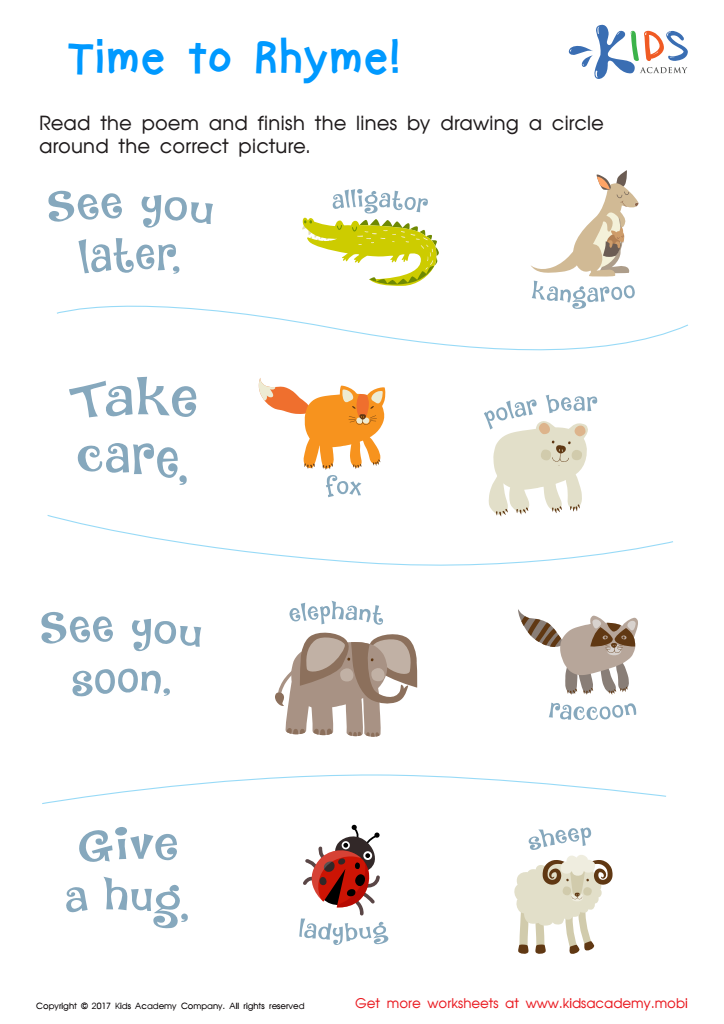
Time to Rhyme Rhyming Worksheet
 Assign to My Students
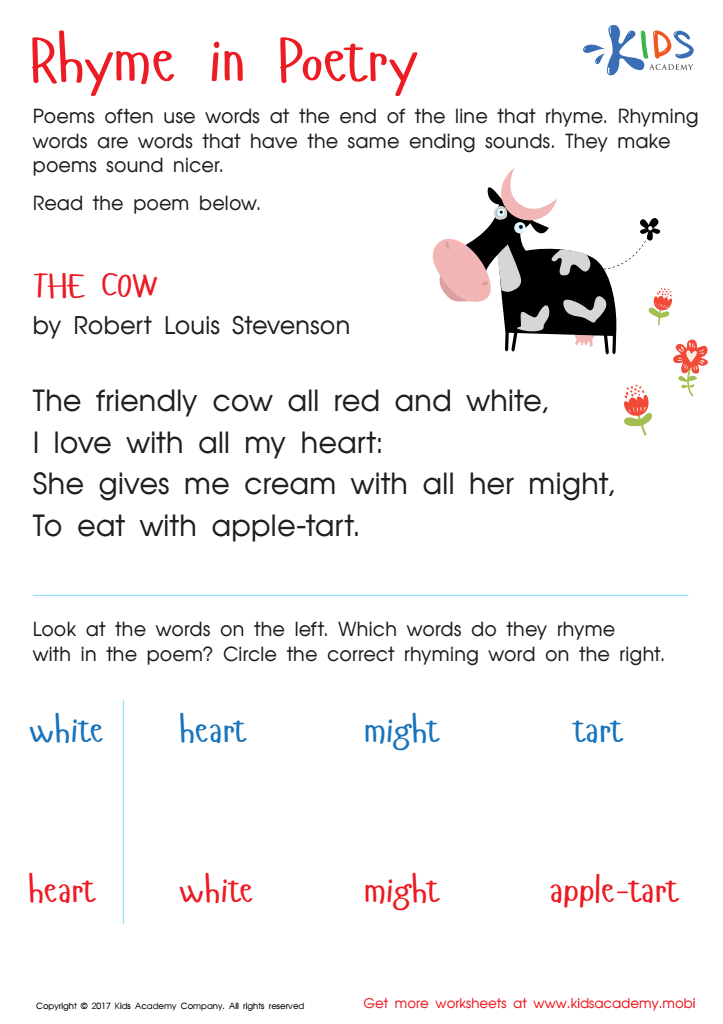
Rhyme In Poetry Worksheet





.jpg)


Understanding rhymes is vital for children aged 7-9 as it lays the foundation for literacy skills that are critical in their educational journey. At this stage, children are not only becoming more proficient readers but are also starting to explore writing creatively. Rhymes expose children to the sounds of language, which enhances phonemic awareness — a key precursor to reading success. Recognizing and creating rhymes helps children develop their vocabulary and encourages them to play with words, fostering a love for language.
Moreover, rhymes can improve memory and recall, as the rhythmic nature of rhyme aids in retention. This can be particularly beneficial in subjects that require memorization, such as math or science. Engaging with rhymes through songs, poems, and stories also nurtures listening skills and promotes focus, both of which are crucial in a learning environment.
For parents and teachers, incorporating rhymes into everyday activities can make learning more enjoyable and interactive. Creative discussions prompted by rhymes can enhance critical thinking and encourage children to express their ideas more freely. Ultimately, fostering an appreciation for rhyme at this age supports literacy development and enriches the child’s overall educational experience.








