Addition Practice Adding up to 100 Misc Worksheets for Ages 7-9
3 filtered results
-
From - To
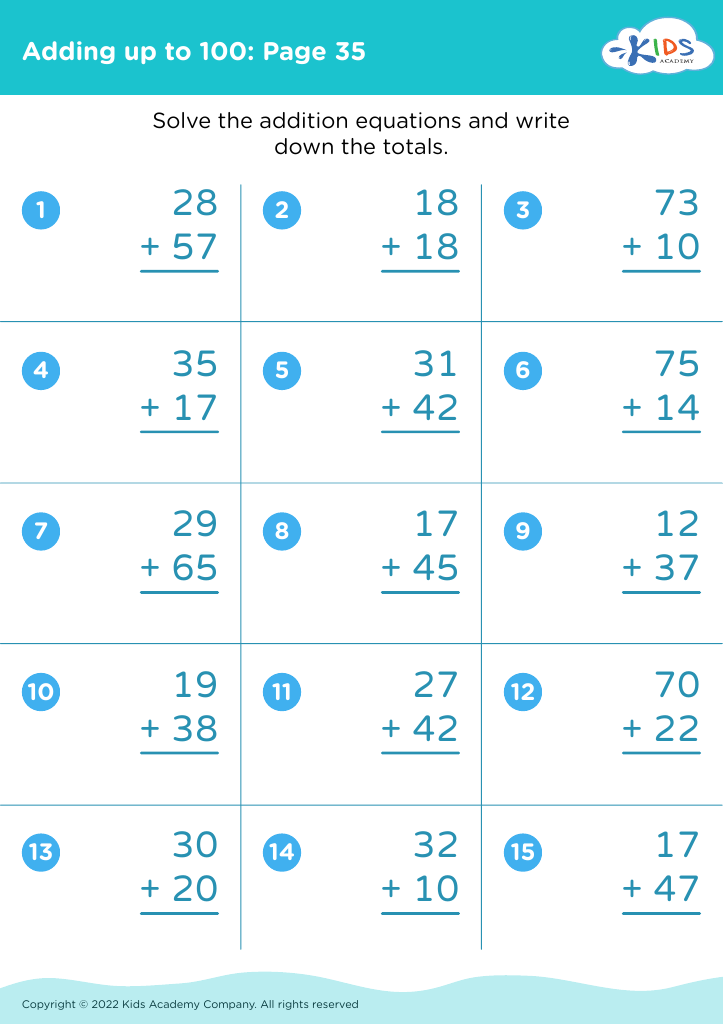
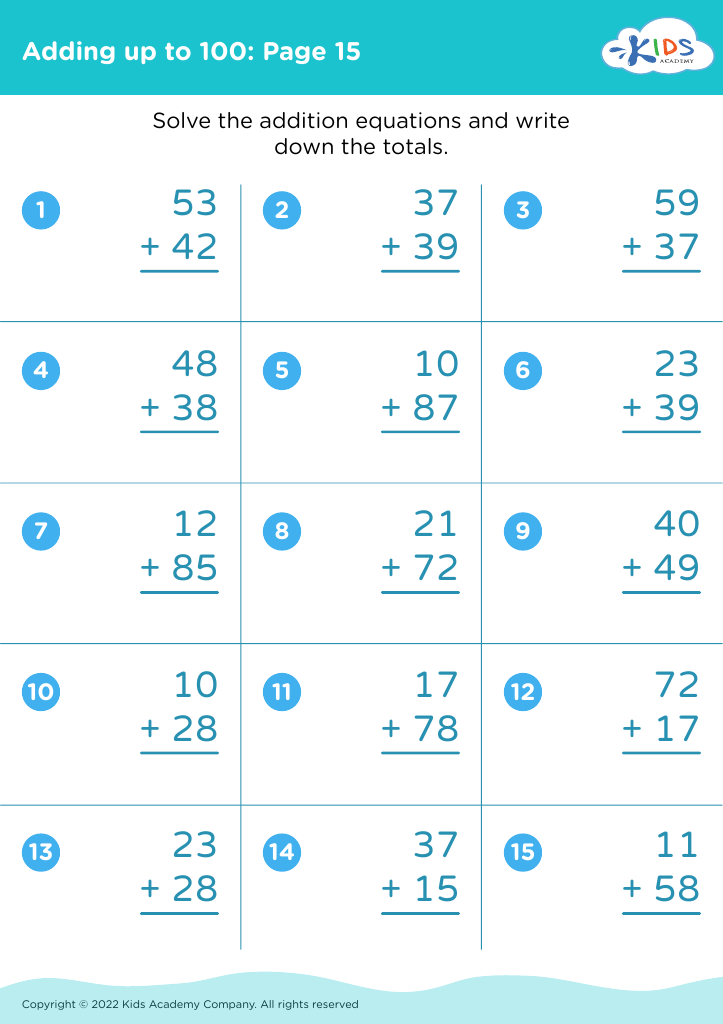
Explore our engaging and diverse "Addition Practice: Adding Up to 100" worksheets, specially designed for children aged 7-9. These multifaceted resources aim to enhance your child's math skills through a variety of fun and interactive activities. With exercises that include filling in blanks, matching, and word problems, young learners will strengthen their addition abilities in an enjoyable way. Ideal for classroom use or at-home practice, our worksheets promote confidence and a solid math foundation. Equip your child for success with these valuable tools, fostering a love for learning and a mastery of addition up to 100! Start growing those math skills today!
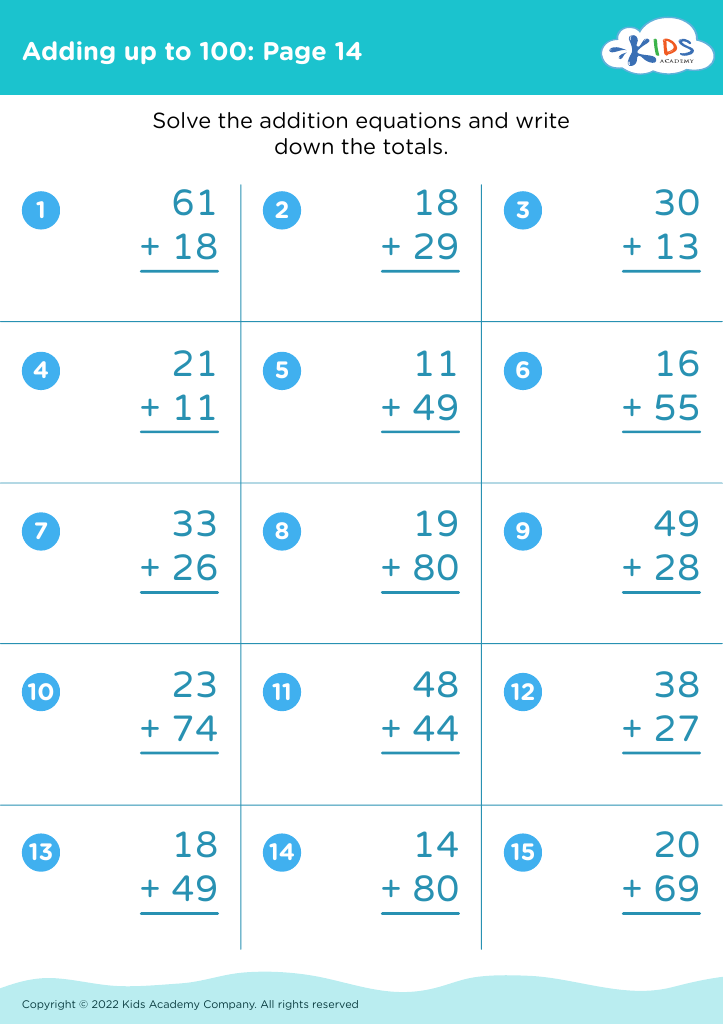


Addition practice is crucial for children ages 7-9 as it lays the foundation for their mathematical understanding and problem-solving skills. During these formative years, children are transitioning from basic arithmetic to more complex calculations, including addition up to 100. Mastering addition enhances their confidence and encourages a positive attitude towards math as a whole.
Parents and teachers should recognize that proficient arithmetic skills support academic success across the curriculum, not just in math. For instance, understanding sums helps with reading charts, calculating scores in sports, and managing money, which are essential life skills. Addition up to 100 also aids in developmental milestones such as improved concentration, logical reasoning, and critical thinking.
Additionally, consistent practice fosters mental math skills, enabling children to work quickly and efficiently. Engaging activities, games, or worksheets can make this skill acquisition enjoyable, turning learning into a delightful experience rather than a chore. Lastly, early mastery of addition can reveal underlying struggles, allowing parents and teachers the opportunity to intervene early and provide necessary support, ensuring no child falls behind in their mathematical journey. Ultimately, caring about addition practice lays a strong groundwork for lifelong mathematical competence.