Color Identification Adding up to 100 Misc Worksheets for Ages 7-9
4 filtered results
-
From - To
Unlock the joy of learning with Color Identification Adding up to 100 worksheets, designed specifically for ages 7-9. These educational resources from Kids Academy combine math and creativity, making it easier for children to practice addition while identifying and using colors. With engaging tasks that involve colorful presentation and fun themes, your child will enhance their arithmetic skills and color recognition simultaneously. Ideal for parents and teachers aiming to create a well-rounded learning experience, these worksheets make math exciting and accessible for young learners. Visit Kids Academy and boost your child's confidence and academic success!
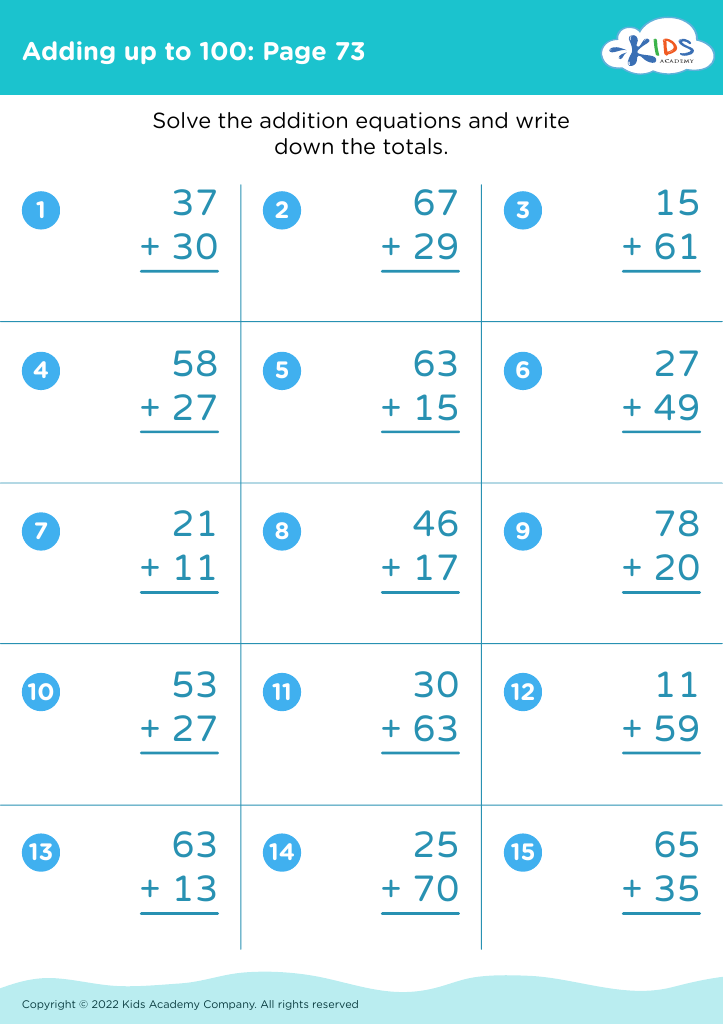
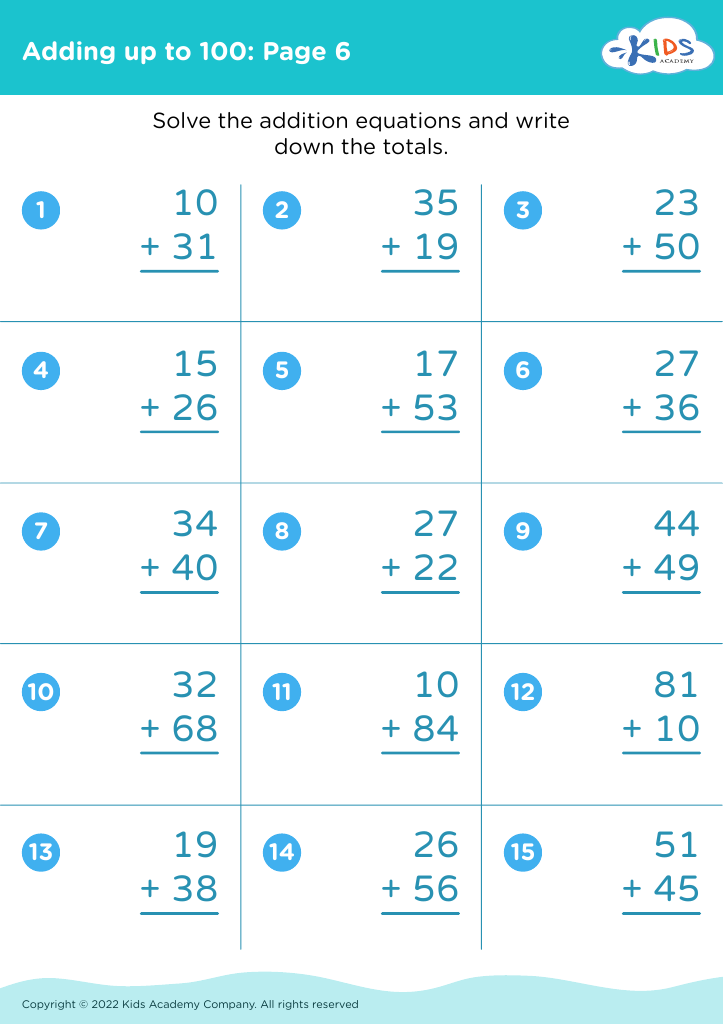
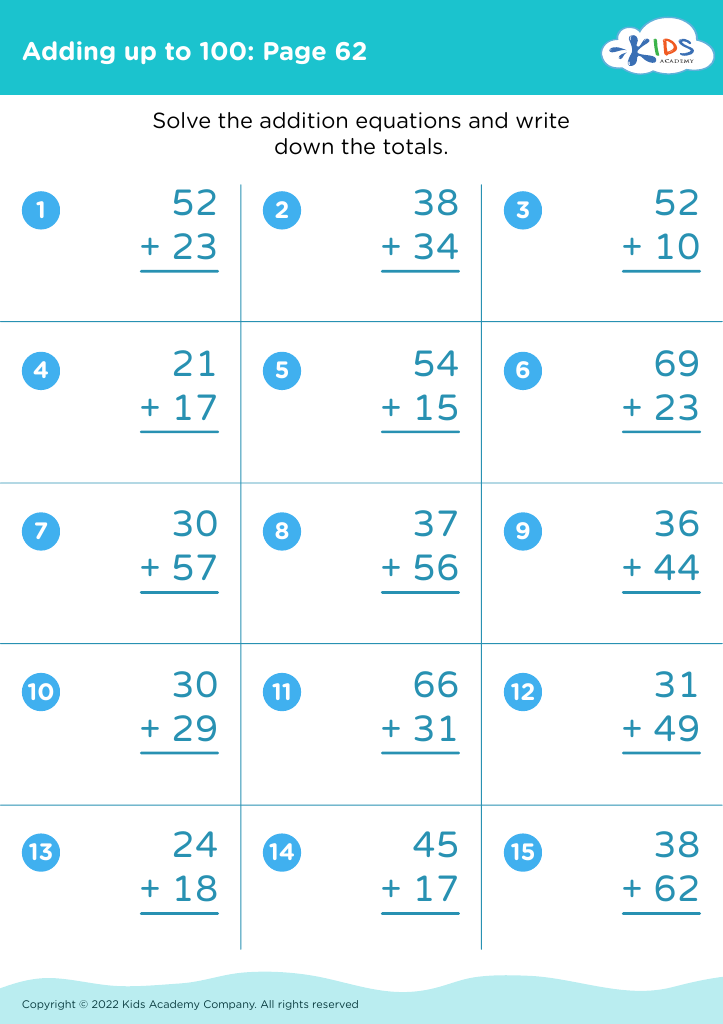
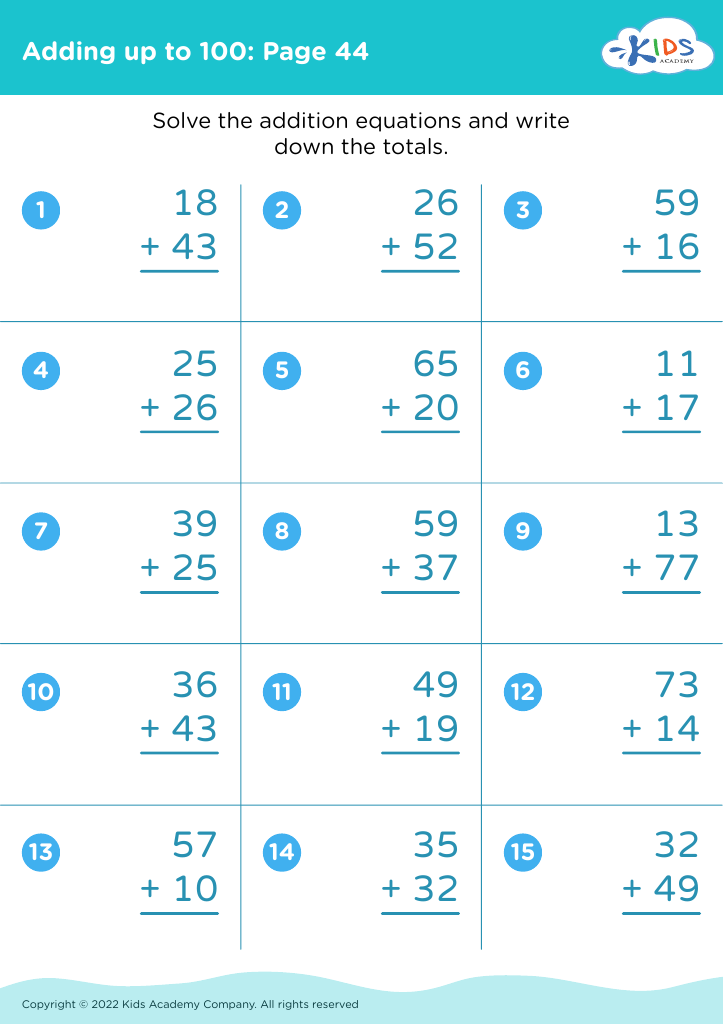


Color identification and adding up to 100 are fundamental skills that form the building blocks for advanced cognitive development in children aged 7-9. For parents and teachers, incorporating these activities can significantly enhance a child's learning experience in multiple ways.
Firstly, color identification is not just about recognizing hues. It helps improve visual discrimination, which is crucial for reading and writing skills. Understanding and naming colors also enrich a child’s vocabulary and descriptive language abilities, enabling them to better express themselves and communicate effectively.
Adding up to 100 cultivates essential mathematical skills that are vital for future learning. Mastery of basic arithmetic operations fosters critical thinking and problem-solving capabilities. It sets the foundation for more complex math concepts, like multiplication and fractions, ensuring a smoother transition as they progress in their education.
Combining color identification with arithmetic exercises can make learning more engaging and enjoyable. Children are more likely to participate actively and retain information when they find the activities fun and interactive. Engaging hands-on methods utilizing both skills help in reinforcing memory, attention to detail, and logical reasoning.
Parents and teachers who prioritize these skill sets, therefore, contribute to well-rounded intellectual and emotional development, preparing children not just for academic challenges but for real-world problem-solving as well.